The roadblock facing seniors in Gwinnett County
Norcross-based nonprofits say community gatherings are a lifeline for seniors, but limited transportation options are keeping many from coming together.

This story was reported through a partnership with 285 South and Canopy Atlanta, a community-led journalism nonprofit that partnered with more than 100 Norcross residents to choose, report, and present stories. Read the longer Canopy Atlanta version of the story here, and the full Norcross Issue here. To learn more about Canopy Atlanta’s work, sign up for their weekly newsletter here.
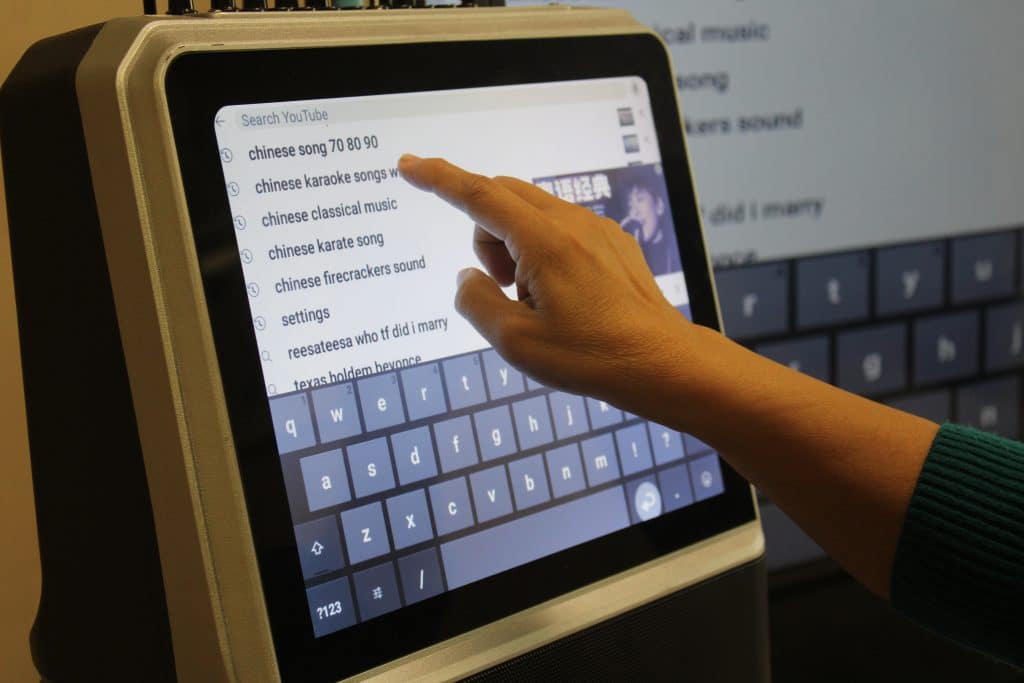
Like any good karaoke party, it started out with technical difficulties. A karaoke box sat beside a screen with Chinese songs queued up on YouTube. Over a dozen seniors sat in rows facing the screen, while Lewis Luu, who is usually appointed as tech support by the other seniors (“he is the technology master,” said the organizer of the gathering), fiddled with the volume button of the karaoke machine.
After a few more hiccups (turning the on button on the microphone, among them), the singing got underway.
Around six people seated In the two back rows were either knitting, passing around snacks, or chatting. Two women sporadically clapped along to the beat. At the front of the room, the microphone circulated among three men who seemed to relish the spotlight, belting out tunes with their eyes closed.
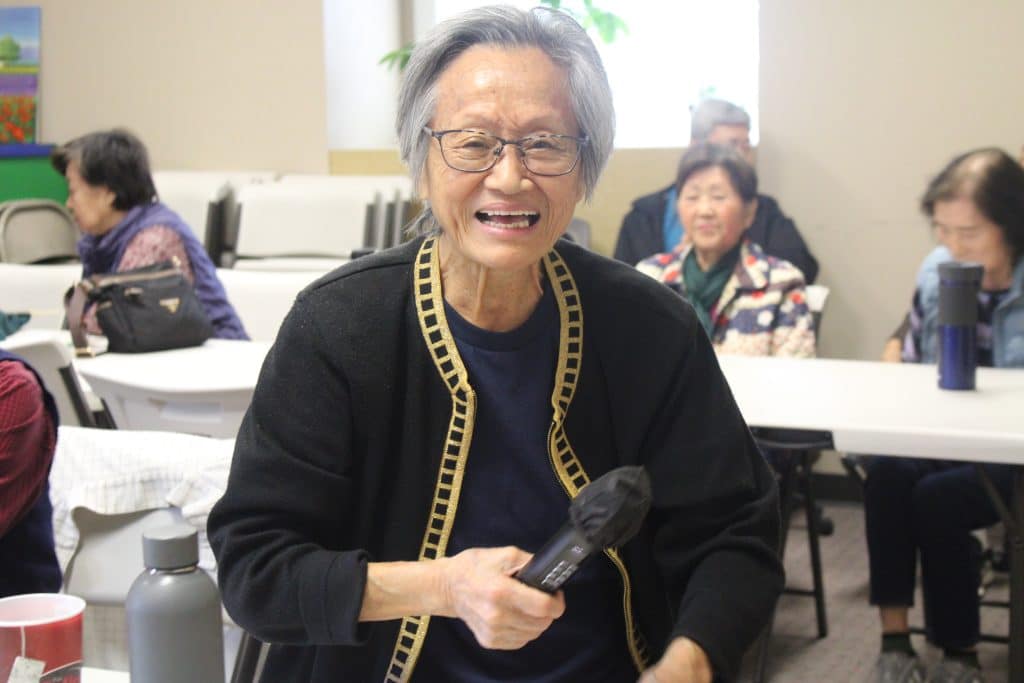
And between the front and back of the room, were others, like Theresa Kang, who sang quietly along from her seat. When the microphone was thrust in front of her, she shyly accepted, and made her way to the front of the room.
“I came today because this is the first day for karaoke,” said Theresa, who is originally from Taiwan. She lives off Indian Trail Road, and drove 30 minutes to get to the office of the Chinese Community Federation of Atlanta office that morning. She thinks more seniors would have come to the gathering, which was organized just a week before, if they had transportation. “If they live too far away, they don’t want to drive.”

This wasn’t always the case.
The Center for Pan Asian Community Services (CPACS), an Asian serving nonprofit that served folks mostly in Dekalb and Gwinnett counties, provided transportation for community members for many years. Four green shuttle buses, along with minivans and sedans, drove people to get groceries, attend medical appointments, and to the CPACS offices for programs for seniors.
Anna Tam used to run those programs at CPACS, and is now the President of CCFA. She said a bus would pick up many seniors from a Chinese supermarket in Duluth and drive them to the CPACS office in Doraville so they could attend any of a number of activities: exercise classes, Chinese knotting, drumming.
But that all changed when CPACS came under investigation after allegations of mismanagement of funds in 2022, and the organization lost the funding that supported its transportation services.
Now, around 20 people come to the senior programs at CCFA. Most of them live close by and can drive themselves. Anna, who is an unpaid volunteer, says she hasn’t had the time to find funding for hiring a van or any other sort of transportation.
She isn’t the only one who’s been seeing how seniors are struggling to find transportation.
Less than five miles away, across from the Hong Kong supermarket strip mall off Jimmy Carter Boulevard, is a nondescript office complex, where Trinh Pham sits at her desk. She is the executive director of the Atlanta chapter of Boat People SOS (BPSOS) – a national nonprofit serving Vietnamese community members with everything from Medicaid applications to tax services to preventative health checkups. Trinh says of the hundreds of people they serve every month, around 70 percent are seniors living in the Gwinnett County area.

At one point, said Trinh, BPSOS started offering exercise classes. But they didn’t last very long. “We want our seniors to be active but they couldn’t come to join even though most of them described their interest. They said, oh, I don’t have a car, I have no one to drive me.”
Many, she said, rely on their kids for transportation. The BPSOS office now opens at 8am, instead of 10am like it used to, after Trinh learned opening earlier was better for the work schedules of the kids – who were driving their elderly parents. “Most of the [kids] work in the nail industry. So normally nail salons open late…early morning if we open, they can take care [of everything]…we found very effective early morning.”
Trinh said BPSOS does have a grant from Uber that covers the cost of rides to medical appointments. She hasn’t pursued funding for transportation outside of that, though, because of capacity and potential liability issues with driving.
What she really wishes for, is better public transportation in Gwinnett.
“People who just move here, they say, can you show me how to get around public transportation in Gwinnett? It’s not reliable at all.”
“People who just move here, they say, can you show me how to get around public transportation in Gwinnett? It’s not reliable at all.”
Trinh Pham, Boat People SOS – Atlanta
The Atlanta Regional Commission, the agency that used to provide federal and state funding to CPACS for its transportation services, no longer supports any immigrant specific organization with transportation, according to spokesperson Paul Donsky. But he said that the ARC does provide $5.3 million dollars a year to nine counties, including Gwinnett, in the Metro area to support older adult transportation services.
Gwinnett County’s transit system, Ride Gwinnett, offers transportation for seniors for ‘quality of life’ trips, said Deborah Tuff, Media Relations Manager for the county. “‘Quality of life’ trips include grocery store, prescription pick-up, and trips that are considered essential for their livelihood.”
But, that information doesn’t seem to have reached some of the people it could help.
Anna said she did go to a seminar on Gwinnett County’s transportation services over a year ago, but from her understanding, the county’s assistance “does not help much because the transportation is not door-to-door.”
And Trinh said she didn’t know about any of the county-provided services for seniors.
Paul admitted that the ARC hasn’t done specific outreach to Asian serving nonprofits to let them know about what transportation services are available. “We have not yet made outreach but would be very interested in doing so and will ensure that their information is included in our database of resources that is available to the public at Empowerline.org.”
How seniors can request transportation through Ride Gwinnett
Seniors interested in transportation services can call Senior Services, part of Gwinnett County’s Health and Human Services, at 678-377-4150. Senior Services will then send a subcontractor, via car, van, or bus to pick seniors up as needed. Health and Human Services has partnered with LanguageLine Solutions “for all of our senior services,” Deborah Tuff, Gwinnett County Government’s media relations and strategy manager said by email, “to ensure we are being culturally responsive and responsible to serve all residents, regardless of language.”
Victoria Huynh describes the transportation situation as a “crisis”. She was the former vice president of CPACS, and worked there when they had a buses and vans that could shuttle people around. She says that many community members who used to access services through CPACS have called her about finding transportation. She’s not sure what to tell them.
“When you have this entity that has been doing this work and building that for over a decade or so, and all of a sudden it just goes away—literally—almost overnight, there’s this shock,” Huynh said. “It is a challenge, because I don’t know of many other services that can fill in immediately,” she added.
Huynh has been advocating with funding agencies, like the Department of Transportation and ARC, about the problem. But the issue doesn’t seem to be a priority. She said that no one is tracking data around transportation needs in these communities at the moment.
“I know, for some of our leaders who don’t sit in that space, they may not see it as the highest priority because maybe they don’t serve the communities . . . day in, day out.”
She’s currently working with smaller nonprofits – through the Georgia AAPI Hub – to build out their capacity to apply for grants.
But the capacity building, the resource sharing, the building out of new transportation services – it all takes time. What’s clear and imminent for the people Trinh and Anna serve is simple: driving in Metro Atlanta “is scary.” Especially when the distances are large. “They can drive but not that far,” said Anna.
“We didn’t have car in Vietnam. We just ride bicycles.”
Trinh Pham, Boat People SOS – Atlanta
Trinh’s parents migrated from Vietnam in the late 90s, she said they never drove. “We didn’t have car in Vietnam. We just ride bicycles.”
Meanwhile, back at CCFA’s office, Kang went back to her seat, and continued to sing along from the audience, a smile lighting up her face.
The organization’s first karaoke party was such a success that seniors want it to continue on a weekly basis. But there is just one problem (in addition to a lack of available transportation, of course). Anna received an email from the office’s property management, complaining that the singing was too loud.
Rather than cancel karaoke altogether, Anna moved the parties from Fridays to Sunday mornings.
“Hopefully down the road, no complaints from the offices,” she said, laughing.
Author

Related Articles
At an annual Buford Highway food drive, volunteers prepared grocery boxes for 300 families, but 500 showed up
Many families are struggling to afford groceries—and worried about the political climate. Here’s how you can help.
SNAP benefits expected to end in November: “That’s just like another chaos and panic.”
For recently arrived refugees in Georgia, who have yet to find their footing in an unstable economic environment, cuts to food benefits add to an already burgeoning crisis of costs
Comments (0)
There are no comments on this article.