“We are disappointed to say the least”
Immigrant advocates in Atlanta respond to Biden’s executive order to block people seeking asylum from entering U.S. through the southern border
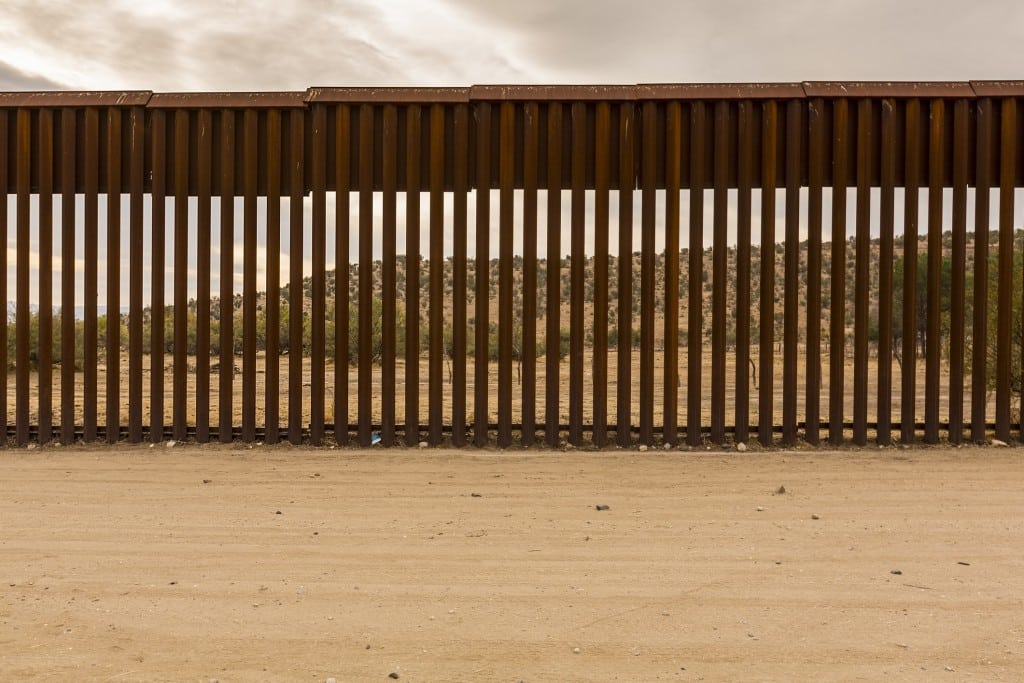
Many Atlanta area immigrant advocates have told 285 South they are disappointed and frustrated after President Biden announced a new executive order on Tuesday, restricting asylum access for people entering through the U.S.-Mexico border between ports of entry when border crossings rise above a 2,500 daily average.
The order also makes it tougher for people to prove they have a credible fear of returning to their home country. The process of asylum requests will only resume when the daily average of people crossing outside ports of entry drops to under 1,500 for 7 days in a row. The last time crossings were below 2,500 though, was in January 2021.
The White House says the rule doesn’t apply to some groups, including unaccompanied minors or human trafficking victims. More on the rule here.
In a speech on Tuesday, President Biden said the “border is not a political issue to be weaponized” and the order would “help us gain control of our border and restore order into the process.”
But speaking to 285 South, immigrant advocates here are saying the decision to restrict the ability for people to seek asylum in the U.S., is clearly political.
Gigi Pedraza of the Latino Community Fund – Georgia (LCF-GA) said the order “exacerbates anti-immigrant rhetoric, and shows that immigrants once again are the first on the chopping board when it comes to political gain.” Her nonprofit works to build the political power of Latinos in Georgia through civic engagement and capacity building. “We are disappointed to say the least.”
Kyle Gomez-Leineweber, a resident of Buford who grew up in a mixed-status home, also said he was frustrated by the announcement. He works for the GALEO Impact Fund, a political advocacy organization that works alongside its partner nonprofit, GALEO, to increase the involvement of Latinos in Georgia in the political process.
Between 2012 and 2020, the Latino electorate more than doubled, from around 180,000 to over 380,000, according to a GALEO report. The gains are significant in a politically contentious state that Biden won by just over 11,000 votes in 2020.
“I think it’s going to have a negative effect on enthusiasm for Latino voters to support certain candidates, or to even come out and vote,” Gomez-Leineweber said. The collective impact, he told 285 South, of new federal policies like this one and the recent state law HB1105, is that many Latino community members feel isolated from the government.
“I think for a lot of folks in our community, even those who are citizens who have legal status, who are registered to vote, we see our stories, connected to those folks who are coming to the United States and trying to obtain asylum and trying to build a life here.” He thinks that policies like these send a message that “our leaders aren’t valuing our histories, aren’t valuing our stories, our backgrounds, and the issues that we care about.”
“The messages that are received…is that the government isn’t on our side, isn’t advocating for us, and is persecuting us. That makes it much more difficult and challenging to make the argument that, hey, you need to be civically engaged, you need to come out and participate.”
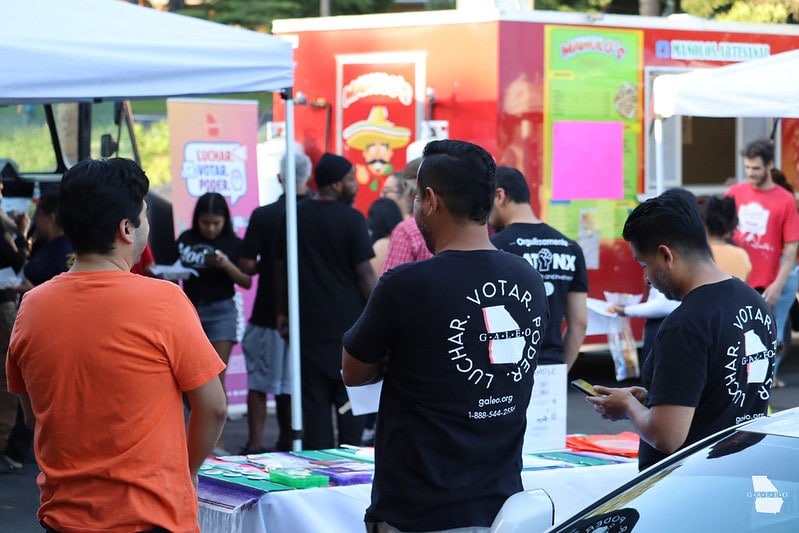
On a recent trip to Washington with other state and national organizations, Gomez-Leineweber met with officials from the Biden Administration, to push for policies like extending work permits to immigrants who have lived in the U.S. for a while. This sort of policy, he said, would provide “some real much needed security, and acknowledge the dignity of folks who are already here.” But the response from officials was muted. “We couldn’t get any firm commitments.”
The Administration is relying on Section 212 of the Immigration and Nationality Act to make the new restrictions on the border possible. Section 212 was invoked by the Trump Administration to implement a ban against individuals from several Muslim-majority countries (known as the “Muslim Ban”). It gives the President the authority to block some immigrants from entering into the country if deemed “detrimental to the interests of the United States.”
Shortly after President Biden took office in 2021, he issued an executive order overturning Trump’s ‘Muslim Ban’, saying it was a “stain on our national conscience” and “inconsistent with our long history of welcoming people…”
Over the past year, the largest numbers of people crossing the border into the U.S. and seeking asylum have been from Mexico, Guatemala, Honduras and El Salvador, but an increasing number are coming from a range of other countries, including Venezuela, China, and Haiti.
Gwinnett County resident Watson Escarment, who has relatives in Haiti, has been helping to resettle many Haitians who have come through the southern border who’ve ended up in Metro Atlanta. “This will obviously have a tremendous impact on those who are seeking asylum from Haiti…there are quite a few Haitians who come through the US-Mexican border, who have legitimate asylum claims that will be left out because of this new policy.”
He is concerned, he said. “Haiti is practically a war zone right now. So for those people, their lives are in danger. There’s no sugarcoating that. I really hope that the administration would reconsider this. ”
Author

Related Articles
Some wins for immigrant survivors of violence, despite slowdown in U visas
“I knew I could do better. It was just the one thing that was lacking for me to go further: my immigration status,” one survivor said.

Stuck in a DACA tug of war, young college educated Georgia residents’ lives are stalled
The Trump Administration has indicated it may soon accept DACA applications; but these undocumented Georgians aren’t holding their breath