Social media accounts impersonating law firms and scamming them out of thousands of dollars
Fake accounts on TikTok, Facebook, and WhatsApp promise help with immigration cases, charge a hefty fee—and then disappear. Here are some other common online scams to look out for.
Fake accounts on TikTok, Facebook, and WhatsApp promise help with immigration cases, charge a hefty fee—and then disappear. Here are some other common online scams to look out for.
READ THIS ARTICLE IN SPANISH. LEA ESTE ARTÍCULO EN ESPAÑOL.
Zaira Solano remembers the day a potential client told her they had been scammed out of $10,000. She initially met with the client to help them with their immigration status. The person didn’t hire her law firm, but instead, paid somebody on WhatsApp who promised they would help them with their immigration status.
“They paid this person who they never spoke to on the phone—never saw in person—$10,000 for their case,” said Solano, the founding attorney of Atlanta-based Solano Immigration Law Firm, which assists clients on matters such as visa applications, adjustment of status and deportation proceedings.
The money was already gone– the only thing Solano could do at that point was help the person file a police report.
This wasn’t the first time Solano had seen such a scam, in which people seeking help with their immigration status lose money after texting back and forth with bogus social media accounts impersonating attorneys or law firms.
But immigration scams are nothing new. The Federal Trade Commission (FTC), the agency charged with protecting the public from deceptive or unfair business practices, began tracking cases of immigration scams and similar crimes in 2011. With the rise of social media, immigrants have become exposed to additional forms of online fraud.
Every year between 2011 and 2014, 400 to 700 immigration scams were reported to the agency, according to a study published by the University of California, Santa Cruz.
The actual number of scams, however, is unknown, according to the study. Factors such as access to a safety net, immigration attorneys, translation services, and nonprofit legal aid play a role in how many complaints are actually filed with local authorities.
While it’s not clear how many of these scams occur in the Atlanta area, local immigration lawyers told 285 South that scamming is a persistent and ongoing problem. Anthony Grant, a public information officer from the Atlanta Police Department, says his agency tracks general fraud cases, so isn’t able to say how many are immigration scams in particular.
In recent years, Solano, who has been practicing law for over a decade in Atlanta, has seen a new trend: scammers creating fake social media accounts on platforms such as Facebook, TikTok, and WhatsApp and using names, logos, and profile pictures from law firms to impersonate them.
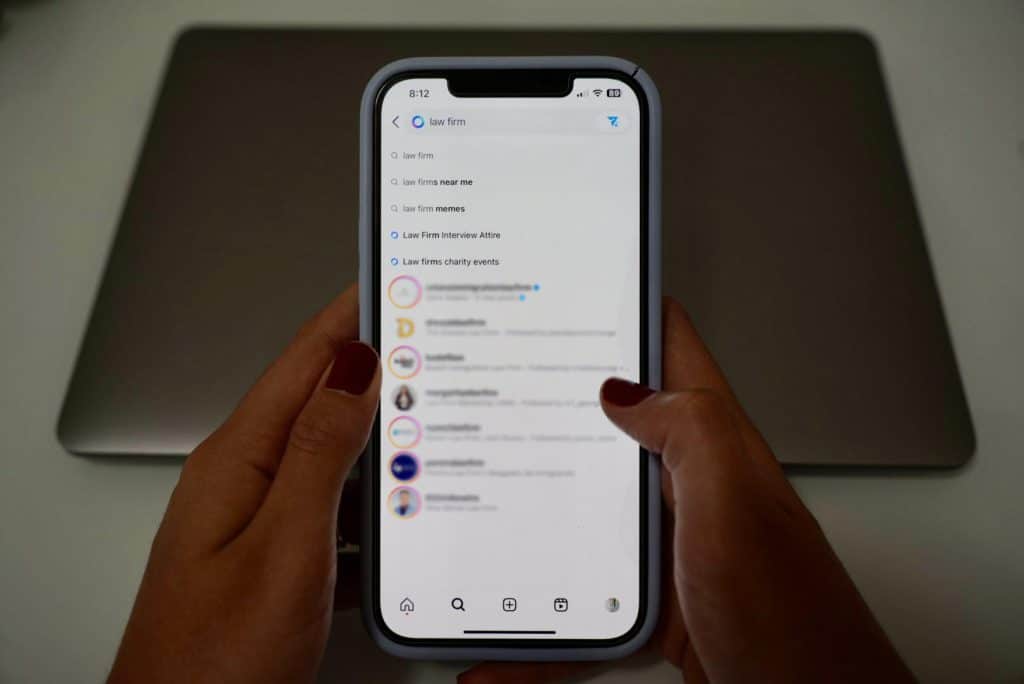
For instance, a quick search on Instagram made by 285 South with the terms “Solano Immigration” resulted in four different accounts—but only one of them was the real account of her law firm.
“It’s happening to us, and I know that it’s happening to other law firms around the country, and it’s very easy for people to fall for it,” Solano added. “It’s very believable.” Almost every day, she said, she has to report to social media platforms that a new fake account is impersonating her law firm. She has also been educating her clientele and followers on how to identify unscrupulous accounts.
“It’s happening to us, and I know that it’s happening to other law firms around the country, and it’s very easy for people to fall for it.” – Zaira Solano, Founding Attorney, Solano Law Firm
“They won’t have a phone call with you, but they’ll message on that platform, and they’ll promise you a consultation and charge you money; or they’ll offer you to do some type of application and charge you money,” Solano said.

A quick search of the terms “Solano Immigration” resulted in four different Instagram accounts but only one belongs to the law firm.
The FTC warns of other online scams such as fake immigration websites that show pictures of American flags or the Statue of Liberty to deceive people into believing they’re associated with the federal government. These websites might steal personal information or charge a fee to download forms that are, in reality, free.
For instance, immigrants hoping to become lawful permanent residents can enter the U.S. State Department’s Diversity Visa Program, which awards up to 50,000 visas annually by lottery. Although the form doesn’t cost anything, some scammers collect money from hopeful applicants under the false premise that they can increase their chances of winning.
Notarios and tax preparers
Scams promising a smoother path to residency or citizenship aren’t the only scams that immigrants are increasingly forced to contend with. They also might encounter fake notary publics—normally, government-certified individuals who verify signatures on official documents. In many Latin American countries, notarios are also attorneys. But that isn’t always the case in the U.S., which can lead to the unauthorized practice of law.
“A lot of people are tricked with notarios and they’re not licensed to give legal advice or even prepare legal documents,” said Serene Hawasli Kashlan, the legal director of Asian Americans Advancing Justice – Atlanta, a nonprofit that provides legal advice to immigrants and refugees in Georgia.
“A lot of people are tricked with notarios and they’re not licensed to give legal advice or even prepare legal documents.” Serene Hawasli Kashlan, Legal Director, Asian Americans Advancing Justice – Atlanta
Notarios, tax preparers, and other community members engage in the unauthorized practice of law when they advise people to fill out certain immigration forms.
“Notarios scam a lot of people by offering them services to fill out forms that the person doesn’t qualify for or offering them to fill out forms that the person might temporarily qualify for, but ultimately, the case is going to be dismissed, ” Solano said.
In her practice, Solano has seen many notarios advising people to apply for asylum. “Anybody qualifies for asylum if they have a fear of returning to their home country,” she said. Six months after they file an application, asylees are eligible for a work permit. “But that doesn’t mean that your asylum application is approved,” Solano continued. “That just means you’re allowed to have the benefit of having a work permit while your asylum application is pending.”
Although some might think that getting a work permit is proof that their asylum case was approved, that’s not the case: “Ultimately, you’ll go to an interview and your asylum case is going to be denied, and that’s what they don’t explain to people.”
How to protect yourself?
- Do your research: Hawasli Kashlan recommends that people do their research to ensure they’re receiving advice from an attorney and not from a notario. “Definitely do their due diligence, make sure the charge is reasonable, make sure the attorney is reputable,” she said. One good place to start: the American Immigration Lawyers Association, which hosts an online database of professionals. Local organizations such as Asian Americans Advancing Justice can also refer people to trustworthy immigration attorneys.
- Talk to an attorney before hiring them: Solano says that getting on a call or meeting in person with an immigration attorney are good practices before hiring someone to help with the immigration case—especially if they found a law firm through social media.
- Verify the domain of web pages: The FTC recommends that people confirm that they are using an official government website by looking into the domain, which should end in “.gov” Also, all official forms from the U.S. Citizenship and Immigration Services (USCIS) are free; if you’re being charged to download one, the site is not legitimate. Likewise, applying for the lottery visa is entirely free; anyone promising they can increase chances of winning is likely a scammer.
We are investigating scams affecting immigrants in the Atlanta Metro area. Have you been a victim of an immigration scam? Let us know your story by reaching out to gabriela@285south.com or sophia@285south.com in English or Spanish.
We appreciate you sharing your story and will contact you if we want to publish any part of it.
Author

Related Articles

UPDATED: Free or low-cost mental health services in Metro Atlanta, many offering counseling in multiple languages
Finding mental health support isn’t always easy – especially for residents in Metro Atlanta who may face barriers like cost, language, and cultural sensitivity.
Venezuelans deported grapple with new realities in their country, amid earthquake aftermath and political upheaval
One former GA resident, now back in Venezuela, shares his story.

29-year-old dies after weekslong stay in Georgia immigration detention center
Prisciliano Trejo, who had leukemia and had been in ICE custody, died on July 24.