“Enough of a reason to care”: Atlantans join a 40-day fast for Gaza
Part of a national campaign, they’re demanding more humanitarian aid for a region facing famine—and the end of U.S. military support for Israel.
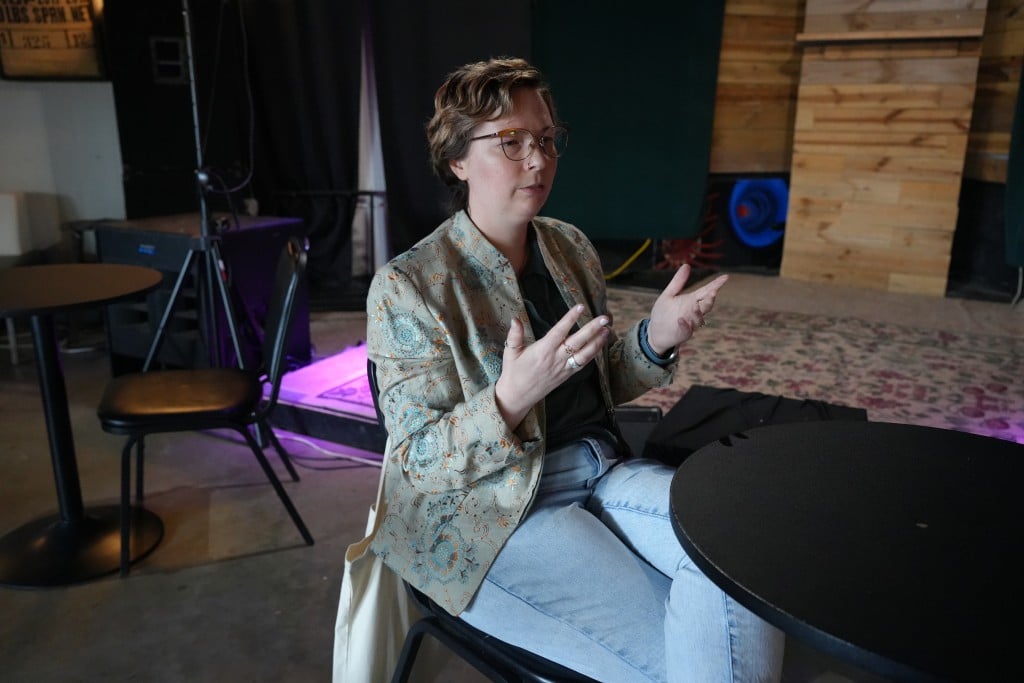
Every three days, Deanna Roberts has a hard-boiled egg and a cup of black coffee for breakfast. Over the course of the day that follows, she consumes only water; in the evening, she’ll have half a piece of pita bread with either peanut butter or a date. The roughly 250 calories this adds up to the estimated daily caloric intake last year by people over 6,000 miles away in the north of Gaza, the Palestinian territory that’s been under intense military bombardment by the Israeli military since October 7, 2023.
Deanna, a Decatur resident whose friends call her Dee, is part of a national movement of people undertaking a 40-day fast for Gaza, demanding a resumption of humanitarian aid to the besieged territory—where, for months, Israel has admitted only a tiny trickle of trucks bearing relief—and an end to U.S. military support for Israel, whose forces have killed at least 50,000 Gazans, thousands of them children. A United Nations representative recently described Gaza as the “hungriest place on Earth,” with 100 percent of its residents now at risk of starvation.
Organized by Veterans for Peace and set to conclude on June 30, the fasting campaign has drawn 650 people so far. Some participants are following the 250-calorie fast for the full 40 days, while some are fasting in the style of Ramadan—from sunup to sundown—while yet others are skipping meals or limiting their consumption to only certain types of food. Dee fasts every three days, alternating with another friend in Atlanta and one in the Midwest. “Everybody’s doing their own unique way of participating,” she said, “which I think provides a further level of accessibility for people.”
But it still has been an odd experience for her. “It feels very strange to even have the choice to decide how I consume that 250 calories,” she said. “It is a luxury and a privilege to be able to decide what kinds of food I’m going to eat, when those in Gaza, they don’t have a choice as to what those 250 calories are.”
For Dee, a theological librarian at Emory, the fasting is also a call for elected officials to take action. She’s part of the Atlanta Multifaith Coalition for Palestine, which, along with other organizations, has been trying to meet with Senators Raphael Warnock and Jon Ossoff to ask them to vote against sending arms to Israel. So far, they’ve only been able to talk to staffers, she said. Dee doesn’t know if the senators are aware of the fasting movement; 285 South reached out to both senators for comment, but hasn’t received a response at time of publication.
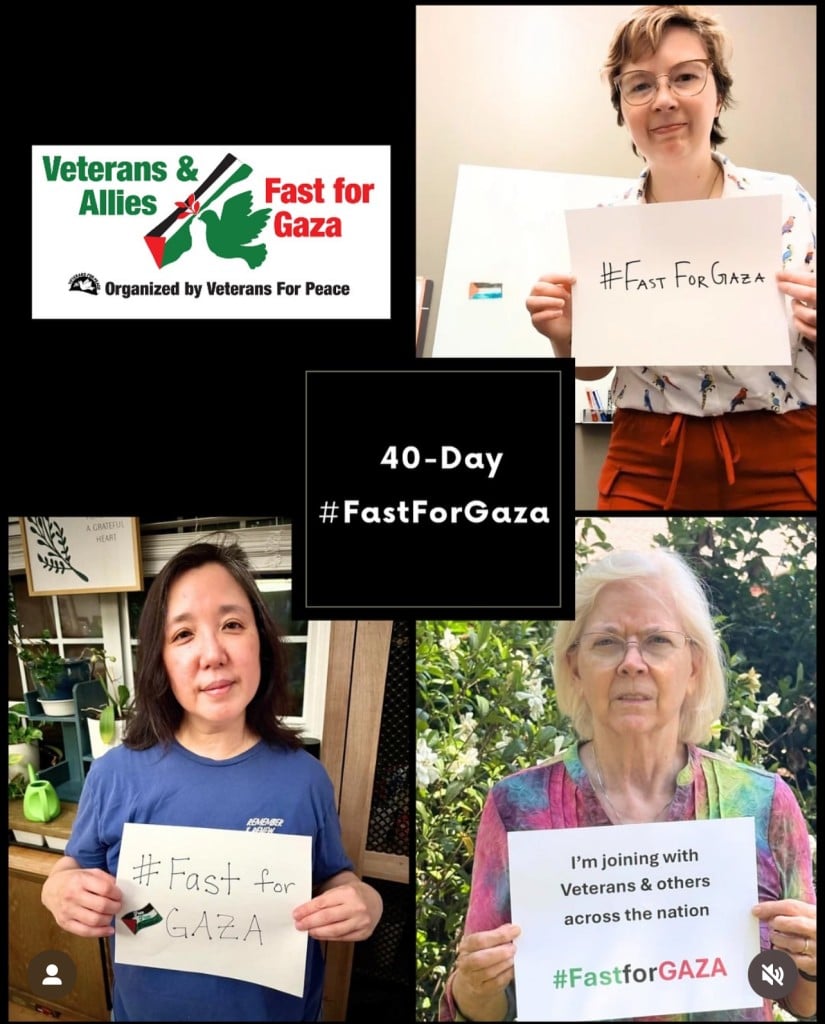
On the days she fasts, Dee said, her stomach is constantly rumbling. She has less energy than usual, and with every movement she makes, her body feels heavier. If the fasting day is during the week, she still has to go to work, but focusing on some tasks is especially hard. For instance, instead of writing or editing a journal that she is responsible for, Dee does data entry or administrative work that doesn’t require a lot of mental capacity. To get through the day, she said, she constantly reminds herself why she is fasting, and thinks that she might have the freedom and ability to eat, but people in Gaza don’t.
“I saw with my own eyes”
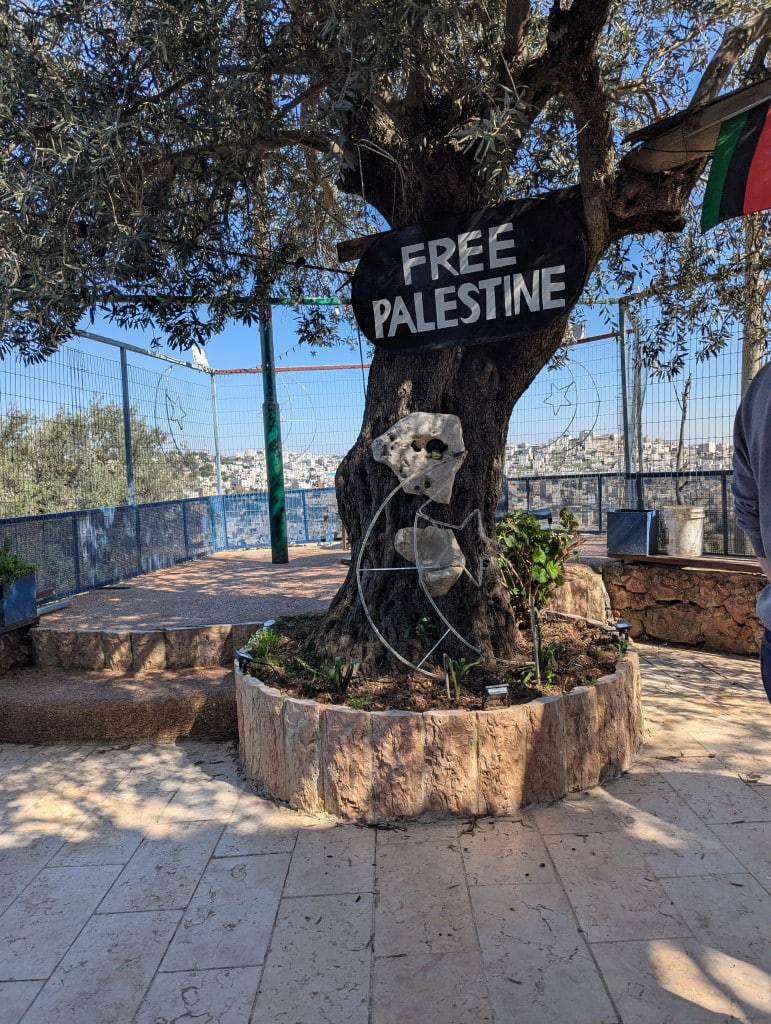
In 2014, while studying at Louisville Presbyterian Theological Seminary, Dee was invited by a classmate on a trip to the West Bank. She remembers thinking at the time it would be a “cool” experience. But it ended up being much more than that: “I saw with my own eyes how apartheid and occupation have been impacting actual Palestinian people,” Dee told 285 South. “I saw and witnessed some things there that left me changed.” On a visit to Hebron, for instance, the Palestinian tour guide leading her group of students couldn’t walk in the same streets as the Americans could.
Dee visited the West Bank four more times after that first trip. On her latest visit, this past March, she encountered an increased number of Israeli checkpoints; walking around Hebron, she noticed tiny Israeli flags painted on rocks and other objects or surfaces every few feet. “That’s a new phenomenon since October of 2023,” she said, “like the settlers in Hebron are trying to make the point that this is their land.” When the group visited the Palestinian activist Issa Amro, they saw that he’d surrounded his house with a fence and covered the roof almost entirely—to protect against Molotov cocktails thrown by settlers, he told them.
Over the years, Dee’s passion for advocating on behalf of Palestinians has grown. She’s been on the steering committee for the Palestine Justice Network of the Presbyterian Church (USA) since 2021 and, when she moved to Atlanta in 2023 for work, she became a member of Joining Hands for Justice in Palestine and Israel, another Presbyterian initiative. When the Atlanta Multifaith Coalition for Palestine was created after October 7, it seemed natural for Dee to join as a representative of Joining Hands, she said: “Because of October 2023, it became clear that it was going to be necessary to build power and build people and work together.”
So far, she’s helped organize events such as a visit from Munther Isaac, a Palestinian pastor in the West Bank, and is currently organizing an upcoming visit to Decatur Presbyterian Church by the Palestinian humanitarian, artist, and activist Rami Khader. She has also participated in monthly walks on the Beltline organized by the Palestine Youth Movement. “I never thought that so fast after moving to a new place, all of my free time would pivot to this one cause,” she said.
Dee was on the Emory campus on April 25, 2024, when pro-Palestine activists set up an encampment for Gaza on the university quad, and eventually tried to occupy the Candler School of Theology. She was standing on the side of a line formed by faculty members trying to protect students, she told 285 South, when she realized that law enforcement officials started firing rubber bullets to the ground, and deployed irritant gas to disperse the students. She backed away quickly, to avoid being affected by the gas, and saw how state and local police violently arrested Emory students, staff, and faculty—her colleagues.
“I can’t describe how horrific it was. I never thought that I would witness something like that on a university campus,” she said. “I’ve seen similar things during my travels to Palestine, but I never thought that I would experience that here.” After watching such a rapid escalation, she called her peers at the Atlanta Multifaith Coalition for Palestine and asked them to come to campus to serve as a protective presence for students. Her commitment to fighting for Palestine deepened. Recalling the day’s events, Dee—a soft-spoken person who gesticulates while talking—dabbed the edges of her eyes as they became teary.
With time, Dee has surrounded herself with people who also support the cause—and parted ways with friends who wonder why she cares so much. To those questions, she now responds: “This is the bare minimum: If you value human life and you believe that each life is sacred, then Palestinians should fit into the definition of those who are worthy of life.”
“I sit here in the United States, working my job, and a good portion of my tax dollars are going to fund the bombing and killing of innocent civilians and the forced starvation of children,” Dee said while nodding her head in a pensive and confident manner while sitting in a coffee shop in Decatur. “I feel like that’s enough of a reason to care.”
Related Articles
Venezuelans in Georgia come together to send food and medicine to the country after two massive earthquakes
“An outpouring of people” have come out across the metro region to respond to needs in Venezuela, expected to continue for months.
A Decatur teach-in draws attention to the world’s largest stateless ethnic group
With recent events drawing attention to the struggles of the Kurds, members of the Atlanta area’s Kurdish community are asking their neighbors to speak up.