
An oasis behind North DeKalb Mall
Fleeing from Burma, Merry San’s family finds respite in a community garden
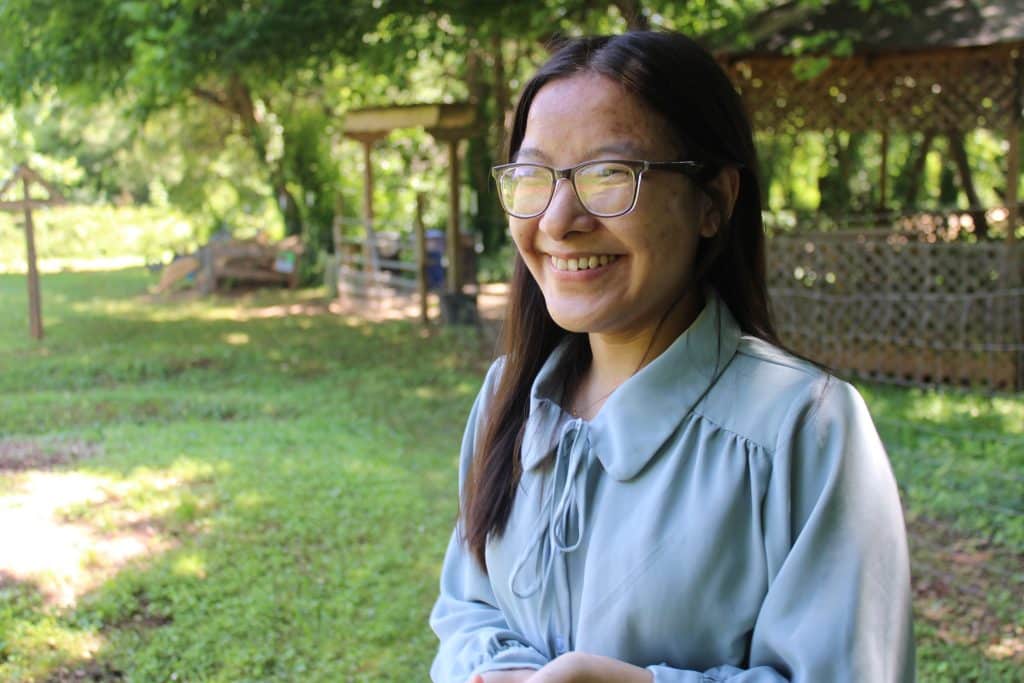
Whenever Merry San watches her mom, Tin Coi, in the garden behind the old North DeKalb Mall, she’s overcome with joy. Tending to her hibiscus and pumpkin plants, chatting with friends in her native language while she eats her packed lunch alongside them, her mother is in her element. Passing vegetables around, the women will call one another by their kids’ names—“Merry’s mom!” her friends shout across the garden to Merry’s mom. “And then they will be like, Oh, do you have that? Can I borrow it?” said Merry, describing a typical scene. “And then the other person shouts back, Yes, come get it!”
“Every time I see them it gives me this peaceful feeling,” she said, her face lighting up. “It’s like they don’t have anything to worry about, except for having fun in the gardens with nature, right?”
It’s a marked contrast for Merry and her mom, who fled from Burma along with her dad and brother around 10 years ago; they’re all still adjusting to life in their new country. “It’s a lonely place, America,” Merry said. “Everybody goes to work, schools, nobody’s at home.” During the day, her dad works in a chicken factory in Gainesville, her brother at a sushi restaurant. Tin Coi can’t work because of health reasons, and gets “bored staying at home all by herself” in Lilburn, said Merry.
That’s why Merry drives her mom to her garden plot at North DeKalb almost every morning and comes to get her at the end of the day: “She would stay, like, the whole day, doing her thing, working on the gardens, planting, watering, and I would just pick her up at five.”
In between, Merry is studying premed at Georgia State—or she’s working in the Decatur office of the Global Growers Network (GGN), the nonprofit that owns this garden and nine other sites around the metro area. The organization traces its roots to 2010, when a handful of families who had settled in metro Atlanta—mostly from Burundi, but also from Rwanda, Congo, and Tanzania—decided to “reclaim their agricultural heritage” by starting a community garden. The original plot, in Decatur, was called Umurima, which means “farm” in Kirundi, Burundi’s national language.
Today, more than 200 growers, originating from all over the world, garden at the plots while learning skills like pest control and selling at local farmers markets. Despite the growth of the organization over the years, these days, the nonprofit’s funding is “uncertain due to federal policy changes,” said executive director Susan Pavlin, explaining that it has multiple grants from the U.S. Department of Agriculture (USDA).
Merry first got involved with GGN as an intern, often helping with interpretation for growers who spoke Burmese or Matu Chin, the language her mother speaks. Last year, when a position opened up, Merry joined the team part-time. “Ever since I’ve [been] work[ing] as a coordinator, we have a lot of Matu growers,” she said, since she helps get the word out to her community, and she’s able to provide interpretation.
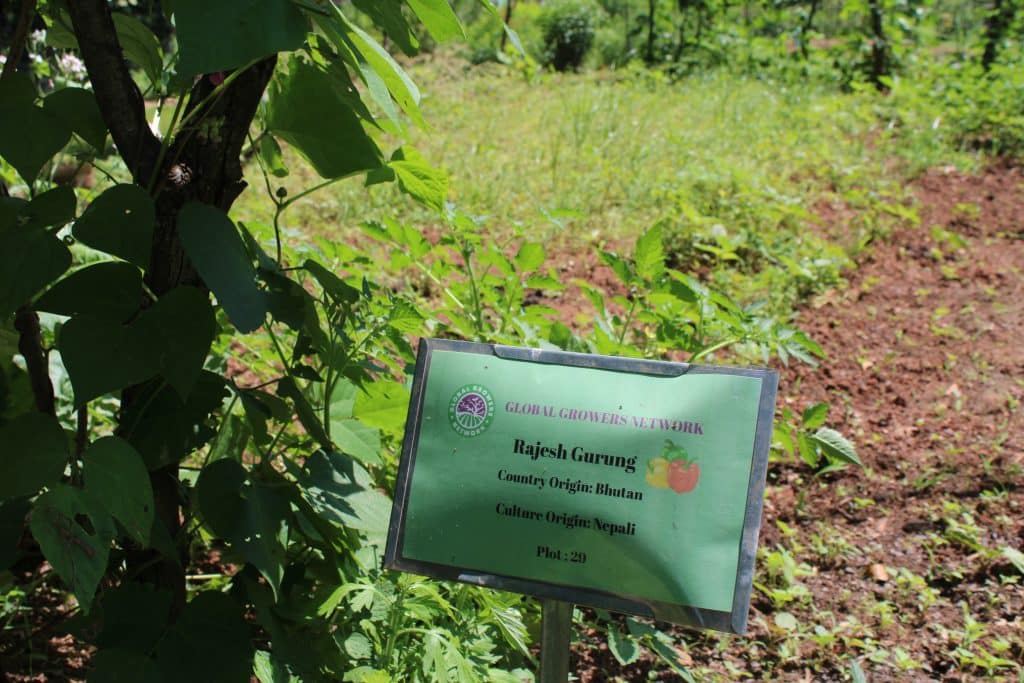
There’s a waiting list for many of the garden plots, she said, especially at the North DeKalb Mall site. That’s due partly to its convenient location and partly to its community vibe, since many Matu growers garden there. Georgia is a top destination in the Southeast for refugees from Burma; many of the over 6,000 Burmese living here are from the country’s ethnic minority communities, like the Matu, who are ethnically Chin, as well as the Karen and Rohingya. The garden gives them a place to catch up on what’s going on in the community, Merry said, laughing: “About anything they want to gossip. I don’t know if that’s good or bad.”
Those moments in the garden are a contrast from the life Merry and her family left behind.
Ever since Myanmar’s independence from the British in 1948, successive military governments have repressed the country’s minorities, including the displacement of over one million Rohingya. Though Merry remembers life in their village in Chin State as peaceful (she was a small child when they lived there), the larger situation wasn’t good for the Chin and other ethnic minorities: “The armed forces were really violating human rights. They are just violating everything,” she said. “So they just come in and do whatever they want with the kids, the house, cats, chickens, you know, everything.”
Her dad fled to Malaysia, and three years later, Merry, her mother, and brother walked through the jungles of Thailand to meet him. She doesn’t remember much from the journey, except that she carried a small pink bag with her; that they would sleep in the jungle or hide in a truck to keep from getting caught by the authorities; and that she would get tired. “Sometimes when I get very tired, somebody just picked me up and then carried me and walked,” she said. Other times, she would get a piggyback ride. Her understanding of the journey was simple: “All I could think was, I’m going to see my dad.”
In Malaysia, their family of four lived in one room of a shared apartment—“the whole family sleep in one room, eat in one room. Our whole life, everything, is in that room.” To earn money, her dad washed cars. Her brother also worked but Merry was too young, so she was able to go to a UN school for refugees. When the family was resettled in the U.S., they first arrived in Savannah, but there weren’t a lot of Chin there, so they moved to the Atlanta area, where there is a tight-knit community, Merry said.
Still, daily life here is challenging. Her father travels over an hour and a half each way to get to his job in the chicken factory, where his work is physically demanding. “He has to hang chickens,” Merry said. “It’s a whole chicken that he has to lift and then hang on a hook, and cut it with a knife.” When he was diagnosed with cancer a few years ago, he returned to work as soon as he finished chemotherapy. Her mom hasn’t been able to work, she said, “because she can’t stand long.” The time she spent as a single parent to her children, after her husband left for Malaysia, really took a toll on her: “Everything’s been so hard.” By becoming a doctor, Merry hopes to make lives easier—both her family’s and her community’s.
In the meantime, it’s the days that her mom spends in the North DeKalb garden that are making life better. The garden is also a connection to the good parts of what she left behind: In Burma, Merry’s family has been farming for generations. Today, at home, her mother stir-fries the hibiscus leaves she harvests—a staple dish she grew up eating. “Just seeing my parents, and the people in my community being so healthy, happy, and eating food together, sharing food together—just making me feel so much better for them. Because they had a very hard life back then. And now they get to enjoy something, right?”
Author

Related Articles
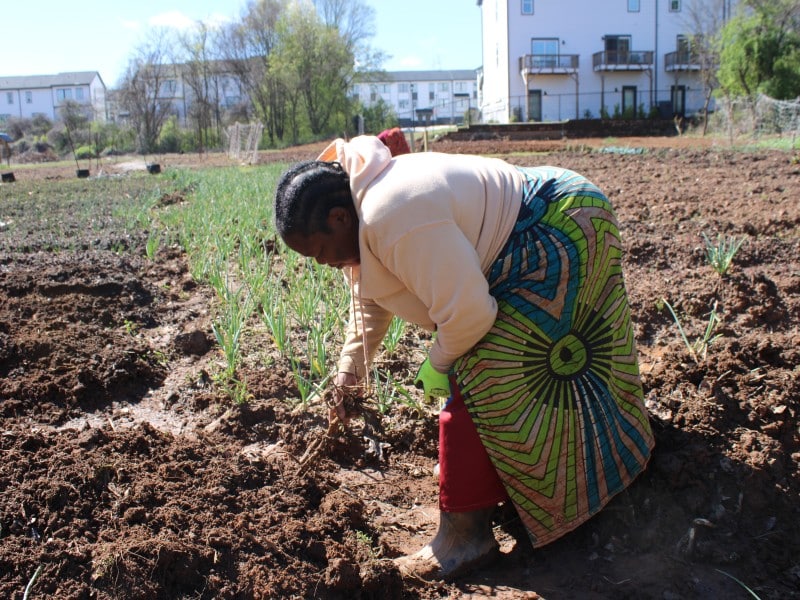
Spring has sprung—and for one Burundian farmer, that means it’s time to get back to the garden
This year, gardeners from the nonprofit Global Growers Network are combating food insecurity by harvesting produce for local food banks.
Andres Carrillo, founder of the pop-up Cocina Pachuco, is using his cuisine to fundraise for immigrants in detention
Born and raised in El Paso, the recently arrived chef is strengthening ties with his new home. One way he’s doing that: supporting the state’s immigrant communities.
“The work has become three times harder”
We speak to pro bono immigration attorney Serene Hawasli-Kashlan, legal director of Asian Americans Advancing Justice–Atlanta, about what it’s like to do her job right now.