
Marietta’s Diyar Al Yemen combines richly spiced fare, colorful decor—and Gen Z appeal
The 21-year-old owner of the metro’s only Yemeni restaurant hopes to educate diners about his culture.
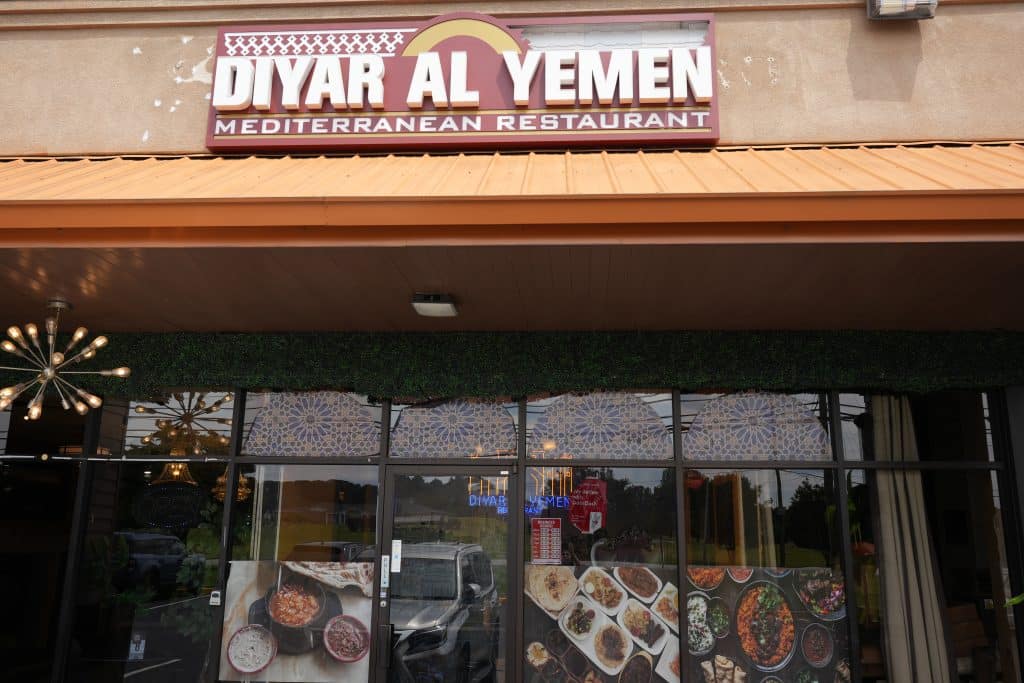
From the moment you step in, Atlanta’s only Yemeni restaurant—Diyar Al Yemen, which opened in Marietta in April—makes a big impression. The foyer is dominated by a neon sign bearing the restaurant’s name, a wall-size image of the Yemeni capital of Sanaa, and a kingly chair for customers to rest in—and maybe snap a picture to post to social media. Inside the dining room, beneath glass chandeliers, booths are arranged for diners to eat on the floor, as people do in Yemen; alternately, they can sit in hand-stitched furniture from the port city of Aden. Pictures on the wall feature famous sites—like Shibam, which is home to centuries-old skyscrapers, and the Haraz region, where some of the earliest coffee beans were grown—and captions with descriptions of each.
This whole setup, combining traditional imagery with social media aesthetics, is by design: The restaurant’s 21-year-old owner, Mohamed Ahmed, wants to attract younger generations—and persuade them to share their experiences on Instagram and TikTok. But he also wants to educate diners about the place his family comes from. “I would say 60 percent of the customers, they go ahead and take pictures in that entrance. And then once they come in, they get to see the history while they’re eating,” said Mohamed.
“I wanted to describe each picture with something that people don’t know about,” he said.
Diyar Al Yemen is Georgia’s first Yemeni restaurant, said Mohamed, who feels that Yemen and Yemeni cuisine are overlooked in the U.S. Born in Juban, Yemen, Mohamed came to the U.S. as four-year-old, and has been working in the restaurant industry since he was a child.
At just 13 years old, he got his first job at a Yemeni restaurant in Michigan, where he grew up. He sought the job out because he knew he wanted to open his own restaurant one day and felt comfortable in the industry. But since he was so young, he lied about his age. “I would take a pencil and I would rub it on a white piece of paper, and I would put it on my mustache area to make it look like I had a mustache,” he told 285 South. He headed to work after school let out for the day.
As he grew up, he worked in a couple more places before opening his first restaurant at age 17 with a chef in his hometown. That restaurant is now operated by his younger brother, Jabr, who recently turned 18.
After hearing cousins in Atlanta complain that they couldn’t find their food in the area, he decided to move south and open a restaurant here. Now, it’s attracting customers from beyond the Georgia state line, Mohamed said: “We had people coming from Augusta, South Carolina, and Alabama, driving a few hours just to try our food.”
In Michigan, Mohamed said, there are already plenty of Yemeni restaurants and the market is oversaturated. “I have had 16 ideas in Michigan, and every time I think of one, a month later, someone else already opened it. It’s very competitive,” he said. “Here, it’s nice and smooth. You can grow slowly and you can think.” And with less of a Yemeni presence in Georgia than in Michigan, he has more of an opportunity to educate people about his cuisine and culture.
Yemeni cooking is known for its big portions. “I would say it’s something that, when you eat it, you would probably need two or three hours after that, just to rest and drink tea,” Mohamed said.
It’s also well known for its strong flavors and generous use of spices: At Diyar Al Yemen, many dishes incorporate a spice mix that includes cumin, coriander, green cardamom, nutmeg, clove, cinnamon, and more. Every month, when Mohamed drives 12 hours back to Michigan to visit family and friends, he also picks up a new shipment from a provider whose recipe he helped design: “It’s the amount I’ve mixed to make it perfect.”
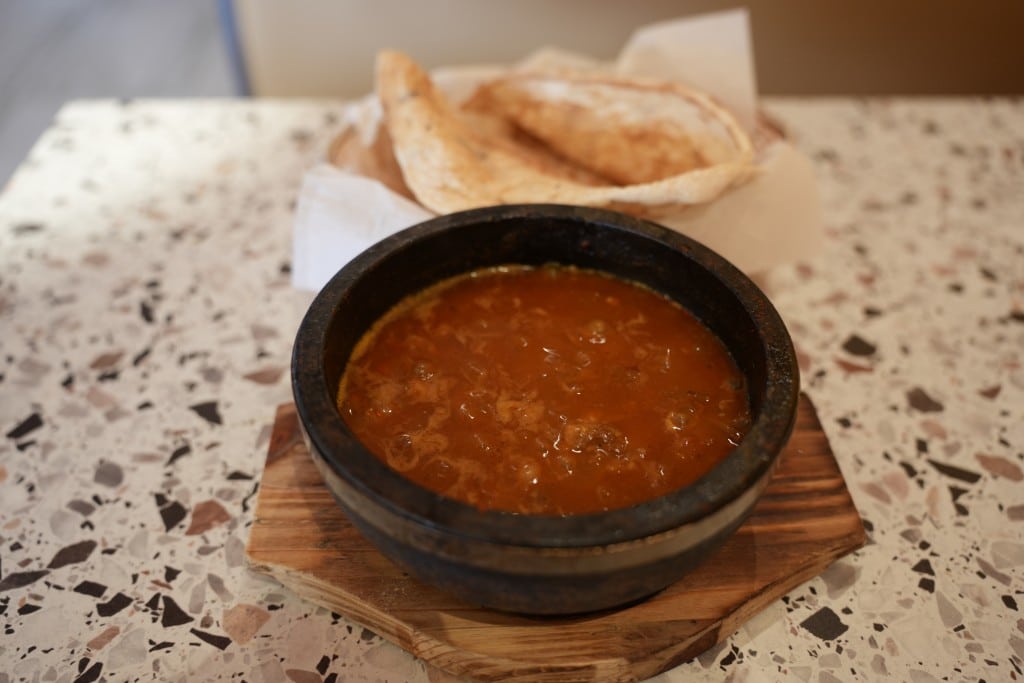
Spices like those figure heavily into some of the restaurant’s most popular dishes—like fahsa, a slow-cooked stew made with shredded lamb and mashed potatoes. It’s served, still boiling, in a clay bowl, with a portion of the flatbread tannour on the side for dipping. Dating to when the Ottoman Empire ruled the Yemeni highlands, in the 16th century, the dish originated as a way to use up kitchen scraps and leftovers; as time passed, people started incorporating more meat into the recipe, and it ended up a staple of Yemeni cuisine.
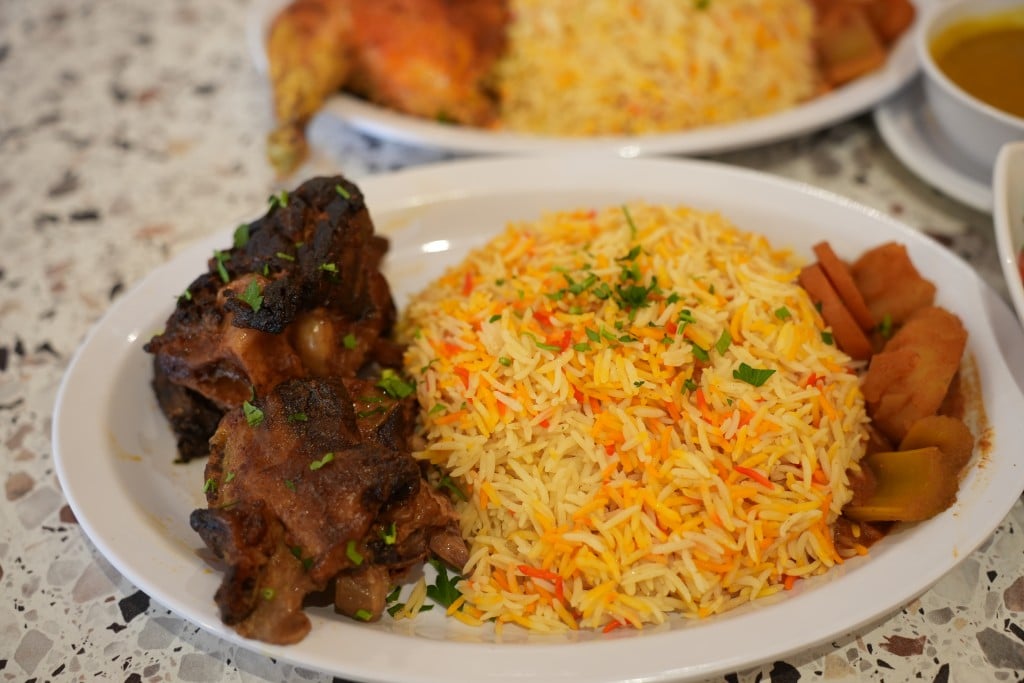
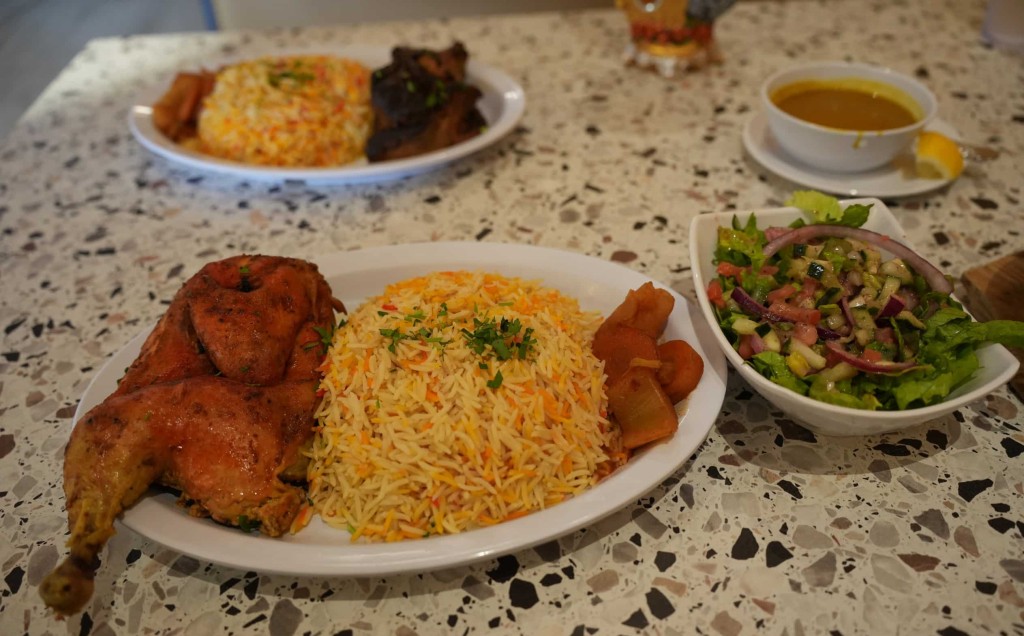
Lamb haneeth, another bestseller, is roasted until it’s tender enough to fall off the bone—more than three hours. It and other dishes, like slow-cooked chicken mandi, are served over spiced rice. The restaurant also offers breakfast—with specialties like spiced sauteed lamb liver and ful, the mashed-fava-bean dish popular across the Middle East—as well as items more commonly found in the U.S., like shawarma and falafel.
Diyar al Yemen may be the first restaurant, but it’s not the only Yemeni food business in the area. Atlanta, along with cities across the country, has seen a recent boom in Yemeni cafes like Alpharetta’s Shibam Coffee and Roswell’s 967 Coffee, as well as small businesses like Om Ali’s Honeycomb, which specializes in sweet Yemeni-style bread.
Mohamed is already thinking bigger: This fall, once his restaurant hits the six-month mark, he’s planning on looking into opening a cafe next door featuring coffees, teas, and desserts—though there are already a couple such options, like Adeni tea and red tea, on his current menu.
Mohamed is also thinking about expanding and opening another Yemeni restaurant in the Athens or Buford area. “I love when new people that have never tried our food come and have it, because our food is pretty rare in areas like Georgia,” he said. “There are three customers who have never tried Yemeni food, who now come every single day.”
Author

Related Articles
Andres Carrillo, founder of the pop-up Cocina Pachuco, is using his cuisine to fundraise for immigrants in detention
Born and raised in El Paso, the recently arrived chef is strengthening ties with his new home. One way he’s doing that: supporting the state’s immigrant communities.
Ibu’s Kitchen gets back to the basics: “Food makes people happy.”
At this “one-stop shop” on Buford Highway, customers can find Indonesian groceries, Batik clothes, homestyle meals, and an unwavering commitment to values.
At La Mixteca Tamale House, colorful masa creations celebrate Valentine’s Day—and honor a mother’s memory
Born in Oaxaca, Rosa Lucia Hernandez launched a tamale business in 2018 to fulfill a longtime dream. After her death, Rosa’s children are keeping that dream alive.