Riding a wave of progressive energy, Ruwa Romman enters the Georgia governor’s race
“Brave and much needed”: Georgia residents with immigrant roots respond to the Palestinian American state lawmaker’s announcement
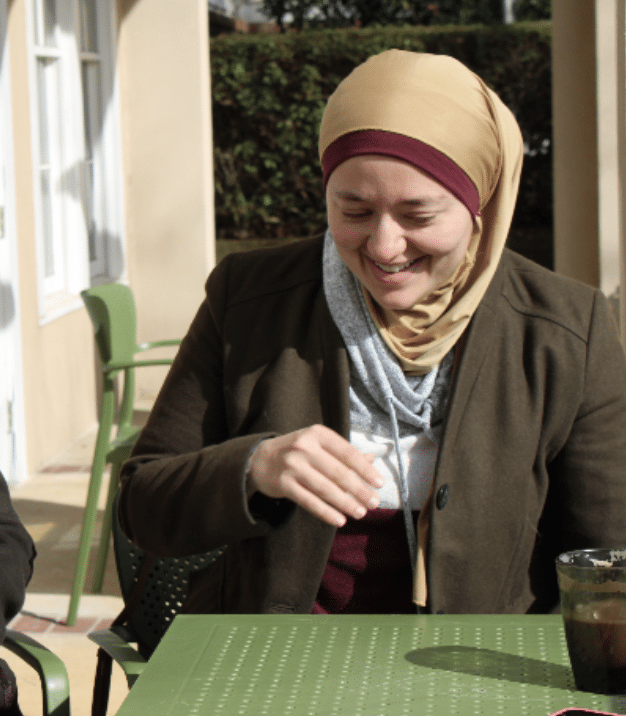
News that Ruwa Romman was entering the Georgia governor’s race “was the first thing I saw on Instagram when I woke up this morning,” said Ayesha Abid, a 28-year-old Grayson resident. “I was very excited. I love Ruwa.”
The first Palestinian American member of the Georgia House of Representatives, Romman announced her candidacy earlier today in an Instagram video, saying she’s “running for governor to raise the minimum wage, reopen hospitals, feed hungry kids, take homes back from corporations, and invest in small businesses.” She talks about her Georgia roots, describing growing up in Forsyth County, and standing beside her dad, a farmer in Elberton. “I’m as Georgia as they come,” she says, speaking from inside what appears to be a barn, wearing a flannel shirt. Seconds later, she says, “I’m also the granddaughter of Palestinian refugees.”
Khadija Mahmoud, a fourth grade teacher and Palestinian American living in Lawrenceville, said she was excited when she learned Romman was running. “I think that it’s very brave and something much needed.”
Romman is part of a wave of progressive politicians, including New York City mayoral candidate Zohran Mamdani and Michigan Senate candidate Abdul El-Sayed, who are unapologetic on their stance on Palestine—and are seeking to upset establishment Democratic politics on this and other issues. In Georgia, she joins a crowded field with six other Democratic candidates including former Atlanta mayor Keisha Lance Bottoms, State Senator Jason Esteves, and former DeKalb County CEO Mike Thurmond. The primary will be held in May.
Romman has represented House District 97, which includes parts of Duluth, Peachtree City, Berkeley Lake, and Norcross, since 2023. She’s not just the first Palestinian American elected to statewide office in Georgia—she was also the first Muslim woman elected to the Georgia House.
Ayesha, who was born in Lawrenceville and has lived in Georgia all her life, remembers volunteering at the Georgia Muslim Voter Project alongside Romman, who has participated in get-out-the-vote efforts in every election since 2014. “We were at the polls reminding people where to go and giving them water and snacks,” Ayesha said.
In the last couple years, Romman has been in the national spotlight for her outspoken advocacy on behalf of Palestinians suffering through Israel’s war in Gaza. Born in Jordan to Palestinian parents, Romman moved with her family to Georgia when she was a child. In 2024, she was put forth by the Uncommitted movement—which aimed to push the Democratic Party to back a ceasefire in Gaza—to speak at the Democratic National Convention. When the party denied the request at the last minute, Romman delivered the speech she would have given outside of the convention. (It was also published in Mother Jones.)
Her announcement also drew a wide range of Islamophic and xenophobic comments on social media calling her a communist, an anti-feminist, and incompatible with the West due to her religion. But it was no surprise to Yasmeen Jaser, a nursing student who was born in Rome, Georgia and considers Romman a family friend.
“We live in Georgia. Georgia is a Southern state and it’s a Republican state meaning that it’s going to follow its Republican representatives and Donald Trump,” Yesmeen said. “Of course there’s going to be Islamophobia. I experience Islamophobia all the time. It’s a norm in Georgia.”
When she was nine years old, Yasmeen moved with her family to Ein Yabroud in Ramallah, Palestine and lived there for six years between 2007 and 2013. She now lives in Lawrenceville and is a nursing student at Brenau University’s Masters program in Norcross.
She says she feels inspired, and empowered to see a woman who looks like her and wearing hijab, in a position of power, running for governor. “I’m very happy, I’m very proud,” Yesmeen says. “With a position like that, she should speak a little bit more about Palestine. Although it’s a dangerous topic to talk about, she is from Palestine so talking about it a little bit more would be good.”
Khadija, whose dad is Palestinian and mom is from Alabama, is not sure how the race for governor will play out, of course, but she has her worries. “If anyone’s vocal about, for example, the genocide that’s happening in Palestine, they’re quickly shut down.” She’s “curious to see if Romman will say anything about that, or if, because she’s Palestinian American, that they will try to shut her down before she can.”
While Romman’s race might be an “uphill battle,” Athens resident and tattoo artist Darya Kalantari told 285 South she’s finding hope in Zohran Mamdani’s campaign for mayor in New York. “I know New York and Georgia [are] two very different places. But still, seeing him blow up in the last few months, and following his success, it’s like: Okay, yeah, people-powered organizing can work.”
Darya, who is half German and half Iranian, helped organize a town hall in February – originally aimed as a space for residents to directly ask their congressman, Mike Collins, to answer questions about “changes [that] were rapidly happening during that time shortly after the inauguration.” But, Rep. Collins declined. “We were thinking like, well, who else can we have?” They decided to reach out to several progressive lawmakers, including Romman.
“She has no associations, she’s not our rep, but she’s like, I will come out and talk with y’all,” Darya said. Romman showed up at the town hall along with Josh McLaurin, a fellow state lawmaker (and current candidate for lieutenant governor) with whom she hosts the Instagram series What’s on Fire. “When they walked in the room,” Darya said, “I could just see all the college-age people, like, literally: Oh my gosh. We all knew who she was. It was so exciting.”
A lot of the people she works with, Darya said, are queer or people of color. “I can see and hear the stress from my clients,” she said. “Just that day-to-day struggle: I’m scared, I’m tired.” She sees it on a personal level too. “As a 32-year-old in America, a lot of my friends are struggling with healthcare, maybe they’re uninsured, or everything is crazy expensive, or a lot of them are having a hard time buying a house or paying rent.”
“I think especially younger people need something to believe in, someone that they feel is genuine and really fighting for people,” Darya said.
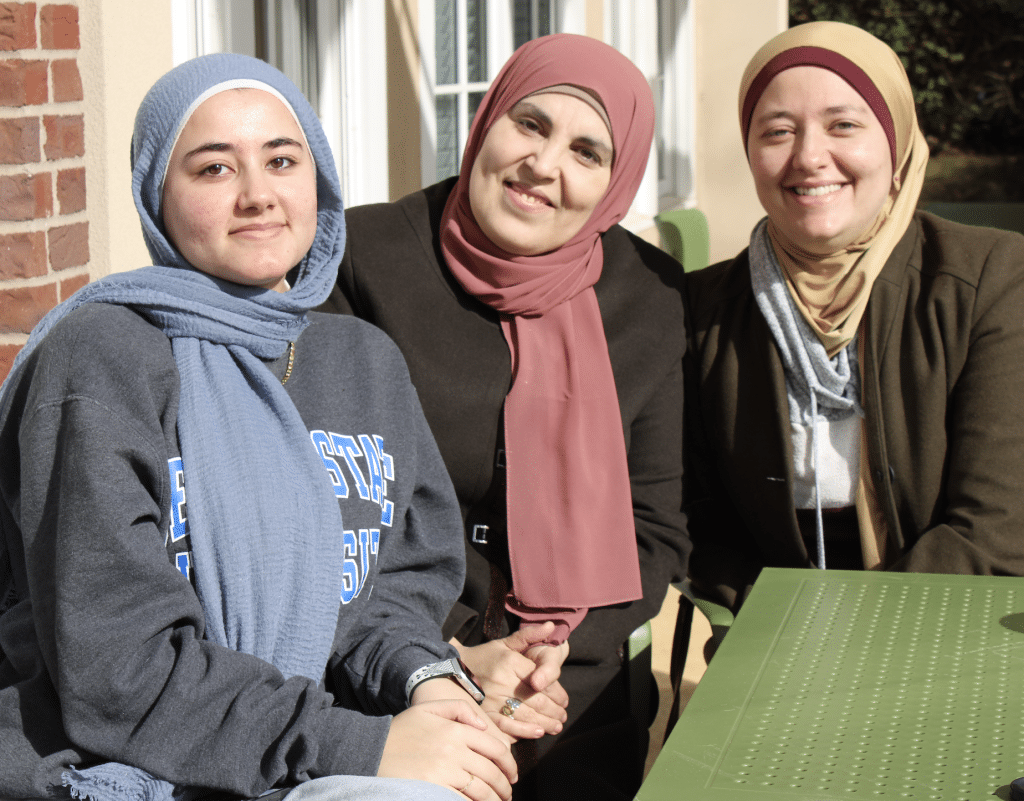
For Khadija, who has two kids aged 8 and 4, and has relatives in the West Bank, this moment feels almost miraculous. “I was just saying the other day to my family, I never thought we’d see the day where Palestine would be mentioned [in the] mainstream media.”
Growing up, she would tell people she was from Jordan, or Jerusalem. “We would shy away from saying I’m from Palestine, because then you get the question, like, you mean Israel?” So, she said, seeing Ruwa go from state lawmaker to running for governor , even if she doesn’t “talk about Palestine all the time” is “a step in the right direction, or at least a step to helping other people open their eyes to [see] who we really are.”
Yesmeen says she thinks Romman has a chance.
“If you’re approaching the right people, speaking with knowledge, with compassion, speaking with patience – a big one is patience, I think she has a good chance of winning. No doubt in my mind.”
Authors


Related Articles
“I didn’t expect it to happen in my family.”
A flurry of homemade videos points to a summer uptick in immigration arrests in the Atlanta area
Venezuelan man dies in immigration custody in Georgia
45-year-old Jesus Manuel Arenas-Silvia is the third person to die in ICE custody in Georgia this year.
“The side of hope”: Following tragedy back home, Atlanta-area Venezuelans find strength in one another
On a recent Sunday, nearly 100 volunteers gathered in Norcross to send supplies to the earthquake-ravaged country—and deepen ties in the diaspora.