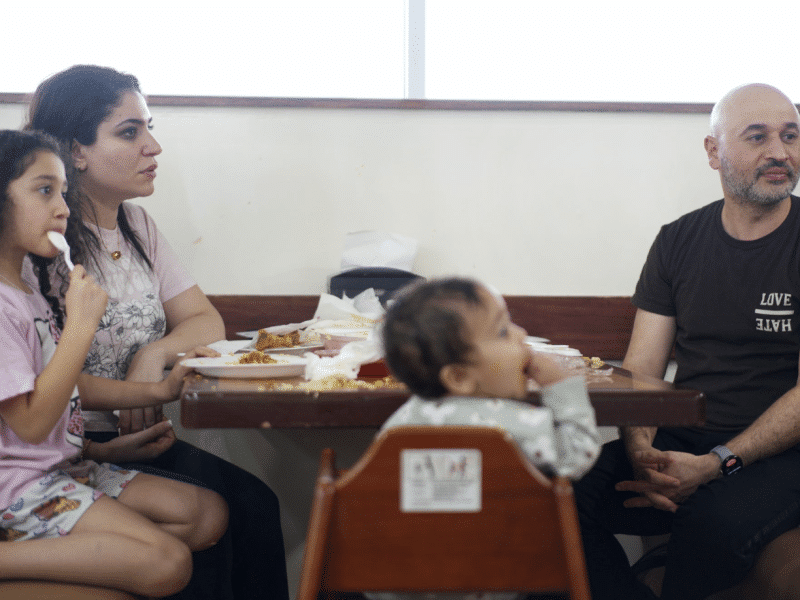
At a food pantry in Buford Highway, volunteers see an increased need
The slowdown in SNAP benefits is only the latest challenge for immigrant communities, already experiencing financial stress amid federal raids and rising deportations.
After arriving in Atlanta from Mexico 35 years ago, Noel was able for decades to find work as a cook at restaurants in the Buford Highway area. But two years ago, following a dispute with his boss, Noel lost his job—and hasn’t been able to find another one, depriving him of a reliable source of income. He has a sister in California who sometimes sends him $50 or $100, but it isn’t enough to change his circumstances. Now unhoused, Noel also lacks consistent access to food—and so he’s come to rely on support he receives from the food pantry at the Latin American Association, a nonprofit organization based along Buford Highway in Brookhaven.
“It has been really helpful,” Noel told 285 South in Spanish. (For privacy reasons, he asked to be referred to only by his first name.) “I’ve come here about three times in the past six months.”
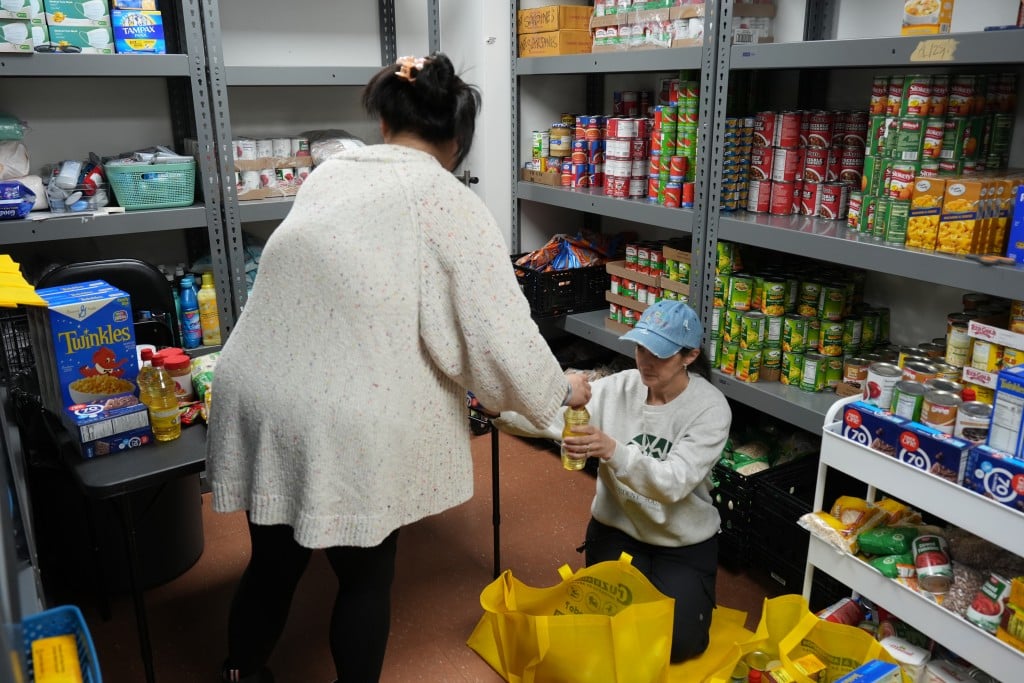
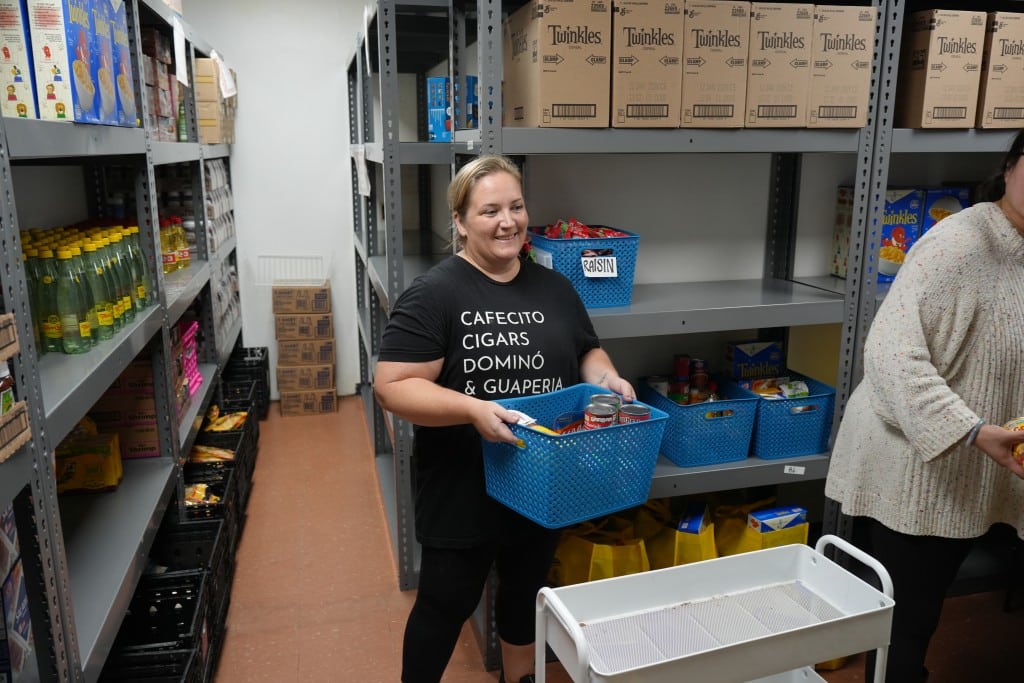
He’s not the only one: On a rainy Wednesday morning recently, two volunteers were busy packing yellow fabric bags of groceries for people who come in every day looking for assistance. A resource for the Hispanic community for decades, the LAA has long maintained a food pantry that it was able to renovate and enlarge during the first year of the pandemic. In late October, though, the pantry was preparing for another spike in demand as funds to the Supplemental Nutrition Assistance Program were set to run out on November 1 due to the government shutdown. In Georgia, 1.4 million residents rely on SNAP benefits, out of about 42 million people nationwide. On Monday, following orders from a federal judge, the Trump administration said it would only partially fund the benefits in November. Still, it’s not clear when those benefits will be disbursed.
This year, demand for food assistance has already been rising amid the Trump administration’s immigration crackdown: Some families have seen their breadwinners detained or deported, while others are increasingly anxious about going to work while federal immigration raids have become commonplace; yet more people, like those in the U.S. under Temporary Protected Status, have lost their legal status to work. Distribution at the LAA’s food pantry grew by nearly a third between August and September. (The pantry is open to anybody regardless of their background, but because of its location on Buford Highway, its clientele is mostly Latino.)
“We’ve seen a lot of cases, since the beginning of the year, where the mom comes in by herself, looking for, in general, financial assistance because the father, the head of the household, got deported, or he had to leave,” explained Laura Estefenn, communications manager for the Latin American Association. “She now became the head of the household, and she comes pregnant with two, three kids.” It’s not just SNAP recipients who’ll now have a greater need for groceries, Laura noted: It’s also government employees themselves, going without a salary as the shutdown continues.
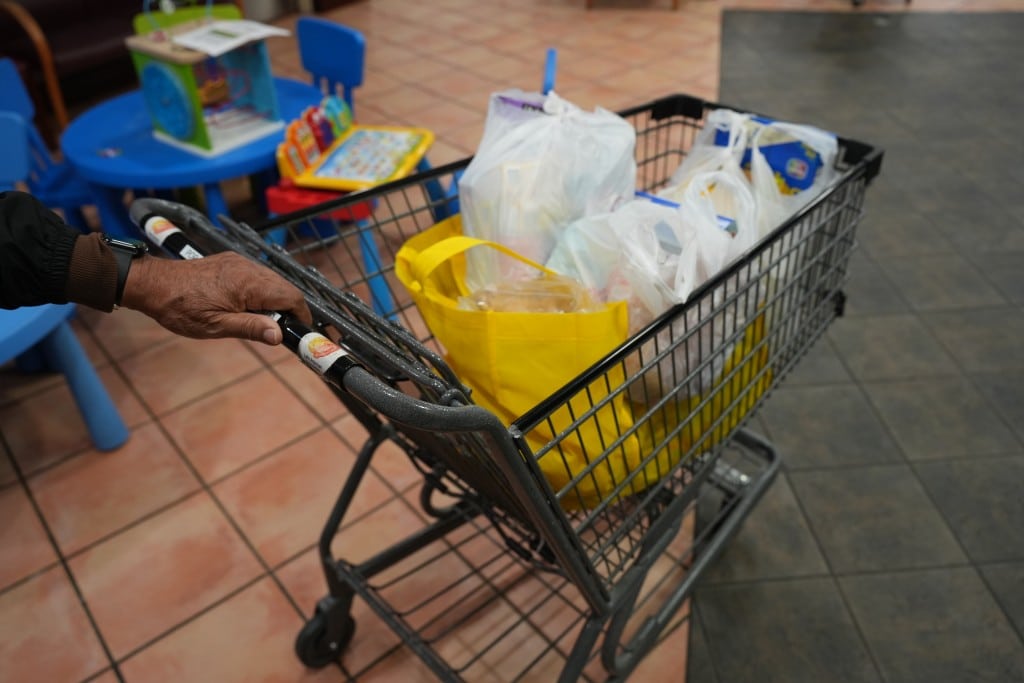
Maria, 74, a naturalized U.S. citizen who is originally from Mexico, used to be able to afford groceries with the help of supplemental security income—a cash benefit she received from the government because she has a heart condition that qualifies as a disability. But in 2023, she moved to a new apartment and stopped receiving the money. Still trying to resolve the administrative issue, she’s relied on the LAA’s pantry to get access to food. “I’ve come here three to four times,” said Maria, who has difficulty speaking because of her disability. “They recently told me I can come more often, but I usually forget when was the last time I came.”
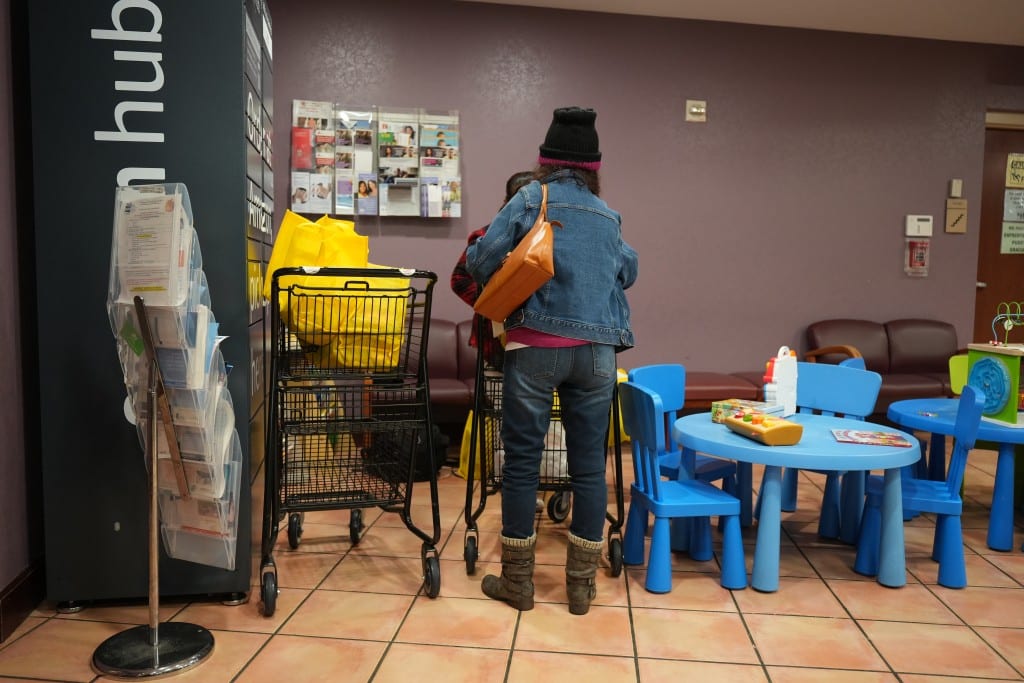
The food pantry operates on purchases it makes from the Atlanta Community Food Bank and a private distributor, Diaz Foods, as well as community donations. In the past, people could only pick up one or two bags of food (depending on the family size) once every two months. But with the increased need, the LAA is now allowing people to pick up the food once a month if they need to.
The food pantry opens at 8:30 a.m. every weekday morning, closing at 5 p.m. Monday through Thursday and 4 p.m. on Friday. People can drop off donations in the lobby area during those same hours. Teresa Acosta, the food pantry’s coordinator, said LAA has a particular need for culturally appropriate food, such as Maseca (corn flour) and beans, as well as dried foods and other nonperishables and almond or other shelf-stable milks.
Laura explained that LAA prefers monetary donations—which are tax-deductible and can be made through the organization’s website—to buy food at wholesale prices. When making a contribution, donors can specify in the comments field that they want it to go to the food pantry.
People interested in volunteering at the pantry can sign up through Hands On Atlanta and participate in any of the upcoming distribution events: November 14 at the LAA’s Gwinnett Outreach Center, November 19 at Las Colinas Apartments on Buford Highway, and November 22 at the LAA’s Atlanta Outreach Center.
For Teresa, who started working at the food pantry in September after closing her catering business, being able to work full-time feeding people feels rewarding and encourages others to join and support their communities.
“People aren’t talking to each other about these things, so I would just say, talk to your friends and neighbors. Are there people in need who don’t know that these resources exist? Or are you in a position to come help? Whether that be monetarily or with your time and talent, just talk to your friends, neighbors, and the people that need help, send them our way.”
Author

Related Articles
Atlanta advocates demand: “Get ICE out of Home Depot now”
As popular spots for immigrant day laborers to find work, Home Depot locations across the country have been repeated targets of ICE raids. Now advocates are pressuring the Atlanta-based company—an official sponsor of the upcoming World Cup—to take a stand.
Woman who assisted in federal abuse investigation, arrested at Atlanta airport and deported days later
“A slap in the face,” her attorney says describing her client’s situation, who had a pending U-visa application