
An infectious disease expert talks about how her job just got a lot harder
Emory physician Paulina Rebolledo, who also practices at Grady Memorial Hospital, talks about vaccinations, mental health, and barriers to care for Latinos during difficult times
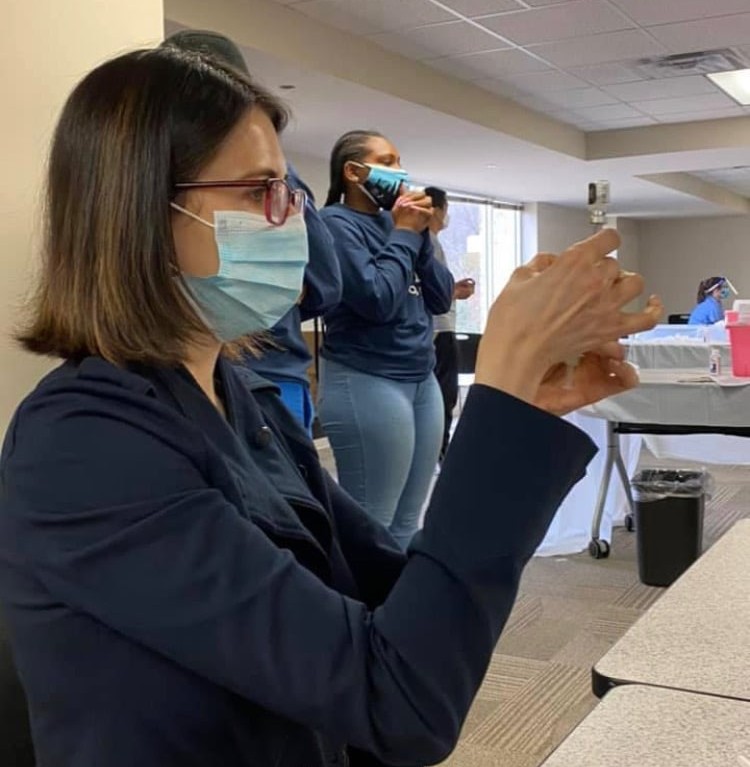
Dr. Paulina Rebolledo remembers walking door to door in rural Mexico, as a youngster, and persuading families to get their children vaccinated. “I was always very attracted, growing up, because of the social components that are involved in medicine,” she told 285 South. As a high school student, she also volunteered with a local organization that provided care for people living with HIV in Mexico.
These days, Paulina starts each morning at the Emory Hope Clinic in North Decatur, immersed in medical research, reviewing the protocols for clinical trials –which are documents that contain all the details and activities related to a study, such as the number of participants needed to understand if a vaccine is safe. An infectious disease specialist at Emory University, she’s done everything from studying rotavirus in infants in Bolivia to improving healthcare for Hispanic communities in Georgia. By the afternoon, Paulina heads over to Grady Memorial Hospital’s Ponce De Leon Center, where she cares for patients with HIV.
In the early days of the pandemic, she played an especially crucial role: working to make vital vaccine information available in Spanish. Now, her work is challenging on another level: the communities Paulina works in are facing a harsh immigration crackdown, and she’s also contending with federal cuts to important medical research. 285 South spoke to Paulina Rebolledo about what it’s like to do her work right now, and how her patients are, or aren’t, able to get the care they need.
The interview was edited for brevity and clarity.
Can you tell me about your work with Hispanic immigrant communities in Atlanta?
My work really solidified during the Covid-19 pandemic. In those early days of the pandemic, as you can remember, there was not a lot of information. Even as we started to learn more about the disease and how people were affected, there was really no information in Spanish. I sort of served as a liaison to help through social media and different platforms, with the Latino Community Fund and other organizations, to try to disseminate information to the Latino community. We set up testing and vaccination sites. We went to churches, shopping centers, to apartment complexes in Buford Highway, and visited South Georgia to offer vaccines and answer any questions the migrant population had.
I also care for all types of patients at Grady Memorial Hospital. We have Spanish-speaking patients who come to our hospital, as well as to our Ponce De Leon Clinic. So those connections, and just looking at the toll that Covid was having on the Latino community, made me start to become increasingly involved with the community outside of clinical medicine.
What are the main concerns you’re seeing among the Hispanic community right now?
There are a lot of questions around the prevention of diabetes and high blood pressure, especially as we’ve seen an increasing rate of obesity overall in children, but specifically among Latinos. The need for mental health services is another concern. There are questions about how we deal with the stressors of daily life, and how that impacts how our children sleep or how our children eat. That piece really comes up no matter what topic we’re discussing, and I feel there’s a huge need to address that.
Is that a new need that you’re seeing in the community, or has it always been like that?
I don’t know if it’s necessarily new. Maybe it’s just more heightened. It seems like it has been aggravated by both the pandemic and the isolation, and then by all the challenges that are currently occurring in terms of immigration. It’s like something has lit the fire. Maybe the mental health piece was always there, but it seems to have become a lot more pronounced.
What do you suggest they do when they tell you they’re having issues with their mental health?
I try to emphasize their social support, and to try to tell them to find things in their everyday life that bring them joy, such as being with their family, dancing, or singing. I try to remind patients that even though there are many things they cannot control, there are some things that one can control, and one can try to feel fulfilled as much as possible with those moments that bring joy.
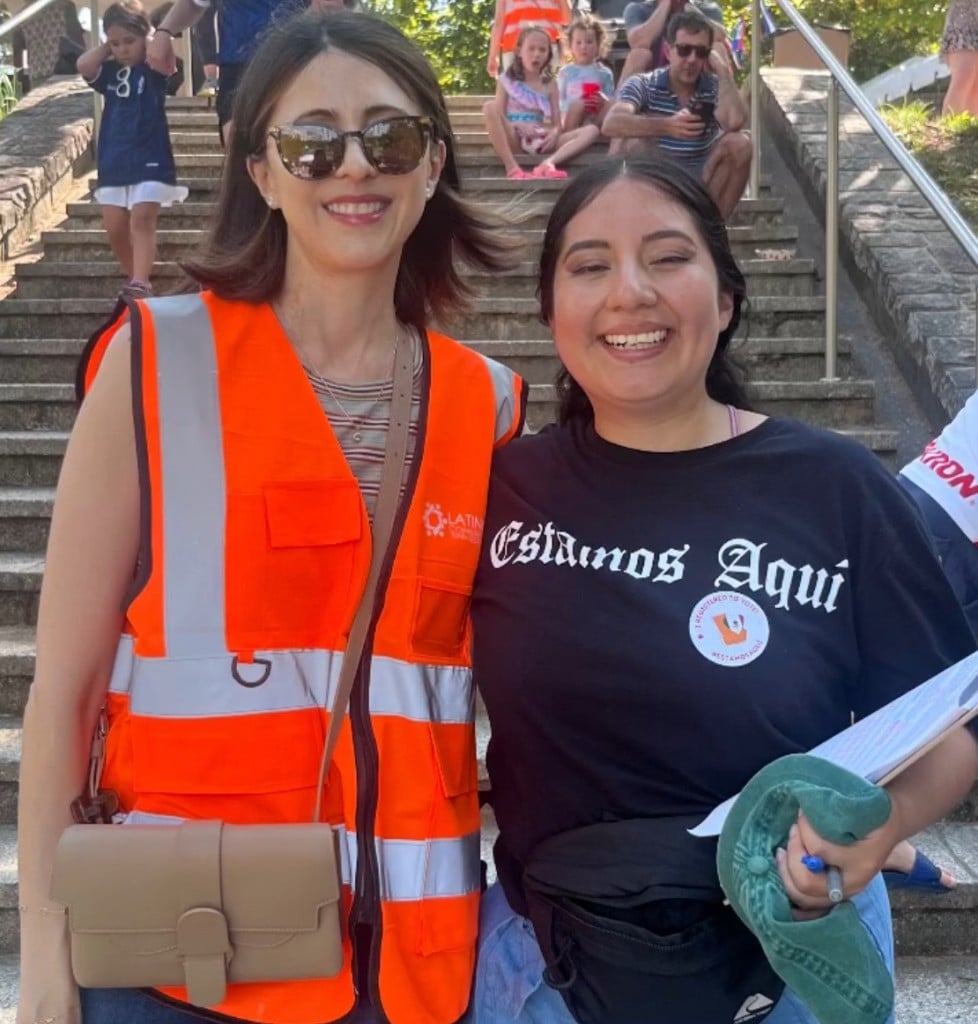
What are some of the barriers that Hispanic families have to getting immunizations?
Access to healthcare is a big one, the challenges with also having to juggle multiple jobs, or the distance that they need to travel to get to the doctor, not having time off from their work, and transportation. There’s definitely concern because there are no longer safe spaces. I’m not saying that that applies to absolutely every Latino, but I think there’s a lot of Latinos that are of mixed immigration status, or, in general, you don’t know what the cost of seeking care will be. So I think there’s a lot of uncertainties and a lot of fear in general in the community that makes it harder for people to feel comfortable or know where to go.
How does that impact your job as a clinician and the work of your colleagues?
When you start to see all of these barriers, you worry about, if people can’t come and pick up their meds, what that does for them as an individual—but also from the public health perspective. The same thing with vaccines. I care about the patient, but I also care about the general public. If one patient not getting vaccinated starts to become 10 or 100, then obviously the effect that that will have on the community as a whole is very concerning.
Is doing your research becoming harder with the federal funding cuts?
We’ve had several grants that were initially cut, and then some of them have been reinstated, following some of the federal lawsuits. It’s certainly become more challenging to seek additional funding because of all the NIH cuts, and again, because the vaccine area is sort of under fire. Some of them had to do with post-acute syndrome from Covid—what we call long Covid—and there were others in HIV. In some way or another, we’ve definitely had a lot of impact on our funding based on infectious diseases in general.
You also have an interest in increasing the representation of Hispanics in clinical trials. Why is that important?
A lot of the vaccines that we study don’t affect just one population; they affect all of us. When you can talk to someone who says, “Oh, I participated in clinical research, and I know what this is,” or someone has knowledge around that, then when the time comes for a new vaccine to come out, people understand. It just gives it more confidence, as opposed to this black box of people thinking that vaccine studies are like experimenting on people and all that mistrust.
I feel like opening the doors and welcoming people into the world of clinical research just makes things more transparent, and it makes them understand that every single vaccine and every medication that we have has gone through some sort of process. Just by having them participate, it opens their mind, and it opens the door for them to understand why this is important and the process around how we get approvals for all these different products.
You chose a career in science—a path that’s unique for Latinos in the U.S. Why are you encouraging other young Hispanics/Latinos to do the same?
Because of the composition of the population in the U.S., and the same way that we talk about clinical trials, it’s important to have representation in all of the different STEM (science, technology, engineering, and mathematics) fields, and particularly in healthcare, where people are caring for others, so that when someone comes into the hospital they can see someone who looks like them or is culturally the same.
It doesn’t mean that the care is necessarily going to be different, because ultimately, I think everybody in the health care field is there, for the most part, for the right reasons. But it certainly helps with that relationship of trust.
Author
Related Articles
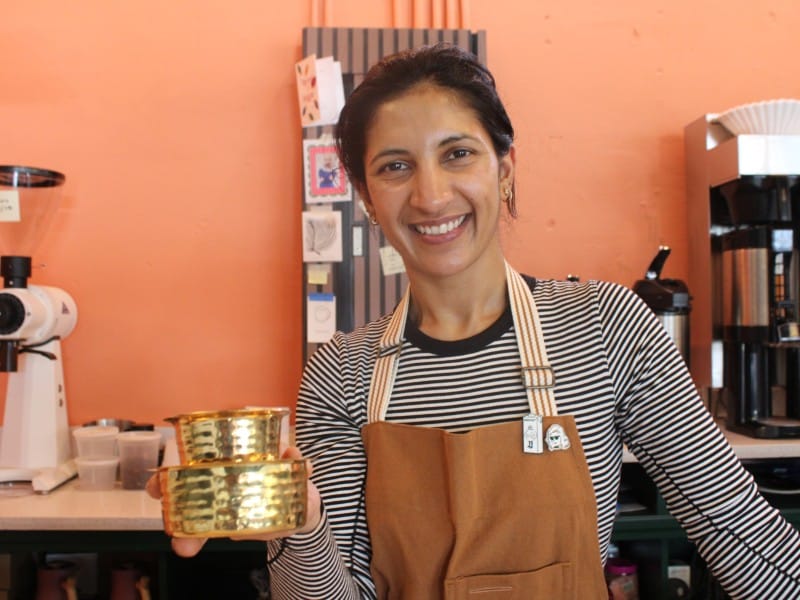
“Everybody has a ‘Raani’ in their house”
At Raani Coffee on Moreland Avenue, Praveena Sundarraj honors South India’s coffee traditions—and builds a new kind of “third space” for coffee aficionados and their parents
These Latinos are running for a cause: each other
Los Corridos, an Atlanta based run club, pivots to support community, alongside jogs on the Beltline
“Still pain…but in my mind I’m feeling good”
A Snellville based Laotian monk who lost his leg in the Walk for Peace, is back home and local residents are eager to embrace him, and his message