As HB1105 is signed into law, steps already underway to ensure security for immigrants.
Among them: a rideshare program offering free rides.

LEA ESTE ARTÍCULO EN ESPAÑOL
While House Bill 1105 was sitting in front of Governor Brian Kemp on Wednesday, Andrea was standing in the hot sun outside the Georgia State Capitol. She was joined by dozens of others. They held signs and chanted slogans against what they believed is an anti-immigrant bill that targets their communities. Reporters with both Spanish-language media and local mainstream outlets circled around them, snapping photos and livestreaming the rally on their phones.
That same afternoon, Governor Kemp was at a ceremony at the Georgia Public Safety Training Center in Monroe County, where he signed HB1105. Most of the law goes into effect immediately, requiring police and sheriffs’ departments across Georgia to report the immigration status of those they have arrested and jailed, to Immigration and Customs Enforcement (ICE). Lawmakers began debating the bill in the last legislative session, following the killing of 22-year-old nursing student Laken Riley on the UGA campus in Athens. A 26-year-old Venezuelan man, Jose Ibarra, who had been arrested by ICE for entering the United States unlawfully in 2022, and then released on parole, has been charged with her murder.
The bill’s signing has exacerbated fear among many immigrant communities, especially for people without legal residency documents, with pending immigration paperwork, or in mixed-status families across Metro Atlanta. In a sprawling car-dependent metro region, many are worried about an increase in police checkpoints and routine traffic stops that could be used as a tool to catch and deport them.
Minutes before Kemp had officially signed HB1105 into law, Andrea, who asked for her last name not to be used, said the law would change her life “totalmente.” Totally. “Imagínate, todavía no tengo esto definido, mi proceso migratorio. La policía me puede agarrar por cualquier, lo que sea…” Imagine, I still don’t have this defined, my immigration process. The police can catch me for anything.
She said she’s afraid she could be sent back to Nicaragua, where she says she faces political persecution.
Andrea lives in Norcross where she said she works at a Mexican business that sells tortillas, corn flour, and other groceries. Without residency papers, she is unable to get a driver’s license, and is concerned about the repercussions of driving without one. She says she pays for a taxi to take her to and from work, which costs her about $100 a week.
The weekly taxi costs add up.
“La licencia es una necesidad para transportar a un lugar a otro, porque el trabajo no estan al lado donde vive, estan a la distancias largas,” she said, on the sidelines of the rally on Wednesday. The license is a necessity to transport from one place to another, because work is not next to where you live, it is long distances away.
Jorge, who asked for his real name not to be used, is unable to take taxis or public transport to work. He’s a landscaper who said he moved to Georgia two decades ago from Central America, and needs to take his tools to his job sites.
He took a brief break from working to speak to 285 South about the new law, apologizing for the sound of machinery in the background. “Va a afectar todos, no importe de donde vengan.” It’s going to affect everyone, no matter where they come from.
“Va a afectar todos, no importe de donde vengan.” It’s going to affect everyone, no matter where they come from.
“Jorge”, landscaper
Especially, he added, those who don’t have driver’s licenses. “Es un muy grave problema.” It’s a very serious problem.
It remains to be seen how the law will play out on the ground in interactions between law enforcement officers and those without documents.
Jorge is aware that the law would only require officers to report to ICE when people are jailed, but he says he doesn’t trust all police officers to be fair. “Some officers are good people. But some officers, they don’t like immigrant people. They’re going to make more checkpoints for communities without papers,” he said, switching to English. “They play with people, play with families.”
Despite the new law, Jorge said he says has to go on with the way he lives his life. He has a son who’s in elementary school and doesn’t plan on leaving. “I have to live here. And I’ve been here. When I came from my country I came to Georgia, and I’m still in Georgia. I just trust God. And wait for whatever happens. I need to pray God keeps me safe.”
Berenice Rodriguez has been sensing a change in some of the communities she works with since state lawmakers started debating the bill. As the Civic Engagement and Organizing Director of Asian Americans Advancing Justice – Atlanta, a nonpartisan nonprofit, she’s regularly in touch with the canvassers who work in the organization’s satellite office in Athens, as well as those who are knocking on doors around neighborhoods in Metro Atlanta.
“There were people who were scared to leave their house, they were scared to drive to work, drive to school.”
The anxiety is evident in some Spanish-language Facebook groups in the area, where many of the posts alert users to traffic stops and police activity on roads, warning people to avoid those areas.
Rodriguez told 285 South that members of the community with licenses had started driving people so they could move around without the worry of being pulled over. But, she said, relying on them wasn’t sustainable. “So I made the decision to start a rideshare program.”
“There were people who were scared to leave their house, they were scared to drive to work, drive to school…So I made the decision to start a rideshare program.”
Berenice Rodriguez, Asian Americans Advancing Justice – Atlanta
On April 12, Asian Americans Advancing Justice – Atlanta posted information on Instagram, in Spanish, Vietnamese, Korean, and Chinese, about how folks could get free rides. “Ensuring a safe journey home is crucial, especially for community members who may encounter challenges,” it read.

“Basically, we provide Uber codes,” said Rodriquez. Those seeking free uber rides were instructed to text “RIDE” to 470-816-3329, and follow the instructions.
“We went through $1,000 worth of vouchers in 10 days,” she said.
Berenice says the organization will continue the program for as long as they can, but she knows that free Uber rides aren’t a long term solution.
“We’re really trying to elongate the time that we have the program active until we decide what our next steps are.”
Back at the Capitol, just steps away from MLK Jr. Drive, when Andrea heard about the rideshare program, her face lit up. “Excelente, muy bien. Esto me da alegría. Nos ayudaría no sólo económicamente, sino también a nuestra seguridad sintiéndonos seguros.” Excellent, very good. This gives me joy. It would help us not only financially, but also our security by feeling safe.
Author

Comments (1)
Leave a comment
Related Articles
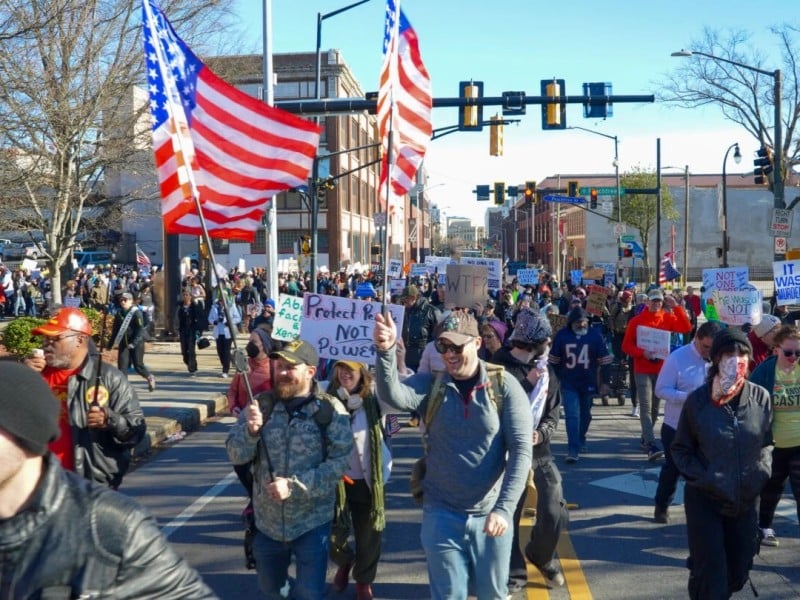
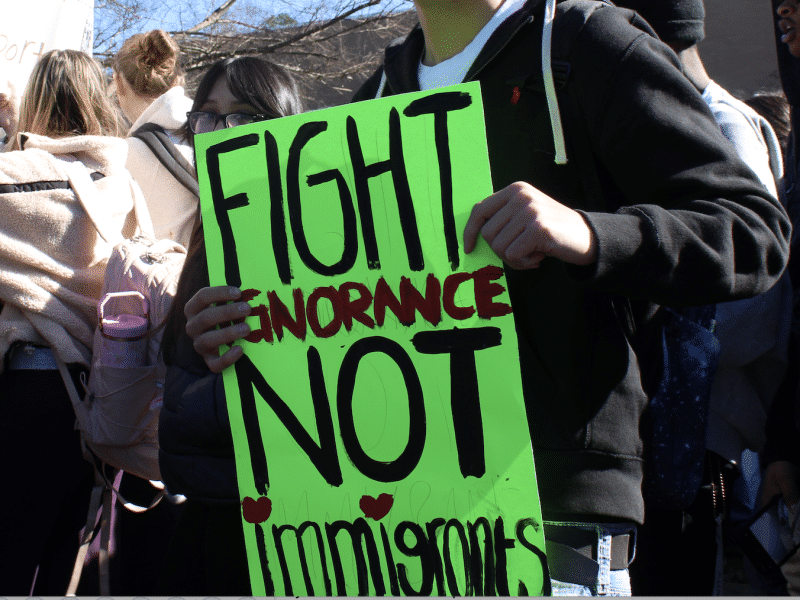
“The world just seems like it’s against them. So it’s really hard when the school does this on top of everything else they’re dealing with”
Cobb County parent speaks out, shaken, after conversation with principal about school walkout
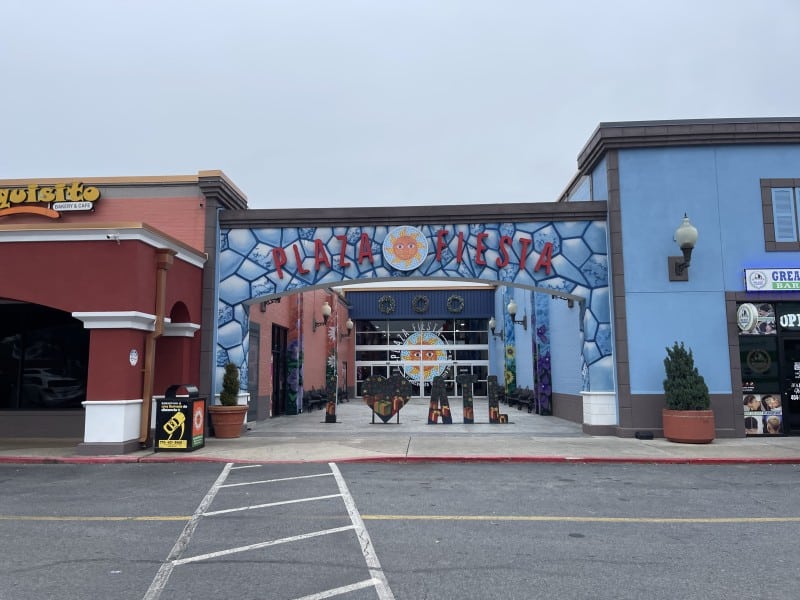
En Plaza Fiesta, conocida como el corazón de la comunidad hispana en Georgia, “casi no entra gente”
Trabajadores y dueños de tiendas del centro comercial latino dicen que el negocio ha estado lento durante el último año, lo que ha provocado reducción de horarios y un futuro incierto
Thank you for reporting this. I’ll be interested to see how they plan to support folks, if you plan to follow this.