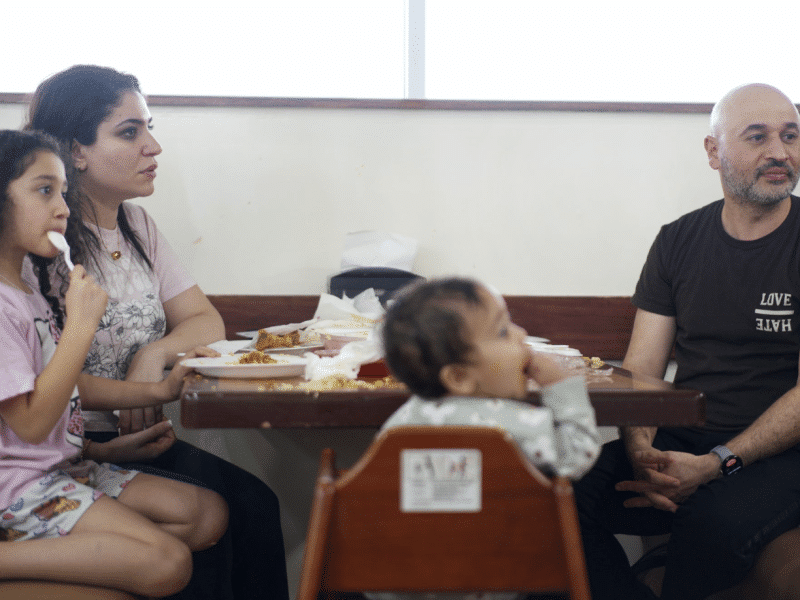
Atlanta nonprofit helping immigrant survivors of violence loses federal funding
On the first day of Domestic Violence Awareness Month, the Department of Justice said it was ending a grant that supported the Georgia Asylum and Immigration Network’s work assisting immigrant victims of crime, including domestic violence and human trafficking.
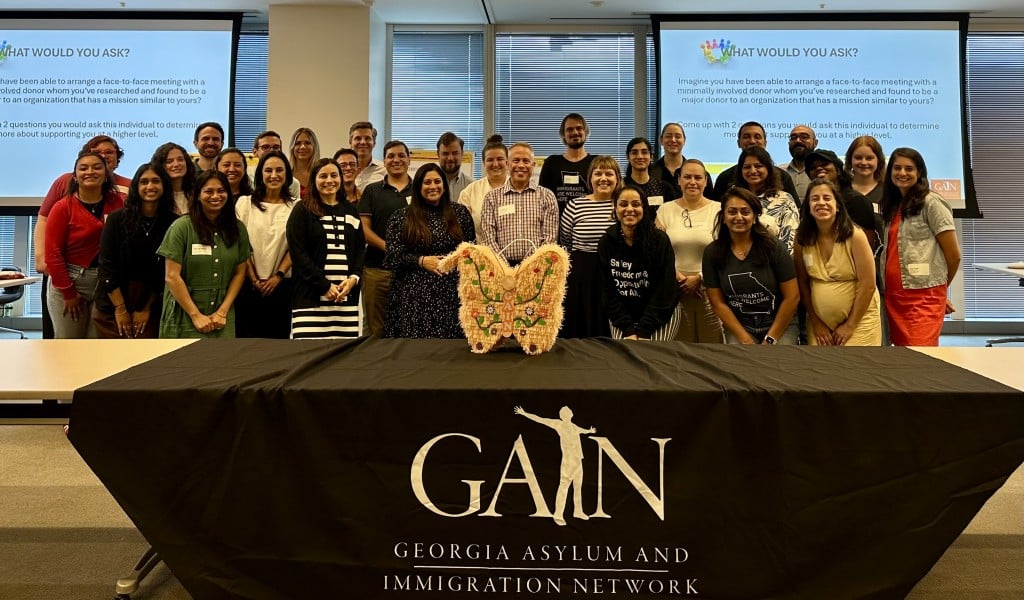
On October 1, the Department of Justice notified the Georgia Asylum and Immigration Network (GAIN) that it wouldn’t be renewing a three-year, $750,000 grant that supports the organization’s work with victims of crime in the U.S., including survivors of human trafficking, domestic violence, and sexual abuse.
The grant was a three-year renewal from a previous three-year period and represents almost 10 percent of GAIN’s budget, said Alpa Amin, executive director of the organization, which provides free legal services to immigrants. It is also the only and largest federal grant GAIN has had, and lost.
“The timing of the decision feels very intentional and pretty disheartening,” Alpa said. “It comes on the first day of Domestic Violence Awareness Month, and it feels like it was almost designed to intimidate those of us who are on the front lines of doing this work.”
The news also comes at a time when ICE detentions in Georgia are up – the state ranks fourth in the country with the most ICE detainees, according to September data collected by Syracuse University’s Transactional Records Access Clearinghouse (TRAC). In 2025, the number of detentions has increased following Georgia’s enactment of HB 1105, which requires local law enforcement to collaborate with ICE through 287(g) agreements. Nationally, 71.5 percent of current immigrant detainees have no criminal convictions, although it is unclear the specific legal status of those detained.
In the past, Alpa said, about 80 percent of the grant helped pay for attorneys, legal assistants, and other personnel who work directly with immigrants to help them identify critical legal protections. These include T-visas for survivors of human trafficking, U-visas for victims of certain crimes who suffered mental or physical abuse and help law enforcement, and Violence Against Women Act (VAWA) self-petitions for immigrants who have suffered battery or cruelty by a U.S. citizen or lawful permanent resident.
In 2024, GAIN’s Victims of Violence program provided legal services for hundreds of survivors, including 266 cases served through direct representation and pro bono attorneys, according to its annual report.
Although GAIN has been trying to get more information about why the grant was not renewed, the organization hasn’t heard back from the Department of Justice. Alpa said that’s possibly due to the shutdown of the federal government that began October 1.
285 South reached out to the DOJ for comment but didn’t receive a response.
The cut also comes amid attempts by the federal government to halt funding for lawyers who represent unaccompanied minors, although courts have ordered the funds be restored while litigation is ongoing. Still, local organizations have felt the impact. The Tahirih Justice Center, a national nonprofit with a local office that serves immigrant survivors of gender-based violence, temporarily paused the intake of unaccompanied minors, Vanessa Wilkins, Tahirih’s executive director, told 285 South in May.
Raksha, a nonprofit serving Georgia’s South Asian community, also received notices from the Department of Justice earlier this year that some of its federal grants would be terminated. Nationally, hundreds of organizations received notices this spring that grants from the DOJ’s Office of Justice Programs were being terminated.
Immigrant victims of crime aren’t just at risk of losing legal support, Alpa said—at the same time, they’re increasingly at risk of being taken into federal custody. That’s also a new development, Alpa said: “If you have a pending application with the government, you were deemed to be a low priority for immigration enforcement, and that’s really no longer the case,” she said. “So, not only are we seeing fewer services available to help people apply for these remedies, but even if you have applied, it still won’t prevent you from being picked up by ICE.”
She explained that cutting funding for this type of work is not only an immigration issue, but a community safety matter that affects all families in Georgia. At a national level, some argue, crime-prevention efforts are facing setbacks due to the federal funding cuts. “When survivors are afraid to come forward, our communities are less safe,” Alpa said. “This decision undermines not just the safety of immigrant survivors, but the safety of every Georgian who depends on our justice system to work for all.”
Alpa said it’s critical that more people speak out. “What I also want to see is more state and local officials and private philanthropy stepping up to acknowledge that immigration legal services are an entry point for survivors’ safety, and to say out loud, without hesitation, that all survivors matter,” Alpa said.
Author

Related Articles
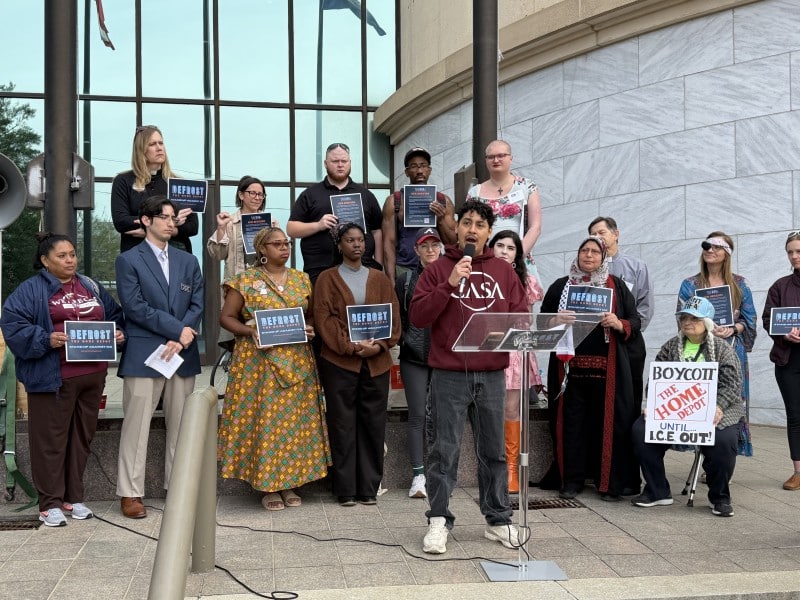
Atlanta advocates demand: “Get ICE out of Home Depot now”
As popular spots for immigrant day laborers to find work, Home Depot locations across the country have been repeated targets of ICE raids. Now advocates are pressuring the Atlanta-based company—an official sponsor of the upcoming World Cup—to take a stand.
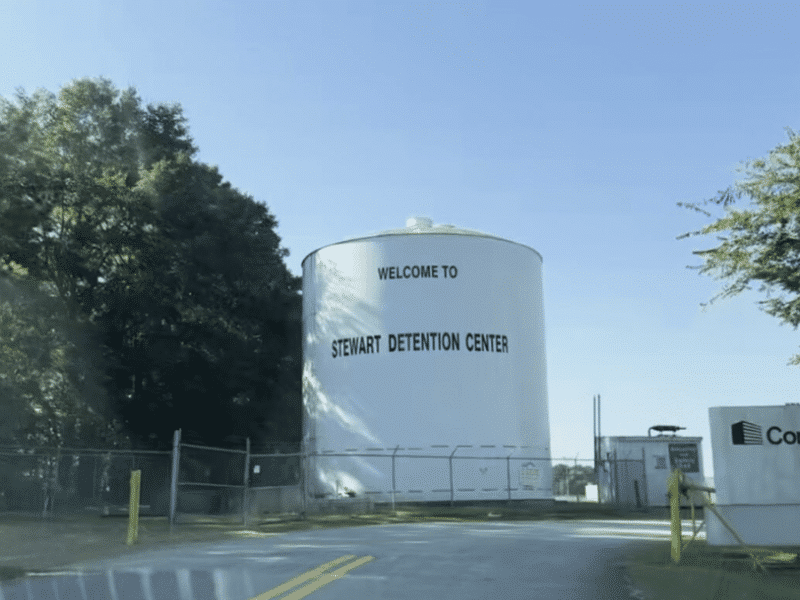
Woman who assisted in federal abuse investigation, arrested at Atlanta airport and deported days later
“A slap in the face,” her attorney says describing her client’s situation, who had a pending U-visa application