Families continue to report that their SNAP money is disappearing—but this year, they won’t be reimbursed
Despite new security features, the problem of food stamp thefts persists—and finding free food isn’t easy, especially for immigrant and refugee families.
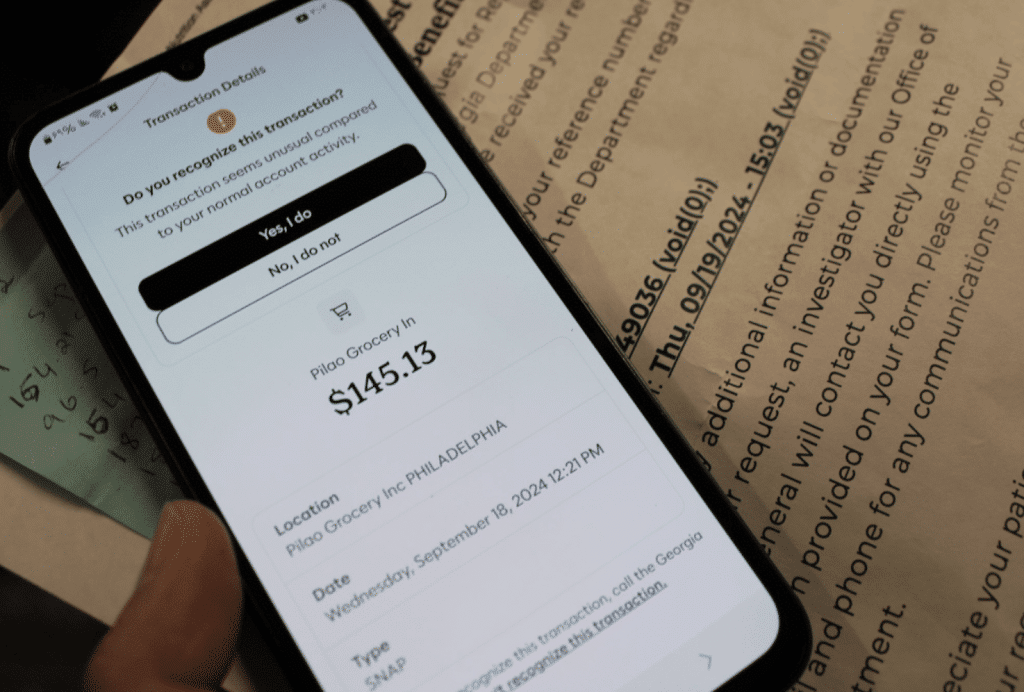
For the second year in a row, the theft of food stamps in Georgia is rising—and immigrant and refugee communities are among those feeling the pain.
Many newly arrived immigrants rely on federal Supplemental Nutrition Assistance Program (SNAP) benefits as they find their footing in their first few months in the U.S. (The program is currently under threat, as the Senate considers a Trump administration backed bill that, if passed, could mean major cuts to SNAP). To access the funds, commonly known as food stamps, SNAP users are given a card that they can use like a debit card to buy groceries. But the cards are vulnerable to scamming, and many immigrant SNAP users have reported being shocked to go to use their cards—only to find that their funds have been stolen.
“We have clients every day complaining about SNAP theft,” said Shaista Amani of the Afghan American Alliance of Georgia (AAAGA), an organization that supports families from Afghanistan.
Last year, after 285 South reported on a wave of SNAP thefts affecting members of the local Afghan community, the Georgia Department of Human Services (DHS)—which administers SNAP funding on behalf of the federal government—said it would make up the lost funds. But the program that enabled that, the SNAP Replacement Benefit program, ended at the end of 2024. That means that victims of food stamp theft won’t be reimbursed any longer for the benefits they’ve lost.
Now, said Shaista, she’s teaching clients how to use the new lock/unlock feature on the EBT app, a technology DHS added in December 2024 in response to the thefts. The feature makes it possible for users to keep the card locked, and therefore unusable, until they unlock it when they’re ready to pay for their food. But “even that isn’t foolproof,” said Shaista. “In many cases, as soon as a family unlocks their card to make a purchase, the benefits are stolen instantly.”
For families who have come here as refugees, and have to learn English and learn to drive or navigate limited public transportation options before being able to get a job, food stamps can be a lifeline. “SNAP is the only reason many newly arrived families are able to put food on the table,” Shaista said. “Given the current challenges with employment, low wages, and the extremely high cost of housing, most families are barely managing to cover their monthly bills.”
“SNAP is the only reason many newly arrived families are able to put food on the table. Given the current challenges with employment, low wages, and the extremely high cost of housing, most families are barely managing to cover their monthly bills.” – Shaista Amani, Afghan American Alliance of Georgia (AAAGA)
Ellen Brown, a spokesperson from Georgia DHS, told 285 South that since the beginning of 2025, the agency has received more than 10,600 stolen SNAP claims—which, if that rate persists, will mean a greater amount of food-stamp theft in 2025 than in 2024.
Brown said that although SNAP recipients will not be reimbursed for stolen funds, they can continue to report thefts by contacting DHS’s Office of Inspector General at 877-423-4746 or inspectorgeneralhotline@dhs.ga.gov. She also said that DHS “continues to investigate all allegations of SNAP fraud it receives and collaborates closely with state, federal, and local law enforcement agencies.”
285 South followed up with the FBI for an update on the investigation into SNAP thefts. Tony Thomas, a spokesperson from the bureau’s Atlanta public affairs office, responded in an email: “Per DOJ policy, we cannot confirm nor deny the existence of an investigation.”
If those who have had their SNAP benefits stolen need food, DHS’s Ellen Brown said, they can go to FeedingGeorgia.org and foodfinder.us to find lists of food banks and food pantries.
To see how this works in practice, 285 South clicked on the Feeding Georgia link and found the closest food bank: The Atlanta Community Food Bank. Dialing the number on the website, we went through a phone tree that directed us to text “find food” to an 888 to find the closest food bank. The response to that text message was “This was NOT a valid keyword.” We then tried another number listed on the website, and texted back and forth with a bot that asked for personal information. The bot shared a few narrow slots of time where we could pick up food from a pantry in Stone Mountain.
Finding a nearby food pantry through foodfinder.us was a similar process. We clicked on the nearest location and were taken to a website with its operating hours: three hours in the morning, four days a week, all weekdays. We then called the listed number, which went to a voicemail, since the call was not during operating hours. The outgoing voicemail message said people must be deemed eligible for food and, once eligible, must make an appointment to come to the food pantry. The voice then said, “Due to a high volume of calls, we are unable to listen to or return any phone messages.”
Both websites were in English and had no additional language options. The Atlanta Community Food Bank website had a Spanish language option.
Shaista said that AAAGA is also seeing a growing number of referrals to food banks too, but accessing them isn’t always straightforward. “Many families have transportation issues—fathers who typically drive are working during the day, and mothers are left walking up to two hours just to reach the nearest food pantry. The only way they’re able to bring food back is by using their children’s strollers.”
Authors


Related Articles

“No more discussion about ICE will be permitted”
Inside the Dekalb County School Middle School advisory meeting that shut down concerns over ICE
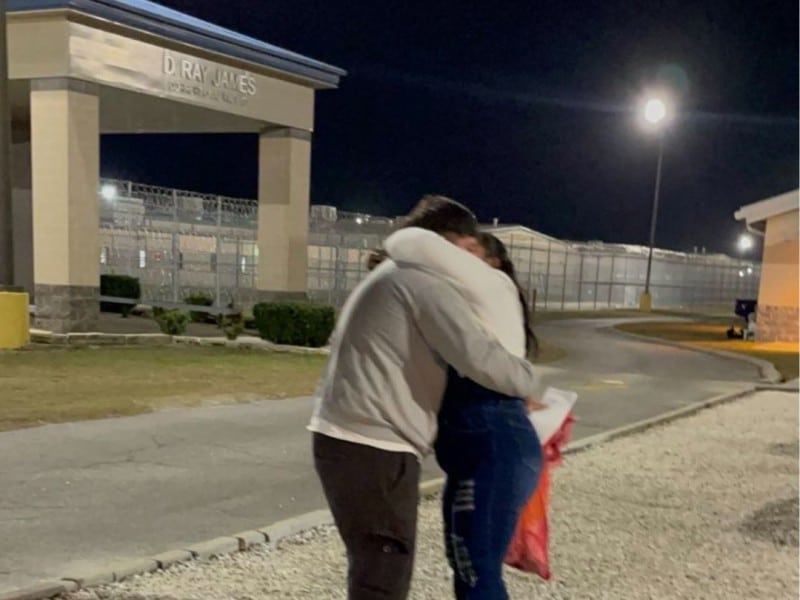
“There’s three people that are free”: More than 3 months since the Hyundai raid, immigrant rights group secures release of workers
Still, legal support is needed to support several of the workers who are detained at the Folkston ICE Processing Center.
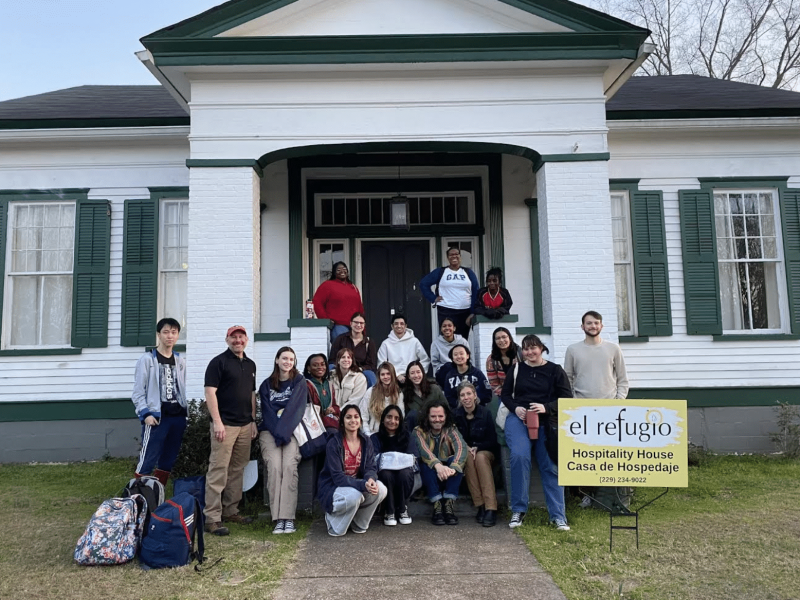
Specific ways you can support Atlanta’s immigrant and refugee communities right now
We’ve been gathering information about what concerned folks can do to support immigrant and refugee communities.