
“How can you be a beacon? How can you stay above the noise?”
From after-school programs to food drives, Celia Robles—an apartment manager on Buford Highway—is laser-focused on bringing her tenants what they need.
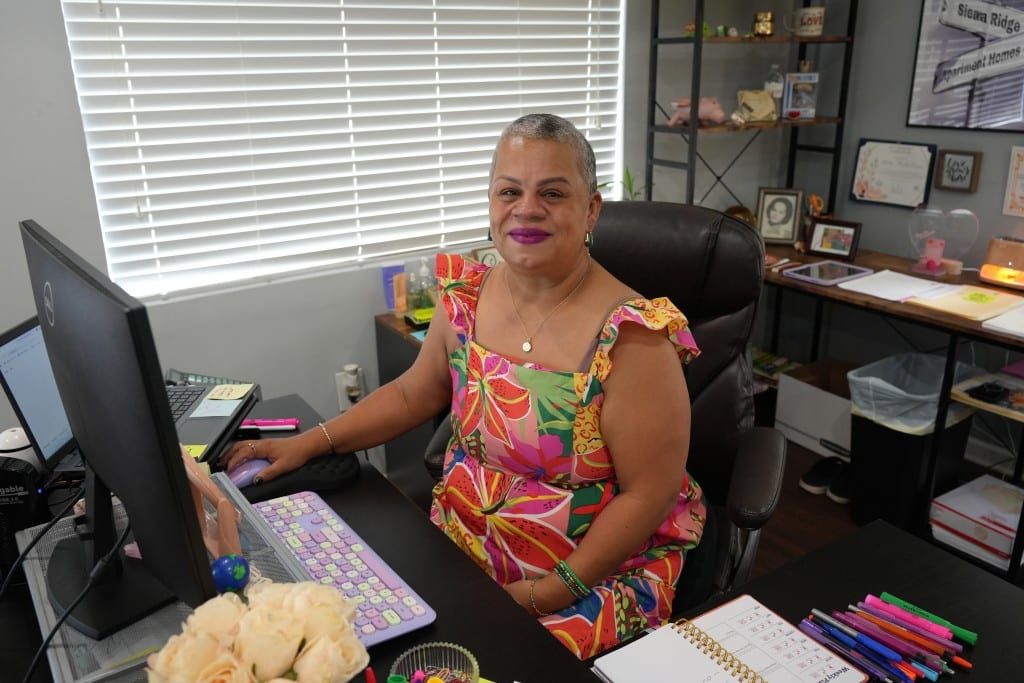
On a recent Friday morning, Celia Robles was moving purposefully around her office in a Chamblee apartment complex. Celia typically has a lot to do: She manages 243 units, which—due to their proximity to Buford Highway—are home to a diverse group of people from around the world, including a large share of Hispanic residents. As she finished the weekly payroll, Celia also guided a new employee through his to-do list for the following week, then headed to the office kitchen to grab three arepas—one for herself, and two more for coworkers.
Her job isn’t the only thing that keeps Celia busy, though. On any given day, she might be organizing a mammogram clinic, or an anti-bullying workshop, or a food drive for the tenants and others at nearby apartment complexes in Chamblee. “The idea is to see what the needs are and educate people,” Celia said during a recent interview in her office.
For the past year, she’s seen the needs in the neighborhood grow as immigrant communities have been targeted by the second Trump administration. In Georgia, immigration arrests have risen to among the highest in the nation. According to media reports, during the first six months of the Trump administration, immigration arrests spiked to 5,670 in Georgia; during the last six months of Biden’s presidency, there were only 1,570 arrests.
That’s left immigrants in fear and eager to get support and information—on topics like housing, education, and understanding their legal rights. “The more you know, the more empowered you will be,” Celia said. In Atlanta, many local organizations have stepped up to support as well, with initiatives like Casa Alterna’s “radical hospitality” program, in which volunteers accompany people to immigration court. Celia is finding support for the neighbors in the apartment complex where she works—one event at a time, advertised mostly through WhatsApp, Facebook, flyers, or just word of mouth.
Working so closely with immigrants, especially Hispanic neighbors, has given her a front-row view of recent changes in economics and living patterns along the Buford Highway corridor: Over the past year, she’s seen people downsizing because they can no longer afford multiple-bedroom apartments. She’s also noticed less traffic along Buford Highway, likely because people are afraid to leave their homes, she said, and face unexpected encounters with immigration officials. “We can agree that the economy is hard. We can agree that things have changed, and in our community, there is fear,” she said.
That’s not the only movement she’s noticed: In recent months, a lot of people have been working out of town because they can’t find jobs in Georgia, she said: “A lot of people who work in construction go to South Carolina, North Carolina, or they go somewhere else. They travel where the job is. That’s always been like that, but now, because of everything that’s happening in Georgia, people are just moving to survive.”
Through all of it, Celia has kept her focus steady: “How can you be a beacon? How can you stay above the noise?” she said, surrounded by boxes filled with coloring books for children, and a popcorn maker she’ll use at an upcoming fall festival at the apartment complex.
Celia knows firsthand the power that something as simple as a brochure with a phone number can have. As a survivor of child abuse and domestic violence, community programs were vital for her. She found support from local nonprofits working with domestic violence victims and was able to restart her life as an independent mother of two young children. “Those programs saved my life,” she said. “I am a testimony and a firm believer that people sometimes need opportunities, and opportunities are out there. If we partner with each other and help each other out, we can disseminate the information, and we can make sure that those people have access if they choose to.”
When she was younger, Celia was in a marriage so abusive that she had to undergo facial reconstruction after her jaw was disconnected. She’s currently in treatment for temporomandibular disorders, which affect the jaw muscles. “Today I’m still dealing with that, the pain and the flashbacks,” she said. But her experience pushed her to spread awareness of domestic violence, she said. In the apartment complex, she has organized Zoom calls with local organizations working on the issue and supporting victims.
“I’m one of the luckiest ones, because I was able to get out,” she said.
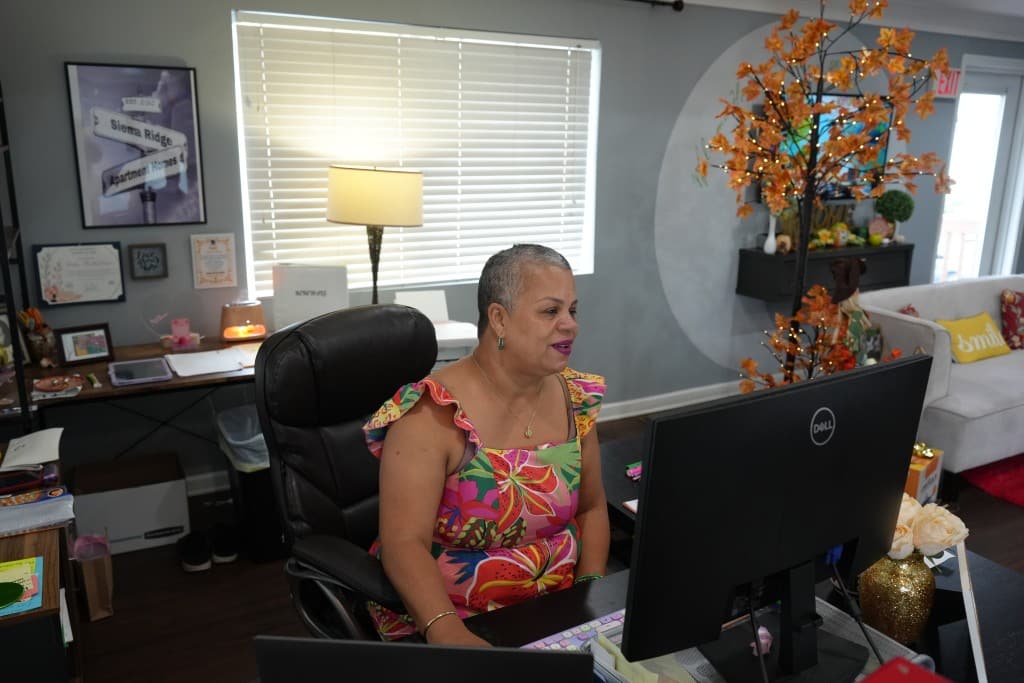
On September 8, the after-school program at the apartment complex will be back in session. Through this program, children have an opportunity to meet online with tutors from Sewa AmeriCorps, organized per grade level, and meet in-person on Saturdays at the apartment complex’s clubhouse. This helps children remain busy and focused on school work while they wait for their parents to get home from work. Over the years, the program has amassed about 45 children, between kindergarten and eighth grade, who attend regularly; Celia estimates that about another hundred participate on occasion—including children who live in other apartment complexes in the Chamblee area.
A few weeks later, in mid-October, is the fourth annual fall festival, where tenants at the apartment complex will come out to enjoy food, games, and gifts. She’s currently in the process of finding sponsors and organizations that can bring educational workshops or information to the neighbors.
“My goal is to help anybody, whether it’s at this job, whether it’s as a person. If I meet you, I want to get to know you, your story, and what I can learn from you, and how can we help each other? Don’t lose hope. This is the time for us to stay and help each other out, because we juntos somos más,” she said: Together we are more.
To get in contact with Celia, you can reach her on her cell (678-323-9377), at her office (494-636-9930), or through email (crlopez@azalearesidential.com).
Author
Related Articles
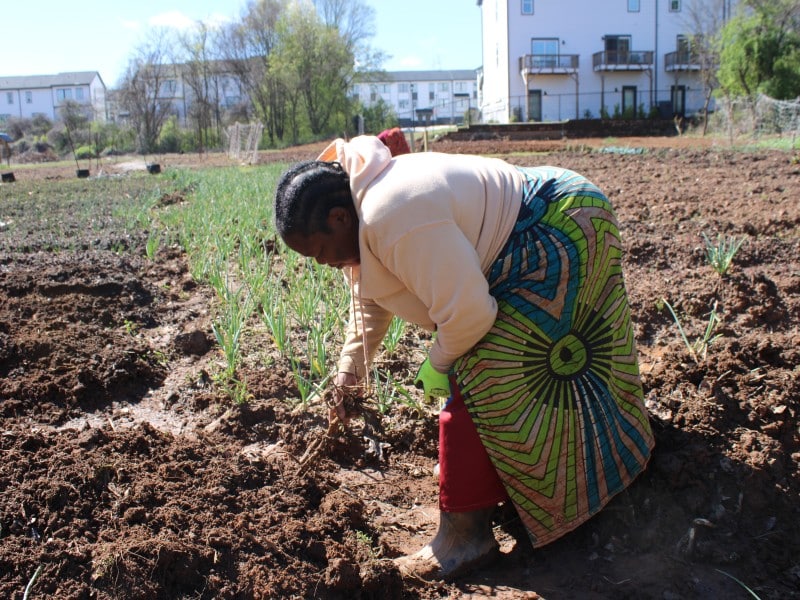
Spring has sprung—and for one Burundian farmer, that means it’s time to get back to the garden
This year, gardeners from the nonprofit Global Growers Network are combating food insecurity by harvesting produce for local food banks.
Andres Carrillo, founder of the pop-up Cocina Pachuco, is using his cuisine to fundraise for immigrants in detention
Born and raised in El Paso, the recently arrived chef is strengthening ties with his new home. One way he’s doing that: supporting the state’s immigrant communities.
“The work has become three times harder”
We speak to pro bono immigration attorney Serene Hawasli-Kashlan, legal director of Asian Americans Advancing Justice–Atlanta, about what it’s like to do her job right now.