“I didn’t know how many Asian American people there were in coffee”
Marissa Childers, founder of Tanbrown Coffee, speaks to 285 South about adding diversity to the Atlanta coffee scene.
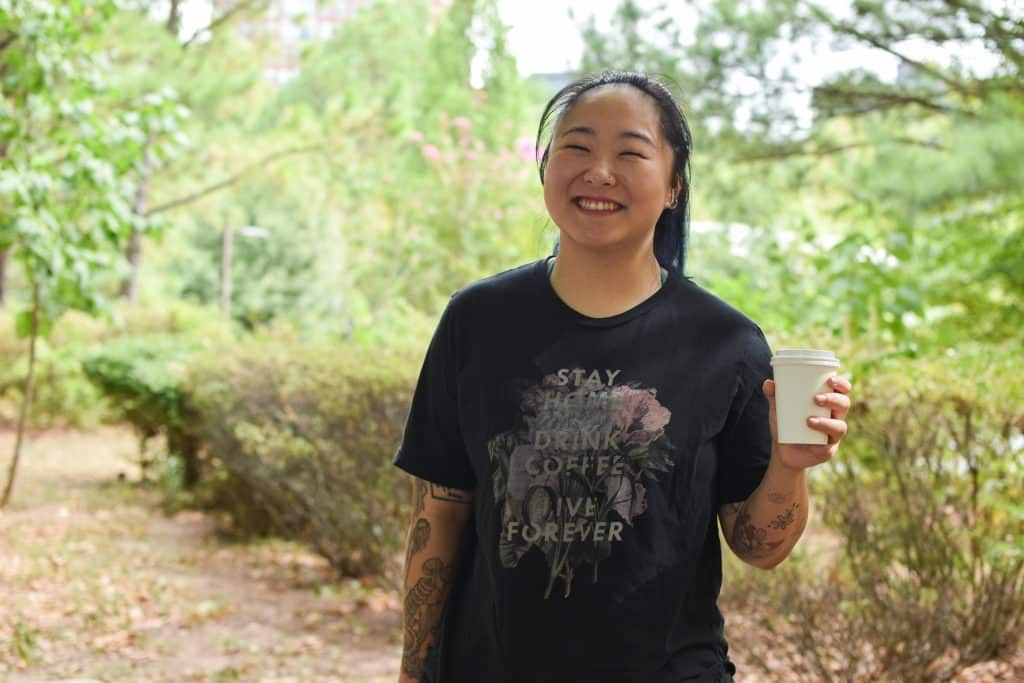
Marissa Childers remembers the day vividly.
She was having a check-in with her boss at the corporate design job where she was working when he asked her the dreaded question: What’s your 10-year plan? She hated questions like that; despite studying industrial design at Georgia Tech, she was unhappy at her job. “I don’t know what I’m going to be doing in 10 years, I don’t know what I’m going to be doing in five years, or tomorrow,” she recalls thinking. “But I know the type of person I want to be.”
There was one part of her job she did take an interest in—watching coworkers use the office Chemex to make coffee. Her boss’s questions solidified something that had been brewing in Marissa for a while, and that day she decided: “I want to be a barista.” She quit and started working at Dancing Goats, eventually going on to manage a location of Spiller Park Coffee.
Today, though, she’s best known as the founder and proprietor of Tanbrown Coffee, a queer- and Asian-owned roaster that specializes in Asian coffee beans. The two-person operation—which Marissa launched in 2022 with Ethan Darla and now runs with a friend, Elyse Vongdara—makes regular appearances at farmers markets in Tucker and, starting this month, Reynoldstown. Customers can get brewed Tanbrown coffee at frequent pop-ups at Patagonia in the Krog Street district, and order beans online that they roast at Leaven, a shared kitchen in Decatur.
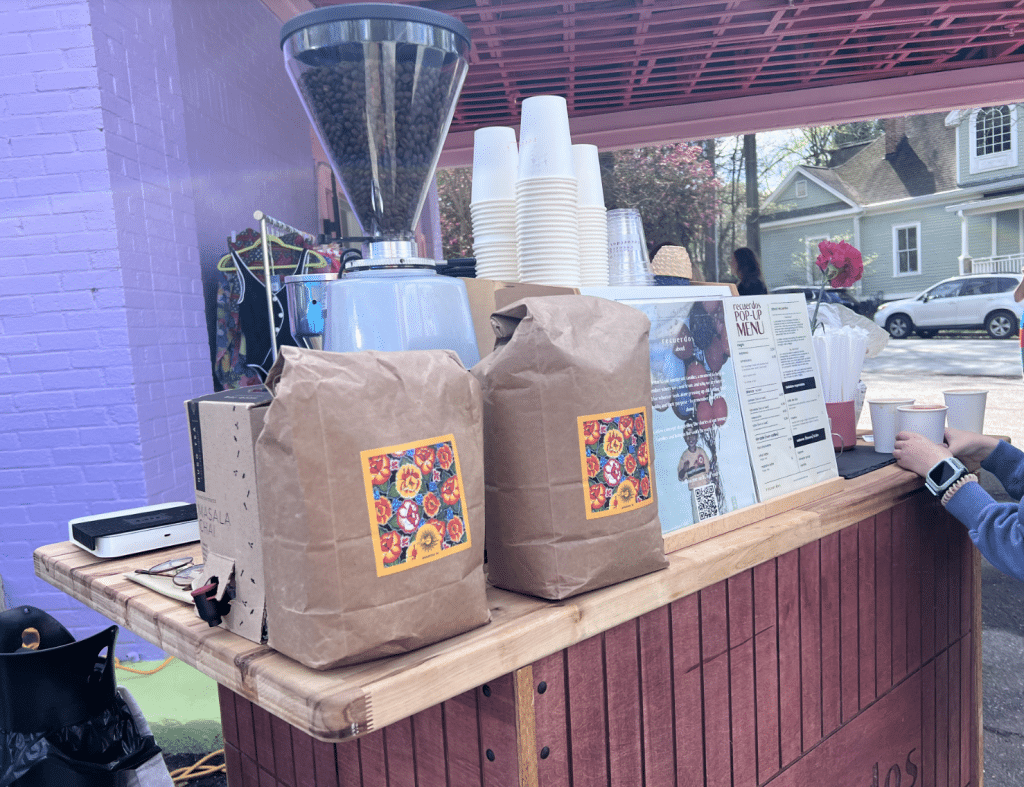
Explaining her journey through the coffee world, Marissa is sitting in the Old Fourth Ward location of Finca to Filter. Woman and queer-owned, with merchandise to match—like shirts that say QUEER AND CAFFEINATED—Finca testifies to the ways the American coffee industry is diversifying, however slowly. In and around the Atlanta metro, this change has been reflected by the emergence of businesses like woman-owned Cloudland Coffee Company; Black-owned Dope Coffee; and Recuerdos, a pop-up where Ivan Solis calls his Mexican coffee drinks a “love letter to our immigrant families.”
Still, Marissa, who grew up around Roswell, saw an unfilled niche where Asian coffee beans might be. As a barista, learning about the industry, she found herself wondering where those beans were—most specialty coffee served in the West is sourced from Africa and Latin America, but, farmers grow coffee beans from China to Myanmar to Vietnam.
The answers she got weren’t encouraging: “Either there’s not a lot, or it’s just not good enough,” she recalls hearing. “It resonated with me a lot as an Asian American person, because I was used to hearing that about myself, in different ways.” She attributes the lack of Asian beans in Atlanta partly to an insularity in the local coffee culture. “I think we sometimes get stuck in a bubble here,” she says. “What I’ve learned about a lot of Atlanta coffee is they learn from each other, and so there’s a lot of different shops that are very similar, with different branding.”
In the U.S., the coffee industry is largely white, and white-owned coffee shops, as a recent Fast Company article pointed out, are often beachheads of gentrification in Black neighborhoods. Native to Ethiopia, coffee plants are still grown around the world predominantly by people of color, making low wages in countries throughout Africa, Asia, and South America— often in places where the U.S. has had fraught geopolitical relationships. (Marissa’s colleague Elyse wants to get involved in efforts to protect Lao coffee farmers from unexploded ordinances—Laos remains the “most heavily bombed” country in world history, a legacy of the Vietnam War.)
Marissa felt the lack of diversity acutely while working as a barista in March 2021, on the day after a white man shot and killed eight people—six of them women of Asian descent—in Atlanta-area spas. “It felt so weird to be surrounded by people who were acting very normally when I was like, I am scared for my life,” Childers recalls. “I remember feeling really overwhelmed, but also frustrated that I was the only person who looked like me in my workspace.”
“I remember feeling really overwhelmed, but also frustrated that I was the only person who looked like me in my workspace.” – Marissa Childers, Founder, Tanbrown Coffee
At the time, she was ramping up to launch Tanbrown. After leaving her corporate job, she learned to roast beans through a program called Glitter Cat, which aimed to bring people from marginalized backgrounds into the coffee industry. She spent over a year educating her palate, developing an understanding of the different aspects of coffee (acidity, body, balance) and the words with which to describe it. “So I could taste when something was wrong, or right, and then go back and suss out what happened,” she says. “And I was like, Oh, my coffee’s not bad.”
After this course of self-education—Marissa also took inspiration from others around the country, like Chicago’s New Math Coffee—she launched Tanbrown with Darla, who’s since moved on to pursue other projects. The name of the business came as they were trying to figure out an aesthetic for the brand—something warm and welcoming, with tans and browns. “Then we saw the words next to each other: Oh! Tanbrown,” Marissa says. “That’s funny because coffee’s tan and brown. We’re tan and brown. So it just makes sense all around.”
Following the spa shootings, Childers also started a group called Coffee Asians—a venue for decompressing, and swapping stories and experiences. Initially meeting online, with members around the country, the group has begun getting together in real life at industry events.
“I didn’t know how many Asian American people there were in coffee,” Childers says. But the community is growing, and coalescing: “I’ve made a lot of friends.”
Author

Related Articles
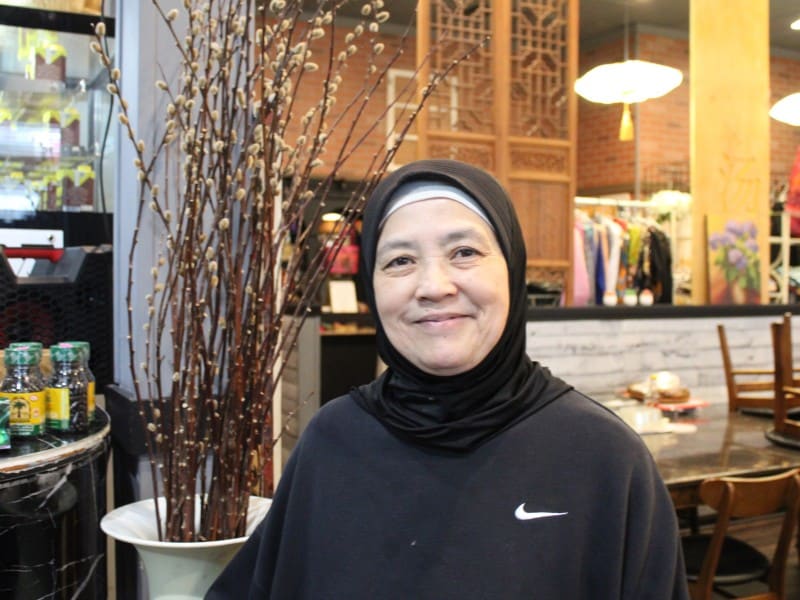
Ibu’s Kitchen gets back to the basics: “Food makes people happy.”
At this “one-stop shop” on Buford Highway, customers can find Indonesian groceries, Batik clothes, homestyle meals, and an unwavering commitment to values.
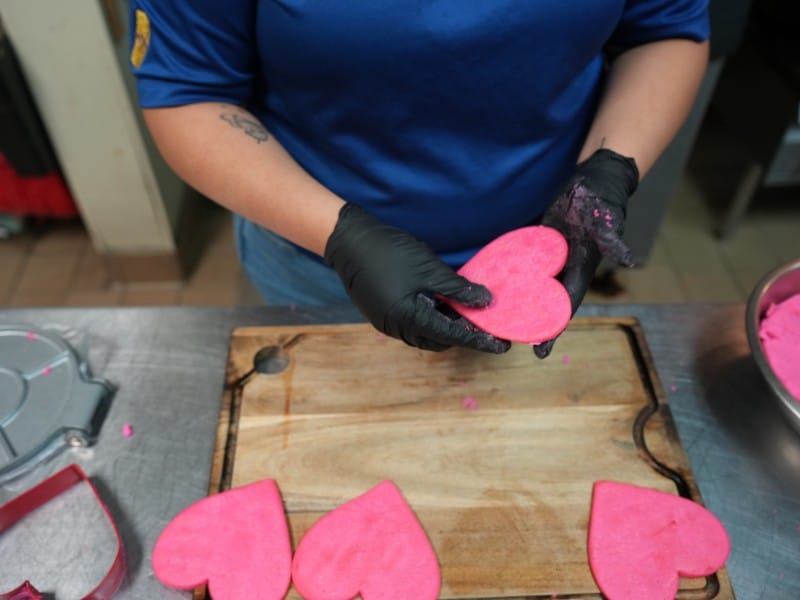
At La Mixteca Tamale House, colorful masa creations celebrate Valentine’s Day—and honor a mother’s memory
Born in Oaxaca, Rosa Lucia Hernandez launched a tamale business in 2018 to fulfill a longtime dream. After her death, Rosa’s children are keeping that dream alive.
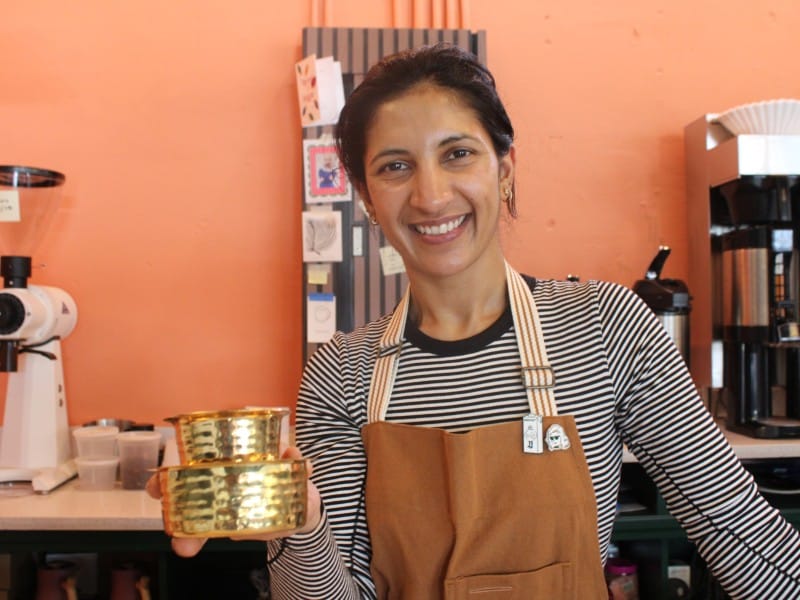
“Everybody has a ‘Raani’ in their house”
At Raani Coffee on Moreland Avenue, Praveena Sundarraj honors South India’s coffee traditions—and builds a new kind of “third space” for coffee aficionados and their parents