“I figured out that people needed more information”
For many diverse communities in ATL, social media isn’t just a way to keep in touch—it’s a place to create journalism that serves the needs of their communities
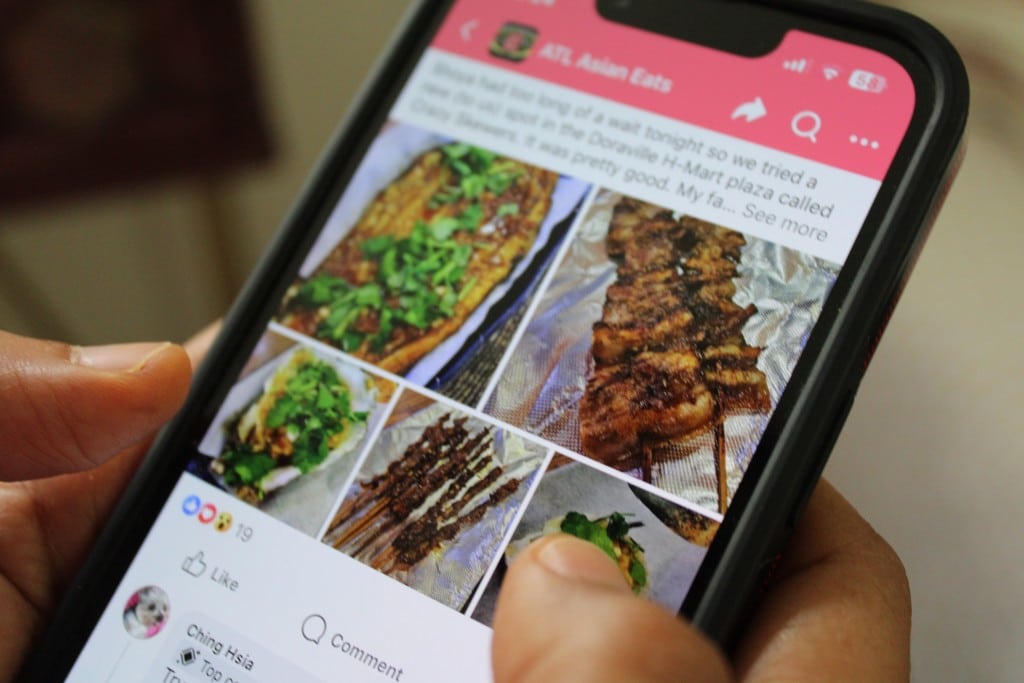
For friends visiting Atlanta, Karly Giang has long been the go-to source for a restaurant recommendation. Giang grew up in Bayou La Batre, Alabama, where members of her immigrant family worked in the seafood industry, and her mother catered for the tiny local Vietnamese population. Food is “in our blood,” she said.
Years ago, when she moved to Atlanta for work, she found the dining options limited—lots of chain restaurants. “I thought Cheesecake Factory was, like, the best thing,” she joked. But over time the food scene grew, along with Giang’s knowledge of it, and particularly the Asian-owned mom-and-pops where she liked to eat. After enough acquaintances asked her where they should be dining, she started sharing the information on her Facebook page.Then, at the beginning of the pandemic, she started a group devoted to the subject: ATL Asian Eats. At first, Giang was mostly hoping to help struggling family-owned restaurants stay alive.
“They’re not internet-savvy, they don’t know anything about social media, they don’t have a Facebook,” she said. “I was targeting them more because I knew they were hurting.” But “it snowballed from there”—as it turned out, there was a big appetite for what Giang was serving. In its first few months, the private group grew to 10,000 members, and today boasts nearly 40,000.
ATL Asian Eats is an example of how useful social media can be for immigrant communities sharing information among themselves and with the wider world. Facebook, TikTok, WhatsApp: In many ways, pages and groups on platforms like these have become crucial information resources for communities—particularly communities of color—that may not see their experiences reflected in mainstream or legacy media. In the process, they’re offering a different vision of what journalism can be: smaller-scale, more people-focused, and often devoted to providing basic resources to communities that may not be receiving them elsewhere.
In 2023, the Georgia News Collaborative commissioned an analysis of the statewide media landscape. Results weren’t encouraging: 17 of Georgia’s 159 counties don’t have any local newspaper, and 112 have only one covering the entire county. But social media, the analysis found, is one of the “bright spots,” where people who don’t necessarily have reporting experience—but possess deep local knowledge—conduct their own kind of journalism, even if it doesn’t resemble the broadsheets and network news of the past.
“Facebook is a wonderful incubator,” said Jean Marie Brown, one of the authors of the landscape analysis. A former reporter and media executive, Brown now teaches journalism at Texas Christian University and is the director of research, learning, and evaluation for the Pivot Fund, a philanthropic venture that supports community journalism led by people of color. (285 South is among the organizations receiving support from the Pivot Fund.) “What you are seeing is immigrant communities, in particular, starting a Facebook page,” Brown said. “And that Facebook page could have 20, 40, 50,000 followers, because it’s within that community and it becomes a trusted source within that community.”
Restaurant recommendations are just the beginning.
The Facebook group Indians in Atlanta, with almost 50,000 followers, has hosted Q&As with political candidates like Georgia Secretary of State Brad Raffensperger. Facebook pages and TikTok accounts alert members of Georgia’s Latinx communities about law enforcement checkpoints set up to ensnare people in the country without documentation. For immigrants in particular, there’s a demand for resources beyond what a newspaper might provide, Brown said: “These publications want to give you the basics, want to give you the instruction manual, and that makes them very relevant too.”
The free messaging service WhatsApp has long been an important means of communication for immigrants in the U.S., including Muslim Americans in the Atlanta area—who can join peers in groups like Helping the Community, which is administered by Shomaila Khan, who founded a nonprofit of the same name. The WhatsApp group helps the nonprofit live up to its billing, Khan said: “We’ll get a case from an organization: ‘This refugee needs this, this, and that.’ We’ll post in the community and before you know it that need is met.”
“We’ll get a case from an organization: ‘This refugee needs this, this, and that.’ We’ll post in the community and before you know it that need is met.” – Shomaila Khan, Founder, Helping the Community
Khan administers a few different groups, with roughly a thousand members in each. Busy WhatsApp groups can beget subgroups: Helping the Community, for instance, spawned an offshoot devoted to events and announcements. In recent months, WhatsApp has been a conduit for Muslims in Atlanta sharing information about the war in Gaza—updates on Palestinian relatives, relief efforts to donate to, protests to attend. Muslim Americans are also using the app to learn how to contact their elected representatives, Khan said: “Not everybody knows this stuff, right? Trying to get the community involved to make an impact together.”
***
“Architects of necessity” is how the Georgia News Collaborative report described creators like these—people who, seeing an information void, seize the chance to fill it. That’s the case with Elizabeth Galarza, the editor of the Savannah-based Spanish-language news website Pasa La Voz. “You know how many people complain but don’t do anything to change it? I’m not like that,” Galarza told me, laughing. “If I see something’s needed, why not? We’ll do it.”
Pasa La Voz traces its roots to the late 2010s, when a hurricane brushed by Savannah and the governor issued an evacuation order. But there wasn’t a lot of information available about when residents would be able to return—and none of it was in Spanish. Like Karly Giang, Galarza found herself sharing information on her personal Facebook page. She had a lot of connections in Savannah’s Hispanic community, owing in part to her previous work as a translator. She told me that recently, when Pasa La Voz covered high school graduations, she knew most of the Hispanic graduates because she’d been present for their births—there in the delivery room, helping the patients talk to their doctors, just like she had throughout their pregnancies.
The hurricane, Galarza said, “was when I figured out that people needed more information.” As she became a reliable source of it, her Facebook presence continued to grow. With help from the Pivot Fund, she’s been able to transition off the platform and onto her own website—an important step, Brown noted, given the “inherent dangers” of social media. Creators are subject to changes in the algorithm, and a single complaint, legitimate or not, can get a page locked down. “It’s a tried-and-true way of building an audience, but at some point these properties have to move away from Facebook,” Brown said. “They have to become independent.”
In addition to the website, Pasa La Voz has made inroads into physical media, producing a printed hurricane guide to have on hand in case the power goes out. Galarza has also been able to add staff, including a video editor. The team is currently putting together a series of video profiles of members of the local Hispanic community, which Galarza felt was important to do after Georgia’s passage of HB 1105, a bill requiring local law enforcement to cooperate with federal immigration officials—which advocates have interpreted as an attack on Latinx immigrants. “We want to make sure that other people see what we do for this community, what we do for this state, what we do for this country,” she said.
Though professional journalists today often have college training, that’s only recently become the case, Brown pointed out, drawing parallels between the new crop of entrepreneurial social media journalists and, for instance, the immigrants who produced Polish-language newspapers in 20th-century Chicago. In certain respects, it’s easier to do now—you don’t need to be able to afford a printing press.
“The way we define journalist can leave some people out,” Brown said. “But truly, if you follow the First Amendment, there is no definition of a journalist. If you want to define a journalist, it should be that they provide news and information in an accurate and timely fashion. If they do that, it could be the lady next door who’s doing a newsletter for the neighborhood. It could be the immigrant community that’s keeping up with stuff on WhatsApp.”
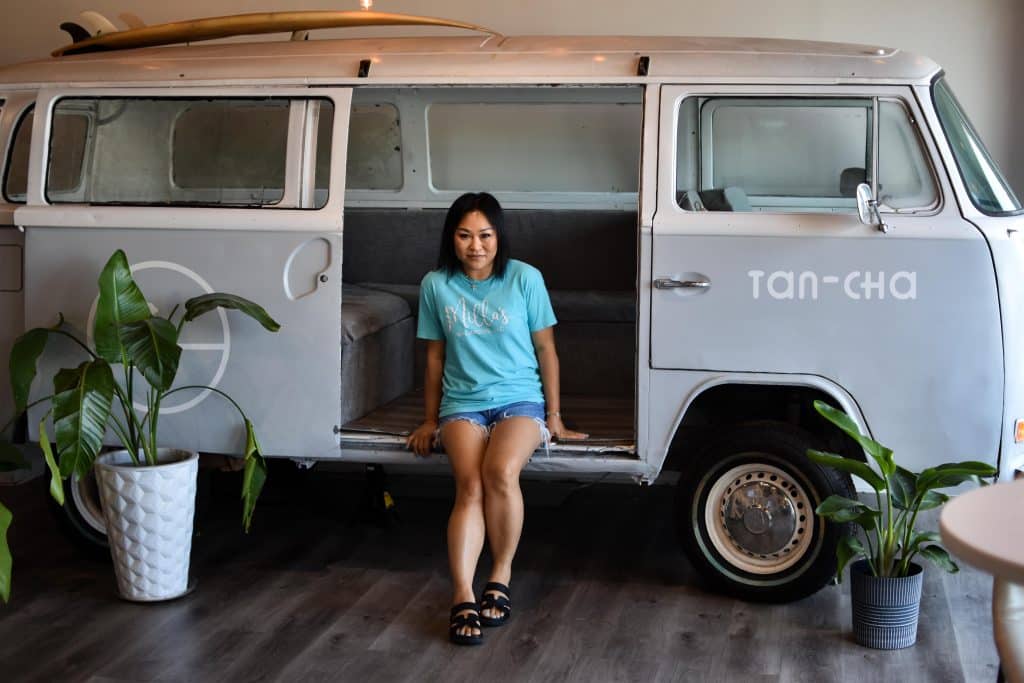
Or the Facebook food correspondent dishing out restaurant recommendations. ATL Asian Eats isn’t Karly Giang’s only foodie endeavor—she’s also a popular Instagram influencer and has a dessert pop-up called Milla’s Macarons. But the Facebook page has grown into a bona fide community, fueled by the enthusiasm of its members. Like her followers, Giang has also gotten some good ideas for where to eat around the Atlanta metro area.
“There’s a lot of counties I’ve never been to that have Asian restaurants, and honestly I would have never known if it wasn’t for that group,” she said. “It did open up a lot of new places for me.”
Author

Related Articles
At an annual Buford Highway food drive, volunteers prepared grocery boxes for 300 families, but 500 showed up
Many families are struggling to afford groceries—and worried about the political climate. Here’s how you can help.
SNAP benefits expected to end in November: “That’s just like another chaos and panic.”
For recently arrived refugees in Georgia, who have yet to find their footing in an unstable economic environment, cuts to food benefits add to an already burgeoning crisis of costs