“I had never seen so many ambulances.”
Metro Atlanta resident describes being in Beirut during attacks, worries for her family and friends in Lebanon.
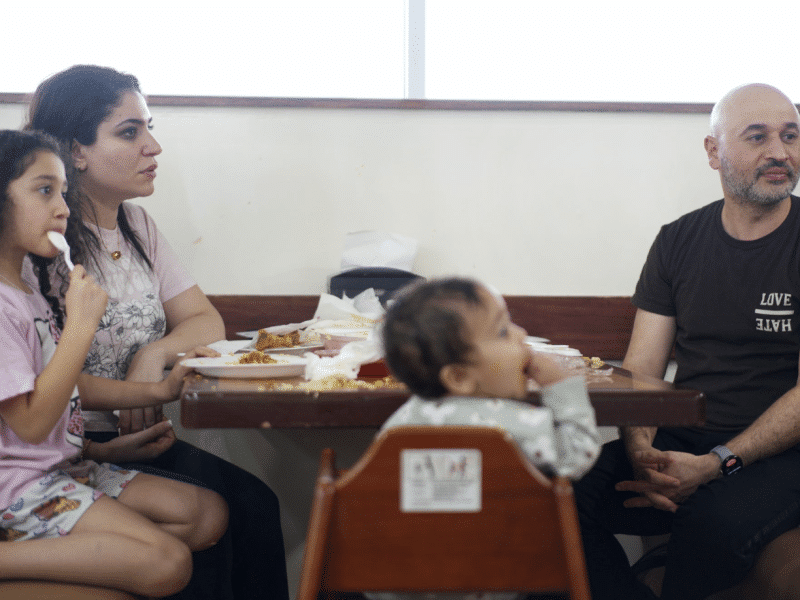
Angela Aboud Khoury has called Atlanta home for 20 years. She was born in Lebanon, where her parents still live, and has kept her connection to her homeland alive, whether it’s through annual trips to Beirut, working remotely for the American University of Beirut, or making homestyle food from the region, like Shish Barak, meat dumplings cooked in yogurt sauce.
But with the current Israeli attacks in Lebanon, it’s hard for her to think of much else.
Angela is one of at least 12,000 residents in Georgia who identify as having Lebanese roots – and is part of a growing Arab American community of over 40,000 in the state, which has nearly doubled in size between 2000 and 2022. She lives in the Northlake area, has three children, and has built a wide community through her neighborhood, her connection with The Alif Institute, an Arab cultural organization, and through the professional network of her late husband, Dr. Jean Khoury, who worked at Emory’s Winship Cancer Institute. She recently joined Lebanon & Beyond, an organization aimed at helping connect Lebanese communities abroad to their homeland.
Earlier in August, she had planned to go to Lebanon with her two daughters. But that trip didn’t happen. “The tensions that built up at the end of July made us hesitate, and then I received notification that my ticket was canceled.”
Just a few weeks after that, her father fell ill and was admitted to the hospital. Angela needed to be with him. She had no idea that she would be flying into a conflict that has seen hundreds of Lebanese killed by Israeli strikes.
“I left the same day. By then, the tension had calmed down. And I knew that I needed to be there, and my kids were very supportive of me. We’re very family oriented, and my parents are not getting any younger, and we need to be next to each other.”
Thankfully, her father recovered.

She was relieved, and remembers thinking, “now I’m going to enjoy my other extended family and my friends and maybe do some shopping before I fly back. And that same day was a Tuesday.”
That was September 17, when pager explosions killed at least 32 people and injured thousands. The explosions are widely believed to have been an Israeli operation targeting Hezbollah, the political and armed group backed by Iran that was formed to fight Israel’s invasion of Lebanon in the 1980s. Designated as a terrorist organization by the U.S., it controls a large part of southern Lebanon.
Angela had just arrived in Beirut, where some of the first explosions happened, after traveling from her parent’s house in Jaj, a small town in the mountains. “It took us a moment to understand what’s going on, because what is it, a remote control explosion, or the remote control devices, or what’s happening? Then we understood that there were pagers…the whole thing was so weird…”
“It took us a moment to understand what’s going on, because what is it, a remote control explosion, or the remote control devices, or what’s happening? Then we understood that there were pagers…the whole thing was so weird…”
Back in Atlanta, her kids panicked. “They started texting me, Mom, are you safe? What are you going to do? Will you try to come back earlier?”
She decided not to cut her trip short though, and instead left Beirut and rejoined her parents in their summer house in Jaj, making sure they were well equipped to stay longer, in case the situation got worse. “Everybody was leaving the city, so the highways were jammed, and I had never seen so many ambulances. Every minute there was an ambulance crossing the highway, either in one direction or the other.”
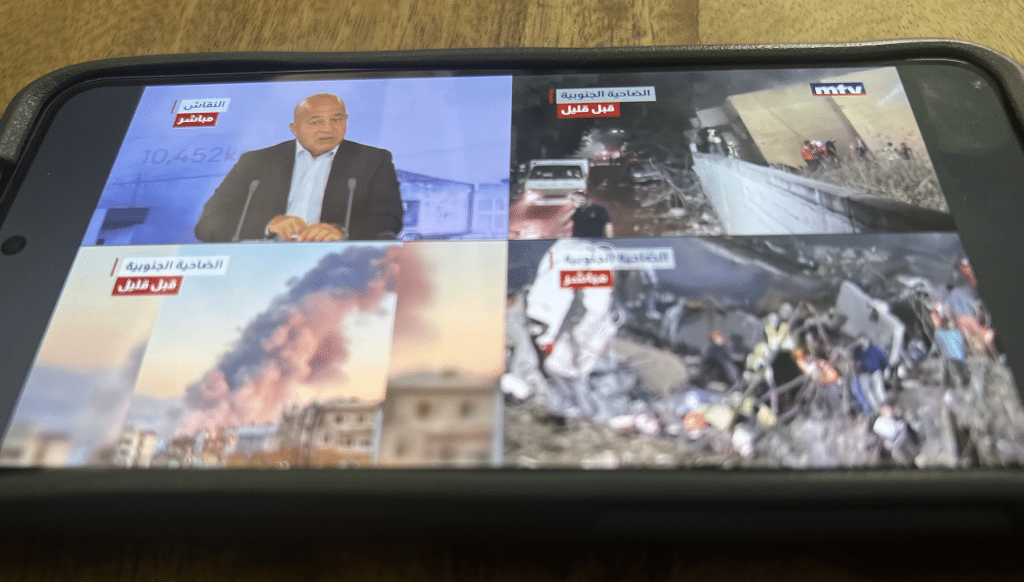
The images of the destruction were all around, she said. “Wherever you go, there’s either a phone with a news flash, or a TV playing in the background with the same images, and it’s not as censored as here, so you see more blood and destruction.” In the U.S., she said, “when you watch a war, it’s very clean. What you see in Lebanon on the screens is more raw.”
Since then, Israel has continued hitting targets, killing hundreds and displacing a million, mainly in southern Lebanon, the stronghold of Hezbollah, but also in Beirut, where Israel targeted and killed Hassan Nasrallah, Hezbollah’s leader, on September 27th.
Angela landed back at Atlanta Hartsfield last week, and spoke to her parents over the phone this weekend, who were still in the mountains. “You’re surrounded by greenery, the mountains, yet you’re hearing those airplanes. And you know that bombs are falling…my parents, my friends, and they say, Yeah, we’re still hearing raids today.”
“You’re surrounded by greenery, the mountains, yet you’re hearing those airplanes. And you know that bombs are falling…my parents, my friends, and they say, Yeah, we’re still hearing raids today.”
She said she is concerned for the future of her country, and for those who are facing the strikes. “I was not injured. My home is not destroyed… I cannot imagine those that are in the midst of that, or who have to flee the south of Lebanon…it’s very eerie, it’s very tragic, and it’s frustrating because we don’t know who’s looking after Lebanon. Who has Lebanon’s interest at heart? When will that end? I don’t know.”
She doesn’t think the Biden Administration or either Presidential candidate can end the spiral of violence. “None of the US candidates have said anything, nor the current administration, nor the upcoming ones have said anything in my opinion, to reassure me that they have Lebanon’s safety as a priority, or sovereignty.”
As the war expands, and with Israel seemingly unwilling to listen to the U.S. and other international calls for a ceasefire, for those Atlantans who have ties to the region, this is a difficult time. Angela hopes that people show them compassion.
“I have the same feeling for those who have family in the West Bank and in Gaza when they live here, but their heart is there. And same for the Lebanese. So that’s what I would ask people to understand, that it is a very stressful thing to go through.”
Author

Related Articles
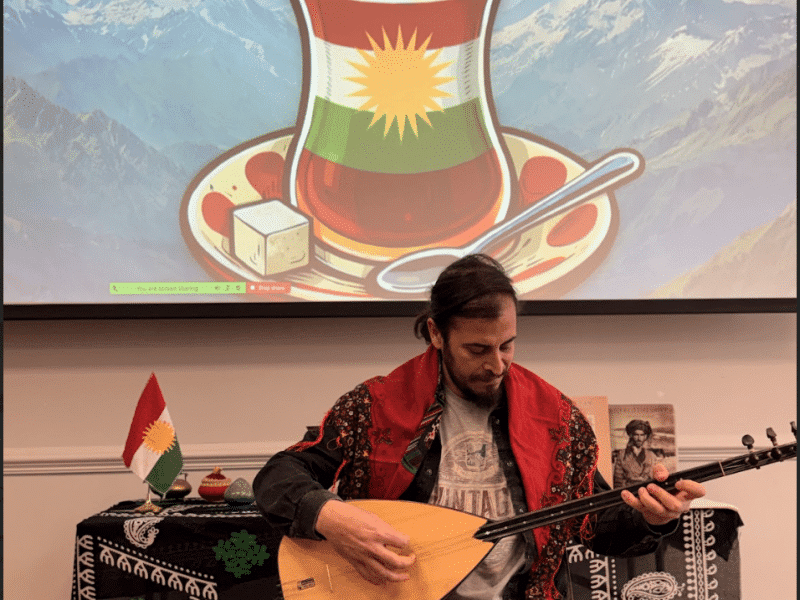
A Decatur teach-in draws attention to the world’s largest stateless ethnic group
With recent events drawing attention to the struggles of the Kurds, members of the Atlanta area’s Kurdish community are asking their neighbors to speak up.
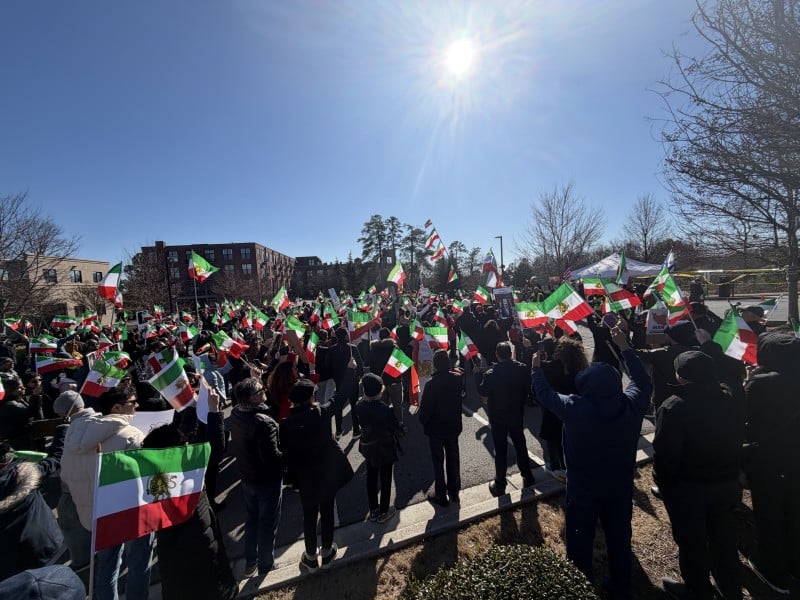
“I cannot sit around doing nothing.”
With internet access severely restricted in Iran, solidarity rallies and social media campaigns have popped up around the Atlanta metro.