
“I like the lifestyle we had”: Following an ICE detention and voluntary departure, an Atlanta couple spends the holidays apart
Arrested earlier this year during a routine traffic stop, Jorge realized that the best way to stay in the U.S. was to leave it—at least temporarily. Now he and Adalina are looking for a way to get him back.
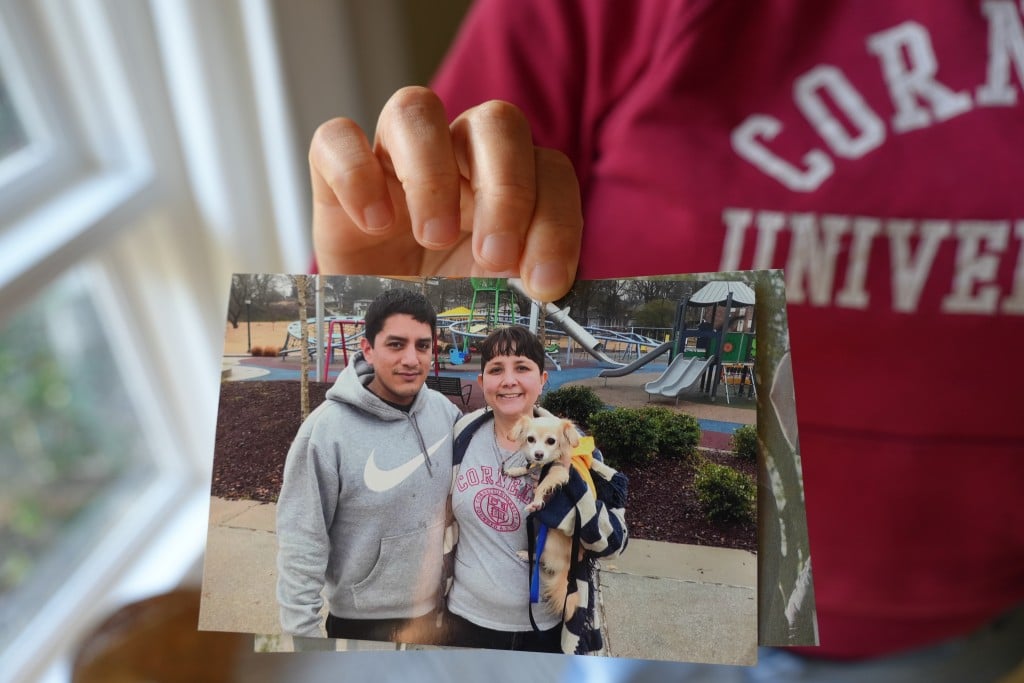
Adalina Merello and Jorge Espichan are preparing for a bittersweet Christmas. For the first time in two years—since Jorge was deported, in mid-November, back to his home country of Peru—they won’t be spending the holiday together.
“Yo la he pasado dos años con Ada y es como un poco de nostalgia,” Jorge told 285 South over a video call, speaking from a park in Lima, the sound of birds chirping filling the pauses. (I’ve spent Christmas with Ada for the past two years, so it’s a bit of nostalgia). “Pero a la vez un poco alegre, porque voy a aprovechar el momento que estoy acá con mi madre y la voy a pasar con mi hijo.” (But at the same time, I’m happy because I’m going to spend it with my mom and my son).
Jorge was taken into custody by Immigration and Customs Enforcement (ICE) in September, after a police officer in Douglas County stopped him for speeding, and subsequently discovered Jorge had a THC vape pen on him. When ICE learned of Jorge’s arrest, he was transferred to Stewart Detention Center, a notorious facility in Lumpkin, where over 2,000 people are currently detained. After spending four weeks there, he finally decided to voluntarily leave the U.S.
For Adalina, it feels weird not being able to spend Christmas with her husband. They used to spend the day cooking, or just doing nothing. “Porque trabajamos en restaurantes, es un día libre para pasar y hacer nada, y yo voy a extrañar a mi esposo,” she said. (Because we both work in restaurants, it’s a day off that we get to spend together and do nothing, and I’m going to miss my husband.) This year, she’ll be spending the holiday with her mother and siblings in Oregon.

After Jorge’s bond was denied, he realized that if he wanted to remain in the U.S. and keep fighting for his release, he would have had to wait a couple of months in detention. That was the last straw, he said.
Leaving voluntarily means that he can avoid a deportation order, and makes it possible for him to return to Adalina and his life in the U.S. sooner. A deportation order would have made him ineligible for an American visa.
Jorge and Adalina are far from the only people to face such a choice: The Department of Homeland Security said in September that an estimated 1.6 million immigrants have voluntarily self-deported in 2025 nationwide. More than 400,000 were deported by immigration officials nationally, including 1,425 removals completed in Atlanta by ICE –ranking eight in the U.S., just behind cities like El Paso, Houston, New Orleans and Dallas.
To reach Peru, Jorge underwent a two-day trip in which immigration officers took him from Atlanta through Louisiana, Texas (picking up other Peruvian and Ecuadorian nationals who were voluntarily leaving or being deported), and Ecuador, before he finally landed in Lima with what he estimates were about 120 other Peruvian nationals. On the plane to Lima, he said, he felt like he was in shock: “I said something like, ‘Okay, that’s it, it’s over—this bad experience.’”
In Lima, he reunited with his mother and eight-year-old son, whom he hadn’t seen in four years. They went out for pizza that day, Jorge said, and watched the sunset together, as he hugged his son tight.
Reflecting back on what happened in Georgia, he said he regrets speeding and having the THC vape, but says there could have been other alternatives than detention and leaving the U.S. “Pay a fine or address it in another way,” he said. According to Georgia law, speeding is a misdemeanor that carries fines between $25 and $500; while THC is a controlled substance, and its possession is either a misdemeanor or a felony depending on the amount carried.
Reuniting with Adalina
“I’ve been speaking with Ada to see what we can do so that I can go back,” Jorge said. “I like the lifestyle we had.”
They are now gathering the documents to apply for a marriage-based green card for Jorge, so that he can return to Atlanta, and pick up where he left off. (He initially came to the U.S. on a tourist visa that he ended up overstaying.)
Sitting on a yellow couch that she and Jorge bought together for their home in Westside Atlanta, Adalina spoke of the challenges she’s faced since Jorge’s been gone.Angel, her service dog, still sits on the couch waiting for him to come home, she said.
“It’s just hard to see him go through this. It’s hard on me too. I just miss him,” Adalina said. “It’s one thing to have the void of him, physically not being here. But there’s also the financial aspect.” She has been relying on the GoFundMe donations to pay for some of her living expenses now that she no longer has Jorge’s income as a support. (A quick search shows there are more than 40 GoFundMe campaigns from families looking for financial support after a loved one was detained and sent to Stewart Detention Center.)
“ She recently put up for rent a bedroom in the house they used to share, and has been applying for jobs for the past six months (even before Jorge’s arrest). “I graduated with my master’s last August and I’ve been looking for full-time work in policy and politics ever since,” she said. Adalina graduated with a Master’s in Public Administration from Cornell University, and currently works as a waitress, and worked as a canvasser during election season, knocking on doors and reminding people to vote down the ballot. “I’ve had interviews for a couple things, but nothing’s come through.”
In Lima, Jorge is helping out with his family’s business in real estate, doing administrative work, while he looks for a job as a cook.
Despite being physically apart, the pair try to keep each other company, and call each other three to four times a day, Adalina said. First thing in the morning, one or two times in the afternoon, and one last time before going to bed.
It’s a bit easier to talk now, Adalina said. When Jorge was in detention, she had to wait for him to call so she was always tied to her phone.
“Let’s hope that [the green card] process is quick,” Jorge said. “So that I can be with Ada again and get back to the life that I had.”
Author

Related Articles
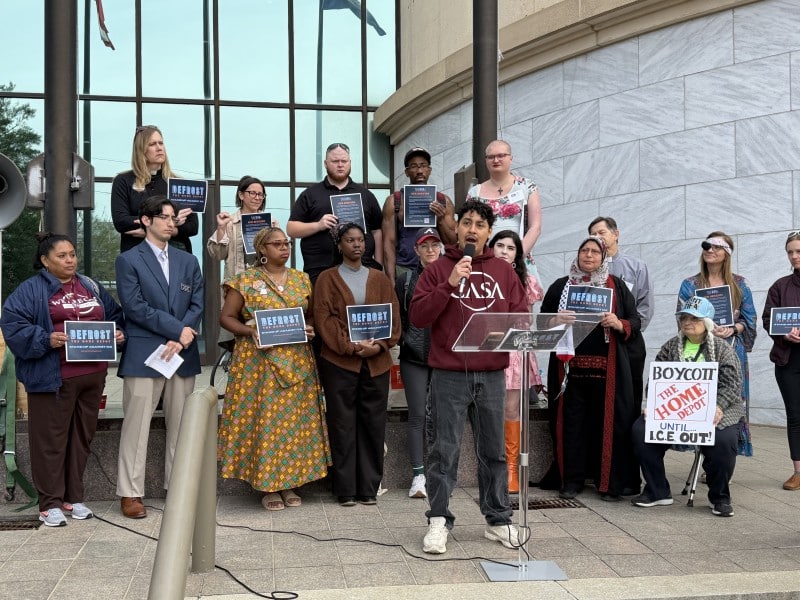
Atlanta advocates demand: “Get ICE out of Home Depot now”
As popular spots for immigrant day laborers to find work, Home Depot locations across the country have been repeated targets of ICE raids. Now advocates are pressuring the Atlanta-based company—an official sponsor of the upcoming World Cup—to take a stand.

Woman who assisted in federal abuse investigation, arrested at Atlanta airport and deported days later
“A slap in the face,” her attorney says describing her client’s situation, who had a pending U-visa application