‘I’ll Just Have to Close My Eyes and Choose’: Atlanta’s Immigrant Voters on the Presidential Election
From now through November 5, 285 South is interviewing a cross-section of first- and second-generation immigrant voters to learn what they’re most concerned about as they head to the polls.
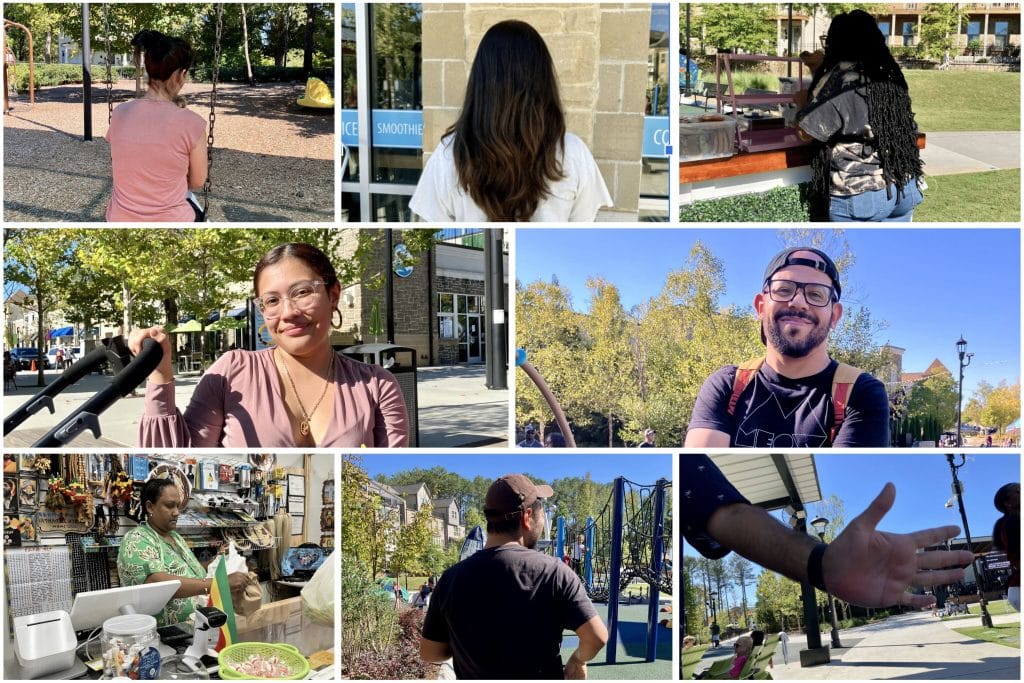
One recent sunny afternoon at a public park in Peachtree Corners, Hayam Sayyad watched his children play, but his mind was elsewhere.
He was thinking about who he’d vote for in the upcoming presidential election. “I’m having a hard time choosing,” said Sayyad, a systems analyst who immigrated from Pakistan and lives in Alpharetta. “I might pick someone from the lesser-known parties.” He says the ongoing war in Gaza—and the lack of support for Palestinians from both the Democratic and Republican parties—have turned him away from voting for the two leading candidates, Vice President Kamala Harris and former President Donald Trump.
He’s not the only one. Many voters have expressed weariness with this year’s options, and the race is expected to remain close to the very end. Trump and Harris have both made repeat visits to Georgia, a battleground state, where growing populations of immigrant communities have the potential to sway the results.
Demographics: the numbers
According to 2023 Census data, the foreign-born population in the Atlanta area is nearly a million, or 15 percent of the total metro population. 46 percent of immigrants hail from Latin America, 32 percent from Asia, 13 percent from Africa, and 7 percent from Europe. Of the number of residents born abroad, more than half are now naturalized citizens—which means they can vote. (Check out this 285 South story on some of these new voters. )
The state’s Asian population has grown by 50 percent in the last decade, and a record-breaking 65 percent of eligible Asian voters turned out in 2020. The number of eligible Latino voters has nearly quadrupled since 2000, according to a recent UCLA study, making up 6 percent of Georgia’s electorate.
Far from being a monolith, immigrant voters represent a wide range of political perspectives, often influenced by age, religion, country of origin, and how effectively candidates are able to communicate their messages. And some groups that might once have offered reliable support for a political party are now less certain—like the Muslim Americans who formed a reliable bloc of Democratic voters in the 2020 election. This year, many say they’re choosing not to vote, or voting for Green Party candidate Jill Stein because of the Democratic Party’s handling of the war in Gaza.
Others are still undecided, even as early voting has gotten underway. Neil P., a pharmacy technician in Lilburn who declined to share his last name out of privacy concerns, says both he and his parents—who immigrated from Kenya and London—are dissatisfied with their choices. “My main concern is, like, Donald Trump is insane. And on the Democratic side, they are fairly corrupt and causing inflation,” he says. “I’ll just have to close my eyes and choose.”
In our entirely random sampling, we’ve found that, despite terms like the “Latino vote” or “AAPI vote,” the political opinions of those we spoke with were as diverse as the group of people who offered them.
Hung Nguyen, 79, Duluth
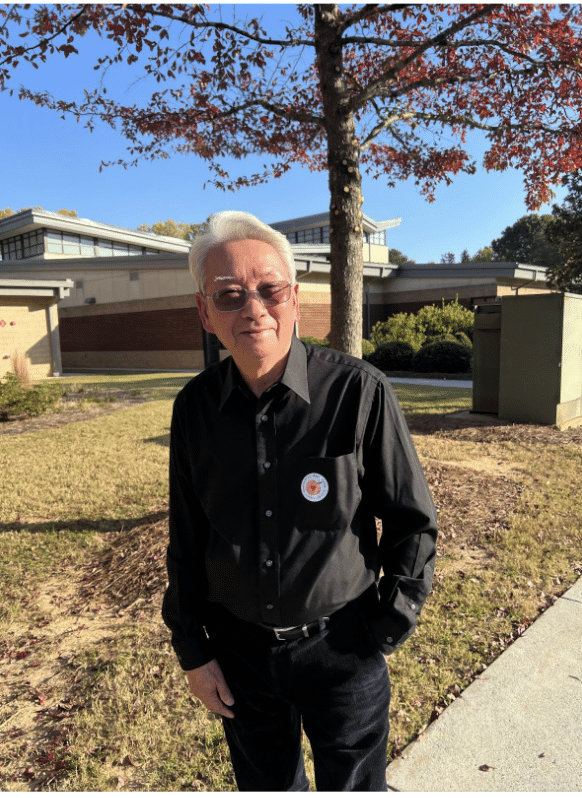
Hung Nguyen, 79, immigrated from Vietnam in 1992; he’s a veteran of the Vietnam War, and was a prisoner of war for seven years. Now retired, he worked as a field project manager for a construction company. Nguyen believes it is the “right and duty of a citizen” to vote, and is supporting Kamala Harris, he says, “based on the economy and foreign affairs.” (LP)
Q: What do you think about Harris and Trump?:
A: As vice president, [Kamala Harris’s] term was limited to assisting the president in his assigned tasks, so she was unable to demonstrate her leadership ability. However, after being nominated by the Democratic Party as a presidential candidate, she highlighted core policies to build and develop the country economically, focusing on the middle class and supporting the lives of the poor. She also respects and enforces constitutional immigration policies and protects women’s rights.
After losing the election in 2020, [Donald Trump] pushed the United States into political turmoil after the incident on January 6, 2021, when he declared the election was fraudulent and used every trick to overturn the election results through more than 60 lawsuits that were all lost due to lack of evidence. He is a presidential candidate who, in a debate, always uses rude language towards his political opponent, lies and exaggerates events.
Fernando Esquivel, 42, Atlanta
Fernando Esquivel, 42, has lived in Atlanta for more than 17 years. Originally from Bogotá, Colombia, Esquivel came to the United States to attend university and is currently an ethics professor at Spelman College. He has also been a volunteer instructor at Freedom University, a civil rights–style freedom school dedicated to teaching undocumented students.
This is the first election Esquivel is voting in after gaining his citizenship last year. “I actually never thought of becoming a citizen,” he says. “Personally, I have a conflicted relationship with the U.S. because of the involvement the U.S. has with Central America.” He plans to vote for Kamala Harris, largely because she is a Black woman, and because he thinks her presidency will be good for historically Black colleges and universities (HBCUs) like the one where he’s employed. (LA)
Q: What are some top issues for you for this election?
A: At the moment, I care about ending the current genocide of Palestinians, homelessness, drug policy, gun control, and healthcare—yet the only thing that is being talked about by both candidates is border security. Although I can understand the interest they have, I, myself, don’t believe in borders.
Q: Do you trust the election process?
A: [laughs] The short is no. The American democratic system is very complex and interesting. We don’t vote necessarily directly; we’ve seen the Democrats pull tricks to keep the far left out of the race. The super PAC is using dark money to fund these elections and campaigns, which I believe weakens the system. Yet, they are not questioned and can get away with it. Eventually, the public loses trust in the institutions.
Q: What is your opinion on those who are choosing not to vote?
A: I have a personal friend who reached out to let me know they were not voting. I get it, because they are playing the long game. I explored the thought of not voting, but ultimately I became aware that voting for Kamala will benefit me, considering I work at an HBCU.
Joseph Park, Song Kim, and Keith Kim

(From left to right) Joseph Park (67, Lilburn), Song Kim (66, Dunwoody), and Keith Kim (61, Duluth) are golf buddies who met recently for dinner at Tofu Village & BBQ in Duluth. The first two are retired; Keith Kim works as a banker. All three South Korean immigrants told 285 South they’re still undecided about whom to support for president. (LA)
Joseph Park: It doesn’t make a difference which party—they just want their party in power, it’s not for the people.
Song Kim: I’m unsure about my voter registration status. But I would probably vote for Trump, even though both of them lie too much. They really need to straighten up on the federal level.
Keith Kim: I usually vote Democratic, so I’ll probably vote for Kamala. But there are some things about her that I disagree with. If Trump closes all the borders, I can’t agree with that 100 percent. But I don’t agree with Kamala on that issue either. I really need to understand their policies a bit better before making a decision.
Munzir Naqvi, 42, Smyrna
Munzir Naqvi, a Smyrna resident, has been working in public service for over 10 years. Originally from Pakistan, he’s also a member of the Pakistani-American Public Affairs Committee (PAKPAC), which launched its Georgia chapter in 2022, partly in response to Metro Atlanta’s growing Pakistani community’s desire to raise awareness of the imprisonment of deposed Pakistani Prime Minister Imran Khan. The organization recently endorsed Donald Trump for president. (SQ)
Q: How did you all come to the decision to endorse Trump?
A: We just pretty much want the U.S. government to advocate for the immediate release of former Prime Minister Imran Khan and all the local prisoners, and just ensure that their safety is there. The other matter was what’s going on in the Middle East. At least in terms of the Harris campaign, I think the perception was that they will continue business as usual.
And we feel that with the Trump campaign, they didn’t commit to anything, but what they did commit to was peace, and right now, peace is the utmost priority, and that was a big thing for us. At least they were talking, they’re engaged, and they want peace. And then even with the Imran Khan matter, they said they would definitely engage and just advocate for what’s going on and listen and do whatever they can. They cannot provide any guarantees, but they will definitely look into it. Whereas the Kamala Harris campaign, they didn’t provide any assurances about anything in terms of either the Middle East or what’s happening in Gaza or Pakistan.
We decided, if you feel like the country is not heading in the right direction, at least go towards the anti-incumbent. If you really want to send a message, then you should support the other mainstream candidate who has a chance, and at least there’s an opening, a doorway, to engaging with them.
Q: Are you concerned about the Muslim ban or Trump’s proposed policies toward immigrants?
A: Obviously, being primarily an immigrant community, we are very concerned about that, and I think that’s where Congress has much more power in terms of immigration and policy. I feel like our community could do a much better job in engaging Congress representatives on educating them on immigration policy. I think we need to get people more engaged in the political process as a community.
Andree Belt, 37, Norcross
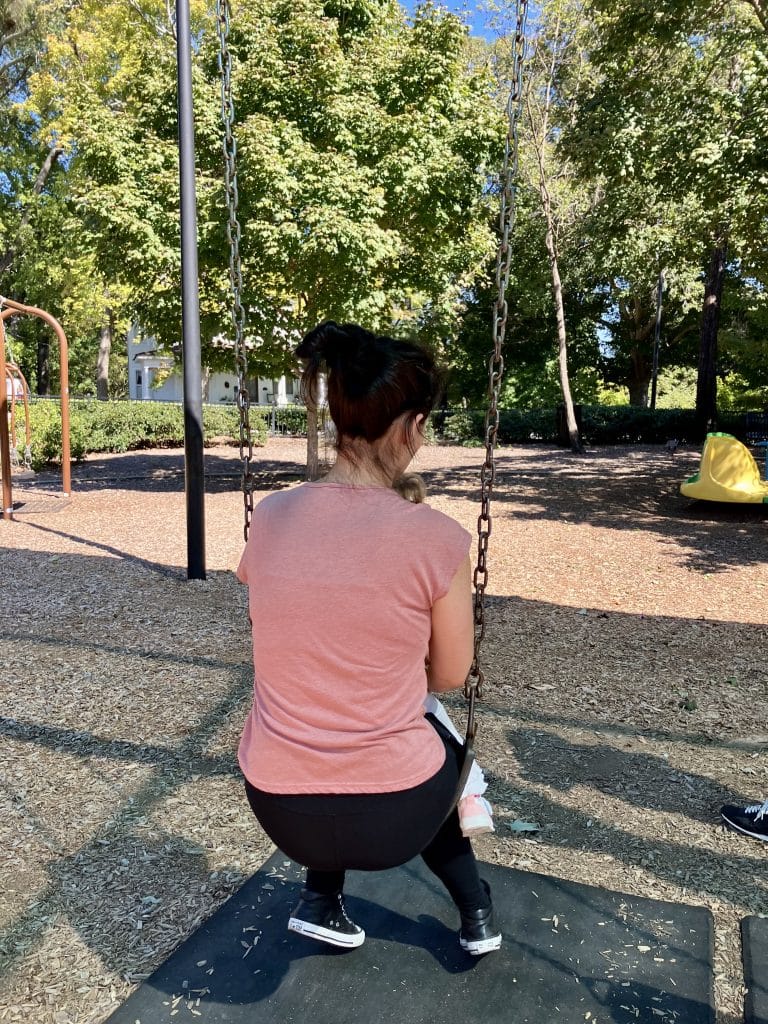
Andree Belt immigrated from Romania in 2010. She is a restaurant manager. On her day off, she sits with her one year old daughter on the swings at Thrasher Park in Norcross and sighs. She said this year, she’s voting for Donald Trump again. Belt says the last few years with higher gas prices and grocery bills have made it difficult for her family. (TS)
Q: How did you decide to vote for Trump again?
A: “I don’t see the other option being very good. At least with Trump we know the country didn’t go down the ditch. There’s really no good option. Harris says one thing and does another, she’s not a woman of her word. At least we know Trump didn’t put the economy down the drain. We need more jobs.”
Brittany Suastegui, 21, College Park
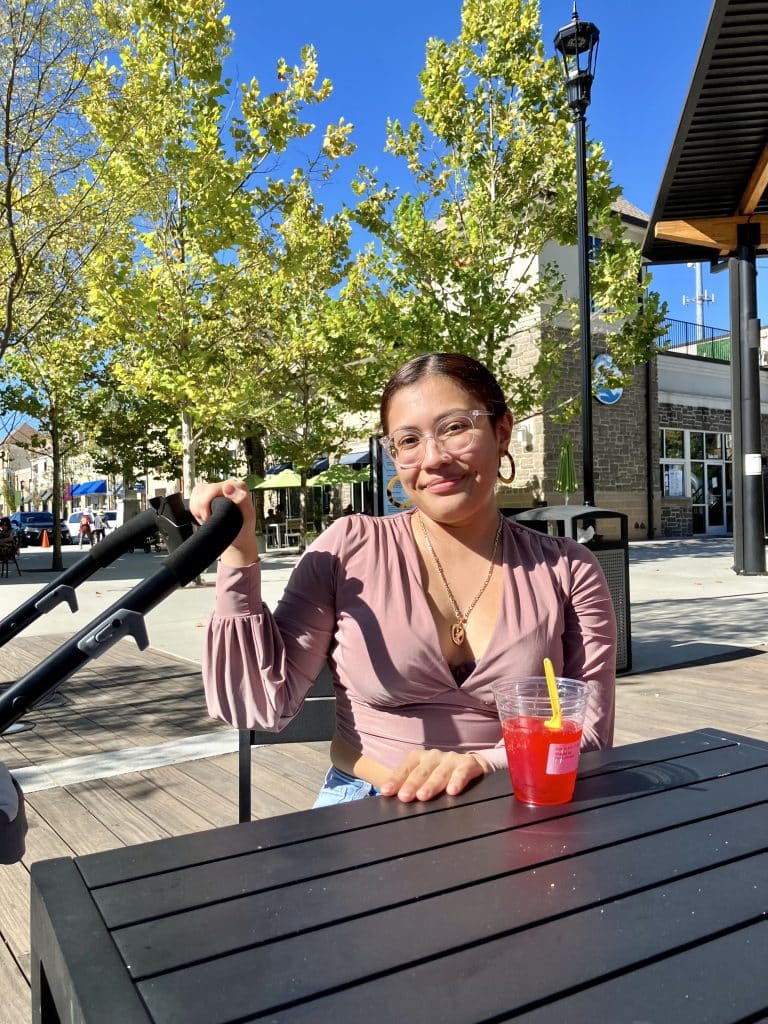
Brittany Suastegui, 21, is a medical assistant at an urgent care facility in College Park/Union City. She rocks her four-month-old baby in his stroller while visiting a friend at Peachtree Corners Park. Her parents immigrated from Mexico more than 20 years ago; both she and her parents, she says, plan on voting for Kamala Harris. (TS)
Q: How did you decide to vote for Kamala Harris?
A: “Harris hasn’t been convicted of any crimes, unlike Trump. Roe v. Wade was overturned and abortion is a top issue for me because I believe every woman has a right to choose. My parents would probably say immigration is their top concern. My parents were given legal status even though they came here 20 years ago, but it seems people who arrive later, such as asylum seekers, get legal status faster. It’s not fair sometimes. It seems [Latino immigrants] who live in the border states and in the South are more likely to vote Republican. I also think access to healthcare is a huge problem. Because of immigration status, many undocumented immigrants may resort to under-the-counter medication. They are a lot more likely to die of complications from diabetes and hypertension because they can’t get access to care.”
Nauro Junior, 47, Suwanee
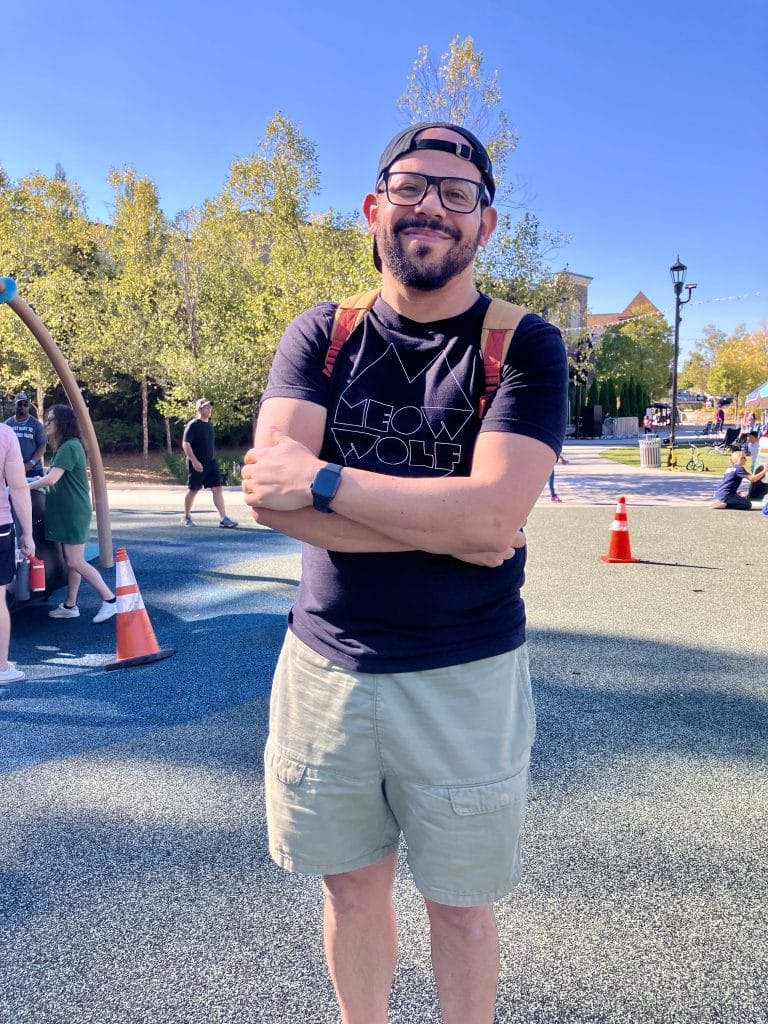
Nauro Junior, 47, is a marketing professional in Suwanee. He immigrated from São Paulo, Brazil, in 2009, and became a naturalized citizen in 2019. Watching over his seven-year-old daughter at Peachtree Corners Park, he says he’s planning on voting for Kamala Harris. (TS)
Q: How did you decide to vote for Kamala Harris?
A: “It’s a very important election. I’m voting for the only viable option: her! It was hard last time for Democrats to win Georgia. It’s hard to say if she will win, but Harris has a shot.”
Q: What are your top issues?
A: My top concerns are gun safety and the economy. I’m not only concerned for my daughter and school shootings but I also don’t want to get shot. There has to be common ground among the population for wanting gun safety laws. In Brazil, guns are not widespread or free to purchase like they are here. Some areas like Johns Creek are safe but, being from a third-world country, you learn quickly where it’s not safe. I’m also concerned about women’s reproductive freedoms.”
Cindy Marin, 27, Stone Mountain
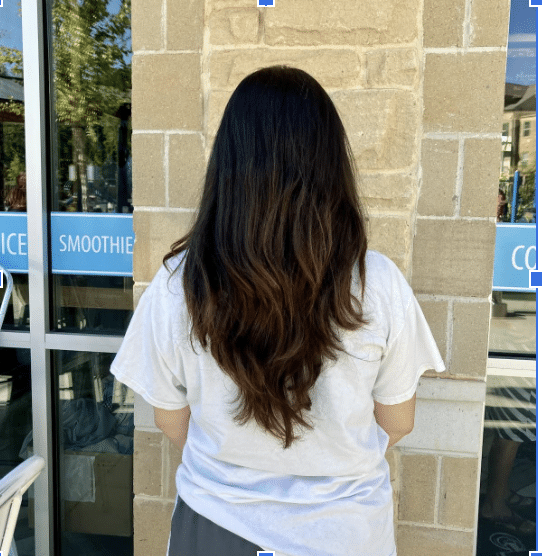
Cindy Marin, 27, lives in Stone Mountain. She calls herself a nondenominational Christian and says she has never voted and has no plans to vote in this year’s presidential election. She is the child of immigrants from Mexico and Ecuador. She says her top concerns are healthcare and the economy and says “everything is too expensive: gas, food, rent, shopping.” (TS)
Q: How did you decide you wouldn’t vote?
A: “I’m not a big fan of politics. I believe in God. I would write Jesus Christ on the election ballot if I could. I don’t trust the election process. It’s all about money and it’s rigged in my opinion.”
Heather Robinson, 31, Stockbridge
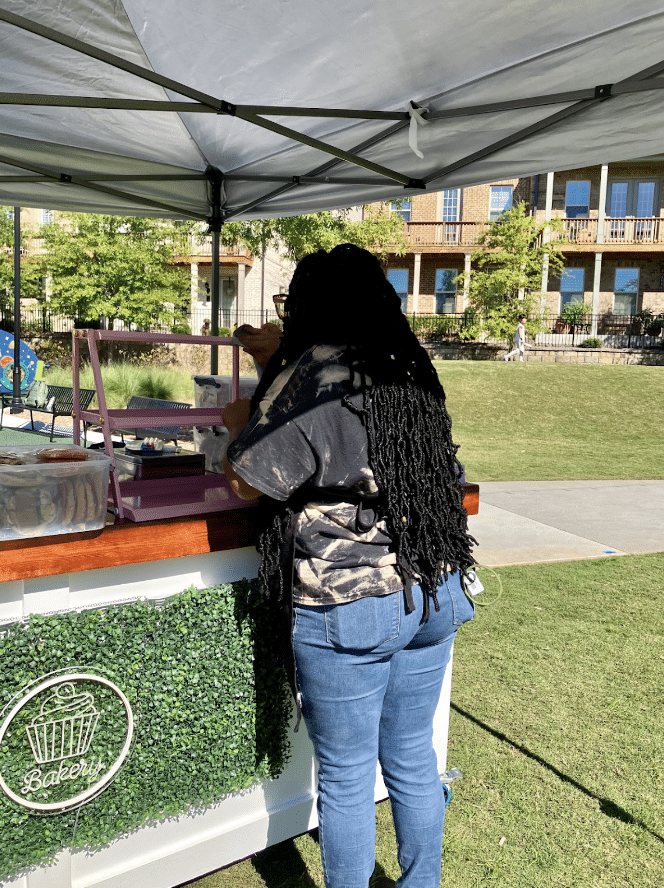
Heather Robinson, 31, from Stockbridge, owns a bakery called the Tipsy Baker. On a Saturday afternoon, she sets up her stall before a concert at Peachtree Corners Park. She says her parents immigrated from Guyana and Jamaica before she was born. (TS)
Q: How did you decide who you are voting for?
A: I am voting for the Democratic candidate for president. I’m concerned about number one, female rights, and number two, abortion rights. I’m not ashamed to say I’m voting for Kamala Harris.”
Zelalum Alemayehu, 48, Lilburn
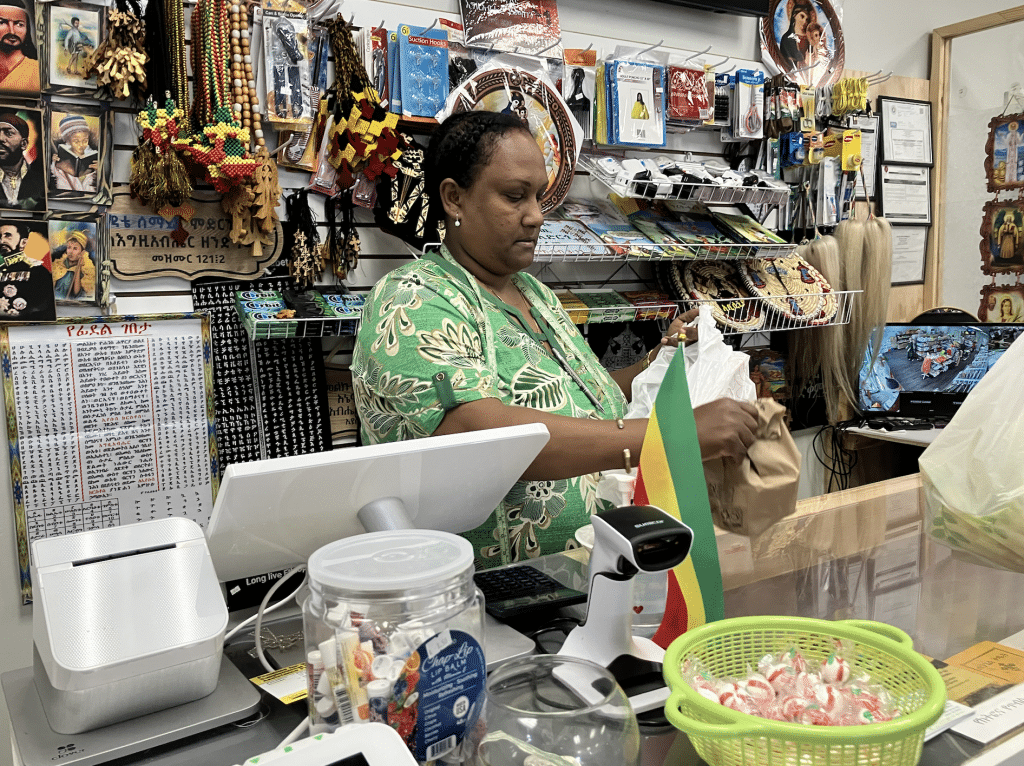
Zelalum Alemayehu, 48, a business owner in Lilburn, says she is undecided.
Her husband, Asch Bezabih, 45, is an IT consultant. He didn’t want to be photographed, but says his top concerns are safety and legal migration. (TS)
Q: How did you choose who to vote for?
Alemayehu: “I agree for the side that President Harris would be the first Black female president. I am also agreeing with some points on the other side.”
Bezabih: “I am concerned about the level of crime in this country. I want to protect what I have and make sure my daughter is safe. I’m also concerned about immigration: Everyone is an immigrant here, but we have to follow procedure and come to the U.S. in a formal way, not from crossing the border.”
Sergio Espinoza, 30, Duluth
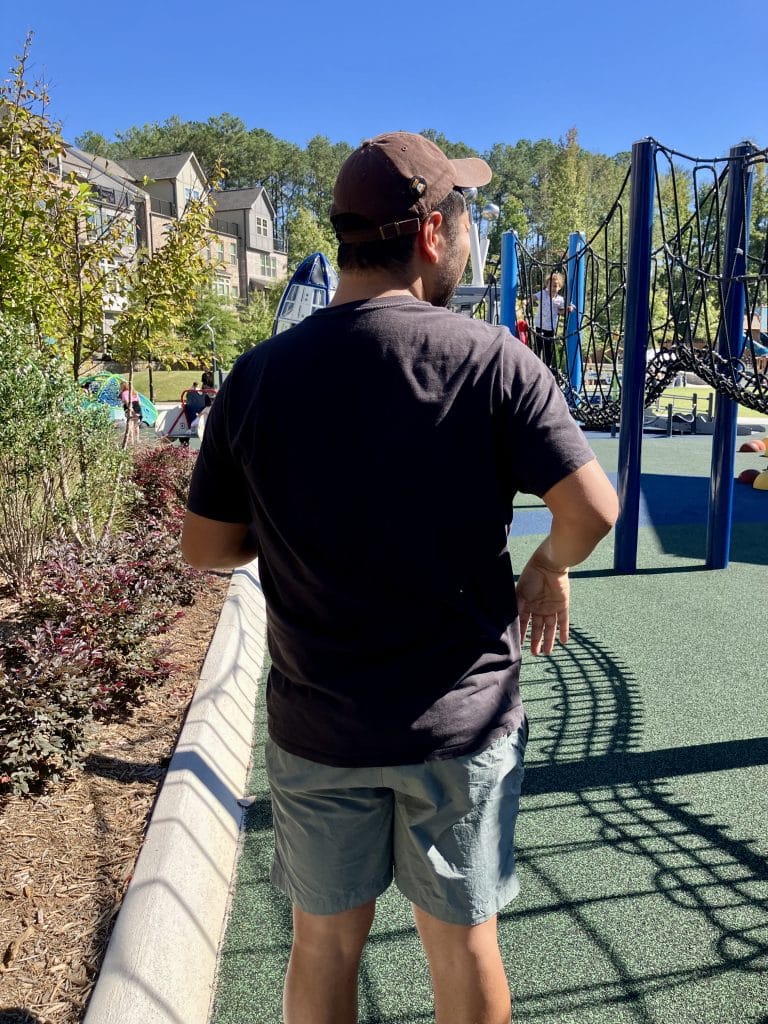
Sergio Espinoza, 30, is an electrical engineer from Duluth. Though he voted for Joe Biden in the last election, he plans to vote for Donald Trump this year. His parents are business owners who immigrated from Mexico before he was born, but Espinoza says he still considers himself an immigrant. He watches as his three-year-old daughter crosses a bridge at Peachtree Corners Park. (TS)
Q: How did you decide to vote for Donald Trump?
A: “The economy is a big concern for me, as well as healthcare and security with the school shootings. And how the U.S. is lending money to other countries for war because now we see how there’s not enough money with the hurricanes [Helene and Milton] to help our own country.”
Q: Do you trust the election process?
A: “No. The proof is everywhere. I don’t know if we’re really in power of anything as American citizens. I know there’s some kind of corruption going on.”
Jay D, 37, Johns Creek
Jay D., 37, who lives in Johns Creek, immigrated from England in 2015. He declines to share his last name out of privacy concerns. Watching his children—ages two and five—play in Peachtree Corners Park, he says he’s not planning on voting in the presidential election. (TS)
Q: Why are you choosing to not vote?
A: “I disapprove of both candidates. I believe in free healthcare, which neither party cares about. Leaving to come here feels like a mistake but England is even worse—they’ve had the same party in power for like 13 years. Here it’s a mix of four years, then four years, but it’s still bad. And immigration is a false issue where both sides play the blame game. I don’t feel hopeful about the future.”
Keep an eye on our Instagram page for more profiles of Metro Atlanta’s immigrant voters.
Authors





Related Articles

“No more discussion about ICE will be permitted”
Inside the Dekalb County School Middle School advisory meeting that shut down concerns over ICE
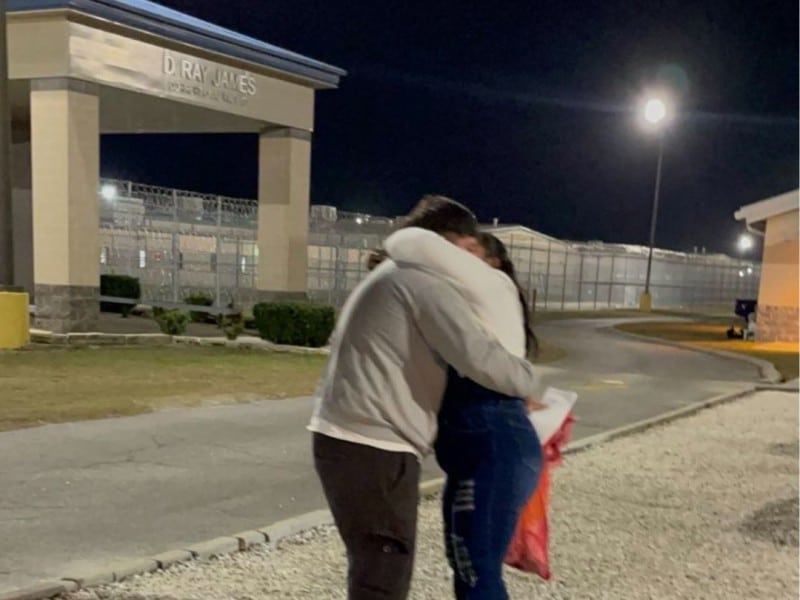
“There’s three people that are free”: More than 3 months since the Hyundai raid, immigrant rights group secures release of workers
Still, legal support is needed to support several of the workers who are detained at the Folkston ICE Processing Center.
Specific ways you can support Atlanta’s immigrant and refugee communities right now
We’ve been gathering information about what concerned folks can do to support immigrant and refugee communities.