One woman’s mission to ensure elderly Korean immigrants in Atlanta register to vote
Kay Kang doesn’t canvass to reach voters. She builds relationships, sends text messages, and taps into a shared history.
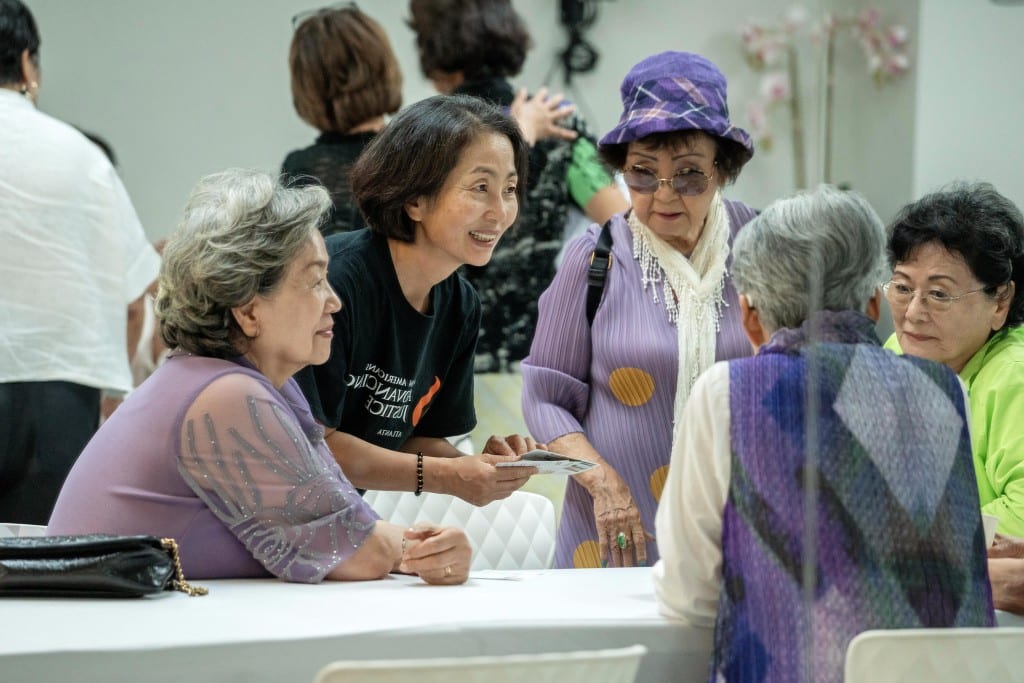
On a late June afternoon, Kay Kang was speaking at the monthly meeting of the Korean Mothers Association of Atlanta in Suwanee. Around 30 Korean American women in their 50s and 60s were sitting in folding chairs around long tables, quietly listening to what she was saying.
To the side, a table was neatly laid out with Korean dishes like japchae (stir-fried noodles). Three canvassers from Asian Americans Advancing Justice – Atlanta (AAAJ- ATL), a nonpartisan nonprofit organization, sat next to the food, with voter information pamphlets, ready to register people on the spot.
Kay Kang is an outreach coordinator with the Norcross-based nonprofit. At the meeting, she was in her element. “I tend to connect with [people like them] easily, given our shared immigration history and experience in this country. They are the easiest to approach,” Kay told 285 South. Unlike door-to-door canvassing, Kay’s preferred strategy for reaching unregistered Korean American voters, particularly the elderly, is to build relationships and give presentations in these sorts of group settings.
As a nonprofit, AAAJ doesn’t advocate for any political candidates, but part of its mission is to help support Asian American participation in the electoral process. And as Atlanta’s Korean population has grown, so has their representation at the polls. According to the 2020 U.S. Census, more than 72,000 Korean Americans were estimated to be residing in Georgia, with most clustered in Gwinnett, Fulton, and DeKalb counties. Over the past decade, the Korean population in the state rose by 20%.
In the 2020 presidential election, the increase in Asian American voters in the Atlanta metro area helped deliver a narrow victory for Joe Biden, flipping Georgia to a majority Democratic state.
During the presentation, Kay spoke to her audience about the importance of voting and how it could help those with mostly immigrant backgrounds feel more connected to American society. Afterward, three of the attendees registered on the spot.
“I tell them voting can be hard, but this is something you must do as a U.S. citizen. But you also can’t get too pushy; you have to give respect for their space,” Kay said.
“I tell them voting can be hard, but this is something you must do as a U.S. citizen. But you also can’t get too pushy; you have to give respect for their space.” – Kay Kang, Asian Americans Advancing Justice – Atlanta
Kay’s job isn’t always easy, and she says it isn’t unusual for her to meet resistance and sometimes outright hostility when reaching out to Korean-led associations. One group she called was immediately suspicious when she tried to inquire about a festival booth to register voters; they accused her of trying to fundraise, which was not permitted. “I become more calm when people are more critical,” Kay said.
Other organizations just want to stay away from anything they think might be seen as political. “Some churches will say they don’t want any connection with politics or government. They’ll say they need to confer with the congregation on whether they’d like me to come and talk.” Smaller churches typically have this reaction, Kay told 285 South; larger ones, like the Korean Community Presbyterian Church in Duluth with nearly a thousand congregants, are the opposite, frequently inviting Kay to speak and openly encouraging congregants to register and vote.
Kay’s motivation to get Atlanta’s Korean diaspora to participate in the democratic process comes from her own history. She grew up in South Korea during its tumultuous post-war period, witnessing the country’s struggle to democratize. She watched her father fight (and suffer the consequences of) an authoritarian regime. When she talks to her audiences, she says she tries to convey the “preciousness” of voting to the Korean community.
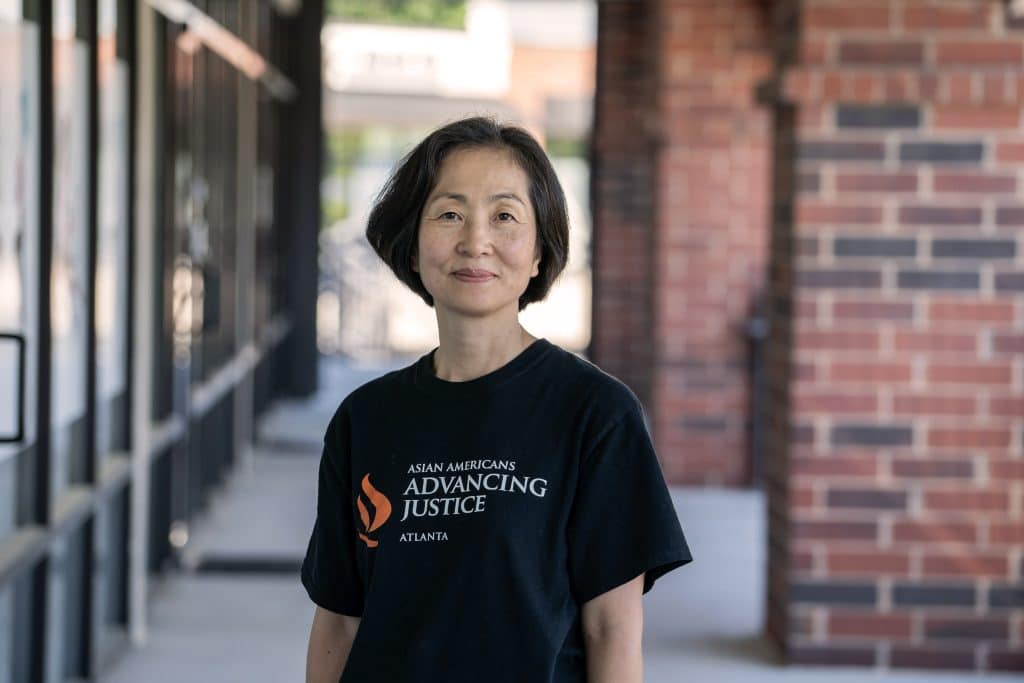
Kay faces other challenges too, especially with older members of her community. “Older citizens really need step-by-step support when voting in this country,” Kay says. “They are not as accustomed to technology, and along with any language differences, many barriers exist for older Korean immigrants to fully participate in voting.”
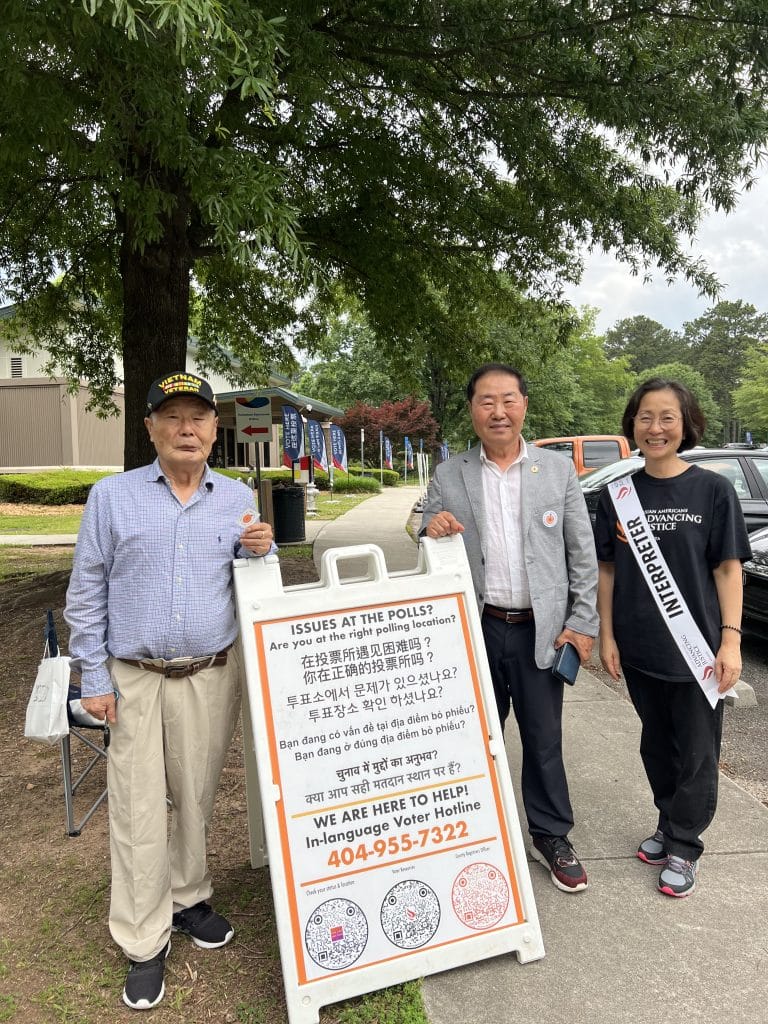
One such older citizen is Song Hyo-nam. He’s 80 years old and a veteran of the Vietnam war, where 350,000 South Koreans fought alongside U.S. troops. Song is also the leader of the Korean-Vietnam Veterans Association of the Southeast Region. One of Kay’s proudest moments, she said, was helping members of the association vote in the primaries earlier this year for the first time. Song also voted in the primaries, largely because of Kay. As with many of her outreach efforts, she had sent him dozens of text messages about voting – and he did not receive a response to a single one of them. Song eventually called her though, asking her to speak with his association about voting.
“Kay helped register 14 of our [association] members to vote for the first time this year,” Song said. “It’s great to see younger people doing this type of work.”
“Kay sat with them outside of the polling place, helped them fill out sample ballots — which Gwinnett County has offered in Korean since 2021 — and went with them to the voting booth to cast their vote.
Song was grateful. For members of his community, he said, voting could be tricky. “So many of us find voting in this country to be complicated and difficult; people like Kay are doing a great service.”
“So many of us find voting in this country to be complicated and difficult…people like Kay are doing a great service.” – Song Hyo-nam, Korean-Vietnam Veterans Association of Southeast Region
While the job can often seem slow and emotionally exhausting, Kay says she’s getting results. In 2023, she managed to help nearly 130 Korean American residents register to vote.
Kay says she doesn’t know anyone else reaching out to elderly Korean American voters, though there might be more people out there. She’s hopeful that Georgia’s growing Korean population, who can access voter information in Korean in more counties like Gwinnett and Dekalb, will feel empowered to register to vote and participate more fully in American life.
“With Koreans, you have to emphasize the preciousness of voting, how it will help them feel closer to American society, and almost encourage peer pressure — if a Korean sees other people around them doing it, they often feel compelled to do it, too.”
Author

Related Articles
These are the bills impacting immigrants in Georgia that survived Crossover Day—or didn’t
Crossover Day is the make-or-break point for bills to have a chance of passing in each year’s legislative session. Here’s how a range of laws affecting immigrants fared.
Refugee, Muslim, and Latino organizations push for laws to improve immigrants’ quality of life in Georgia
Among them: increased opportunities for foreign medical graduates to expanding language access in schools to repealing immigration enforcement bills