
One year after October 7, Emory students honor lives lost in Palestine
This spring, student protests over the war in Gaza were met with police violence. Tuesday night’s vigil was more peaceful.
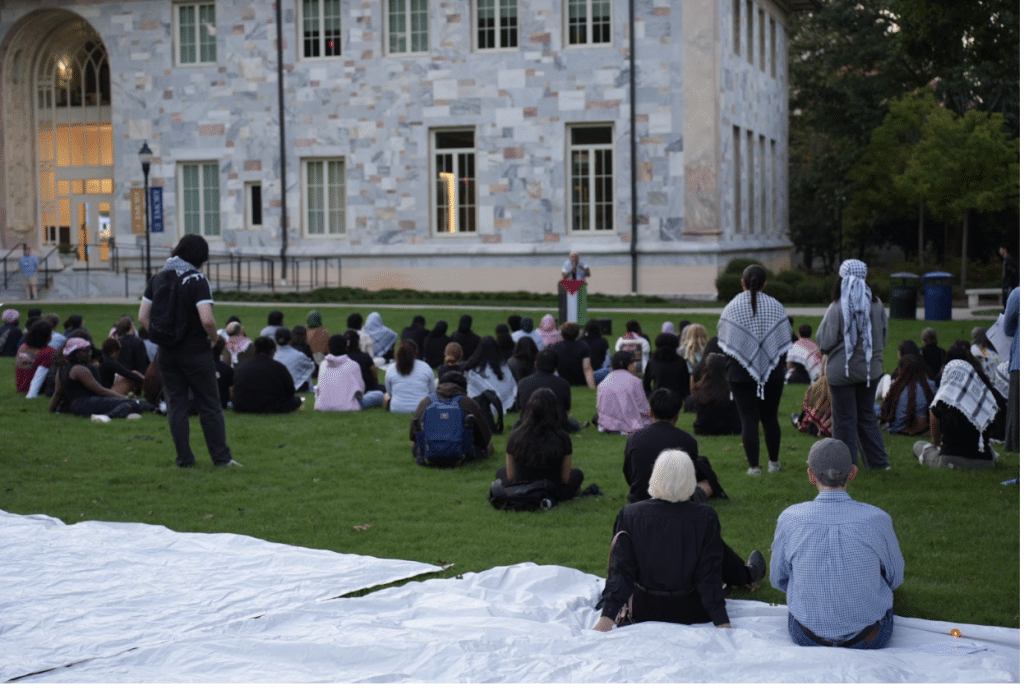
On Tuesday night, a crowd of about 70 people held candles on the Quad of Emory University to mourn the lives of those killed since October 7, when attacks on Israel by the Palestinian group Hamas ignited a regional war, now entering its second year. Organized by Emory Students for Justice in Palestine (SJP), the event served as a memorial service for the dead in Palestine and, now, Lebanon, where Israeli forces invaded earlier this month and have killed more than 2,000 people. That’s in addition to the tens of thousands killed in Gaza over the past year—in actions human rights advocates and legal scholars have said could constitute a genocide.
“I don’t know if anyone could have predicted what would come out of the events on October 7,” said Ibrahim, the president of Emory SJP, who preferred to use his first name out of safety concerns. “However, what I do know is that the world has failed Palestine.”
Students, faculty, and community members read letters from Palestinians, raised money for relief efforts, wrote out the names of the dead, and gathered in multifaith circles to pray. Tuesday’s vigil was markedly different from protests on the Emory Quad in April, when police attacked protesters, using pepper balls and tear gas to disperse an encampment set up by students agitating for a ceasefire. Students also demanded that Emory divest from both Israel and the controversial Atlanta police training facility known as “Cop City.” The crackdown resulted in at least 28 arrests, according to local media reports.
According to data compiled by the Associated Press, the number of Gazans killed has exceeded 41,000. Nearly 100,000 are wounded, and 90 percent of the occupied territory’s population—roughly 1.9 million people—have been displaced. (A study in the British medical journal the Lancet estimated that the death toll could eventually exceed 186,000.) Following Hamas’s October 2023 attacks, which resulted in the deaths of around 1,200 Israelis, the conflict has grown beyond Israel and Palestine. “As we speak, the U.S. and Israel continue to bomb Gaza, the West Bank, Lebanon, Yemen, and Syria,” Ibrahim said, referring to the staunch support—and billions of dollars in military aid—the Israeli government has received from the United States.
Tuesday’s event was the third memorial Emory SJP has put together in the past year. Speaking to 285 South, Ibrahim said he was saddened to be organizing another. “I did not expect to have to do this memorial. I really hoped and prayed that there would be a ceasefire over the summer, that Palestinians would stop dying,” he said. “But unfortunately here we are, one year later—one year of genocide.”
As the fall semester continues, Emory SJP plans to keep protesting, Ibrahim said: “We are going to continue working towards divestment.”
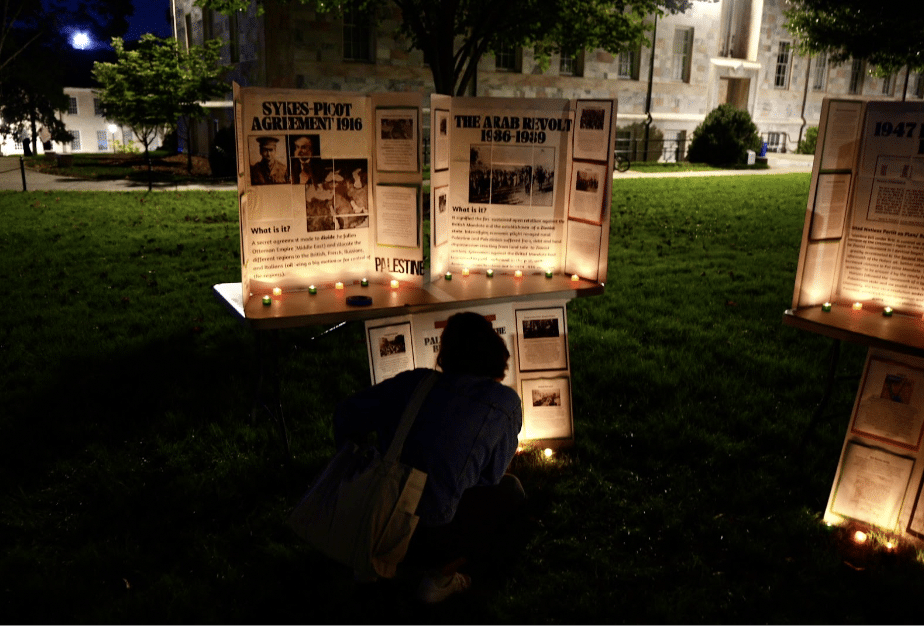
Members of the surrounding community also joined the event, including Rev. Sara Webb Phillips, an Emory alum and a member of the Atlanta Multifaith Coalition for Palestine, who just returned from a visit to the West Bank and the Gaza border. She said she attended because she felt it was important to show that students have a right to protest without fear of arrest. In addition to criticism over its handling of the April encampment, Emory is currently facing a U.S. Department of Education investigation after students filed a federal civil rights complaint alleging months of “severe discrimination, harassment and intimidation of Palestinian, Arab, and Muslim students on Emory’s campus by faculty, fellow students, alumni, and Emory administrators.”
Another coalition member, Steve Babb, said: “I wanted to come to a place where people believe Palestinians are human beings—which is a pretty low bar.”

Related Articles

“No more discussion about ICE will be permitted”
Inside the Dekalb County School Middle School advisory meeting that shut down concerns over ICE
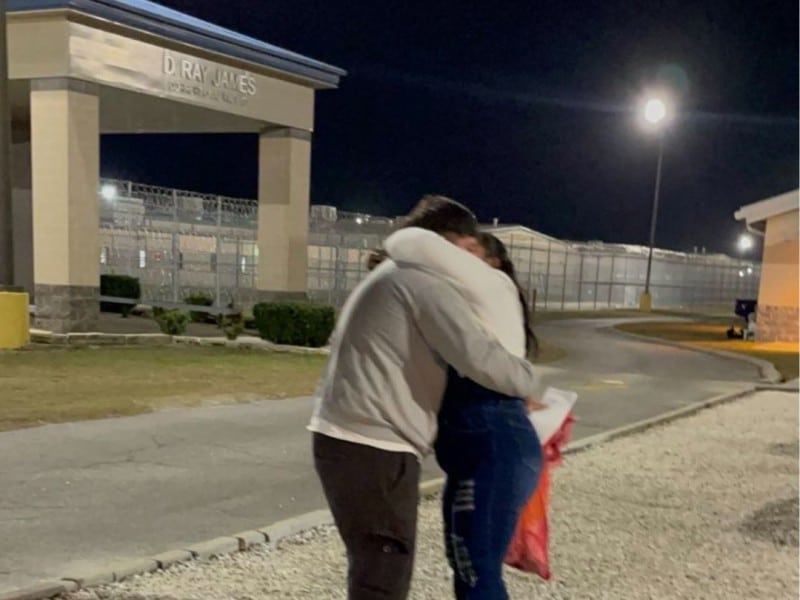
“There’s three people that are free”: More than 3 months since the Hyundai raid, immigrant rights group secures release of workers
Still, legal support is needed to support several of the workers who are detained at the Folkston ICE Processing Center.
Specific ways you can support Atlanta’s immigrant and refugee communities right now
We’ve been gathering information about what concerned folks can do to support immigrant and refugee communities.