
SNAP benefits expected to end in November: “That’s just like another chaos and panic.”
For recently arrived refugees in Georgia, who have yet to find their footing in an unstable economic environment, cuts to food benefits add to an already burgeoning crisis of costs
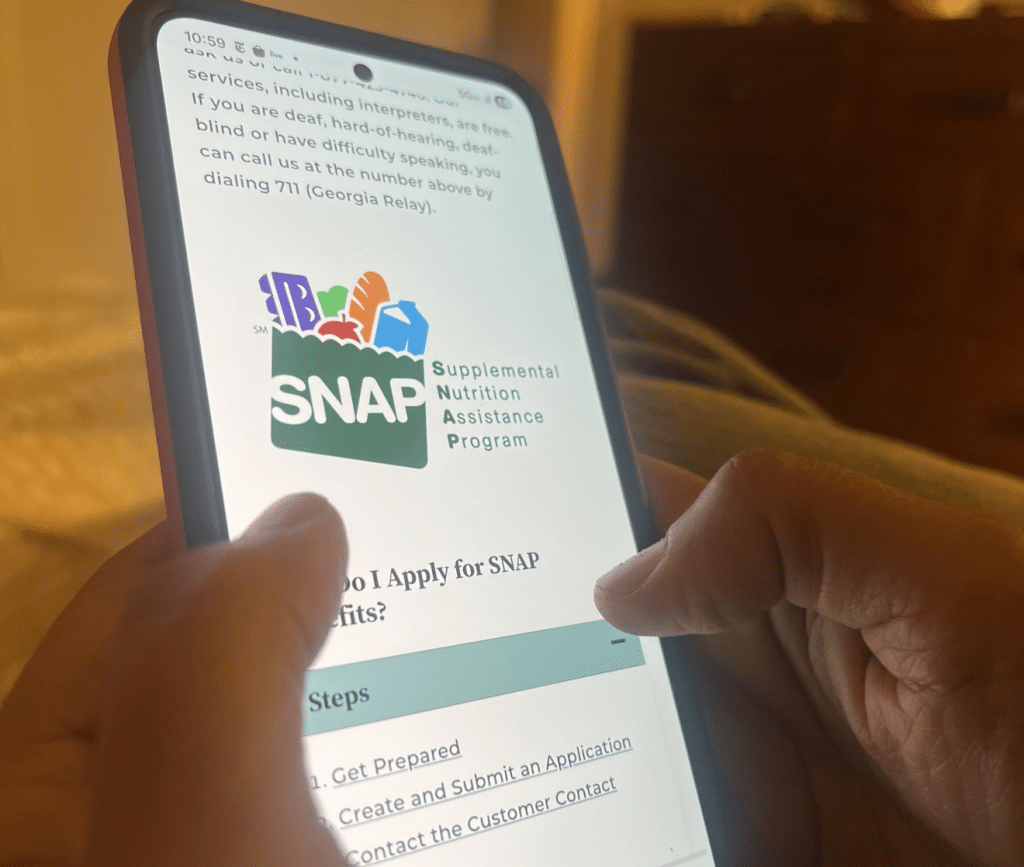
Stone Mountain resident Rita, who didn’t want her last name to be shared, doesn’t know how she’s going to pay October’s rent, which is already late. Her monthly rent and utilities in her two bedroom apartment, which she lives in with her two children, are about $1450.
“If I show you my bank balance, I have $20,” she told 285 South on Thursday, her voice breaking. “I haven’t paid the October rent, and November is on its way.”
She was recently notified that in November “we might not receive food stamps. That’s just like another chaos and panic.”
Rita is among the 1.4 million Georgia residents who are likely to lose their SNAP benefits come November 1, if the government shutdown continues. Those benefits are a lifeline when the cost of rent, utilities, and transportation are non negotiable. For refugees like Rita, who have recently arrived in the U.S., it will make finding a stable footing even harder. Especially given that the support once provided by some resettlement agencies has gone due to federal cuts to refugee programs.
Now, 285 South is hearing reports that the job market that once supported so many new arrivals is less robust than it used to be.
Born in the Democratic Republic of Congo, Rita arrived in Georgia in October of 2024 with her children, aged 4 and 11, via Zimbabwe. “I grew up in the refugee camp,” where, she said, “they all tell us America is where you gonna go get rest and just start living.” The message she heard was simple: “if you’re strong enough, you’re gonna make it…There’s jobs, there’s money.” She wasn’t sure if America would be their resettlement destination, it could have been “either Canada, Australia or America,” but, she was told, “wherever they send you is better than where you are right now.” When she found out it would be the U.S., she was excited: “everybody talks about American land of dreams, or the sweet American dream.”
Rita and her kids arrived at Hartsfield Jackson Atlanta International Airport on October 30, 2024, and a resettlement agency set them up in an apartment, and paid her rent for three months.
After that, she said, she was on her own.
She managed to get a job through a staffing agency as a janitor, but when the hospital she was cleaning cut that contract, she was cut as well. Since then, she’s had multiple temp jobs, but they’ve been either part time or erratic.
Her last job was at a warehouse in Stone Mountain. She was hired in August, and in late September, she received a text message, she said, that said, “the company is slow, when they get back to being busy, they’re gonna call us.”
She lost her paycheck, and with that, her ability to pay October’s rent. “I mean, how do you do that to somebody? I’ve got kids,” she said.
It’s been a similar situation for some of her friends, she said. “I have a friend who got a similar job here at a food company by East Ponce de Leon. The same thing. They hired her. She had high hopes, like, okay, now I’m gonna pay my bills and all that. All of a sudden, the company is slow. They call her to come into work once or twice in a week. How is she gonna pay her bills?”
“Coming to America was like a dream come true, but then when I get here…I’m just overwhelmed with the fear of what happens tomorrow.” – Rita, Stone Mountain resident, SNAP benefits recipient
Ellie Thaxton runs the Clarkston Cares program at the nonprofit Remerge, which provides direct assistance to families in the area, helping them pay for everything from rent to power bills to groceries. On any given day, she said, she might receive 10 different requests. Often, she has to make hard choices on who to support.
Just this week, a woman reached out asking for help with her power bill – around $800. Her food in the fridge was rotting, she said, and finding a job has been hard – she doesn’t have wifi at home to do interviews via zoom.
Ellie couldn’t help her. With limited funds, she’s prioritizing families with kids under 18. “Makes my heart break for her,” she said, adding “she’s not the only one.”
She had to turn another family away recently, who live in Tucker and are originally from Guatemala. “The dad died. They’re in such a hole right now. Their electricity got cut off – their electric bill is 1800 dollars,” she said. “I just don’t know how we’re going to help.” The mother runs her own tree landscaping business, and she’s not able to charge her phone. “How is she going to communicate? Having her phone on and Internet access is so important to running your own business.”
“We were already in a crisis before this food stamp thing,” said Ellie. Now, she said, “families will be forced to either go hungry or under-eat or spend what little income they have on food instead of other bills, bringing them at risk of eviction.”
While groups like the Atlanta Community Food Bank are encouraging folks to stock up on food now, in anticipation of crowded food pantries come early November, Ellie is raising funds to help families with rent and food in the coming days. “Sometimes it’s that little gap between them losing a job and finding a new job that can be the difference between them becoming homeless or them staying stable.”
Even though fundraising is challenging right now – one recent donor told Ellie she couldn’t donate because her “business is suffering” and “her husband works at the CDC, and he’s furloughed right now” – she’s determined. Clarkston Cares has launched an emergency fund, with the goal of raising $100,000. “I hope and pray as we get word out people will donate and try to prevent disaster.”
“Sometimes it’s that little gap between them losing a job and finding a new job that can be the difference between them becoming homeless or them staying stable.” – Ellie Thaxton, Clarkston Cares
On Monday, Rita has an appointment for her and her children’s greencards. The fee to apply is $60 for her, and $20 for each of her children. To make extra cash she sometimes braids hair at a salon close to her apartment. If it’s a busy day, she’ll be lucky to make $100 – enough for those fees.
For her rent though, whatever she makes at the salon won’t be sufficient. Back in March, when she was facing eviction, Clarkston Cares was able to step in and help out with the rent. Now, it’s not clear what she’ll do. “I can’t even do what a mother is supposed to do for her kids,” she said, breaking down into tears. “The most important thing is just the roof, having a roof over my kids head and the rest, only God knows.”
She reflects back at her time in the refugee camp, where she remembers hearing stories of the hope America would bring. She wishes someone had prepared her for what was to come.
“Coming to America was like a dream come true, but then when I get here, it’s just like another reality, because month by month and day by day, I’m just overwhelmed with the fear of what happens tomorrow.”
Author

Related Articles
Woman who assisted in federal abuse investigation, arrested at Atlanta airport and deported days later
“A slap in the face,” her attorney says describing her client’s situation, who had a pending U-visa application
A Rohingya man in New York died under mysterious circumstances— his relatives in Georgia are grappling with the loss
Federal immigration officers left Nurul Amin Shah Alam outside a closed coffee shop in harsh winter weather— days later he was found dead. He was getting ready to move to Georgia, says his niece in Stone Mountain.