
Some wins for immigrant survivors of violence, despite slowdown in U visas
“I knew I could do better. It was just the one thing that was lacking for me to go further: my immigration status,” one survivor said.
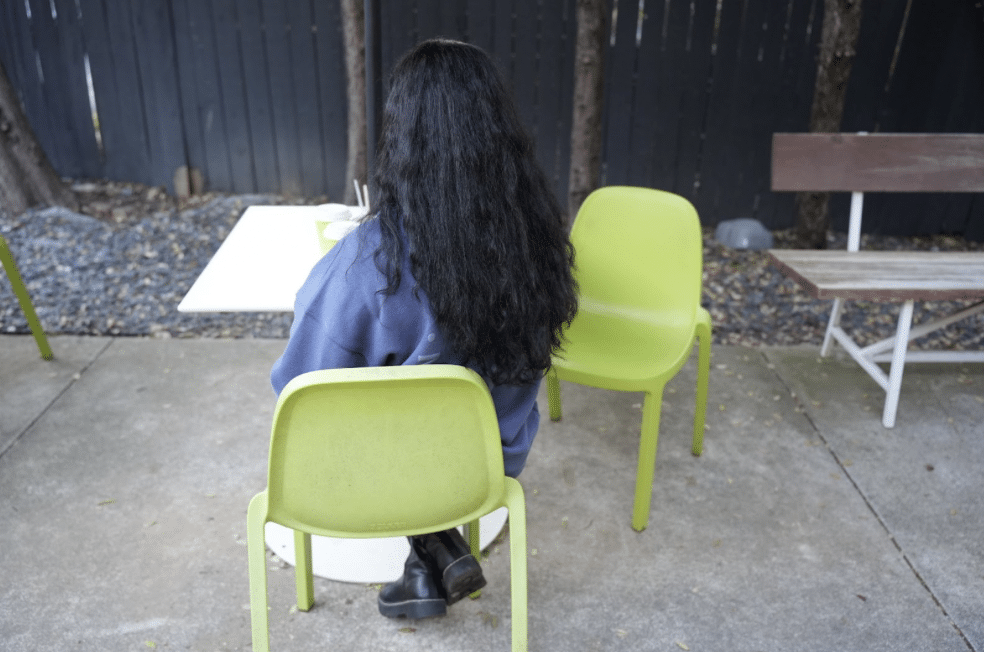
In 2020, Hetal moved to the U.S. with her then husband and two daughters, aged 10 and 15. In India, Hetal and her children had already suffered years of abuse at the hands of her husband and his family: “It’s been since day one of my marriage,” she said. “His family, they abused three of us, not just me.” Although she tried to escape multiple times, she said she could never get the assistance she needed—her husband’s family had political connections and influence in India. “Wherever I went, I couldn’t find help,” she said.
Immigrating to the U.S., Hetal’s family lived for a while in Miami before settling in Peachtree City, where her husband started a business—a gas station, where Hetal worked without pay. Her husband was still sexually abusing Hetal and harming her daughters, she said: “I used to cry in the bathroom. I used to pray to God to just help me [to] one day do everything on my own.”
In 2022, for the first time since moving to the U.S., she called the police to report her husband’s violence. He spent just a couple days in jail. But in the process, officers gave Hetal a pamphlet that included the contact information for the Tahirih Justice Center, which serves immigrant survivors of gender-based violence. Hetal learned that her experience as a survivor of domestic violence made her eligible for a U visa, which is available for victims of certain crimes or abuse who are willing to help law enforcement in its efforts to investigate or prosecute criminal activity. With the organization’s help, she decided to apply. (Hetal asked for privacy as she goes through the immigration process, so we’re using only her first name.)
A national nonprofit with an Atlanta office, Tahirih currently represents 150 local clients with active immigration cases. Many, like Hetal, are seeking specific types of visas available to immigrants with certain life experiences—not just U visas but also T visas, which are allotted to people who have been victims of human trafficking. Created in 2000 by Congress, both categories of visa have especially benefited immigrant women.
Now, the future of both types of visa, as well as other protections, is increasingly in question. Early data suggests that applications for U visas are falling, as more and more women are afraid of reporting to law enforcement. In October, a coalition of immigrant groups sued the Trump administration on behalf of a group of people who’d been targeted by Immigration and Customs Enforcement (ICE) despite having pending applications for U and T visas.
Meanwhile, there appears to be a slowdown in visa processing times at U.S. Citizenship and Immigration Services (USCIS), said Collin Mickle, the managing attorney of Tahirih’s Atlanta office, who represents Hetal. The organization hasn’t gotten a single decision on any of its pending cases this year, including Hetal’s case. The organization has had smaller wins on approvals for things like work permits, Mickle added—“but no final approval on a substantive application for humanitarian immigration relief.”
Why U and T visas matter
Both U and T visas were created as part of the 2000 Victims of Trafficking and Violence Protection Act, a bill reauthorizing the landmark 1994 Violence Against Women Act. These visas are critical, say immigrant rights advocates, because they give people experiencing violence or trafficking a way to contact law enforcement – without fearing removal from the country. Both U and T visas also create a pathway to permanent residency.
Both types of visa were targeted in Project 2025, the document created by the conservative Heritage Foundation that has served as a “blueprint” from the second Trump administration—which says that “victimization should not be a basis for an immigration benefit.” Those with pending U visa applications have reportedly been arrested and detained in the past year. Administration policies have also made it easier for authorities to detain immigrant victims of domestic violence by allowing them to patrol previously off-limit places like courthouses and schools. A lawsuit in California is challenging a policy instructing ICE officers that they no longer have to check if someone has a pending U or T visa while they carry out arrests.
The effect of that activity has been a dramatic decline in people applying for such visas: Between the last three months of 2024 and the first three months of 2025, applications declined by roughly half, according to data from USCIS. At the same time, the progress of such applications through the system has slowed, according to Mickle and other advocates. “It is quite clear the administration is slow-walking these cases,” said Charles Kuck, a renowned Atlanta immigration attorney, who added that his office has had a few final decisions on U and T visas this year.
Some wins for survivors
These days, attorneys and advocates are celebrating any wins they can get for their clients, even if those don’t include securing visas. “Every time we’re able to renew someone’s work permit or apply for a work permit for the first time, that is a huge win, because it means that someone is able to be self-sufficient,” Collin said. “Somebody is able to start to make a life for themselves and come out of the shadows.”
They have also received about half a dozen bona fide determinations, which means USCIS has established that a person has successfully submitted their claim and—if the statements they made turn out to be true—the visa will likely be approved.
“Those are big wins,” Collin said. “That means that we did our job, that we were able to help that person successfully make their case.”
Aparna Bhattacharyya, executive director of the nonprofit Raksha which works with South Asian American survivors of violence, said a few of their clients had received their work authorizations and bona fide approvals this year. “It gives them a way to have safe housing and be able to provide for themselves without being taken advantage by others.”
In Hetal’s case, she obtained the bona fide determination for her and her daughters’ U visa and her work permit in November 2024. She was able to start working as a nurse assistant, visiting elderly people, checking their vitals, and helping them with their daily activities, including attending to doctors’ appointments.
Although she still awaits a final approval and her application will remain pending for a few more years, Collin said, it is an encouraging sign for the future.
“Nothing is ever certain in immigration law, and USCIS adjudication has become more complicated and uncertain this year,” Collin said. “However, [Hetal] and her daughters have very strong cases, and we feel very strongly that they have successfully stated their case and are deserving of approval of their U visa petitions.”
Hetal is studying to become a certified medical assistant—something that wouldn’t have happened if Tahirih hadn’t helped her with her case. “I knew I could do better. It was just the one thing that was lacking for me to go further: my immigration status, and we were waiting on it, and this is a huge thing,” she said.
Author

Related Articles
A Roswell Masjid Strives To Mimic the Trees
The Living Building certification has been granted to only 35 buildings worldwide. A North Fulton masjid wants to be next.
At an annual Buford Highway food drive, volunteers prepared grocery boxes for 300 families, but 500 showed up
Many families are struggling to afford groceries—and worried about the political climate. Here’s how you can help.

Press-freedom advocates sound the alarm over Yaacub Vijandre, stuck for nearly two months in ICE custody in Georgia
The Filipino photographer and activist, who’d documented pro-Palestine rallies in Texas, was a DACA recipient. The government informed him of its decision to revoke his status two weeks before arresting him.