
Stuck in a DACA tug of war, young college educated Georgia residents’ lives are stalled
The Trump Administration has indicated it may soon accept DACA applications; but these undocumented Georgians aren’t holding their breath

Like most high schoolers, Mario couldn’t wait to get his driver’s license. Around 2017, while living with his family in Lithia Springs, he hoped to have an all-American student experience: driving to school, driving around with friends, and—most importantly—driving to any available field to play soccer.
It wasn’t until he asked his mother about it that Mario learned that getting behind the wheel would be a lot more difficult for him than for many other teens: He and the rest of his family, who came from Nuevo Laredo, Tamaulipas, Mexico, were living in the U.S. without documentation. This was news to Mario – he always thought of himself like any of his other classmates: American. “I initially felt really disappointed,” recalls Mario, now 24 years old. “Not with my status, but the fact that I wouldn’t be able to obtain a driver’s license.”
In theory, Mario did have a path to getting a driver’s license and a greater sense of stability in this country: Deferred Action for Childhood Arrivals (DACA), a 2012 Obama administration policy that extended deportation protections to undocumented immigrants who, like Mario, had been brought to the U.S. by their parents as children.
The program has helped nearly a million young adults without legal documentation attend school, get jobs, rent houses, and apply for mortgages—in short, to settle into life in the U.S. without constant fear of deportation. Virtually since its inception, though, DACA has been tied up in court, and it’s been the subject of conflicting executive orders every time a new president takes office.
When the program was first announced, Mario was 11 years old—too young to apply. When he became old enough to get his driver’s license, he faced a different obstacle: The Trump administration, aiming to end DACA, had stopped accepting applications.
Political volleyball has been a hallmark of DACA. In December 2020, a federal judge ordered applications open again, and the following month, incoming President Joe Biden issued an executive order recommitting the federal government to DACA. Any hope for potential DACA recipients would be short-lived, though: Six months later, another judge barred the government from accepting new applications, though existing DACA recipients could continue to renew their status every two years.
Scores of young people have been caught up in this back and forth—including Mario, who applied for DACA in 2021 during the brief window when new applications were being accepted. The program was put on hold again shortly after he’d submitted his fingerprints, photograph, and other biometric data.
Now, Mario and other young adults are hopeful, if apprehensive, about the future of the program: In a September legal filing, the government indicated it may start processing new DACA applications again (though not in Texas, due to the specifics of this particular lawsuit). Though that’s far from certain, 285 South spoke to DACA-eligible people to gauge their reactions—and see if they’re still interested in applying. (Out of concerns over privacy and safety, all names in this story have been changed.)
Mario, for one, wants to apply again. Fearing deportation in the midst of ongoing ICE raids, he says DACA status would “bring a sense of relief,” though DACA status isn’t an ironclad guarantee of safety: Amid the sweeping raids, some young people here with legal status have been arrested and face deportation proceedings. For Mario, though, DACA would also “bring the possibility of gaining a Social Security number and the ability to apply to various jobs.” Undocumented people can’t obtain a Social Security number unless they have work authorization, which DACA grants; without it, they can get a Taxpayer Identification Number (ETIN), which mostly means working as an independent contractor—and losing out on the benefits many full-time workers enjoy.
During college and post-grad, Mario has mainly worked as an independent contractor, including at his current job coaching soccer for a nonprofit. When he’s not putting in hours there, Mario takes his athletic skills to social media: He began filming himself during practice and providing soccer advice to followers, gaining a following and finding a way to monetize the content he makes.
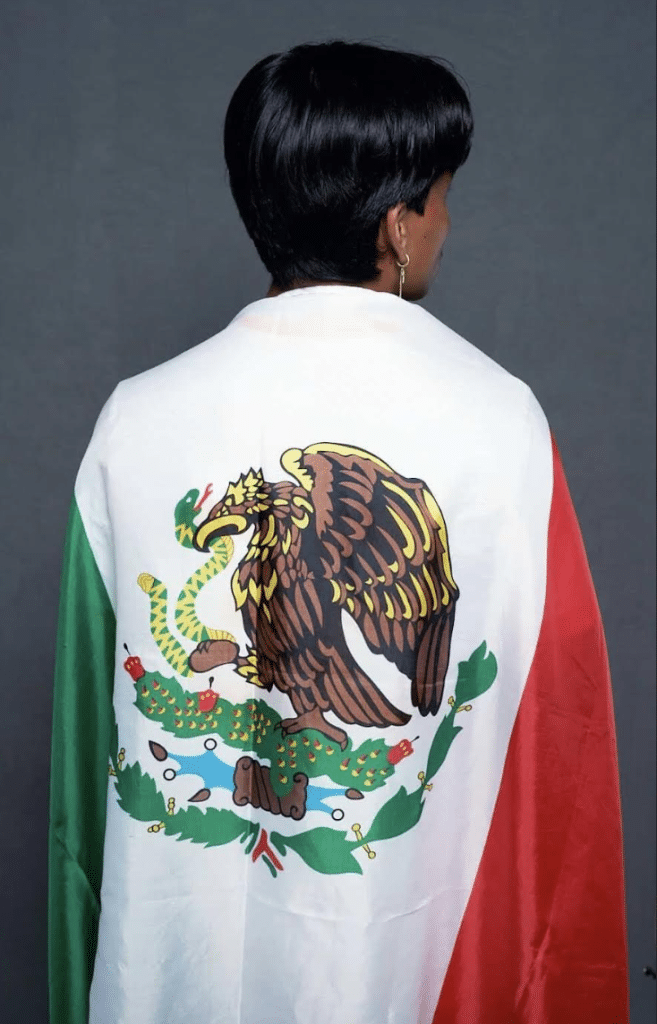
Ashley, who’s 27, has also struggled to find jobs without work authorization. Born in Michoacan, Mexico, Ashley moved to Norcross with her family in 2007 before going out of state for college. She obtained an internship while working toward a master’s degree in counseling, with a focus on student development. Although her graduate internship covered tuition, she was also meant to receive a stipend of 20k yearly. But due to her lack of work authorization, it was not possible. Ashley states, “basically that money will never come to me”. Towards the end of her internship, Ashley then learned that her university wanted to keep her employed, but the lack of work authorization prevented it. Thankfully, Ashley says, “a staff member found a way to keep me on board as an independent contractor,” and she’s hopeful her contract will be extended.
Still, Ashley is hopeful that DACA applications will open up again—and plans on applying when they do. “I would love to be able to financially support myself and my family,” she says. “And I would love the opportunity to go back to school and become a licensed professional counselor.” Once she obtains her certification, she wants to become a therapist who serves underrepresented communities.
Besides the fear of deportation, the lack of that crucial nine-digit number is the biggest obstacle faced by the people 285 South spoke with for this story, affecting not just their employment prospects but their mental health and sense of well-being. Azucena, for instance, was born in Honduras and was around eight months old when her family brought her to Georgia, where they ended up settling in the Forest Park area. Azucena became aware of her undocumented status when she was six years old—and even then, she says, she understood the implications.
Her undocumented status “impacted my mental health the most during my senior year of high school,” she says. She’d been advised to apply only to private universities. Since 2010, Georgia has barred undocumented students from its most competitive public colleges, one of three states in the country to enact such a policy. “It was rather difficult hearing about my peers getting into state schools like Georgia Tech or the University of Georgia, while I was completely barred from applying,” Azucena says. Applying to private universities gives undocumented individuals hope that the university accepts undocumented students and/or provides scholarships specifically for undocumented students.
Like Mario, Azucena decided to apply for DACA when applications were open—and, like Mario, her application had reached the biometrics stage when the door closed. Hearing the news was “a complete blow to any faith I had in obtaining some form of protection from deportation,” she says. “Not having DACA bars me from so many things: getting a driver’s license, feeling safe while traveling, and applying to certain scholarships.”
“Not having DACA bars me from so many things: getting a driver’s license, feeling safe while traveling, and applying to certain scholarships.” – Azucena, Georgia resident
She was able to get funding to enroll at a private university, where she’s currently a student. Still, she realizes that her opportunities are limited—and not just because of her status. As an environmental studies major, Azucena is facing a job market that “looks a little bleak,” she says, particularly with her desired field—disaster relief and management—decimated by the Trump administration’s cuts to government funding and nonprofit grants. She’s now planning on attending grad school: It will “buy me (and the government) some time before I officially join the workforce,” she says.
Despite hopeful signs, nothing about the future of DACA is certain. Groups like the National Immigration Law Center have underscored that—contrary to some misinformation that’s been spread—“the status quo remains. Nothing has changed for now.” Though they’re hopeful conditions will change, many DACA recipients have grown used to the uncertainty. When she heard the recent reports about applications, Azucena’s reaction was indifference: “Over the years, I have come to doubt any good news about DACA. Part of me always hopes that things will end positively, but more often than not, nothing comes of it.”
Ashley is only slightly more optimistic: “I was excited but at the same time cautious,” she says. “You never know what will happen tomorrow with this administration.”
Author

Related Articles
These are the bills impacting immigrants in Georgia that survived Crossover Day—or didn’t
Crossover Day is the make-or-break point for bills to have a chance of passing in each year’s legislative session. Here’s how a range of laws affecting immigrants fared.
Refugee, Muslim, and Latino organizations push for laws to improve immigrants’ quality of life in Georgia
Among them: increased opportunities for foreign medical graduates to expanding language access in schools to repealing immigration enforcement bills