
There aren’t enough pro bono immigration attorneys in Georgia to support people in immigration detention.
26-year-old Alizeh Sheikh is one of just a tiny handful of pro bono lawyers in Georgia providing a much needed service: representing people stuck in immigration detention
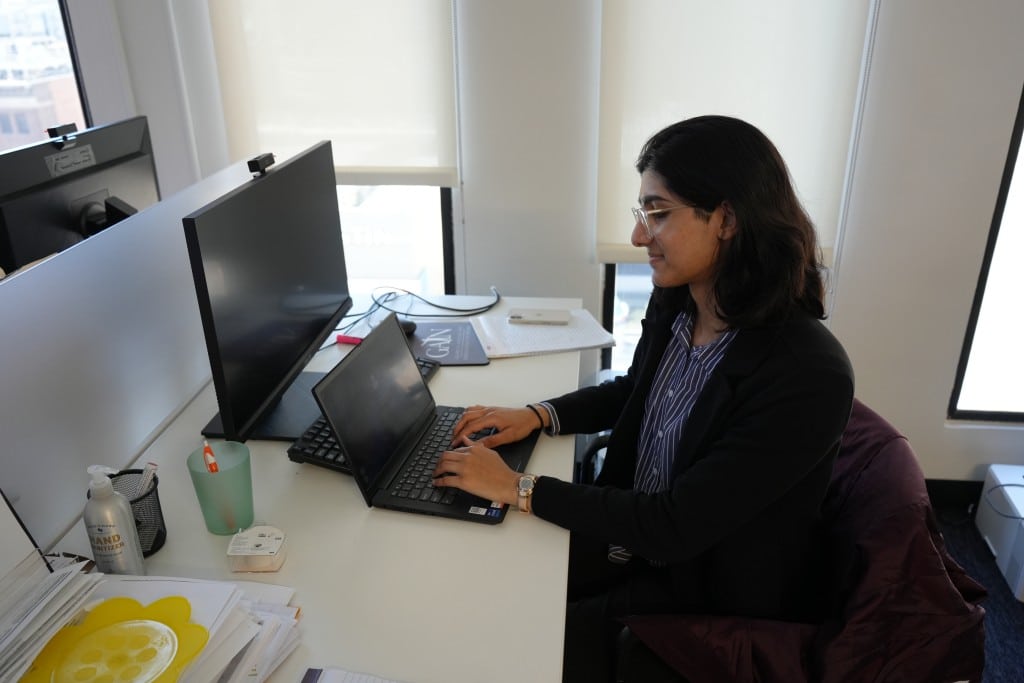
At least once a month, Alizeh Sheikh drives over two hours from her office in downtown Atlanta to Lumpkin, a small town in South Georgia. Lumpkin might be a tiny speck on the map, but it’s home to one of the largest immigrant detention facilities in the country: Stewart Detention Center, operated by a private contractor on behalf of U.S. Immigration and Customs Enforcement (ICE). Alizeh travels to Stewart to visit her clients; at 26 years old, she’s one of only about six pro bono attorneys in Georgia working full-time to support a growing number of people in immigration detention.
A recent law school grad, Alizeh, who works with the Georgia Asylum and Immigration Network (GAIN), has been doing this work for only about seven months. In that time, she’s filed for asylum for people from all over the world, including clients from Afghanistan who fear returning to a country ruled by the Taliban, and from Venezuela, a country eroded by an economic crisis and government persecution of political dissidents. In the months since Donald Trump returned to the presidency, though, her brief has continued to grow: In the nationwide crackdown following Trump’s inauguration, 1,500 undocumented people have been arrested in Georgia (around 1,400 were arrested around the same time period last year, reports the AJC).
Last year, legal resources in the state were decimated when the Southern Poverty Law Center laid off its immigrant justice team, which had previously provided pro bono support to detainees at Stewart and another immigrant facility, the Folkston ICE Processing Center in Southeast Georgia.
Today, when, according to reports, immigration detention facilities are full beyond capacity, people who are stuck in immigration detention in Georgia may receive or request a list of legal resources. That list includes GAIN, Asian Americans Advancing Justice–Atlanta, Duke Law School’s Immigrant Rights Clinic, and the City of Atlanta’s Public Defender’s Office. Each of these organizations has only one or two attorneys on staff with the capacity to provide full-time legal representation to detainees at Stewart. Other organizations, like El Refugio and Catholic Charities, also provide support to people in detention, such as referring clients to the organizations that do have legal support –Alizeh has represented clients referred by El Refugio, for instance.
“It was really important to me after law school to be able to come back home and do immigration work, specifically in Georgia, because there’s just a lot of need here,” said Alizeh, who studied law at Harvard; she grew up in Georgia, the child of parents from Pakistan. She spoke with 285 South from her office at GAIN), where she’s doing a two-year fellowship through Equal Justice Works, which connects law students and legal professionals with professional opportunities in public interest law.
“When somebody’s detained, you want to get them out as soon as possible”
When Alizeh meets a client at Stewart, she sits in a noncontact visitation booth, separated from her client by a plexiglass window. The window has a small slot for passing legal documents through; conversation happens on a closed-circuit phone, sometimes with the help of an interpreter. Although she speaks Spanish, she relies on interpreters for other languages such as Russian and Dari, she said. The first conversation is about getting to know the client: She asks how they got to the U.S., what they fear if they return to their home country, what happened to them in the past that makes them fearful, what family they have here, whether or not they’ve applied for asylum, and if they want her as their attorney.
For those seeking asylum in the U.S., access to legal representation can make all the difference. Nationally, denial rates of asylum cases for those without representation are between 80 and 90 percent; with representation, their chances are much better – the denial rate falls to between 60 and 70 percent.
“When somebody’s detained, you want to get them out as soon as possible,” said Alizeh. She does that by applying to one of two processes: bond or parole. With bond, she must show a judge that her client isn’t a flight risk or a danger to the community. If she’s successful, the judge sets a bond amount to ensure that, once they’re released, the person will return to court to pursue their immigration case.
Through parole, she asks ICE to release her client from detention; in a less formalized process, the agency decides whether or not to grant that request. She counts either kind of release as a win: Without the barriers created by detention—like limited phone and internet access, and the challenges of gathering documents—it becomes easier for Alizeh’s clients to prepare their asylum cases.

When immigrants have to argue their own cases
Since there are so few affordable or pro bono immigration attorneys like Alizeh in Georgia, most people in immigrant detention will never even get to see a lawyer—at Stewart, the number of people with legal counsel may be as low as 6 percent, according to a 2017 SPLC report.
“Realistically, people will have to do cases by themselves, without an attorney,” Alizeh said. So she’s been working on creating resources to help people represent themselves in immigration court. She’s hoping that by the end of her fellowship in the fall of 2026, she’ll have a series of materials explaining how people can best represent themselves. Those materials will include information like what the judge looks for when they decide on a bond case, and the kinds of documents that detainees need to collect in order to make a bond packet—a collection of evidence submitted to an immigration judge to support a request for a hearing and the release from detention.
For example, explained Alizeh, to prove someone is not a danger to the community, she shows to a judge that her client does not have a criminal history. If they have, she might submit an explanation about the circumstances of the crime to the judge, she said. If a client has been charged with assault and battery, and she has evidence that somebody else was the aggressor or that her client might have been falsely accused, she would submit that.
“To prove you’re not a flight risk, you want to show that someone is really appreciated by their community and has very close ties,” Alizeh said. If the person has kids, she would present to the judge a birth certificate proving the attachment of the person to the community. The materials will also include information on how those detained can collect letters from members of a community demonstrating a sense of support and the desire for their release.
Alizeh is also working on another initiative – a court watch program that enables concerned community members to witness what happens immigration court.
The point of it, she said, is to hold the system accountable by reminding immigration judges that people are watching. Through the program, volunteers will observe proceedings through Webex to get a sense of what is happening in immigration courtrooms in Stewart Detention Center–the detention facility has an immigration court where detainees attend court hearings without leaving the building. Among the data she hopes to get are numbers on how many people are represented, how many are being denied bond, and what the actual chances of getting bond are for people with criminal convictions. Alizeh hopes these efforts can help in gathering information that people in detention can use when they go in front of an immigration judge.
Soft-spoken by nature, Alizeh grows passionate when talking about these efforts, and what she hopes to accomplish by the end of her fellowship. “To me, it’s a gift to be able to do this kind of work and be able to interact with clients face to face, and feel like I got to really know my client,” she said. “I’d like to be able to not only become a better lawyer in terms of researching the law, but also become a better person.”
Author
Related Articles
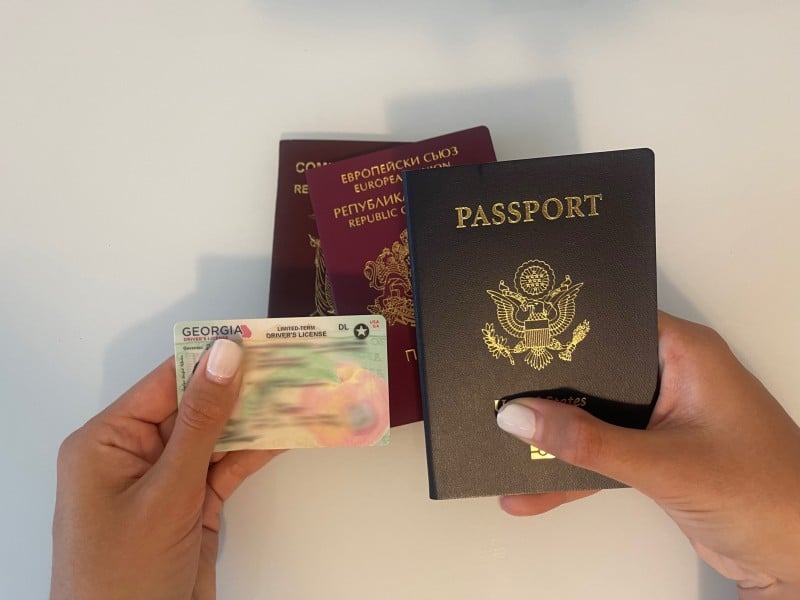
If you’re not a U.S. citizen, you may be asked for proof of your status here. What kind of documents should you be carrying?
Federal agents recently fined a green card holder for not having his papers with him—sparking questions about what kinds of documentation immigrants should be prepared to show. 285 South sought out three local lawyers for guidance.
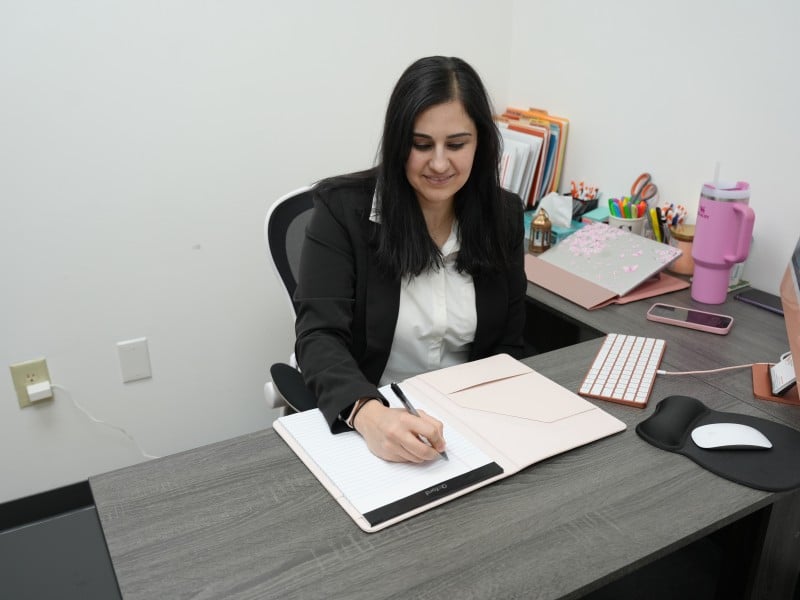
“The work has become three times harder”
We speak to pro bono immigration attorney Serene Hawasli-Kashlan, legal director of Asian Americans Advancing Justice–Atlanta, about what it’s like to do her job right now.
“We are stuck”: With SNAP and Medicaid benefits cuts, refugee families in Clarkston on edge
Following legislation passed last year, almost all immigrants and refugees in the U.S. lost access to crucial food and healthcare support. Here’s how two families are coping.