“They told me, ‘it was stolen. There’s nothing we can do.’”
Afghan families speak out over food stamp thefts.
UPDATE on 10/25/24: Georgia’s Department of Human Services (DHS) has told 285 South that clients whose claims are approved can expect to receive their reimbursement within two weeks of submitting them. 285 South will be following up with the SNAP recipients we interviewed to see if they were reimbursed.
Eight men were sitting patiently in the office of the Afghan American Alliance of Georgia, housed at the Clarkston Community Center. All were recent arrivals to the United States, and last Wednesday, they had all come to tell their story of being robbed of a crucial lifeline: their food stamps.
At first, they weren’t sure if they wanted to be photographed or named, but after discussing it over with each other for a few minutes, they came to an agreement: perhaps sharing their identities would make people pay attention to what had happened.
The men, all of whom had moved to Atlanta from Afghanistan in the last year or so, were SNAP recipients. SNAP is the federal program that provides people with low incomes a benefits card, known as an EBT card, to buy food. For new refugees and asylum seekers, who have yet to find their feet in the U.S., it is often the only way they can buy food for themselves and their families.
All of the Afghans in the room said the same thing: the money on their benefits cards had vanished in September.
One by one they recounted the sinking moment they realized the money was gone.
Mirza Mohammed Faizi told 285 South he remembers buying groceries from the International Halal Store on Memorial Drive and looking at his receipt, which showed he had $1,018 left on his account. The next day, when he tried to use his EBT card, he said there was nothing left. “1018 dollars in my account, it got lost,” he said, speaking in Urdu, before switching to Dari.
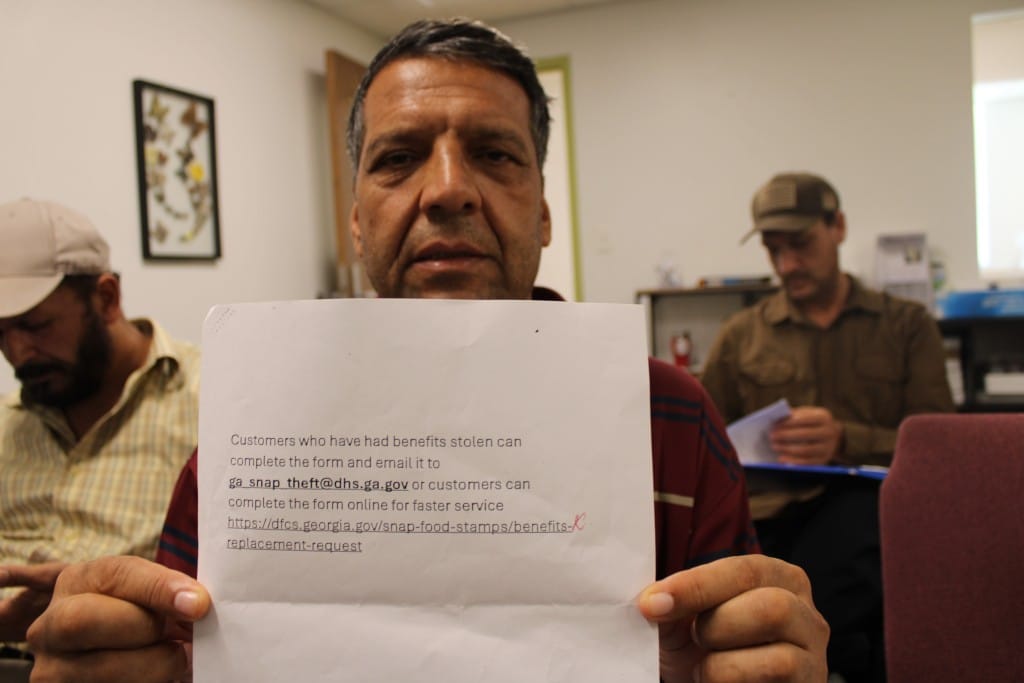
So, he took a Marta bus 125 from Clarkston to the office of the state agency that administers food stamps – the Georgia Department of Human Services (DHS) Division of Family and Child Services (DFCS) offices, on Parklake Drive, next to Northlake Mall. “They told me, ‘it was stolen. There’s nothing we can do.” The DFCS representative told him to change the pin code on his card, which he did. They also handed him a flier that included an email address and link to an online claim form.
It’s been almost a month since he filed that claim, with the help of the Afghan American Alliance of Georgia (AAGA), a nonprofit that supports newly arriving Afghans in the Atlanta area. But, he says, he still hasn’t been reimbursed. Thankfully, community members have been bringing over food for him, his wife, and their seven children.
Shaista Amani, the program manager at AAAGA, said the organization has filed 30 online claims for families who have had money from their food stamps cards stolen in the last month. “When they come to us, we check their EBT app. There is an app for food stamps where they can see the transactions. From that then we see, oh, these are the transactions, and they tell us, oh, I don’t recognize this. And when we see the location, it’s completely another state, and most of them are New York and Philadelphia.”
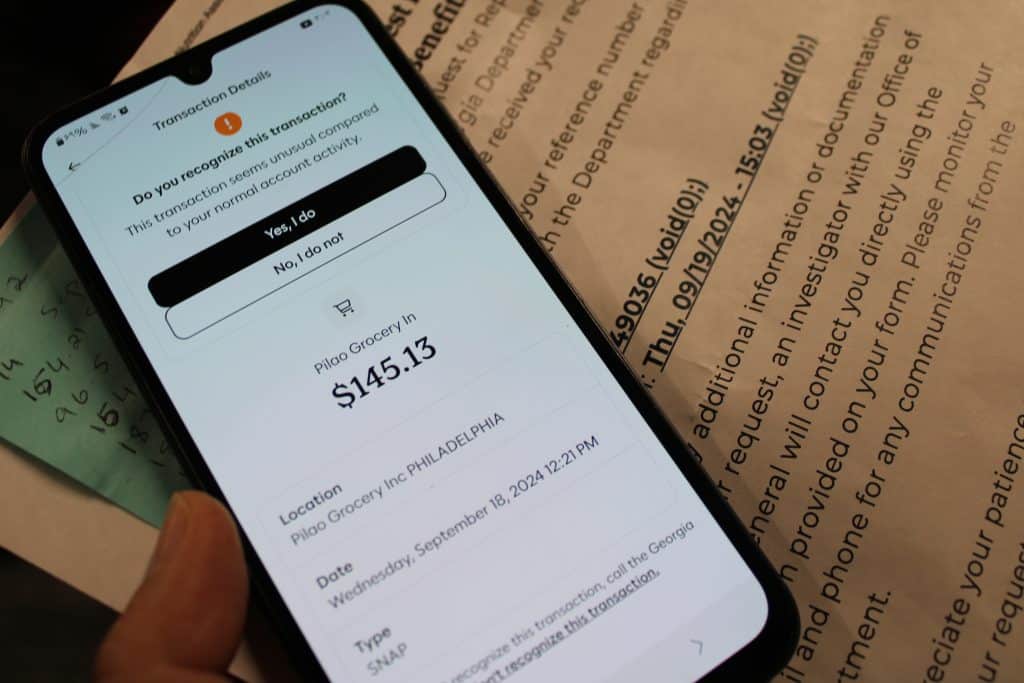
Each claim, she says, takes her and her team 30 to 45 minutes to file, but sometimes even longer if they don’t have the EBT app that tracks purchases. “So then we have to install the app so that we can get the proof.”
Reaching a human at DHS over the phone to talk through the specifics of some of the cases has been tough. “We stayed on a call for almost 2 hours… but no one was picking up from the DHS office. And even when you choose ‘schedule a call back’, there’s no one available.” Or, she says, she receives an automated message: “we can’t process your request at the moment.”
More than 7,000 SNAP theft claims have reportedly been filed with Georgia’s Department of Human Services since last October. 5600 of those claims have already been approved, and over $3 million has been issued in replacement food stamp benefits, according to a recent Fox 5 news report.
Nationwide, there have been reports of scammers lifting information from EBT cards. The cards don’t have chips, and rely on older, magnetic strip technology, which makes it easier for them to be “skimmed.” Card skimming criminals use illegal devices attached to ATMs or card terminals, to steal card data and PIN codes. Then they clone or fake those cards to make purchases, often in other states.
None of the people 285 South spoke to, nor the people Shaista has filed claims for, said they had been reimbursed, including some who said they had money stolen twice.
When 285 South reached out to DHS to ask what the agency was doing to stop the thefts from happening, a representative responded to say that they were working with their EBT card vendor to “finalize, test, and deploy to production several fraud mitigation changes to increase card security.”
And when asked when families who had filed theft claims would be reimbursed, they said that “All SNAP skimming/cloning claims for reimbursement are processed within seven days of approval.”
285 South then followed up to ask how many days this means recipients had to wait before getting the approval. DHS said “clients whose claims are approved can expect to receive their reimbursement within two weeks of submitting the claim.”

Back at the community center, over the course of the afternoon, even more people trickled in, anxious to talk about what had happened to them. The stories were strikingly similar.
Mohammed Yunus told of how his wife was at the checkout counter with a cart full of groceries when she learned there was no money left on her card. “The cashier told her, ‘you don’t have any benefits left.’” He was amazed, he said. The last time he had checked there was $2,704 on his card. That was in mid September. He still hasn’t been reimbursed, despite filing an online claim.
Khurram Baig, a middle-aged man wearing a white shalwar kameez, said $644 was stolen from his card in September, which he was never reimbursed for. But in October, when he went to a Pakistani grocery store to buy Afghan bread for $5 dollars, he saw good news on the receipt: his October benefits had arrived and he had over $700 on his card. He rushed back home to tell his family. But the next morning, when he went to get milk for breakfast from Family Dollar, the cashier told him there was no money left on his card. He’s filed a claim and is hoping to be reimbursed.
Bass Bibi Rezai had walked for an hour in the afternoon sun just to have the chance to meet with the AAGA to talk to them about her case. 672 dollars were stolen from her card, she said. She’s happy with the amount she and her husband get through their benefits card every month, she said, she just doesn’t want it to be stolen. “Wherever I take the card, they say it’s declined.”
On Wednesday, Bass Bibi filed a claim with the help of the AAGA. She hopes she’ll be reimbursed, but in the meantime, she’ll wait.

Authors


Related Articles
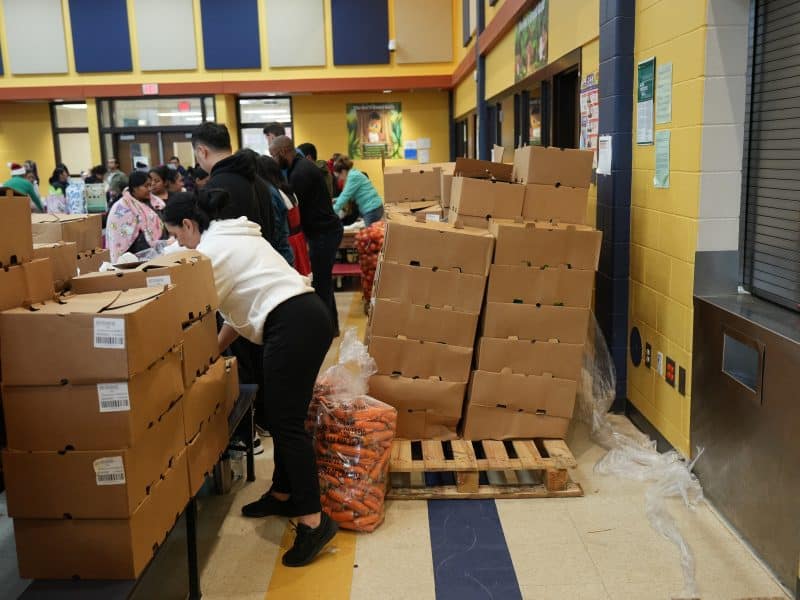
At an annual Buford Highway food drive, volunteers prepared grocery boxes for 300 families, but 500 showed up
Many families are struggling to afford groceries—and worried about the political climate. Here’s how you can help.
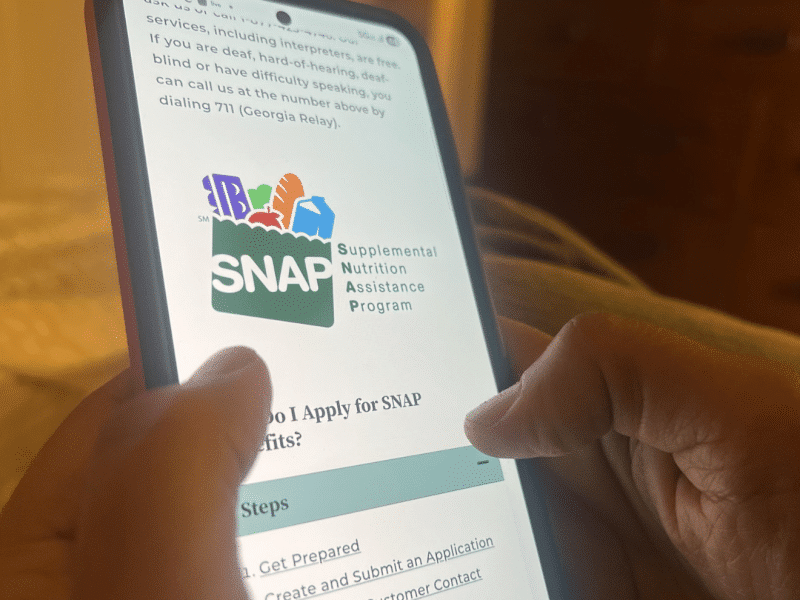
SNAP benefits expected to end in November: “That’s just like another chaos and panic.”
For recently arrived refugees in Georgia, who have yet to find their footing in an unstable economic environment, cuts to food benefits add to an already burgeoning crisis of costs