
A clean slate for the new year: Inside a Korean rice cake shop during the holiday season
On January 1 and the Lunar New Year, many Koreans eat tteokguk, a steaming broth studded with chewy rice cakes. In the winter months, that means a busy kitchen at Gwinnett County’s Nak Won Rice Cake

Every morning, the kitchen at Duluth’s Nak Won Rice Cake shop is in full swing by 5 a.m. One day before dawn in December, a crew of six took on different duties: Two cooks steamed the rice that would serve as the base for Korean rice cakes, or tteok. Two others slammed bench scrapers onto slabs of tteok adorned with beans and nuts, which would be cut and packaged into individual pieces. Another pushed a ball of rice cake dough into a machine producing ggul tteok, or honey rice cakes, which would be shaped like half moons and filled with honey and crushed sesame seeds.
As the new year approached, Nak Won was ramping up for a spike in sales of tteokguktteok, the thin, white, oblong rice cakes used in tteokguk—a soup traditionally consumed by Koreans to mark the holiday. “The whiteness of the soup symbolizes a clean slate to start the new year with,” said Nak Won owner Lee Soon Hee, walking around the shop to monitor her employees’ progress. She moved finished items into storage or out front, into the cafe area, where they’d be sold when the business opened in a few hours. Steam produced by the busy operation permeated the small storefront and fogged the windows.
Lee has owned and operated Nak Won Rice Cake shop since 2000. The business has three locations in Gwinnett County, including the one on Peachtree Industrial Boulevard where Lee was this morning. (The others are off Pleasant Hill Road in Duluth and in Suwanee’s Assi Plaza.) “Tteok represents celebration in Korean culture,” said Lee, who previously ran a tteok shop in the Gangnam district of Seoul. “At one point, rice was a precious item [in Korea] and hard to come by, so whenever tteok was present, it meant a celebration.”
At first, Lee didn’t plan to keep making tteok after she immigrated to the U.S. “But we got here, there was nothing else to do, so we just did what we knew how to do,” she said. In addition to ggul tteok and tteokguktteok, the shops regularly feature snacks that are eaten throughout the year, like mujigaetteok (rainbow rice cake), songpyeon (half moon–shaped rice cakes traditionally in white, pink, or green, with various fillings), and injeolmi (small rice cake balls tossed in soybean powder).
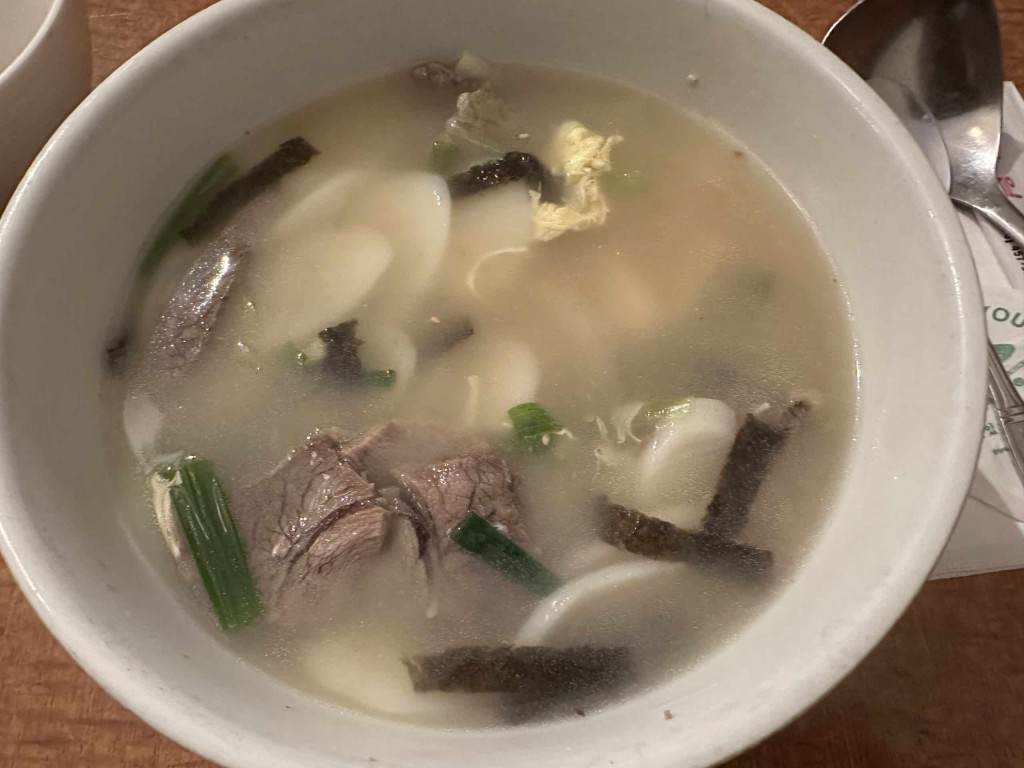
With Korean food gaining in popularity here, many have become familiar with dishes like tteokbokki—spicy rice cakes bathed in a sweet and spicy gochujang sauce and served with strips of fish cakes and sometimes boiled eggs. Tteokguk, though, may be less well known. It’s made by adding tteokguktteok to a meat and dashi broth, which is then topped with strips of fried egg, geem (seaweed paper), and scallion. Variations abound according to family tradition or ingredient availability.
Most people consume tteokguk just twice a year: on January 1 and on the Lunar New Year, which in 2025 will fall on January 29. Though it’s typically made at home, many Atlanta-area Korean restaurants serve it for New Year’s—like Arirang K, in Johns Creek, which this year offered free bowls to lunchtime customers.
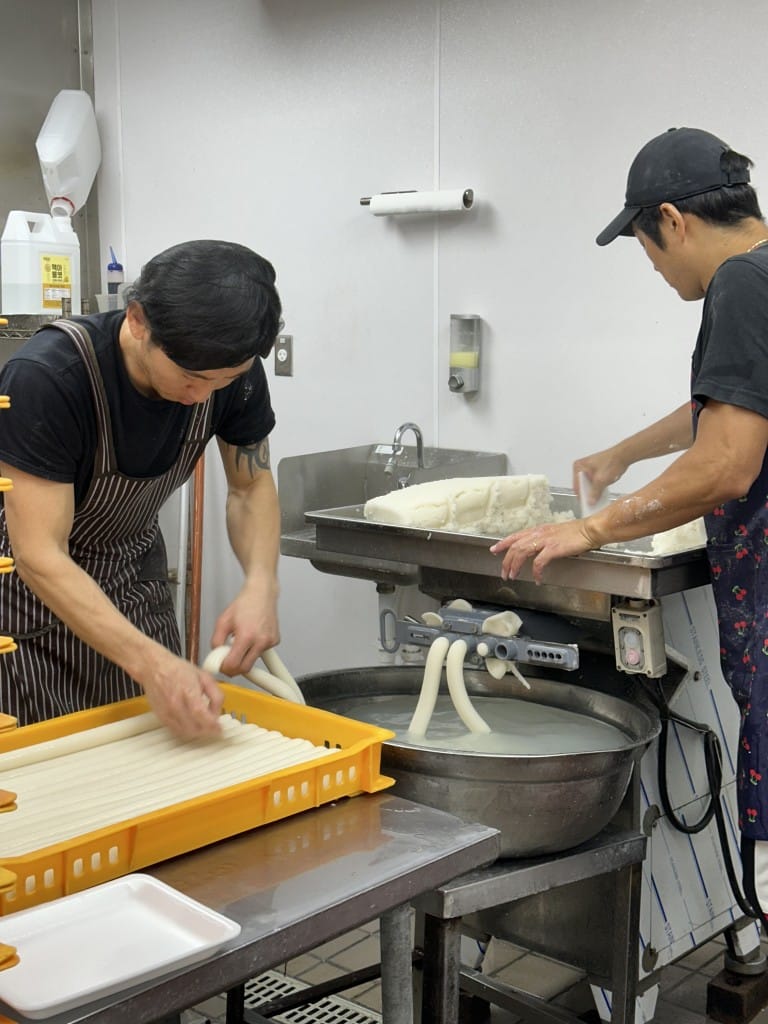
Making garaetteok, the longer cylindrical rice cakes that are sliced into tteokguktteok, is no easy feat. The cooks at Nak Won begin each night at 11 p.m. by steaming the rice, creating a dough that’s extruded through a tube—similar to sausage making—into a bath of warm water, which helps prevent sticking. The workers take the long strips out of the water and cut them into a more manageable size; they’re then set aside for preorders, packaged into smaller styrofoam packets, or placed in an industrial fridge, where they’ll chill for two days before being sliced into smaller tteokguktteok.

If you didn’t get a chance to eat or make tteokguk this week, you can wait till Lunar New Year later this month—and many Korean restaurants that specialize in soups and stews serve the dish year-round. And, if you have access to Korean rice cakes through a local grocery store, specialty shop, or frozen home delivery, tteokguk and similar dishes are easy to make at home. Check out these recipes from New York Times contributor (and Atlanta native) Eric Kim, popular YouTuber and cookbook author Maangchi, and chef Chris Cho.
Author

Related Articles
Andres Carrillo, founder of the pop-up Cocina Pachuco, is using his cuisine to fundraise for immigrants in detention
Born and raised in El Paso, the recently arrived chef is strengthening ties with his new home. One way he’s doing that: supporting the state’s immigrant communities.
Ibu’s Kitchen gets back to the basics: “Food makes people happy.”
At this “one-stop shop” on Buford Highway, customers can find Indonesian groceries, Batik clothes, homestyle meals, and an unwavering commitment to values.
At La Mixteca Tamale House, colorful masa creations celebrate Valentine’s Day—and honor a mother’s memory
Born in Oaxaca, Rosa Lucia Hernandez launched a tamale business in 2018 to fulfill a longtime dream. After her death, Rosa’s children are keeping that dream alive.