
UPDATE: After theft of food stamp benefits, many Afghan families get their money back
285 South highlighted the problem in October; families started to get reimbursed several weeks after.

“Allah ka Shukur,” Mirza Mohammed Faizi told 285 South over the phone on Monday: Thanks to God. The father of five had finally been reimbursed for the $1,000 that had disappeared two months earlier from his EBT account—the money provided to low-income people through the federal government’s Supplemental Nutrition Assistance Program, or SNAP, also known as food stamps. That money is a crucial lifeline for those who, like Mirza Mohammed, are recent refugees or asylum seekers still trying to get a foothold in their new country. Besides getting back the stolen funds, he added, he’d received his November and December money from the Georgia Department of Human Services (DHS) without a hitch.
With his new EBT card in hand, he went to a shop in Somali Plaza on Memorial Drive to make sure it worked. It did. “Meherbani”—Thank you—he said to 285 South, which brought attention to the food stamp thefts in a piece published in October. Mirza Mohammed also expressed gratitude to the Afghan American Alliance of Georgia (AAAGA) for helping him file a claim.
Mirza Mohammed’s family was one of more than two dozen Afghan families in Metro Atlanta whose food stamp benefits appeared to be stolen in September, as they saw unrecognizable transactions on their EBT card apps originating in states like New York, New Jersey, and Pennsylvania. In October, 285 South spoke to at least eight men who were seeking help at AAAGA’s Clarkston offices to file online reimbursement claims. Most were Afghans who’d recently arrived in the United States. Many hadn’t yet found jobs, and were supporting families who depended on the benefits to eat.
Between September and October of this year, the AAAGA helped at least 30 people file claims related to stolen benefits, and the organization says the majority of those were reimbursed by DHS four to six weeks after 285 South contacted the department for comment. Claims that haven’t yet been reimbursed are currently in process, according to a compliance investigator for DHS’s Office of the Inspector General.
DHS received 25,284 claims for reimbursement of food stamp benefits between October 1, 2023, and December 5, 2024, according to Kylie Winton, a spokesperson for the agency. Of those, 14,601 claims have been approved. The remainder have been denied.
For the past several weeks, Mirza Mohammed said, he’d had to borrow money just to buy food for his family. When he had money back on his benefits card, he said, speaking through an interpreter with the AAAGA, he “bought a lot of food, just to store it, in case the food stamp money gets stolen again.”
Food stamp recipients pay for groceries using an Electronic Benefit Transfer (EBT) card, which draws money from their SNAP accounts like a debit card draws money from a checking account. Like debit cards, EBT cards can be susceptible to card skimming, in which scammers attach a device to a card reader—for instance, at a grocery store checkout counter—that quietly steals account information. But EBT cards can also be more vulnerable to fraud because they don’t have chips—a technology that creates a unique code for each transaction, making it harder for scammers to clone the information on the card.
SNAP scams have been reported in states across the country, including in West Virginia and New York, and the issue has been on the radar of the Federal Trade Commission. In Georgia, the DHS’s Division of Family & Children Services—which administers SNAP, a federally funded program—received federal approval to replace electronically stolen SNAP benefits for recipients who are victims of fraud, according to their website. To be reimbursed, the thefts must have occurred between October 1, 2022, and December 20, 2024.
In an October email, DHS spokesperson Ellen Brown said her department has worked with its EBT card vendor “to finalize, test, and deploy to production several fraud mitigation changes to increase card security, including a change to prevent clients from setting easy PINs like 1111 or 1234.”
“We are also testing the deployment of an app that would allow clients to lock and unlock their cards,” Brown wrote. “As we continue to explore more options to increase card security, it’s important to note that changes like card chipping are not yet possible in Georgia because most vendors’ EBT point-of-sale systems do not support chipped cards.”

When the full benefits weren’t coming in, Mirza Mohammed said he struggled to pay rent and feed his family. “We get food stamp money because we need it,” he said.
Now, things are starting to change. Two of his daughters have interviews scheduled for jobs at the airport, and he hopes he’ll be able to start interviewing for jobs soon too.
He said he wants DFCS “to pay more attention” to the food stamp thefts—he “doesn’t want this to happen to anyone else.”
Authors


Related Articles


“The world just seems like it’s against them. So it’s really hard when the school does this on top of everything else they’re dealing with”
Cobb County parent speaks out, shaken, after conversation with principal about school walkout
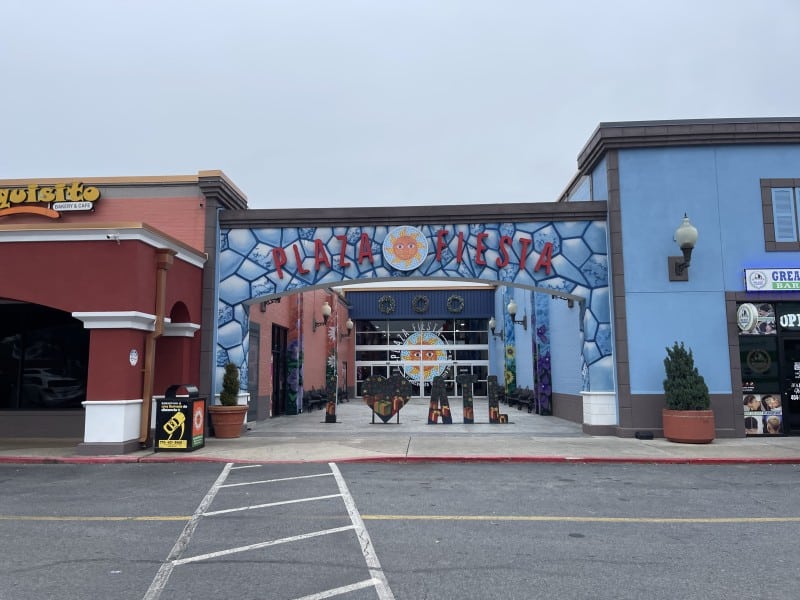
En Plaza Fiesta, conocida como el corazón de la comunidad hispana en Georgia, “casi no entra gente”
Trabajadores y dueños de tiendas del centro comercial latino dicen que el negocio ha estado lento durante el último año, lo que ha provocado reducción de horarios y un futuro incierto