A movie about Kashmir, filmed in metro Atlanta
Saffron Kingdom premieres in Atlanta on April 22 at Georgia State University

When filmmaker Arfat Sheikh first moved to Atlanta for graduate school at Georgia State University in 2019, he didn’t know that a few years later, he’d be debuting a feature-length drama about his native Kashmir. He did know, though, that he wanted to bring the stories of Kashmir to a wider audience.
On Tuesday, that’s exactly what’s happening: Saffron Kingdom, a film that has been three years in the making, is screening at GSU’s Dahlberg Hall Theatre.
The film weaves together the story of a Kashmiri American family and their journey from Srinagar, Kashmir’s capital, to Atlanta, with the wider context of the region, including scenes depicting key moments like the Gawkadal massacre, when Indian security forces killed between 50 and 100 protestors.
It’s the first time, said Arfat, that Kashmir has been represented in cinema in the U.S. in this way. Kashmir is a region in the Himalayas divided between India, Pakistan, and China, with India administering the largest portion – and the side with a history of human rights violations. The UN called for a plebiscite in Kashmir in 1948, for Kashmiris to determine their own future after partition, which was never honored; since then it’s been at the center of a long-running dispute between India and Pakistan. Over the past several decades, Kashmiri struggles for independence have been met by waves of Indian government crackdowns that have led to massive human rights abuses, disappearances, and restrictions on media. In 2019, the Indian government stripped Kashmir of its semiautonomous status, further squashing hopes of independence.
Arfat had originally hoped to feature Kashmiri actors in the film. But, he said, they were fearful of repercussions from the Indian government. “Initially I wanted to get Kashmiri faces. But of course, because of the threat of persecution, there was some interest, but [many] did not even apply because they knew that they wouldn’t be able to go back.” That’s because the Indian government has restricted people in the past from returning if they’re involved in activities the government perceives as anti-India or politically sensitive.
So he pivoted, putting out a wider casting call. Much of the cast and crew who ended up working on the film were local to Atlanta, and represented a wide variety of backgrounds—including Kurdish, Filipino, Aramaen, and Venezuelan. “I would have never thought these people, who belong to other parts of the world also, would all come together to tell a story of Kashmir,” Arfat said.
Most of the crew didn’t know much about Kashmir coming into the making of the film, but they learned. They even had to learn to speak Kashmiri, he said. “We go back to the 90s in Kashmir [in the film]. So everything is Kashmiri…and they had to adapt to even speaking the language, learning the lines in that language, and emoting, because there are some nuances that are very specific to cultures.”
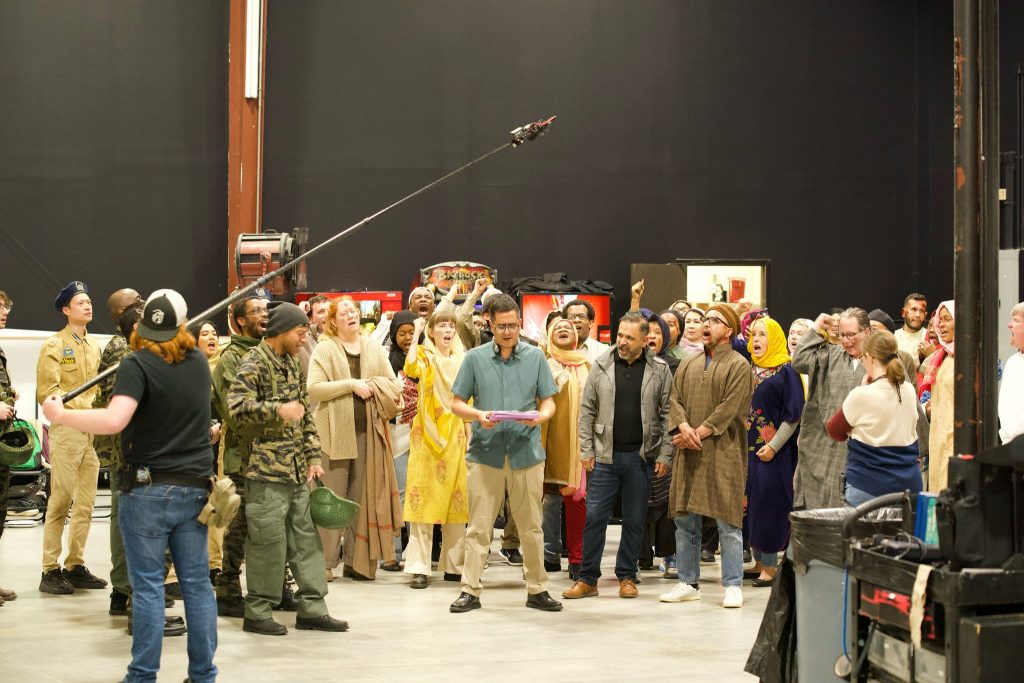
That pivot to a diverse cast turned out to further his mission of getting Kashmir’s story out in the world. “I couldn’t get a Kashmiri. But guess what? My challenge turned and became an opportunity. Now they care for Kashmir. Also their families care for Kashmir.”
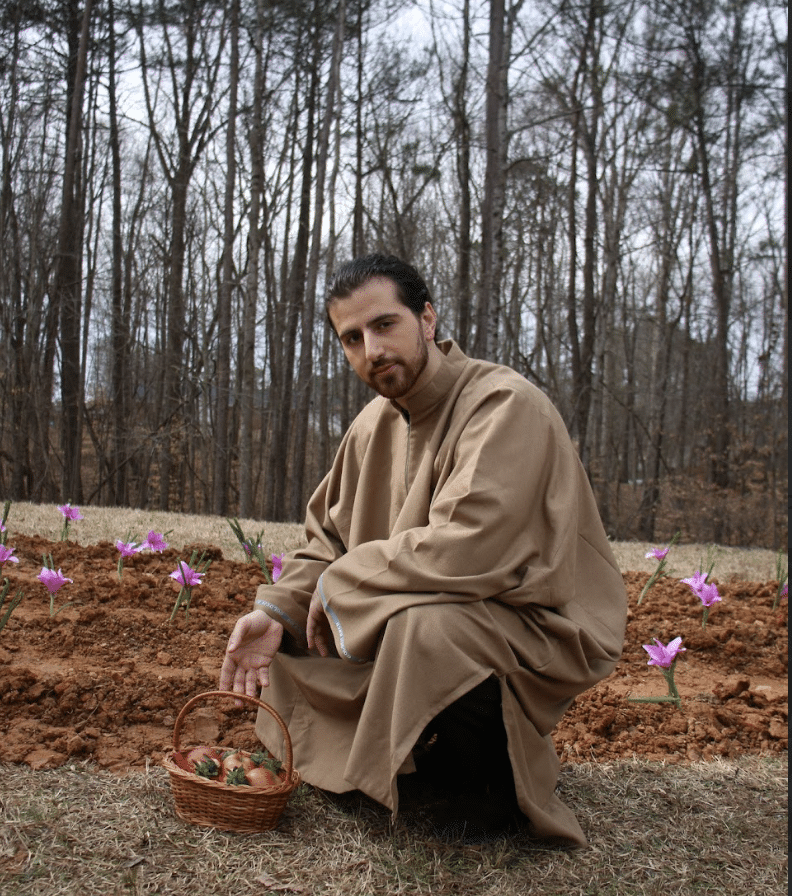
And since he couldn’t get to Kashmir for filming, the challenge of shooting the movie locally turned into its own opportunity: An opening scene featuring saffron fields was filmed in Suwanee (“We did a lot of filming in Suwanee for Kashmir, because the trees and the landscape made it easier,” said Arfat). The film also relied on archival footage, made use of green screens, and includes scenes that are shot in Chamblee, Dunwoody, and the Oglethorpe and GSU campuses. A local Kashmiri American family even let the film crew shoot scenes in their house, which had the interiors of a traditional Kashmiri home, like Kashmiri carpets and wood carvings.
So far, Arfat said, the reception to the film has been positive—partially based on the fact that audiences are curious about Kashmir but have few opportunities to learn about it, since stories from the region so rarely make it to more mainstream forms of media. “That’s exactly why this film was even made in the first place, because we had no cinematic representation,” he said. “That was the whole idea.”
Related Articles
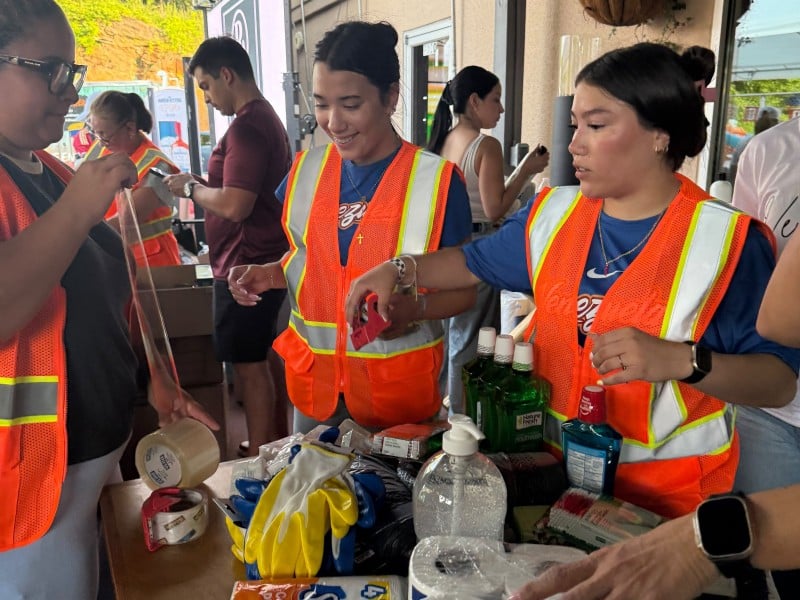
Venezuelans in Georgia come together to send food and medicine to the country after two massive earthquakes
“An outpouring of people” have come out across the metro region to respond to needs in Venezuela, expected to continue for months.
A Decatur teach-in draws attention to the world’s largest stateless ethnic group
With recent events drawing attention to the struggles of the Kurds, members of the Atlanta area’s Kurdish community are asking their neighbors to speak up.