“The work has become three times harder”
We speak to pro bono immigration attorney Serene Hawasli-Kashlan, legal director of Asian Americans Advancing Justice–Atlanta, about what it’s like to do her job right now.
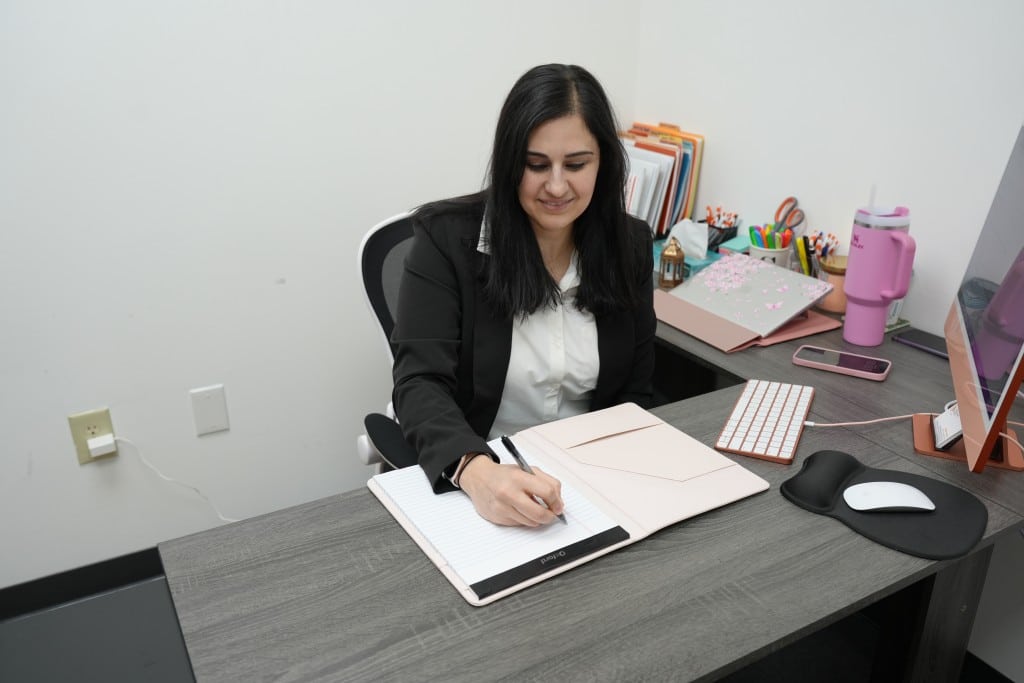
Immigration attorney Serene Hawasli-Kashlan and her team at Asian Americans Advancing Justice- Atlanta have almost 200 open cases at the moment. They’ve had to pause the intake of new clients, she said, because they’ve reached capacity. The Norcross-based nonprofit focuses primarily on Asian American and Pacific Islander communities, and people from Middle Eastern, Muslim, and South Asian backgrounds, but most of their clients right now are from Spanish-speaking countries.
That’s not the only thing that’s changed in the last year. In 2025 their legal programming tripled: her team offered seven clinics and 22-workshops where people come together and learn what to do if Immigration and Customs Enforcement shows up at their home, their workplace, or while driving.
This isn’t the first time that world events have changed the nature of her work; As a Syrian-American attorney, Serene started practicing immigration law in Michigan, after the Syrian Civil War broke out in 2011. She suddenly saw a need in the state’s large Arab American population: “At that point, I knew nothing about immigration law, and it wasn’t even in my area of expertise. But just because of that, in needing to support my community, I started learning more about immigration,” she said.
She began helping people with their applications for Temporary Protected Status, a government designation that provides protection to people coming from countries where conditions are unsafe. Serene eventually started her own firm, before moving back to Georgia, where she grew up.
Now, as legal director of Asian Americans Advancing Justice–Atlanta she has hands are full: the nonprofit is one of just a few organizations in Georgia that provide free and low-cost immigration services.
285 South caught up with Serene recently to talk about what it’s like to practice immigration law during the second Trump Administration.
The interview was edited for brevity and clarity.
How many clients are you currently supporting?
Our team jointly has over 150 cases—it may be closer to 200 cases. There’s four attorneys, and each attorney is responsible for their cases, but I oversee the entire department.
I’ll just give you an example, we represented a detainee recently. He’s from Venezuela. He was caught up in the Hyundai ICE raid, which was the largest ICE raid in U.S. history. It was in Ellabell, Georgia, and we supported the rapid response efforts with Migrant Equity Southeast (MESE), which took the lead on that in Savannah. We attended their clinic, but then we also had a clinic at the Folkston Detention Center with the National Immigration Project. We went with them and interviewed around 55 people from the raid.
Our client was a referral from MESE, and we thankfully got him out of detention, which has been really hard these days because a lot of people are subject to mandatory detention. We had to argue he wasn’t, and we’re representing him in his asylum case. I took the lead on preparing his documents, and I represented him in the individual hearing with my co-counsel.
I’m taking the lead on a lot of asylum cases, but I also have adjustment of status cases, help with DACA renewals. We all are cooperative, and we help each other wherever help is needed.
Are you currently taking new cases?
We haven’t been able to take on too many cases, unfortunately, because they’re so time-consuming and we’re already at capacity. We had to have a pause on new intakes in cases, but we’re trying to support in any way we can, through legal programming or clinics.
We had a pause of cases when I joined in 2024 because there was a time there was no legal director for a few months, until they found me and I joined, so I just needed to see what was happening. We inherited a lot of cases from the previous director, so we had to catch up. We had a pause, and we reopened, and we just get so many calls and so many inquiries, so within a few months, we had to pause again, because we’re only four attorneys.
There aren’t enough people doing this work. I think only us and GAIN are doing detained work, and it’s only a few attorneys. An asylum case in court can take 50 to 100 hours of work easily. You only have so many hours in the day and we take our cases very seriously, and we’re going to pour our hearts into it. So we can only take a certain amount of cases without burning out.
And what does a workload of over 150 cases look like? How long do you stay on a case?
That’s the thing: Immigration cases are taking years to resolve (except detained cases—those move faster). Maybe they’ll resolve within six months. But an asylum case with USCIS could take 10 years to resolve. Most of the work is upfront for affirmative asylum cases, meaning cases you file with USCIS, those could take probably around 50 hours of work up front if you file everything. But a court case is a little different.
An asylum case in court is a different type of asylum, right?
Yes, it’s called defensive asylum. Basically, you’re applying for asylum in defense of removal. In that case it’s similar in the preparation, but it’s a lot more hostile in immigration court. You want to bring on an expert to talk about the country and why that person would have a well-founded fear of future persecution if they returned. Whatever is going on in the country that may be complicated that a judge might not know, you want to back it up with country-condition evidence. In both cases, affirmative and defensive, you need country-condition evidence, but experts are probably more needed in courtrooms.
Georgia has one of the lowest grant rates in immigration court—I think it’s less than 5 percent.
Asylum law should be applied uniformly across the country, but it’s not. You see different judges have different grant rates, and that’s unfortunate. So, it’s just harder to win in immigration court, but someone represented has two to five times better chance of being granted relief than someone that just shows up pro se. They don’t know the language, they don’t know the system. So, it is a huge benefit to have free immigration attorneys that are helping people that are very vulnerable, especially detainees, and we have nondetainees as well in court, but they especially need help and there’s only a handful of people doing this work for free and not enough support.
How can people provide that support?
A lot of nonprofits are struggling financially right now because of federal funding cuts, and even private donors and grants, and things are down, in general. I think individual people donating to organizations that do this work would be very helpful. Being able to backfill positions if someone leaves the organization, or making sure we are able to pay our staff or hire additional staff—all of us are operating at probably 110 percent, and we’re burning out, and that worries me. As a director, that’s why I made a call to pause new intakes, even though we all hate saying no. But we know that we will burn out and we owe it to the clients that we do have to give them the best representation possible. We’re trying our best, but financial support is very needed, especially at this time.
How does success look like for you these days?
I always tell the team, we have to celebrate the successes where we can. For instance, getting that bond hearing for the Venezuelan client, getting his bond motion granted, that was a success, and he was reunited with his family.
Other successes include getting our clients work permits, or being able to get a strong application filed. Right now, everything feels heavy, everything feels harder. There is a lot of anti-immigrant rhetoric, a lot of policies that are making everything very difficult, I would say. But all we can do is keep pushing through and advocating for our clients.
A success could be attending an ICE check-in with a client and them not getting arrested. We have to celebrate any successes we can. The work has become three times harder. We didn’t attend ICE check-ins with clients, because it was fine. Now, we’re having to go because we don’t know if they’re going to be detained. Being there might deter detention. So, now we’re actually having to attend ICE check-ins, which is time-consuming.
It’s just a hostile environment. Now we have the Department of Homeland Security filing motions to pretermit cases, meaning, they’re trying to get an asylum seeker to not even have a chance to have a hearing. Basically, they shouldn’t be able to apply for asylum because they have a safe third country to go to. Under the Trump administration, they have all these agreements with third countries that are not safe for these people to go to, and they have no connections to those third countries.
What are some of the changes that you’re seeing in immigration law since Trump took office, and how are they changing the work that you do?
There have been more than 550 policy changes since Trump took office the second time.
Everything is more difficult—we had fees come up, exorbitant fees. We had a motion to reopen for one of our clients who is a detainee from Afghanistan. He worked with the U.S. military in Afghanistan. We helped him with his motion to reopen, which I thought was very strong. I think, under a previous administration, it would have been granted, but this judge in particular has a very low grant rate and he denied our motion. And basically the fee to file the motion to reopen was over $1,000, and we had to pay for it out of our scholarship fund.
We have a scholarship fund just for client fees that people cannot afford. He can’t afford it, he’s been in detention for a year. He left his family because his life was in danger—how do you expect him to pay a $1,000 fee? Something like that wasn’t an issue before—a motion to reopen didn’t cost anything before.
Now, they’re charging for asylum applications $100 every year. There were some legal challenges against that and put it on pause, but fees, policies like pretermission made asylum, in particular, extra difficult. There’s extra scrutiny for certain countries, in particular for Palestinian asylum seekers. They put a pause on all immigration benefits for Afghan nationals and we do have some Afghan clients that are freaking out about this.
For a time, when the Trump administration first took office, there was a pause on Adjustment of Status applications for refugees and asylees. So, I had already applied for people who had been granted asylum, I applied for them to adjust status to legal permanent resident, and there was a pause on that for a long time. It’s resumed, supposedly, except for Afghan nationals.
They have a pause on granting asylum with USCIS right now, for all nationalities. They’re accepting the applications, maybe they’ll continue processing them, but they won’t grant anything.
What is something that you want people to know?
I think we just need more support. We need more people doing this work, pro bono or low bono. Even private practitioners, if they can take cases lower-cost for vulnerable individuals, that’s a huge help. People bearing witness. We hope to expand our Court Watch program for regular people to go to the courthouse and observe. I know you don’t think you’re doing much, but you are. You’re bearing witness. You’re holding the government accountable. You’re collecting data so that we can see trends and what’s happening in the courthouse, because oftentimes injustices happen and there’s no one to see it.
Individual people in Minnesota, for instance, they’re really standing up and protesting. And in addition to protests, we should be calling Congress every day and saying, “This is not right. This is not the America we want to live in. Stop funding ICE, stop expanding detention centers.” These are things that more people need to care about and advocate for. We need to advocate for immigrants because we are a country of immigrants.
Author
Related Articles

“To Make Them Happy, All Our Future Generation”
The Atlanta Rohingya community revives their soccer tournament in Clarkston
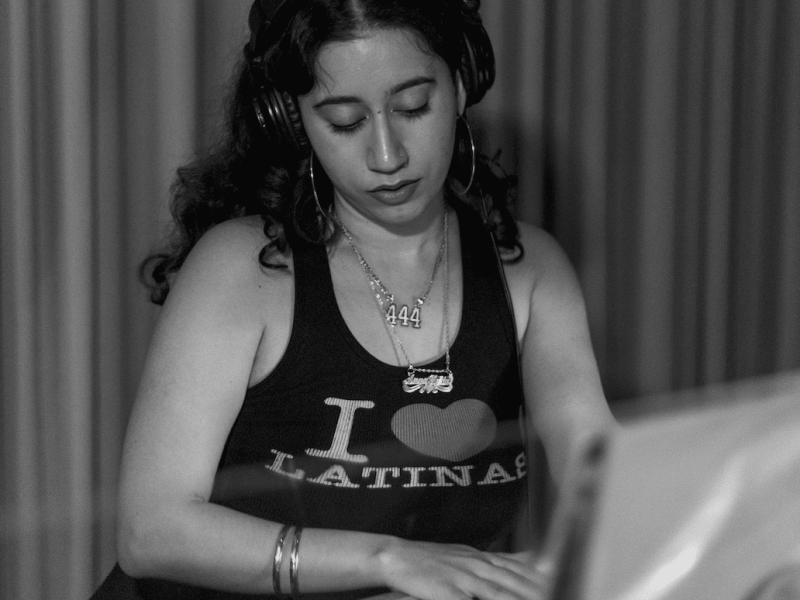
Latin music is having a moment in Atlanta—and DJ B. Bruja is riding the wave
An Emory art grad who decided to stick around, Anna-Frida Herrera is one of a new generation of Latin DJs finding bigger, more diverse audiences for their eclectic sounds.
Update: Culturally specific food pantries and other food resources
SNAP terminations continue to have ripple effects on immigrant and refugee communities.