
In You Uninterrupted, Julia Kim explores Asian American identity—with a lot of help from the community
In pop-up events over several months, the artist posed eight questions of self-exploration—and received more than a thousand responses. She hopes the project will build empathy among Georgia’s AAPI communities.
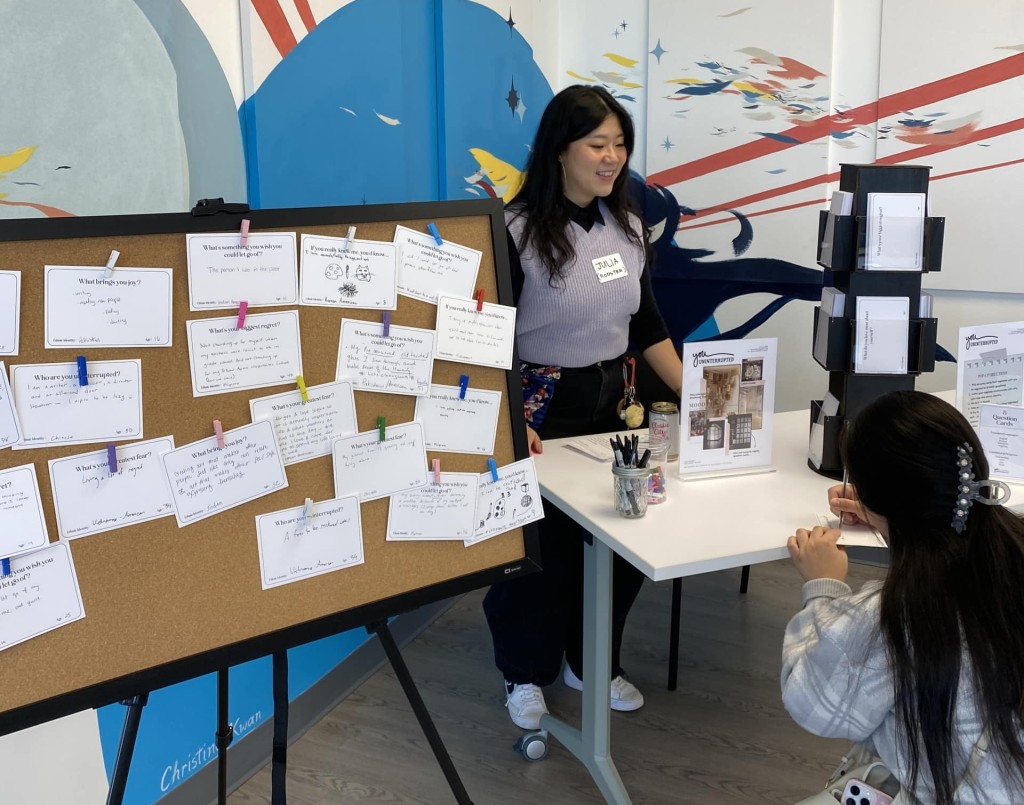
In 2021, Julia Kim was at her job in Charleston, South Carolina, when she learned about the Atlanta spa shootings—when a white gunman killed eight people, six of them Asian American women, at three area businesses. Her colleagues at the design firm where she worked checked in with her to see if she was doing okay, and at first Julia told them she was. It would take about a week for her to process the severity of the event, which sent shockwaves through Asian American communities across the country. “I felt like my world was flipped upside down, and the reality of what it means to be Asian American in America really hit,” she told 285 South.
Born in South Korea, Julia moved with her family to Ohio when she was four years old. When she was in third grade, the family came to Georgia, where Julia grew up and went to college. As the reality of the murders set in—and Julia found herself more than 300 miles from family and friends in Georgia, surrounded by a white community that was unaffected by the shootings—she began to feel like she was living in a different reality. She remembered what it felt like growing up Korean American, feeling like she wasn’t Asian enough or American enough, or that there were certain stereotypes that she was expected to fulfill as an Asian woman—for instance, being quiet and not speaking up. She realized the harm that stereotypes can play in building fear and hate, and started thinking about how to change the narratives surrounding Asian Americans.
In 2021, after six years in Charleston, Julia returned to Atlanta, where she works as a landscape architect—and where she saw an even greater need to connect with her culture. Now she’s channeled some of those feelings into a new art exhibit, You Uninterrupted, in which she explores what it’s like to be a member of Asian American and Pacific Islander (AAPI) communities today—with the help of many members of those communities. Over the past several months, she’s been popping up at events throughout the metro area and asking attendees to answer one (or more) of eight questions, like: What brings you joy? What’s something you wish you can let go of? What’s your biggest fear? The responses she collected—1,134 postcards in all—are the centerpiece of You Uninterrupted.
“I think the conclusion I came to was, in order for us to shift that narrative as a group of people, it starts with us, individually, having to reclaim who we are and our own stories,” she told 285 South. “This project was just a way for me to grow and figure it out with my community. I think there’s a power in the collective and I just wanted to bring my community along with me.”
The exhibit will be on display this weekend at the Supermarket, an arts and event space in Poncey-Highland (638 North Highland), with an opening reception Friday, July 11, from 6 to 9 p.m.
“It took a village”
To put the project together, Julia applied for a fellowship from the Asian American Women’s Political Initiative, which provided both mentorship—she learned, for instance, how to build a successful art exhibit—and funding to cover materials and the pop-ups where she collected the postcards. Julia spent three months attending 20 community events around the metro area, soliciting input from people whose families came from Korea, China, Cambodia, the Philippines, and elsewhere. Though Julia focused on Asian Americans and Pacific Islanders, respondents came from all kinds of backgrounds. The answers are anonymous, with each postcard recording only the respondent’s age and ethnic identity.
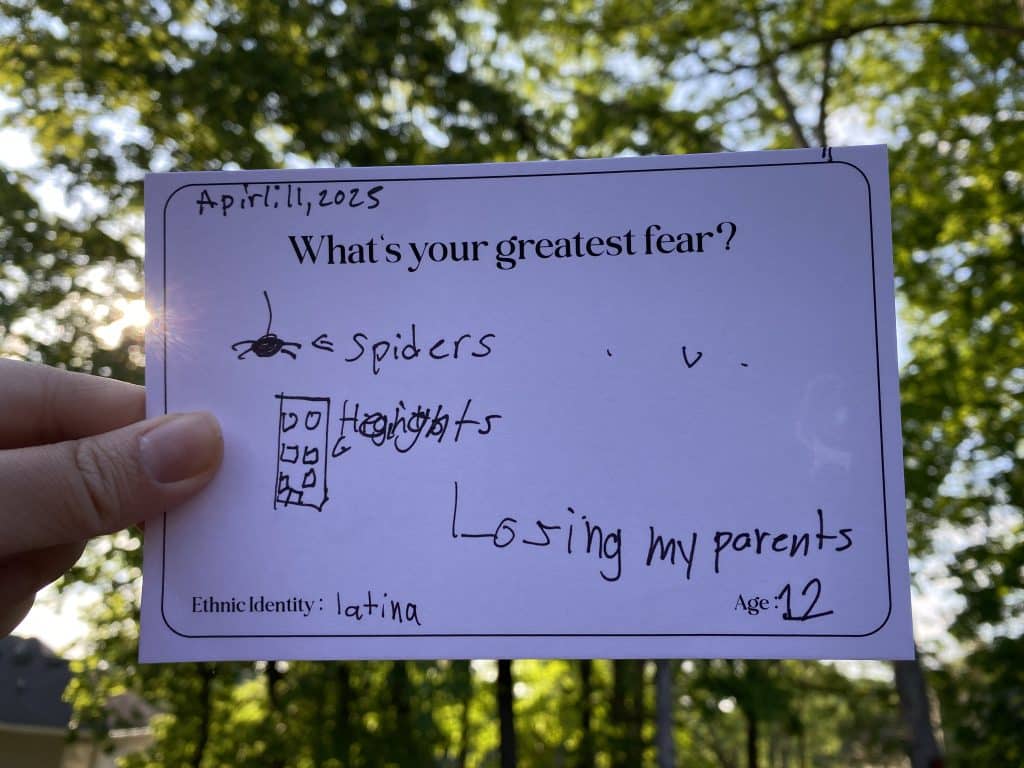
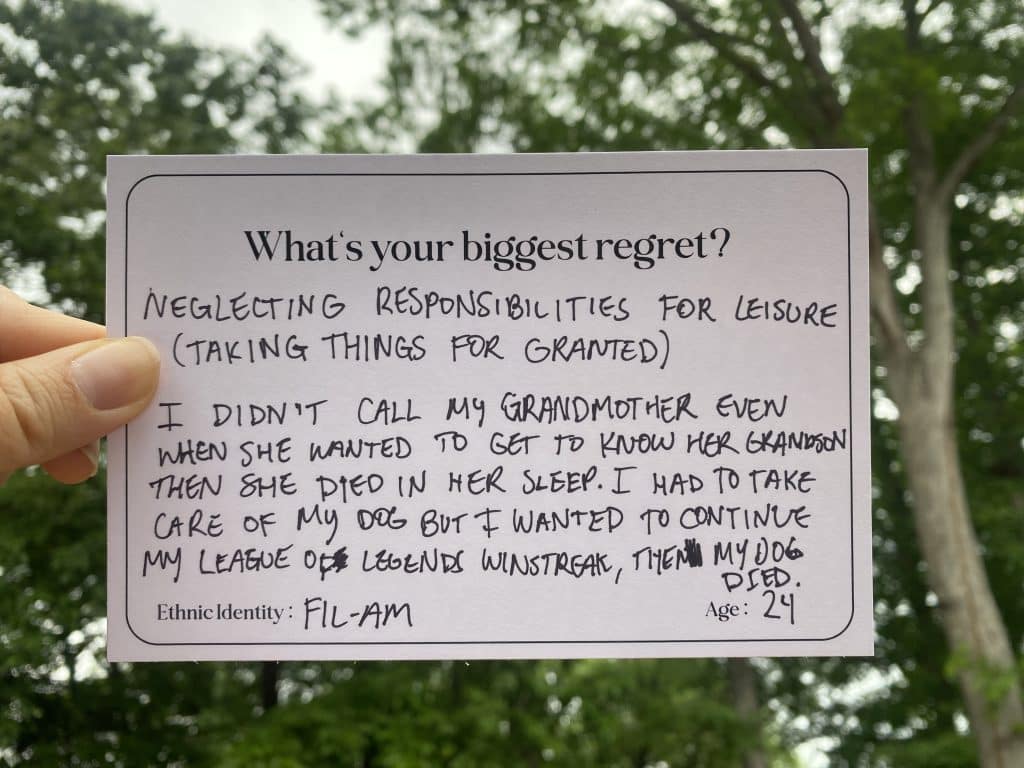
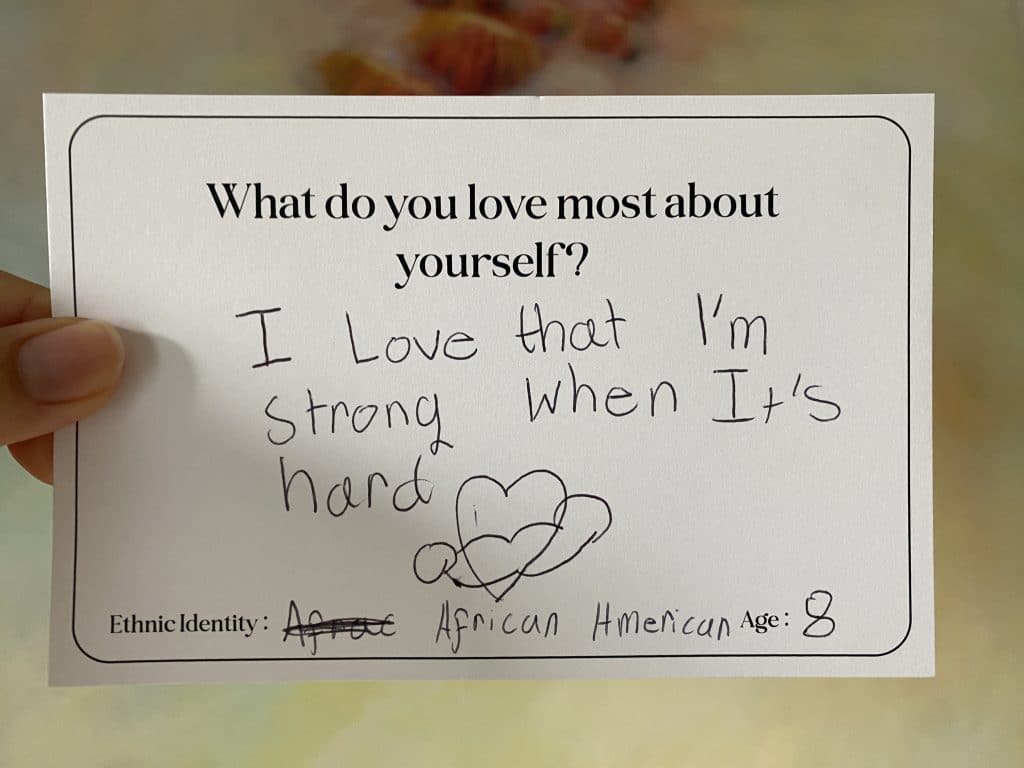
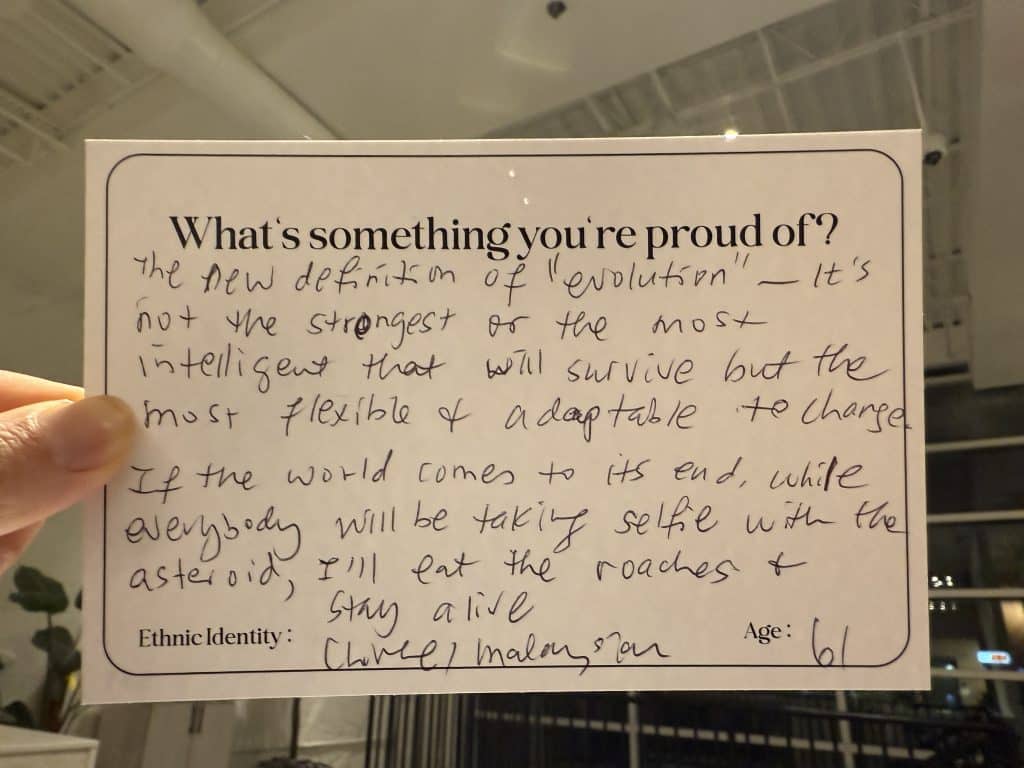
There were some common themes: immigrant children feeling the responsibility of caring for their parents. Not being able to share feelings with loved ones. Broken relationships between parents and children. Fear of losing loved ones. Finding joy and community with family and friends. “I have been filtering through the cards myself and it’s like there is so much between ages and cultures,” Julia said—noting, too, the ways that perspectives between the generations diverge. “I think between first-generation Asian Americans and the second generation, there’s a lot of tension,” she said, as well as racism and stereotyping among people from different Asian countries. With Atlanta’s AAPI community growing rapidly, Julia said, there’s a greater need to find spaces where people can connect, share stories, and see themselves in others.
At the exhibition, the postcards will be hung from the ceiling in 11 chandelier-like arrangements, illuminated by warm yellow lighting and interspersed with hanging pieces of dark fabric—a contrast, Julia said, meant to serve as a symbol of the light and darkness in everyone. At the end of the gallery, a projector will display responses from people on a wall, in an area that’s meant to serve as a space for reflection for viewers who have just walked through the hanging cards. The overall project “honestly took a village,” Julia said: Relying on family and friends—and followers on Instagram responding to calls for help—she’s also working on having the cards translated into eight languages.
Although the show will only be on display for the weekend, Julia is transcribing the cards digitally with the goal of eventually building a website. She wants to separate them by themes, ages, and ethnic identities, and open a section where more people can answer the same eight questions. She also hopes to connect nonprofits with the content on the cards, so that they can build programs to support Asian communities.
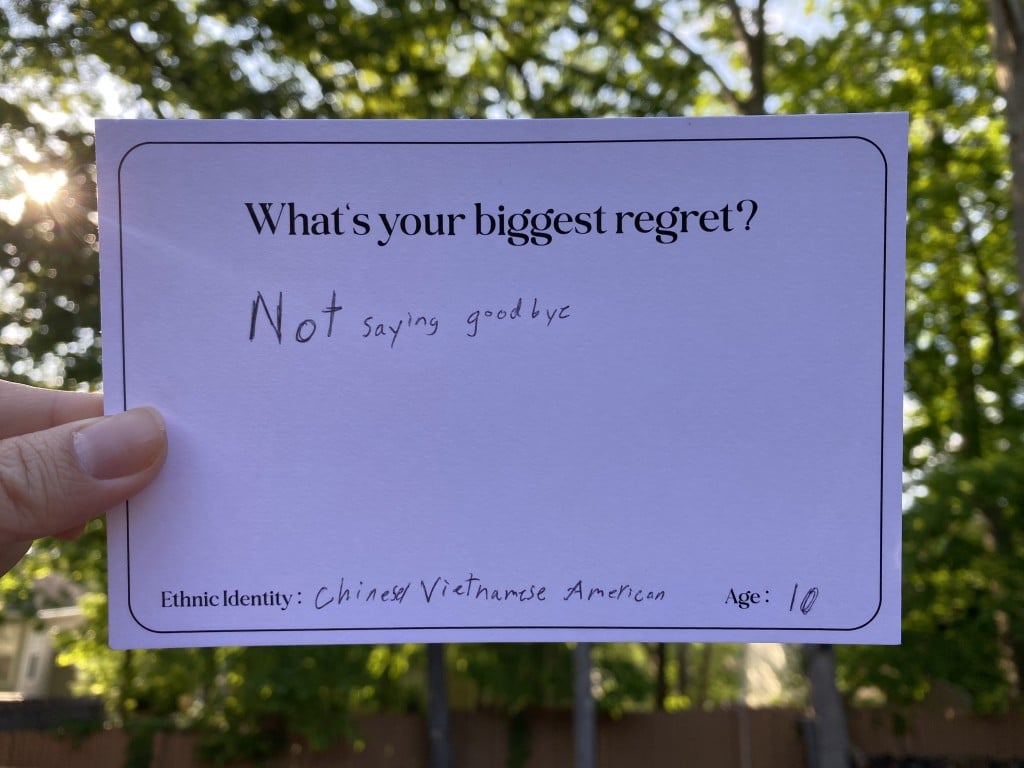
Two cards in particular have stayed with Julia. In one, a 10-year-old respondent answered the question “What’s your biggest regret?” with, simply: “Not saying goodbye.” “That made me cry,” Julia said.
The second card had to do with the question “Who are you uninterrupted?” The seven-year-old who chose the card asked Julia what it meant. “I said to him, ‘If you had no setbacks, limiting beliefs, like, whatever it could be—who would you become?’” she recalled. The kid’s eyes lit up, and he told her he knew who exactly he would like to be. As Julia peeked over his shoulder, he wrote: “Me.”
“And I think that was so profound,” she said. “Even though I told him, you could be anyone and you had nothing holding you back, for him to still choose himself, I think that sparked the idea of being okay with all parts of me that make me whole.”
Author
Related Articles
Spring has sprung—and for one Burundian farmer, that means it’s time to get back to the garden
This year, gardeners from the nonprofit Global Growers Network are combating food insecurity by harvesting produce for local food banks.
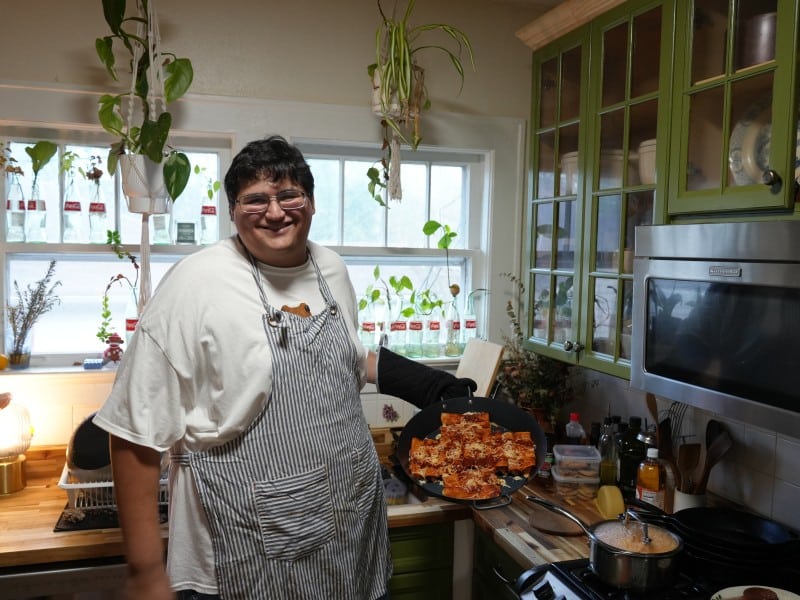
Andres Carrillo, founder of the pop-up Cocina Pachuco, is using his cuisine to fundraise for immigrants in detention
Born and raised in El Paso, the recently arrived chef is strengthening ties with his new home. One way he’s doing that: supporting the state’s immigrant communities.
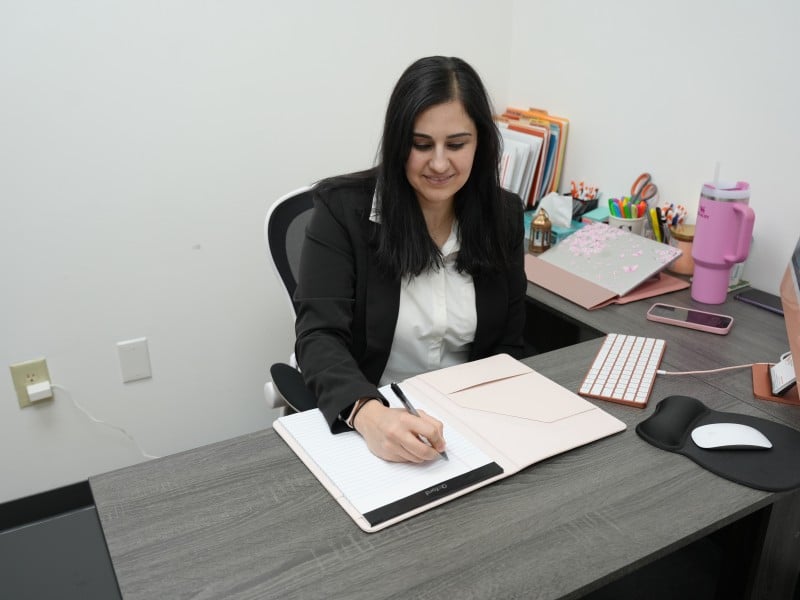
“The work has become three times harder”
We speak to pro bono immigration attorney Serene Hawasli-Kashlan, legal director of Asian Americans Advancing Justice–Atlanta, about what it’s like to do her job right now.