At Plaza Fiesta, “no entra casi gente”
Workers and shop owners at the Latino shopping mall say business has been slow in the last year, leading to reduced hours and an uncertain future.
Stoikow
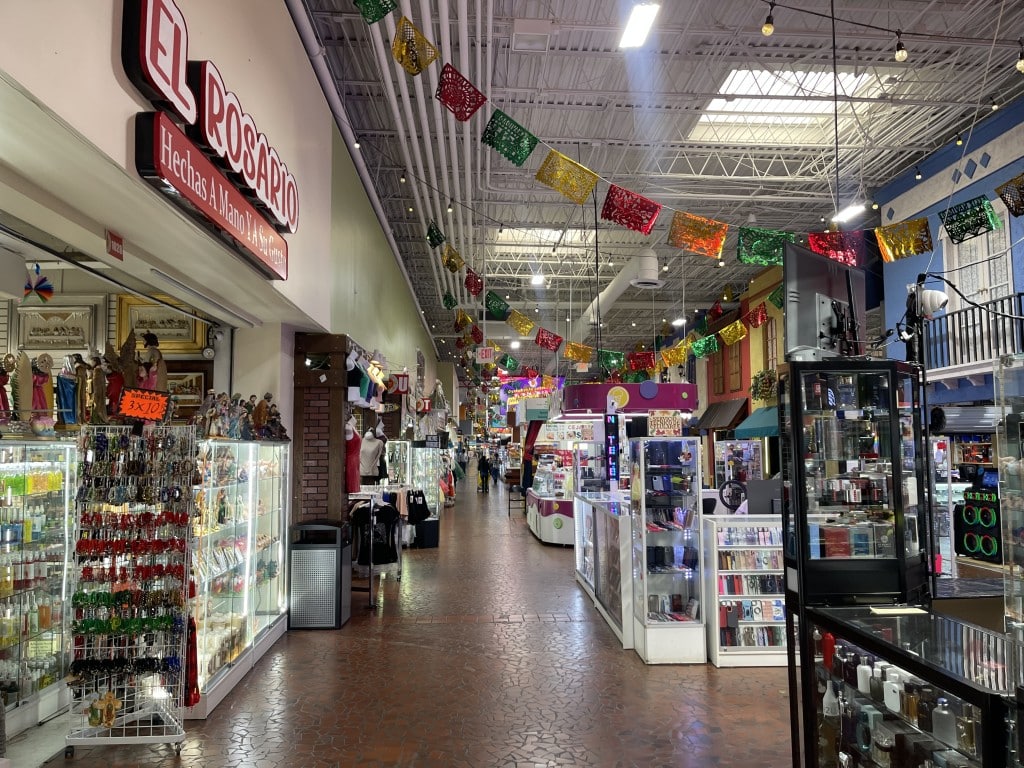
Maria stood behind a display case looking out into the mostly empty food court of Plaza Fiesta. Next to her was a large screen with bright advertising that read: “Ready to Grow Your Business?” The 28-year-old has worked at the Latino shopping mall for the past four years—but 2025, she said, had been like no other.
“Cualquier persona que le preguntes igual ahorita van a abrir y tú te vas a dar cuenta que no entra casi gente,” she said. Anyone you ask will tell you the same thing. They’re about to open now, and you’ll see for yourself that hardly anyone comes in.
Describing itself as the “heart of the Hispanic community in Georgia,” Plaza Fiesta has long been heralded as both a community hub and a destination in the Southeast. Last February, after a federal immigration crackdown in the area, it became the center of protests against U.S. Immigration and Customs Enforcement (ICE), with hundreds of people filling its parking lot and stopping traffic on Buford Highway for hours. Now, more than a year into the national escalation of ICE arrests and raids, local businesses are feeling the effects of heightened anxiety among Latino and other immigrant communities. Many workers and shop owners 285 South spoke to recently said businesses have struggled in the past year, seeing a slowdown in sales like they’ve never seen before. (We’ve changed or shortened the names of those we spoke with to protect their safety.)
It isn’t just business that’s been hard, Maria told 285 South. On October 15, she said, her husband was driving in the area when his car broke down. When a police officer stopped him, her husband showed his North Carolina driver’s license. Since he didn’t have a license from Georgia, he was arrested, she told 285 South. He ended up at Stewart Detention Center in Lumpkin for over two months before being transferred to the Robert A. Deyton Detention Facility in Lovejoy, about an hour away from Atlanta.
Maria spoke softly and quickly, her words tumbling out. She explained that she and her daughter planned to self-deport back to Zacatecas, Mexico, in April. She had moved to the U.S. four years ago because her husband was here. Now, with her husband facing deportation, staying here doesn’t make sense. “Entonces pues le digo a él que yo ya no me quiero quedar acá, porque le digo ahorita uno ya no puede salir, o sea, ya son muchas cosas.” Since things turned out this way, I told him I didn’t want to stay here anymore, because I told him that now you can’t even go out anymore, I mean, there are just too many problems.
“Estoy esperando que lo suelten para agarrar mi niña y nos vamos. Ya le saqué todos sus papeles,” she said. I’m just waiting for them to release him so I can grab my daughter and we can go. I’ve already gotten all her paperwork ready.
The mass immigration crackdown, she said, is hitting home in a way she could have never imagined. Her uncle and nephew, who live in Texas, have also been detained. “Yo pensé que nunca me iba a pasar algo así, pero no, ahorita. Ya de verdad todo está pasando,” she said. I thought something like this would never happen to me. But no, it’s happening now.
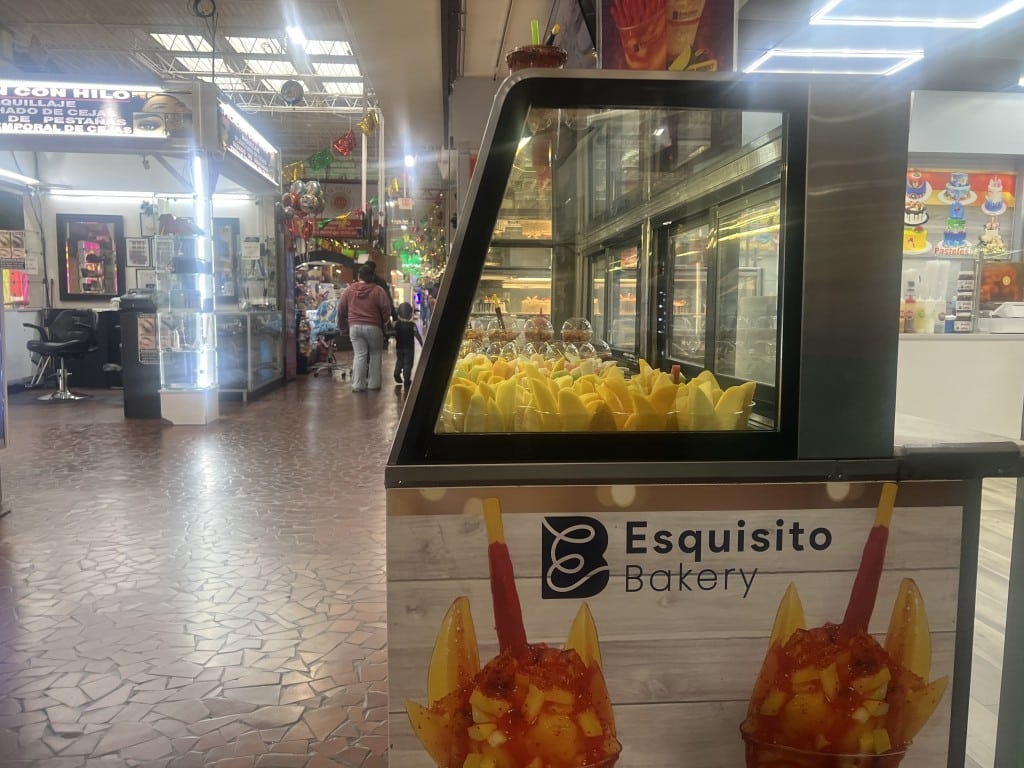
Nineteen-year-old Irene stood behind a cash register in the food court. Compared to where they were before 2025, she said, “las ventas ha bajado mitad de lo que antes”—sales have dropped to half of what they used to be. She said they used to have about 80 orders on a weekday, but now they only get around 30. Even when customers do come, she said, “la gente siempre busca las cosas que valen menos para gastar menos.” They always look for the cheapest things to spend less.
Irene’s hours were reduced last February, and she now works three days a week instead of six. She’s not alone, she said—many of the workers in the food court are in a similar situation.
With business so slow, Irene tries to find ways to pass the time. She scrolls on her phone, but then stops because it’s too stressful. “Porque si no hay trabajo, no hay gente. Y tampoco no hay que hacer acá ya,” she said. Because if there’s no work, there are no people. And there’s nothing to do here anymore either.
Irene, who’s been working at Plaza Fiesta for about three years, is considering going back to Guatemala, where her mom still lives. “Es mucho estrés pensar que si las ventas van a subir,o se va a arreglar o se va a ir peor. No sé,” she said. It’s too much stress thinking about whether sales will go up or if things will get better or worse. I don’t know.
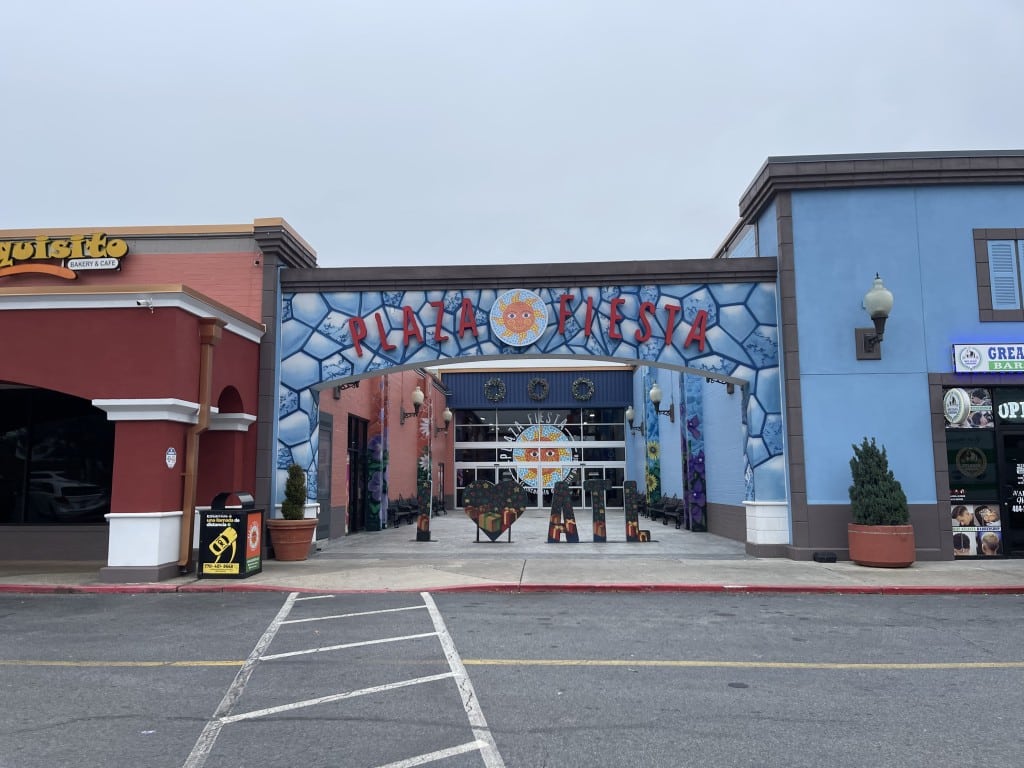
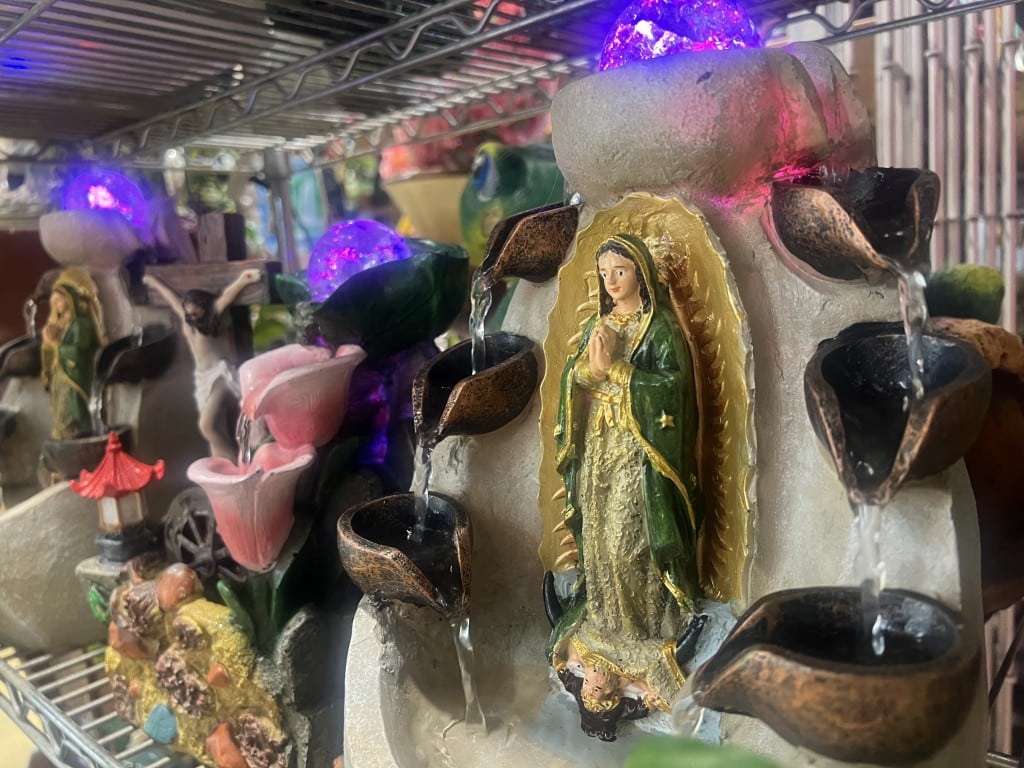
In another corner of the mall, Cristina and Eduardo, a Salvadoran couple, own a small shop that sells rosaries, statues of Jesus and the Virgin Mary, and wooden figurines—versions of the kinds of trinkets you can find in many Plaza Fiesta stores. They’ve owned different businesses at Plaza Fiesta for around 18 years, they said.
“Si te fijas, no hay personas caminando. Antes esto era llenísimo,” Eduardo told 285 South. If you look, there are no people walking. This place used to be packed.
They’ve had to let go of one employee in the past year, so it’s mostly just the husband and wife at the shop, along with one other person who sometimes helps out on the weekends. The couple interrupt and overlap each other as they speak, often completing each other’s sentences.
With sales so slow, Cristina said, “ahí estamos ahorita, resistiendo como.” That’s just where we are right now, just hanging in there. Eduardo chimes in, explaining, they’re living “de un mes para el otro. Un poquito de aquí, un poquito de allá.” From one month to the next. A little bit from here, a little bit from there.
Eduardo said they’ve never seen any immigration enforcement actions take place at Plaza Fiesta, but the impact of ICE on their lives has been undeniable: “Tengo varios amigos que se los han llevado ya.” I have several friends that’ve already been taken away. Most, he said, worked in construction or landscaping.
285 South reached out to Plaza Fiesta’s property management for comment, but they did not want to speak on the record.
Like Maria at the display case and Irene in the food court, the Salvadoran couple are also thinking about leaving the country. They’re worried about their 11-year-old daughter, who was born in the U.S. “Ella igual siente lo mismo. Y se quiere ir también. Y ella siente la presión que nos da,” said Eduardo. She feels the same way too. And she wants to leave as well. And she feels the pressure that we’re under. “Ella se asusta. Ella también le tiene miedo a la migración,” Cristina added. She’s scared. She is also afraid of immigration.
The family—who also encouraged their relatives to move to the U.S. after they migrated—are now struggling to foresee a future in the country. “Ya no pensamos en un futuro aquí, en este pais,” Cristina said. We no longer think about a future here, in this country. She knows one thing for sure: If she’s back in El Salvador, “no vamos a estar con ese estrés de sentirnos perseguidos.” We’re not going to live with that stress of feeling like we’re being persecuted.
Authors


Related Articles
After a sewage eruption at Stewart Detention center, some detainees are still not drinking the water
“The smell is still there, it’s lingering,” said one advocate, who’s been reporting on conditions

This Georgia resident was planning his wedding. Now, he’s on hunger strike in Folkston, fighting for his release from ICE detention
Around 500 people at the Folkston detention facility continue their hunger strike, protesting health and safety conditions, and prolonged detention

Kashmiri filmmaker and GSU alum behind Atlanta-filmed ‘Saffron Kingdom’ released after unlawful detention
The arrest comes as the Trump administration has ramped up immigration crackdowns across the U.S. — and its use of detention against pending cases, like Sheikh’s.