Big crowds rally on Buford Highway in support of immigrants—while others plan for deportations
Hundreds gathered on Saturday to protest the Trump administration’s anti-immigrant policies and recent ICE arrests. Nearby, others met with lawyers to go over their options.
READ THIS ARTICLE IN SPANISH HERE. LEA ESTE ARTÍCULO EN ESPAÑOL AQUÍ.
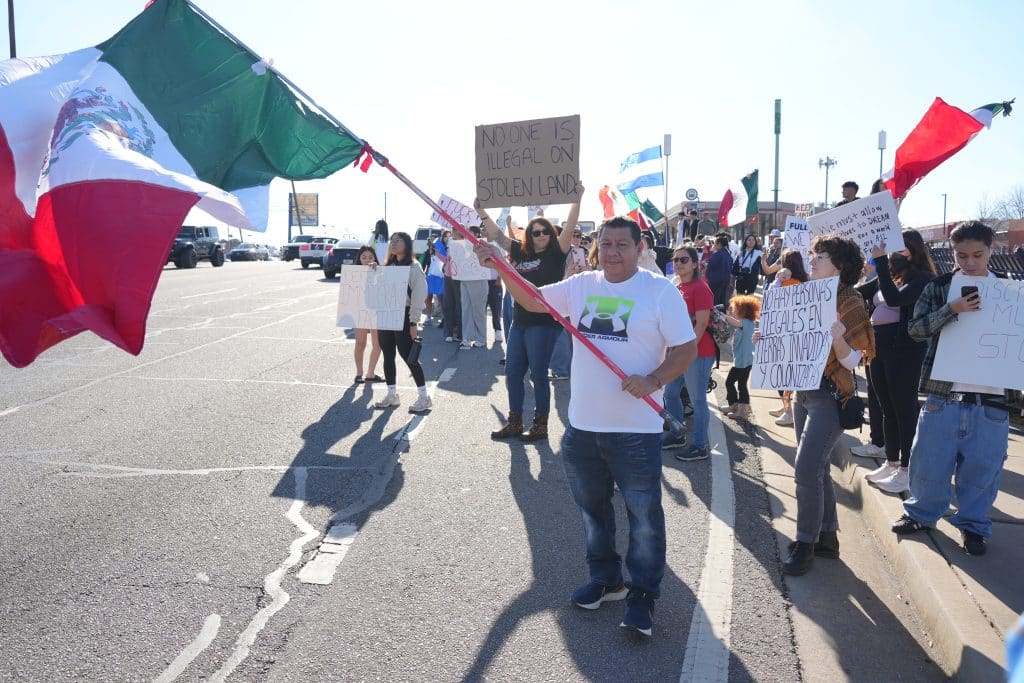
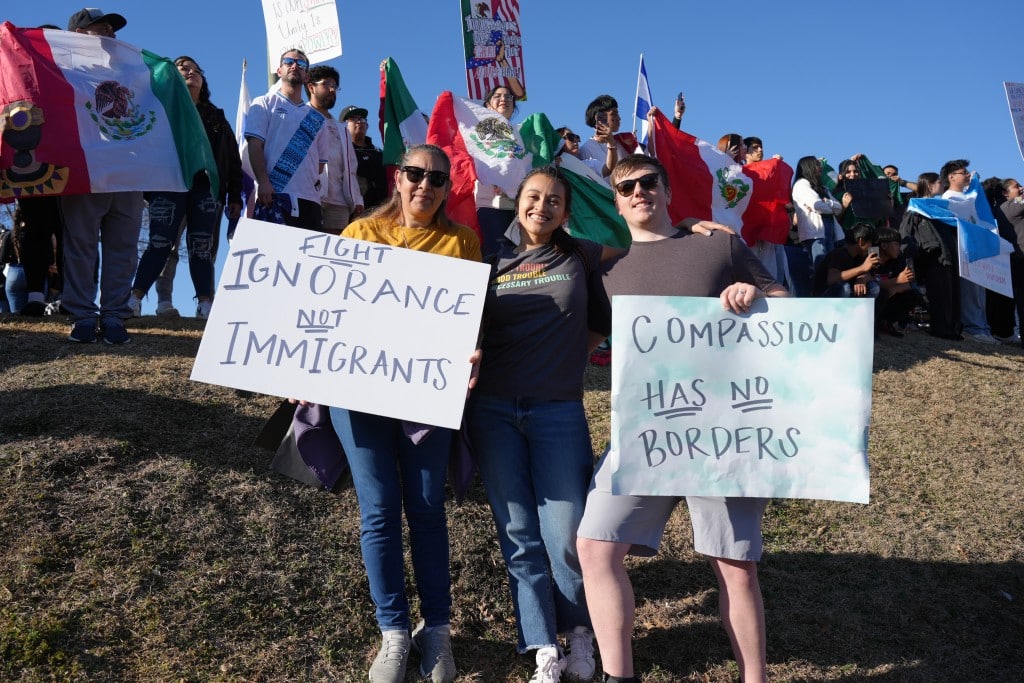
Etna Melgarejo stood in the grass along the sidewalk on Buford Highway on Saturday, holding up a sign saying “Fight ignorance, not immigrants.” The 56-year-old mother, originally from Mexico, has lived in Georgia for more than 30 years. She joined hundreds of people who had shown up at the intersection of Clairmont Road and Buford Highway to condemn the ICE arrests that started just days after Donald Trump returned to office, and to show their support for immigrants.
Just before the rally, she said, she spoke with a family member who is undocumented. The person was already setting up a plan in case they got deported—packing up the family’s clothes and organizing the paperwork for their house. She said they were still trying to figure out whether their U.S.-born adult children would remain in the country or leave with them.
“It’s all very sad, to be honest,” she said in Spanish.
Throughout the afternoon, protesters waved flags from Mexico, El Salvador, Colombia, Ecuador, Venezuela, and the United States while chanting slogans like “¡Si se puede!” (Yes, we can) and “Trump, escucha, estamos en la lucha” (Trump, listen, we are fighting back). Passing vehicles honked their horns, flew flags, and blasted mariachi music. As more people joined, protesters momentarily shut down the highway, while Chamblee police and members of the Georgia State Patrol tried to redirect the peaceful rally back toward the sidewalk.
Though most of the people at the rally were from Latin American countries, white Americans also joined to show solidarity. Sasha, 37, who is originally from Colorado but has been living in Georgia for the past decade, showed up for her six-year-old nephew, who has a Mexican parent. “I don’t want him growing up in a place that thinks that he’s less than just because of the color of his skin or the language that he speaks,” she said, her voice cracking. “He should be able to be big and feel like just as much a part of this country as anybody else.”
The rally was Atlanta’s most visible response yet to the recent ICE arrests and the cascade of anti-immigrant policies coming from the White House in the last two weeks. In Georgia, where Hispanics and Latinos make up approximately 11 percent of the population, with over a million residents, members of immigrant and refugee communities in the Atlanta area have reported a chilling effect—with local businesses seeing fewer customers, and school teachers noticing a drop in attendance.
Listen to the rally in this audio:
Others are taking action by talking to experts and lawyers, preparing and informing themselves on what documents they need to get in order, who they need to speak to should they get deported.
Etna’s daughter, 30-year-old Jessica Devins, has undocumented friends who work in all kinds of industries: house cleaning, construction, real estate, caregiving, food service. Many of them are rattled about the recent wave of arrests among immigrant communities, she said, but they still have to show up at their jobs—and go on with their lives despite the fear.
“I feel very sad about what is happening to our community, especially knowing that this country has so many good things to offer, but they are being taken away from people who deserve and need them,” she said in Spanish.
Preparing for the logistics of deportation
Three miles down Buford Highway, around 50 people gathered in the community room of the Salvation Army in Doraville. Organized by local Spanish-language media outlet Prensa Atlanta and Amigos de la Comunidad Georgia, a group that supports families in the Buford Highway corridor, the meeting was a chance for concerned residents to ask their questions to lawyers and immigration experts.
“I know there’s a lot of fear, I know there’s a lot of anxiety,” said Pia Candotti, a lawyer who focuses on estate planning and family-based immigration law, in Spanish. Attendees sat around tables piled with flyers from law firms and red “know your rights” cards while Pia exhorted them to focus on “what you can do, what you can control.”
One of the chief concerns: what happens to their children if they’re deported. Pia had said that it was important to get a power-of-attorney document, signed in front of a notary, that gives someone’s children to another person for a year or for some other designated time period, but attendees wanted to know what happened after that. “¿Qué pasa después de un año?” one woman asked: What happens after a year? Pia also urged community members to think through who could take charge of their homes and businesses should they be deported, and emphasized the importance of getting legal documents in order.
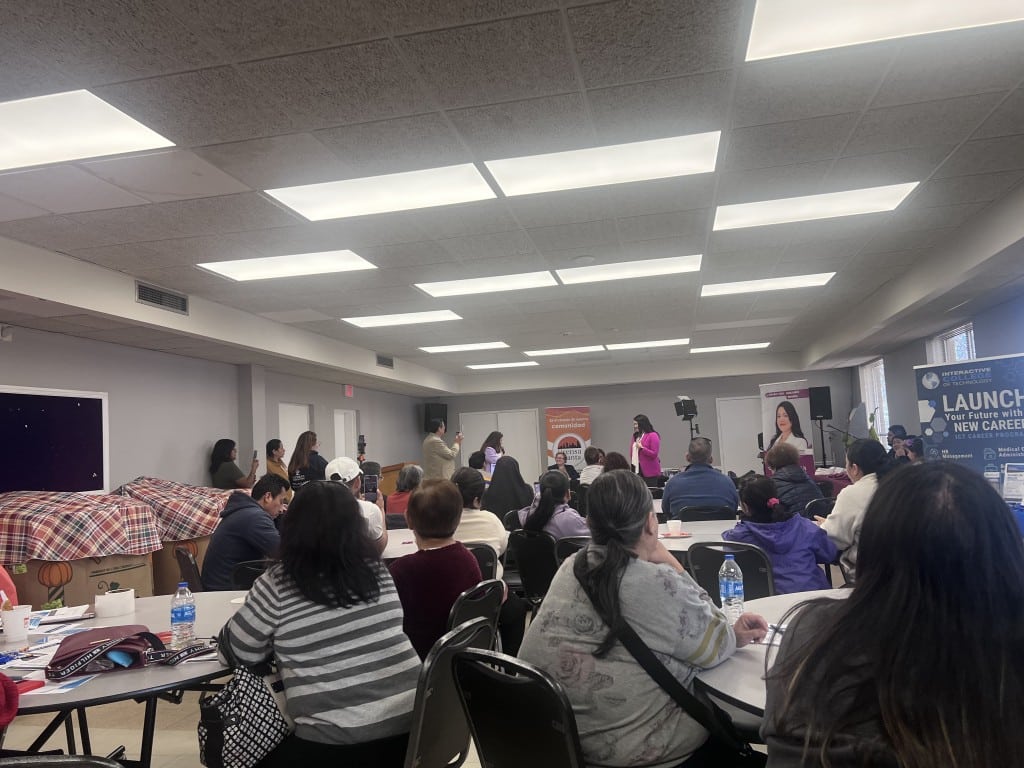
State House representative Karen Lupton, who represents parts of Chamblee, and a counselor from the DeKalb County School District also joined the meeting, both offering promises of support.
The counselor said that, if ICE were to come to any of the schools, “la administración, y solo la administración, va a tratar con ellos”—the administration, and only the administration, is going to deal with them. She pleaded with the families to continue sending their children to school, and to make sure the emergency contact info was up to date, in case their parents were deported.
But the conversation illustrated the myriad difficulties both parents and administrators may encounter navigating potential arrests by ICE. Another person, via social media, wanted to know where kids should go if they come home from school and find their parents gone; the DeKalb rep said that if a bus driver tries to drop a child off and there are no parents to pick them up, the child will be returned to school, where officials will reach out to their emergency contact.
“Muchos padres están con ese temor de ir a recoger a las paradas a los niños,” another woman said: A lot of parents are afraid of picking up their kids at the bus stops.
Over the course of three hours, local residents, community leaders, and experts went back and forth, exchanging information, and preparing themselves for what may lie ahead—with a sense that deportation was an inevitability.
“Mi hijo tiene más de veintiún años. ¿Le puedo dejar la custodia total de los niños menores?” asked a man in a green puffer vest, green beanie, and black sneakers. My son is over 21 years old. Can he be left in full custody of the minor children?
A call for empathy
Fifty-four-year-old Rafael Garcia, a documented immigrant from Mexico who has been living in Georgia since 1988, was also at the Buford Highway rally to show his support. “Everything that’s happening, it’s sad,” he said in Spanish. “But what I see here makes me happy, that people are coming out. Because just as people go out to dance, they should be present here.”
He said he has family in Texas who have a lot of fear of being deported, so he decided to come to the rally in their representation. As he talked about his siblings, his eyes turned red and teary, and he held on to a Mexican flag he was waving.
“Si estamos unidos, no nos pueden hacer nada,” he said: If we are together, they can’t do anything to us. Around him, cars honked their horns and the crowd roared.
Author

Related Articles
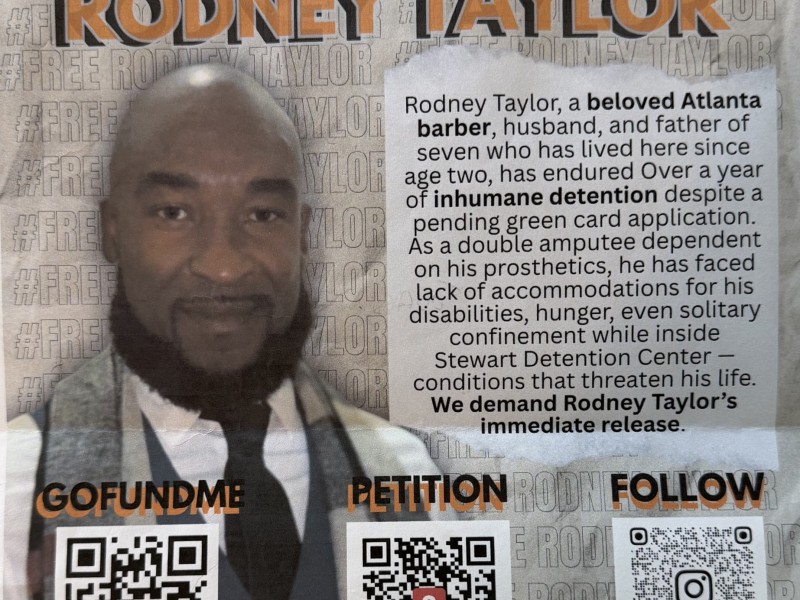
Rodney Taylor released from detention: “I am proof that when people organize and refuse to look away, we can win”
The Gwinnett County resident, who has suffered health problems while incarcerated since January 2025, has been released from Stewart Detention Center.