
“We did it”: Latinx student film Nuestra Realidad makes its cinematic debut at Tara Theatre
“We’re really taking up the space and not only just taking it, but we’re adding to it.”
A young teenager, Sara, is about to walk out the door for school when she overhears her mother on the phone. Her mom doesn’t want to drive, she’s saying quietly in Spanish: “Retenes”—a term often referring to traffic stops or checkpoints—are on the rise, and she’s afraid of getting pulled over and detained. Hearing this, Sara texts her friend that she can’t make it to cheerleading practice. Moments later, Sara and her younger brother get into an argument after she tells him their mom can’t drive him to his martial arts practice either.
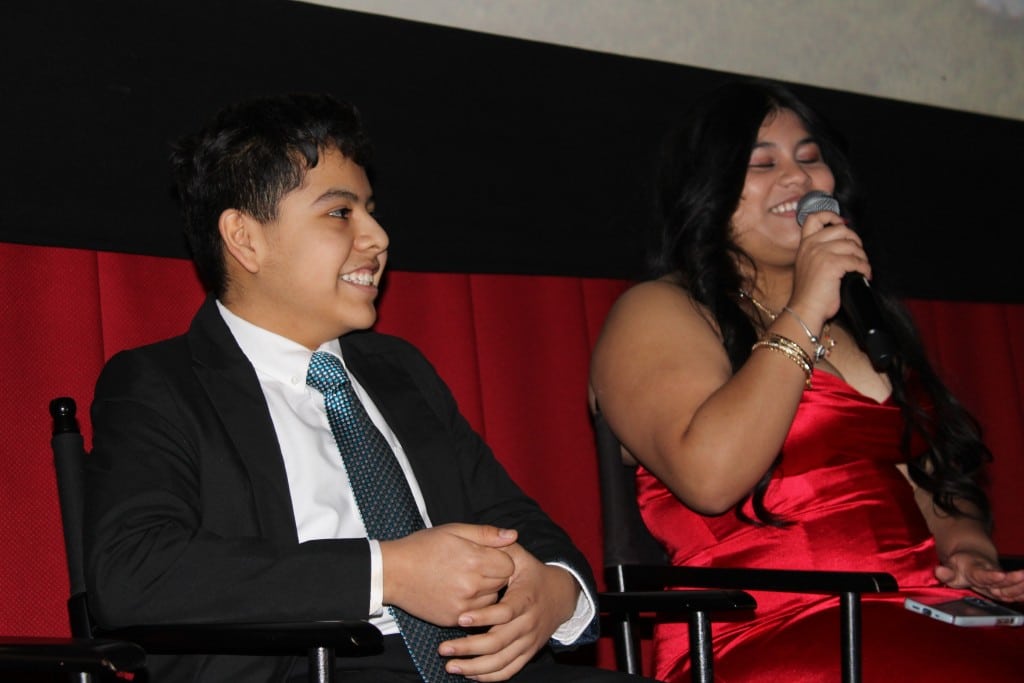
It’s the first scene in Nuestra Realidad, a short film that premiered Sunday at the Tara Theatre. The movie explores the lives of Latinx youth growing up in the Atlanta area, but not only that—it was scripted, directed, and starred in by young Latinos. “My character is pretty much identical to me in real life,” said Kimberly Cruz, sitting in a director’s chair at the opening, clad in a shiny red dress, her hair styled in loose curls. “I mean, the film is kind of pretty much identical to my life.”
Directed by Sophia Mera Nieto, a graduate of Gwinnett County public schools, Nuestra Realidad was initially inspired by a research project of Dr. Emily Lemon, who examined the mental health impacts of the federal 287(g) program—which empowers local law enforcement to enforce immigration law, and has been called a “deportation pipeline.” The film addresses fear in the community created by immigration laws, and how those fears affect everyday life.
Those realities impacted the making of the film itself, said Diana Lopez Garcia, an executive producer and cowriter on the film. The crew met once a week, on weekends, at a Gwinnett Public Library, before starting the filming in the summer. Getting everyone together was no small feat: “A lot of parents couldn’t drop off their kids, or a lot of kids couldn’t make it because their parents can’t drive them due to those same fears. Or, I’m going to be there late because my ride canceled orI’m not gonna be there at all, my ride canceled.” Sometimes, Diana said, she would leave her home in East Point more than two hours before their expected meeting time in Gwinnett, so she had enough time to pick up people on the team who needed rides.
The film itself, from the theme to the details, “really was [the kids’] film, their project, up until the very end,” Diana said. In the scene when Sara is texting back and forth with her friend, for example, she doesn’t use emojis. The kids explained to Diana, who is a few years older than them, that using emojis was an “unc and auntie” thing to do.
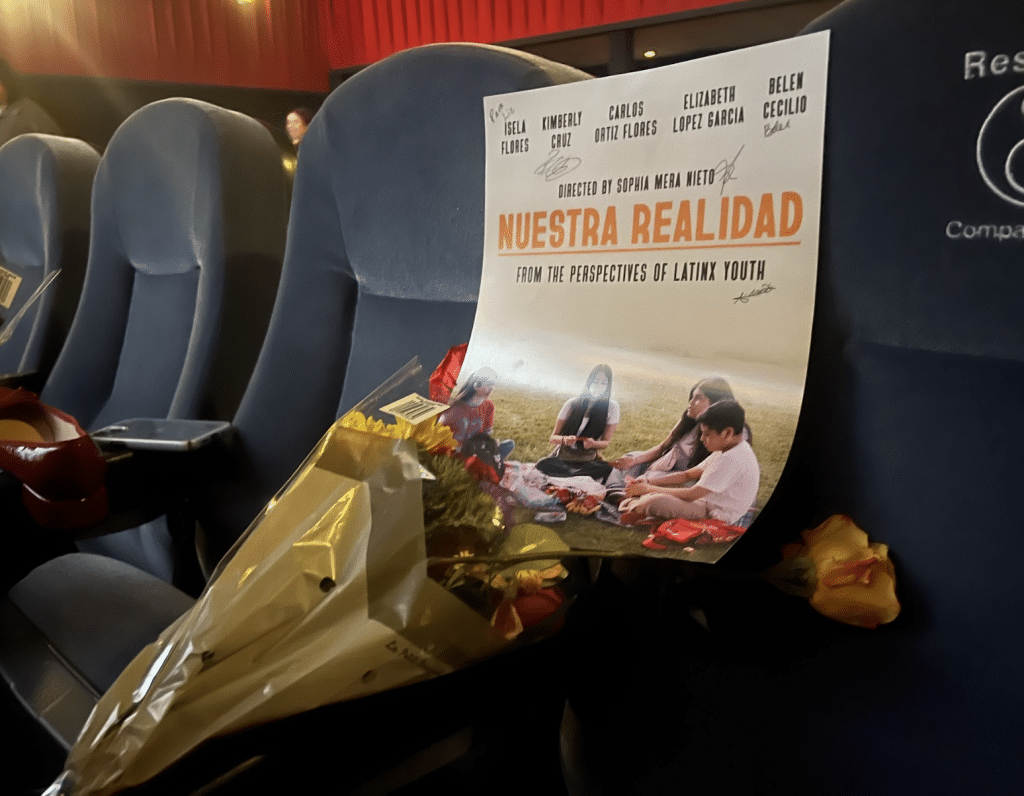
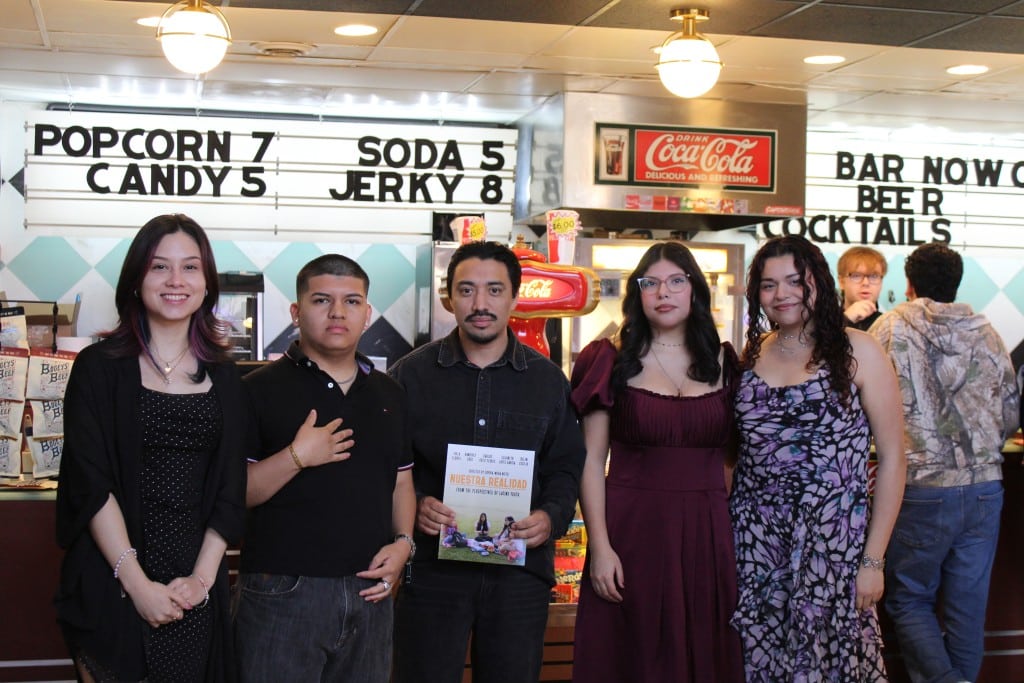
For Sunday’s premiere, the independent theater hall was abuzz—the young crew dressed in their finest (the dress code that they came up with themselves was “homecoming,” Diana later told 285 South), signing their autographs on the movie posters, and smiling for selfies with bouquets of multicolored flowers.
Seeing the finished product in this ornate venue, one of Atlanta’s most storied theaters, felt surreal to some members of the crew. “It felt very dreamlike. Like oh my gosh, we’re here, we’re in this space,” Diana said. “We’re really taking up the space—and not only taking it, but we’re adding to it.” When she peeked over at her younger sister, who was an actor in the film, she saw her cover her face. It was like, she said, “she was nervous—like, Oh my God, oh my God. It’s me.”
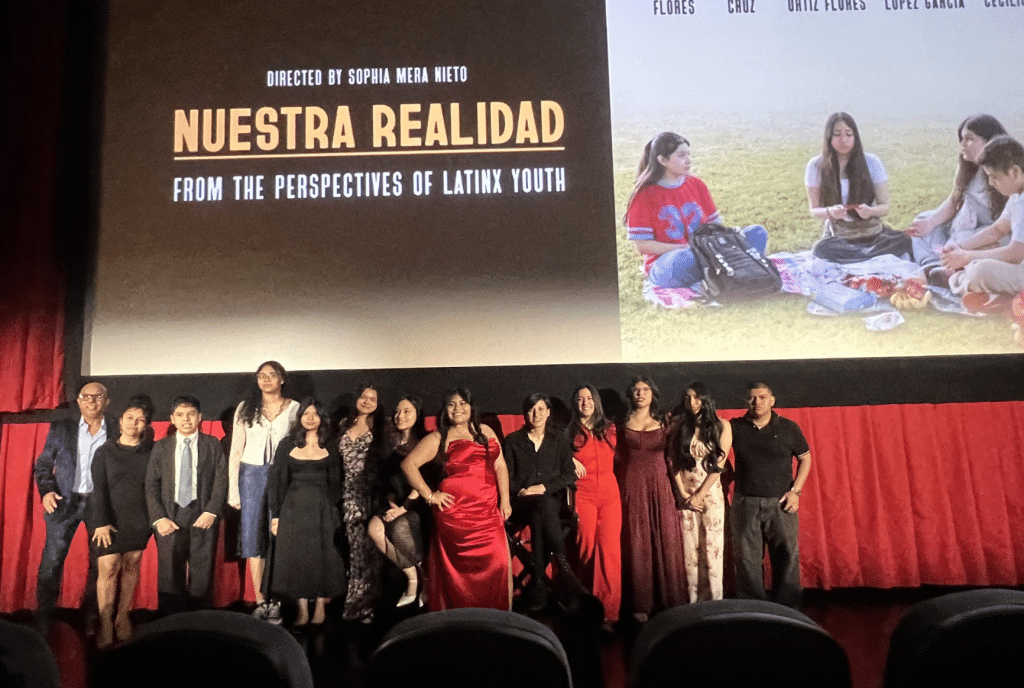
After the film and the aftercuts—which featured music from local rapper Victor Mariachi—ended, the actors and crew made their way to the front, taking their seats in black director’s chairs for the Q&A. They spoke about just how much the film reflected their day-to-day lives. “I’ve known and had people in my life get deported,” said Anthony Jasso, Nuestra’s codirector of photography and editor. “I remember it felt like my world shattered.” He continued: “Just this morning, as I was rushing to get out of the house, I couldn’t find my wallet.” He said he couldn’t help but think, “What if? You know, if I get stopped, I don’t have my ID on me, I don’t have my driver’s license?” The other crew members nodded in agreement.
When an audience member asked what was next for the film, Anthony said it had been accepted to the Gwinnett Public Library Film Festival in March, and the team had been invited to submit it to the Georgia International Latino Film Festival in October. The audience of around three dozen people cheered.
Sophia Mera Nieto, the director, closed out the screening, saying to the audience, “Tengo esperanza en que esta nueva generación no se va a quedar callada, que son los que veo que pelean más.” I have hope that this new generation will not remain silent, because they are the ones I see fighting the most.
Afterwards, as they walked out of the theater and into the parking lot, the team felt “a big sigh of relief,” said Diana. “Like, we did it.”
Author

Related Articles
“They’re free to be kids here”
On a makeshift soccer pitch in a Decatur gym, middle schoolers from countries including Afghanistan, Congo, and Sudan speak a shared language (with a little trash talk mixed in).
Spring has sprung—and for one Burundian farmer, that means it’s time to get back to the garden
This year, gardeners from the nonprofit Global Growers Network are combating food insecurity by harvesting produce for local food banks.
Andres Carrillo, founder of the pop-up Cocina Pachuco, is using his cuisine to fundraise for immigrants in detention
Born and raised in El Paso, the recently arrived chef is strengthening ties with his new home. One way he’s doing that: supporting the state’s immigrant communities.