“They’re free to be kids here”
On a makeshift soccer pitch in a Decatur gym, middle schoolers from countries including Afghanistan, Congo, and Sudan speak a shared language (with a little trash talk mixed in).
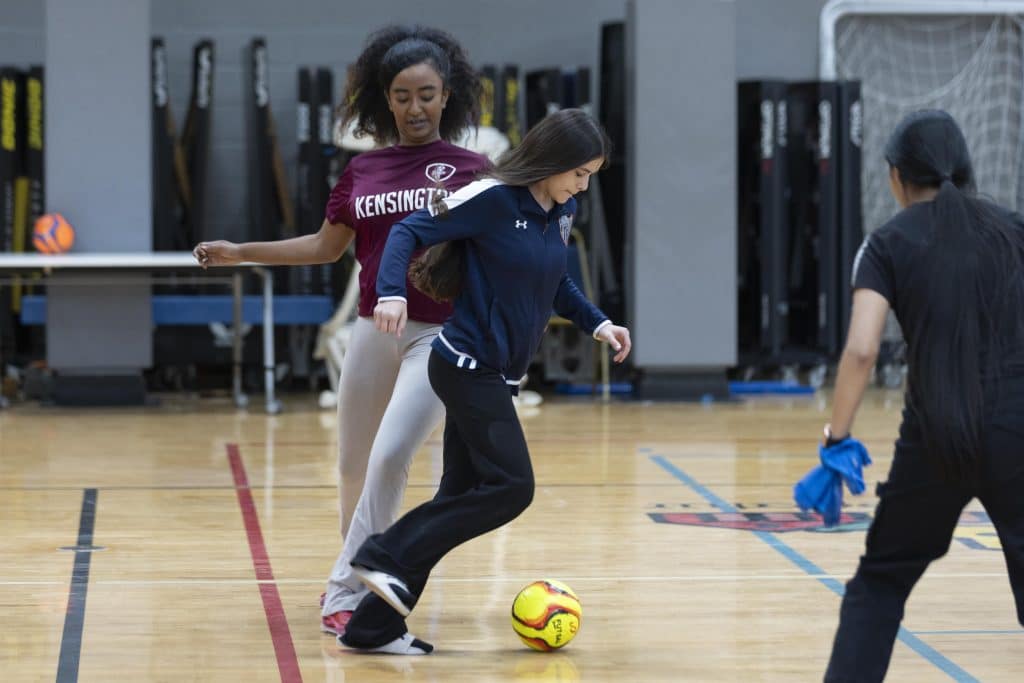
Umaira is first through the gym doors at the Decatur Recreation Center. Almost every Wednesday, she gets the chance to play soccer with her classmates at Global Village Project, an all-girls middle school serving students who came to the U.S. as refugees. Umaira, who was born in Afghanistan, wants to soak up every minute.
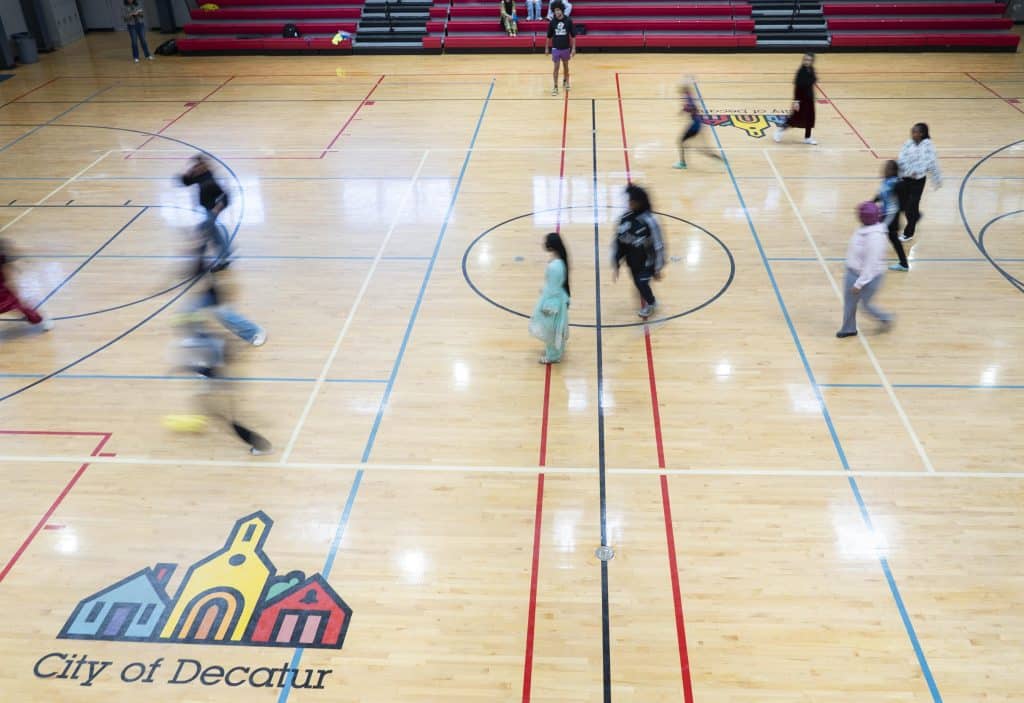
Youth soccer typically looks like grassy pitches, Saturday mornings, and exclusive club teams. It can also look like kicking a ball around on a hardwood floor with sandals, sometimes bare feet, and two goals set just below a hoop. One thing, though, remains the same: the competitive energy. On this weekday afternoon, the yells reverberate off the gym walls at the recreation center—with a healthy amount of trash talk mixed in. Not even coaches participating in gameplay are immune to the kids’ taunts or loser hand gestures.
The program springs from a partnership GVP has had since 2023 with Soccer in the Streets, a nonprofit with a goal to make soccer accessible to low-income communities. Founded in 1989, Soccer in the Streets has two youth initiatives. One is StationSoccer, a project to build fields at MARTA stations for surrounding neighborhoods that have historically had less access to pay-to-play sports. The second: reaching young people for whom that program remains out of reach by sending coaches out to schools around the metro Atlanta area.
For the girls at GVP, these afternoons on the basketball court are often the only opportunity they have to play soccer. Not Umaira, though: The 13-year-old seizes every chance she gets.
“When we have parties, the boys all play [soccer],” Umaira says. “The girls are making TikToks, but I don’t go with them. I stay with the boys.”
Students who attend GVP live at or below the poverty line, said a spokesperson for GVP, and several take a free bus from Clarkston to attend school in downtown Decatur. At home, many don’t have access to fields or face cultural barriers that discourage girls from playing sports.
This year’s students come from 10 different countries—including Afghanistan, Congo, and Sudan—and, among them, speak 13 different languages. While “six-seven” may be the most popular phrase in translation, soccer is a universal language that these girls share.
They relish the chance to compete. During the first week of Ramadan, when several were fasting, coaches planned for a lighter day and opted to cut the scrimmage—but that decision turned out to be controversial. “We want to play soccer,” students cried from the bleachers where the coaches huddle up with the group before and after each session. The final practice of Ramadan was only gameplay. No drills, no “clean the room” game, just straight soccer.
The weekly practices are precious to Umaira. She finally has a chance to be out and about, running around with her friends—the thing she misses most about Afghanistan. “We were in the street all the time,” she says. Girls did not attend school when she was growing up—instead, she says, she hung out with her cousins and friends, often getting into trouble—they once got caught throwing watermelon peels off a roof—and coming home after dark. When she left Afghanistan, sports helped to fill that void. In addition to soccer, she plays flag football, volleyball, and basketball with her family or at the local mosque.
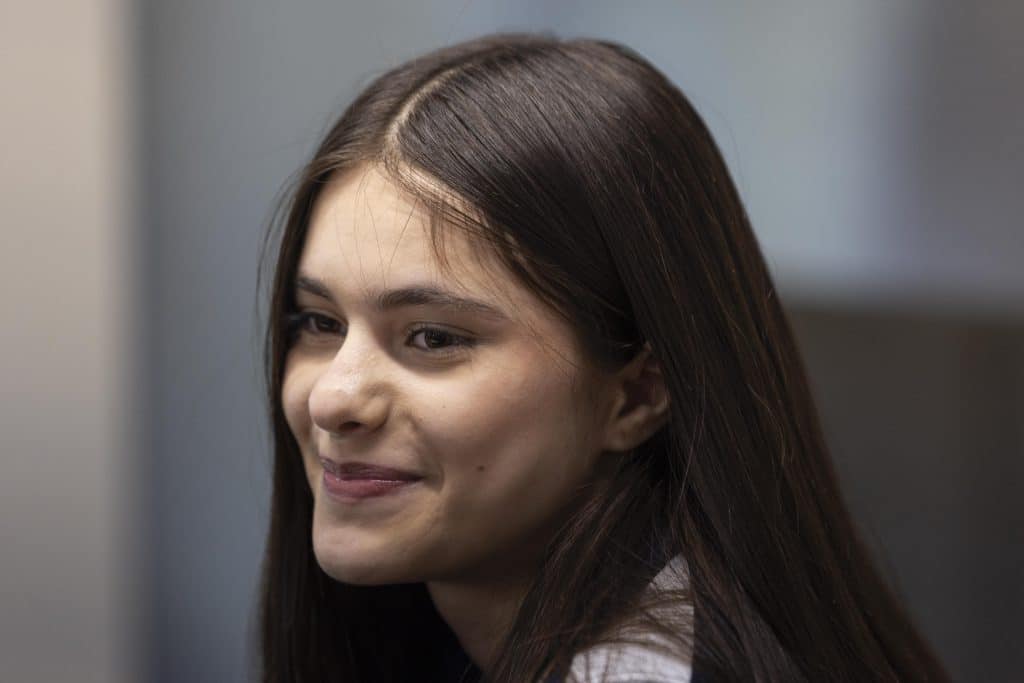
When Umaira was born, the United States had been waging war in the country for more than a decade. As the U.S. military abruptly withdrew in 2021, the Afghan government collapsed and the Taliban regained control of the country, leaving many displaced—including Umaira and her family. “Out of nowhere, they were like, ‘Pack your stuff. We are leaving,” she says. Her mom told her she didn’t know if the family would be able to return. “But I didn’t listen,” Umaira says, “I was crying.”
Her mother, her two brothers, and she came to the United States, while her father and two sisters currently reside in Tajikistan. Umaira’s sister had been visiting their grandparents in northern Afghanistan when the Taliban took over. Her parents had to make the difficult decision to break off as her father left to retrieve her sister. They found refuge in Tajikistan but—given the Trump administration’s indefinite ban on refugees—now face an uphill battle to reunite the family.
Several girls at GVP carry a similar trauma, teachers and staff working with the students told 285 South. It helps that they have role models in their coaches—two out of four of whom are women. As soon as the students arrive, Soccer in the Street coaches Maryam Mumin and Arsema Mulugeta are swarmed with hugs. Maryam, a second-generation Somali American, sees herself in her players.
“I grew up in a household where my parents are immigrants, refugees, and coming here, seeing these kids who don’t have as much access to sport . . .” she says. “It was always soccer that brought us together and brought me a sense of community. So the fact that I’m able to do it for these girls feels like [healing] my inner child.”
Soccer in the Street’s coaches focus less on tactical instruction and more on containing the chaos of the screaming girls, says Maryman, who can use the space as an emotional release. “Sports and movement are important for all students, but especially important for our students,” says Danielle Ereddia, GVP’s education program manager. “They have all experienced trauma. As a school, we prioritize being trauma-informed, which involves three things: creating a safe environment, building relationships, and supporting and teaching emotional regulation.”
For Umaira, soccer is also an outlet outside of her fractured family dynamic. Her mother leaves for work at 5 a.m., and with her father and other siblings in Tajikistan, it falls on Umaira to get up shortly after her mom leaves to look after her younger brothers. She also helps her mom navigate life in the U.S., often serving as her translator, since she doesn’t speak English.
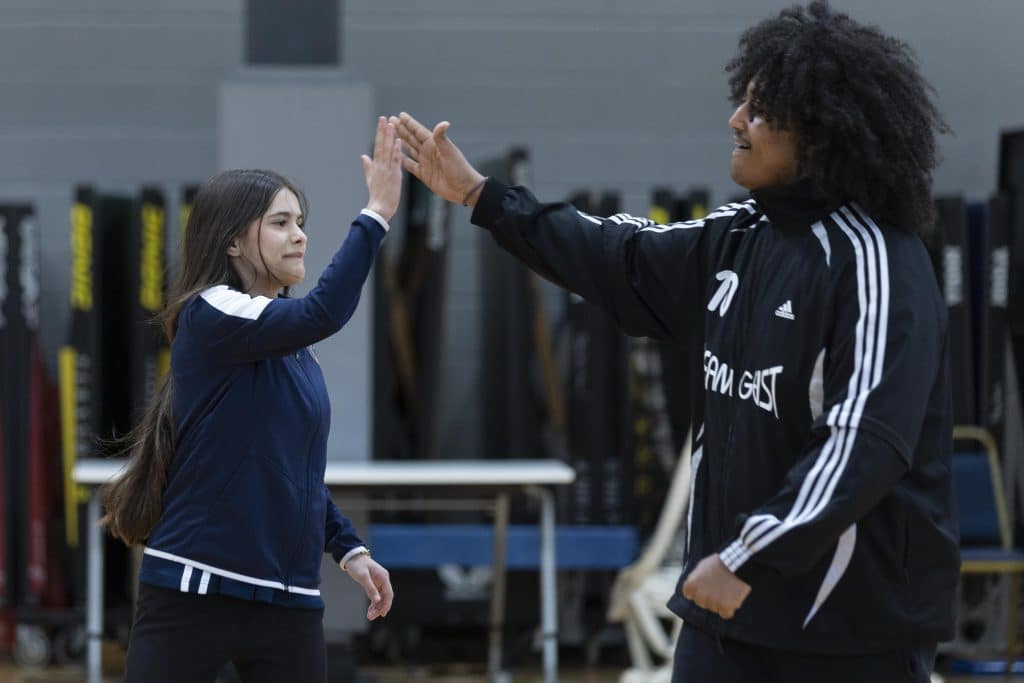
Maryam has watched several of the students grow into leaders through soccer, becoming more vocal and directing teammates on the pitch. Umaira is no exception. It’s apparent in how the teen carries herself on the makeshift field at the Decatur rec center. A handball penalty is called on her team and, through loud objections, she hypes up her goalkeeper. The keeper can’t block the penalty kick, but that doesn’t faze Umaira. Amid the chaos, she calmly brings the ball back to the center circle to resume play. She doesn’t score in this match, with both her attempts hitting the crossbar—but her teammate notches two goals. Both times, Umaira celebrates her mate with a signature handshake.
“A lot of them have told me they’re not able to [play soccer] at home,” Maryam says. “But here they’re free to be kids.”
Related Articles
Update: Culturally specific food pantries and other food resources
SNAP terminations continue to have ripple effects on immigrant and refugee communities.
A new Doraville cafe serves up a taste of Southeast Asia’s kopitiam culture
Kopitiams aren’t just coffee shops—”there is human warmth, the friendliness from that cup of coffee”
These Atlanta eateries are saying “Paga Lo Que Puedas”: Pay What You Can
Kamayan ATL and Vinny’s Mutual Aid Bakery are joining over 100 restaurants in 13 countries for a day dedicated to putting food access—and people—first.