
A Rohingya man in New York died under mysterious circumstances— his relatives in Georgia are grappling with the loss
Federal immigration officers left Nurul Amin Shah Alam outside a closed coffee shop in harsh winter weather— days later he was found dead. He was getting ready to move to Georgia, says his niece in Stone Mountain.
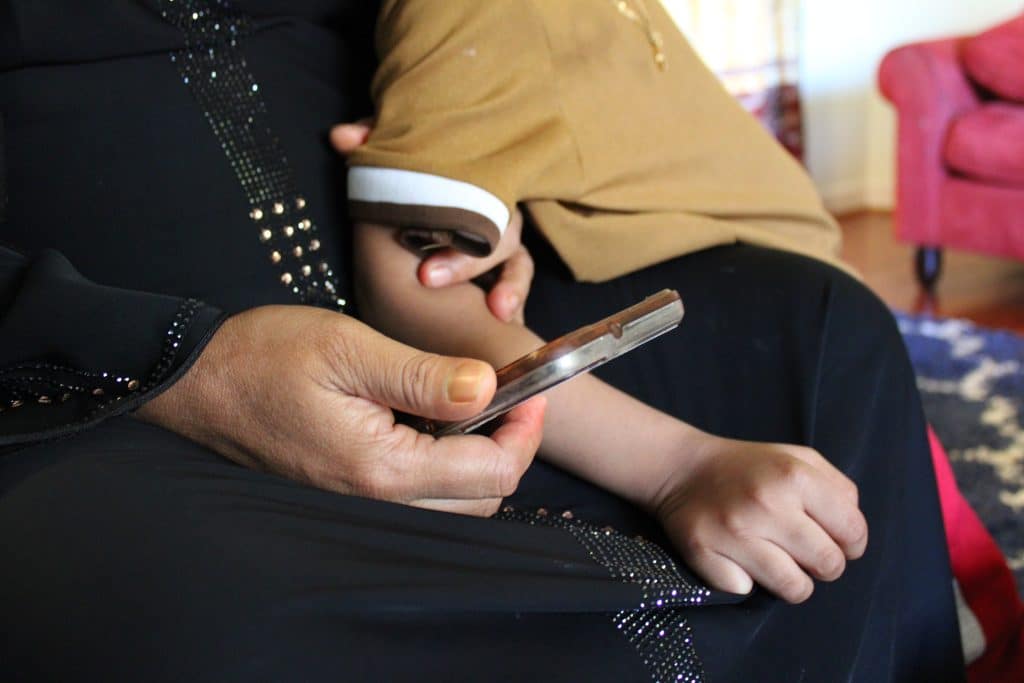
Rosheeda Binti Abu Sayad sits in an armchair in her home in Stone Mountain. Her husband is in Gainesville, working at a chicken factory, but her home is full: Her toddlers bounce in and out of the room, and sunlight peeks through the drawn curtains. She speaks loudly and quickly, her words tumbling out, and then falls silent before speaking again, her words becoming softer, more uncertain. She is talking about her uncle, her father’s brother, Nurul Amin Shah Alam.
Nurul Amin lived in Buffalo. Rosheeda had hoped to bring him, his wife, and two of their sons to Georgia, where they could join the Atlanta area’s growing Rohingya community and enjoy a climate that was warmer and more familiar. She had even connected her uncle with a local community member, and they had discussed the logistics of renting a van to drive the family south.
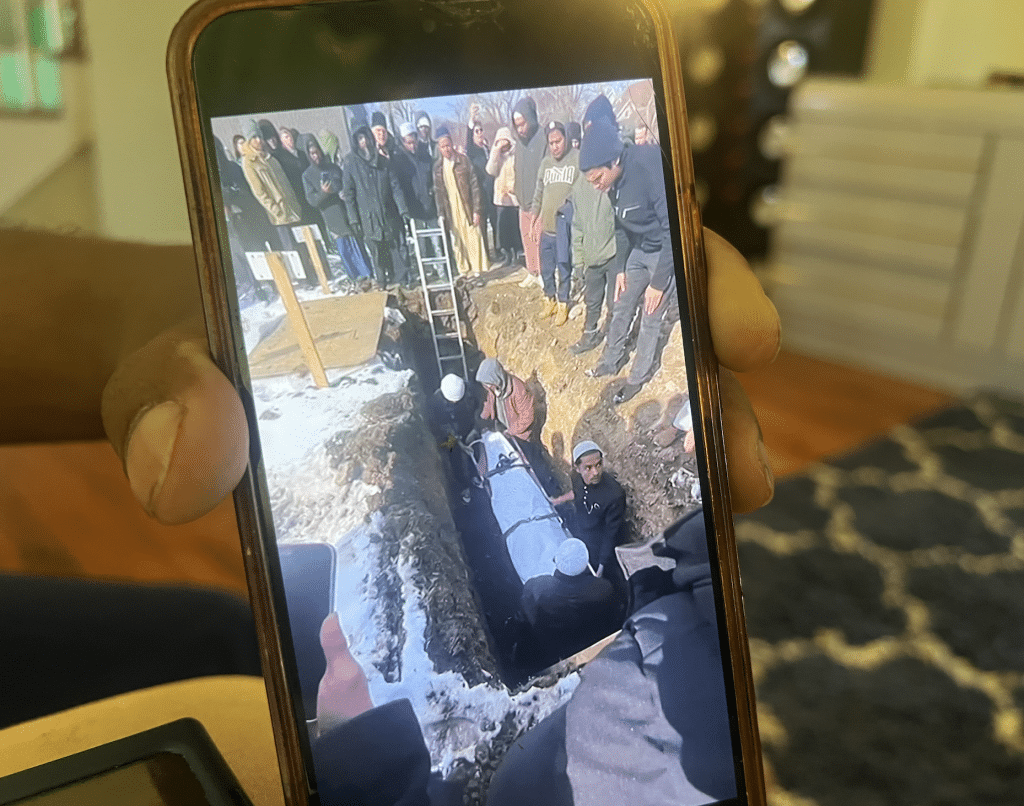
Instead, a few weeks ago, Rosheeda flew north for Nurul Amin’s funeral.
Nurul Amin’s body was found about five miles from his home in Buffalo on February 24. Around five days before that, U.S. Customs and Border Patrol (CBP) had dropped him off at a closed Tim Hortons coffee shop, in weather that was almost freezing. Nurul Amin’s wife and kids, as well as Rosheeda—his closest relative in the U.S. outside of his immediate family—are still trying to piece together what happened. To this day, Rosheeda says, neither CBP nor the Erie County police have contacted the family. 285 South reached out to both CBP and the Erie County sheriff’s office for comment, but as of publication, they had not responded.
On Friday, New York Attorney General Letitia James announced that she’s opened an inquiry into Nurul Amin’s case, seeking answers into the circumstances surrounding his release, as well as why he’d been incarcerated so long before that at a local jail, the Erie County Holding Center.
“They never thought that he would come to America, and after two months, he is gonna die in this situation,” said Rosheeda, speaking Rohingya through an interpreter, a member of the local Rohingya community named Abu Talib.
Before resettling in metro Atlanta, Rosheeda lived as a refugee in Malaysia, which is home to more than 120,000 Rohingya—an ethnic group that’s been the target of persecution for decades in nearby Myanmar. Fleeing Myanmar, Rosheeda arrived in Malaysia in 2013; she joined her husband and Nurul Amin, who had been in the country for a few years. Rosheeda and her family left in 2016 and resettled in the Clarkston area. Nurul Amin, along with his wife and two of his kids, made it to the U.S. eventually too, resettling in Buffalo in December 2024. Three of their kids were (and are) still in Malaysia, and the plan was that they would join their parents here as soon as their resettlement paperwork was finalized.
“I like America more than I like Malaysia, but only thing I don’t like here is too much snow, ice, ” Rosheeda remembers her uncle telling her soon after he arrived in Buffalo. “When my children come to the America,” he had told her, “I will move to the Georgia, whole my family.”
But in January 2025, the Trump Administration announced a ban on refugees entering the U.S. Nurul Amin was distraught, Rosheeda recalls. When she called him, he didn’t want to speak. “He knew his children cannot come here, and he thought he cannot meet his children again,” Rosheeda says, with Abu Talib interpreting. Feeling increasingly frustrated and cooped up in the frigid weather, he would go out for walks, sometimes late at night, Nurul Amin’s wife told Rosheeda. Usually one of his kids would join him, worried about his safety. He was saying things, she said, like, “Pack up. I will move to Georgia. Sometimes he said, Pack up, I will go to Malaysia.”
One afternoon, he went out by himself, after purchasing some curtain rods to use as walking sticks, the family’s lawyer told The Investigative Post. Nurul, who was blind in one eye and impaired in the other, and didn’t speak English, wandered onto the property of a neighbor, who called the police. In a bodycam video that has since been released, an officer is shown tackling him to the ground while he struggles against her. He was charged with assaulting officers, trespassing, and possession of a weapon (the curtain rod), and kept at a holding facility for a year before police released him to Customs and Border Patrol on February 19, 2026. CBP dropped him off as a courtesy, the agency has said, at a closed Tim Hortons in freezing weather. His son had been waiting for him outside the jail, and when he didn’t show up, the family’s lawyers filed a missing-person case. Days later, his body was found.
Nurul’s wife, Fatima, called Rosheeda to tell her the news. “We found him,” Rosheeda recalls Fatima telling her.“Doctor called, he’s dead.”
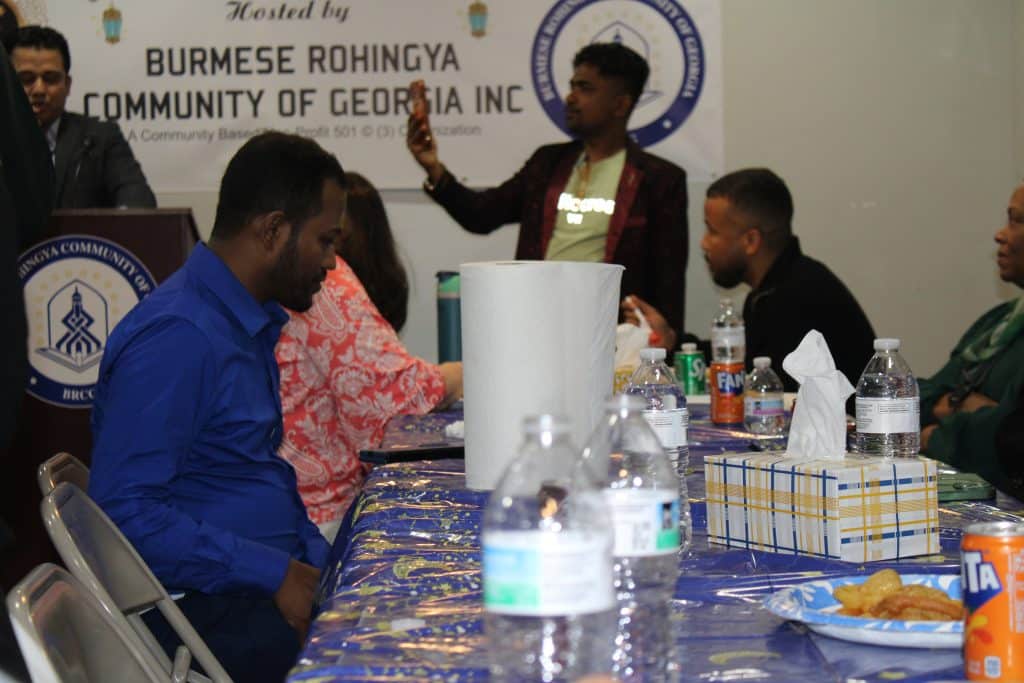
Nurul Amin’s death has reverberated in Georgia, which is home to about 2000 Rohingya community members, according to the Burmese Rohingya Community of Georgia (BRCG). Many can’t wrap their heads around what’s happening. “The U.S. brought us here, we went through thousands of interviews to get here,” says Abu Talib, the executive director of the BRCG, who himself resettled here in 2012 following a harrowing ordeal.
There have been instances when local community members have been temporarily detained by law enforcement, he says—like when a group of Rohingya men on their way to work at the Gainesville chicken factories were stopped by ICE in Norcross. “One of them had no documents, because his documents were at home,” so he was held for two hours, says Abu Talib, until “someone took the document from his home and showed to ICE, and that’s how he came out.”
“If you look immigrant, they go after you,” he says. “We became refugee after going through genocide, ethnic cleansing, persecution,” and now, “every Rohingya say we feel the same thing. The way how ICE is treating [immigrants], it’s the same thing back home.”
In an email to 285 South, Nurul Amin’s lawyer, Terrence Connor, wrote that their focus at the moment was “re-uniting the family and the 3 sons remaining in Malaysia. [New York] Governor Hochul has been very helpful. We will next turn to the underlying facts of the horrific events that caused the death of Nurul.”
Back in Stone Mountain, Rosheeda takes out her phone, which has the video of Nurul Amin outside the Tim Horton’s. She’s crying. She feels her uncle was treated as an animal; she believes if the police had initially just called a language interpreter, the ensuing nightmare could have been avoided.
“When I came to America, I feel good. They help me a lot. They help me to place that I can live, and they pay the rent, and they provide me every document I need,” she says. “But I never thought that America would be like that. I never thought my uncle would be die because of lack of understanding.”
Author

Related Articles
“Our family was destroyed. We’re piecing it back together,” says Adalina, whose husband was deported to Peru
After months apart, a metro Atlanta resident decides to leave the U.S., apply for Peruvian citizenship and join her husband in Peru—at least until a new administration takes office. As she prepares to leave the U.S., she is finding support in her Atlanta friends and community.
“I love this country (…) and I just ask to be treated fairly,” says Rodney Taylor from Stewart Detention Center where he is facing deportation
Gwinnett county resident and double amputee issued travel documents signaling imminent removal to Liberia, as his health continues to deteriorate.
These are the bills impacting immigrants in Georgia that survived Crossover Day—or didn’t
Crossover Day is the make-or-break point for bills to have a chance of passing in each year’s legislative session. Here’s how a range of laws affecting immigrants fared.