“I cannot sit around doing nothing.”
With internet access severely restricted in Iran, solidarity rallies and social media campaigns have popped up around the Atlanta metro.
For about two weeks in early January, Bardia wasn’t able to speak with his parents—who still live in Bardia’s home country, Iran. “The phones were down for 10 days, but now it’s back,” he said. Still, communication remains difficult: “We can just talk to them for like five minutes per day. We try not to get into very specific details with them—you just want to know that they’re doing okay, they’re alive, and that’s it.”
Driven by an escalating economic crisis, Iranian citizens have poured into the streets to protest since late December. What began as discontentment over inflation and skyrocketing prices, though, broadened into a movement against Iran’s repressive governing regime, which has held power since the Islamic Revolution of 1979. As protests have spread throughout the country, they’ve been met with brutal violence by security forces—who have killed at least 3,000, and possibly more than 30,000, Iranian citizens. On January 8, authorities imposed an internet blackout in the country, making it difficult for international observers to assess the scope of the situation.
In late January, Bardia’s father was able to get some internet connection, and when they talked over a video call, Bardia could see his dad’s eyes become teary as he spoke about how difficult conditions in the country had become. Out of fear that the government might be listening, they didn’t get into specifics—but, Bardia said, he could see in his father’s demeanor that he was deeply affected by the violence. A friend of Bardia’s, who was 26 years old, was among those killed, he found out through friends who also gained internet access.
The effects of the unrest in Iran are being felt around the world—including the Atlanta area, which is home to thousands of people of Iranian descent (including two members of the Atlanta City Council). Here, members of the Iranian community have been gathering in community and solidarity—some to mourn the violence, others to call for an end to Iran’s authoritarian regime.
For Bardia, a member of a younger generation of Iranians, it’s not the first time he joined a local movement in support of freedom in Iran. Arriving in the U.S. five years ago as a student, Bardia obtained an engineering degree before starting to work for an engineering firm in Atlanta. In 2022, he organized protests in Atlanta that were part of Women Life Freedom, a global movement created after 22-year-old Mahsa Amini died in state custody after being arrested for violating the country’s laws on mandatory hijab wearing and beaten by police. Causing international outrage, Amini’s death also sparked widespread protest in Iran—which was also met with state repression.
When the latest round of protests erupted, Bardia thought this time might be different. “The first videos that came out, the streets were full of people,” he said. (We’re not using Bardia’s full name because he fears for the safety of his family still living in Iran.)
“People outside in small cities that I haven’t even heard of. People were chanting, protesting, and I was like, Man, this time is going to be the one. No—they were again silenced and killed. But this time, even people outside of Iran are doing something.”
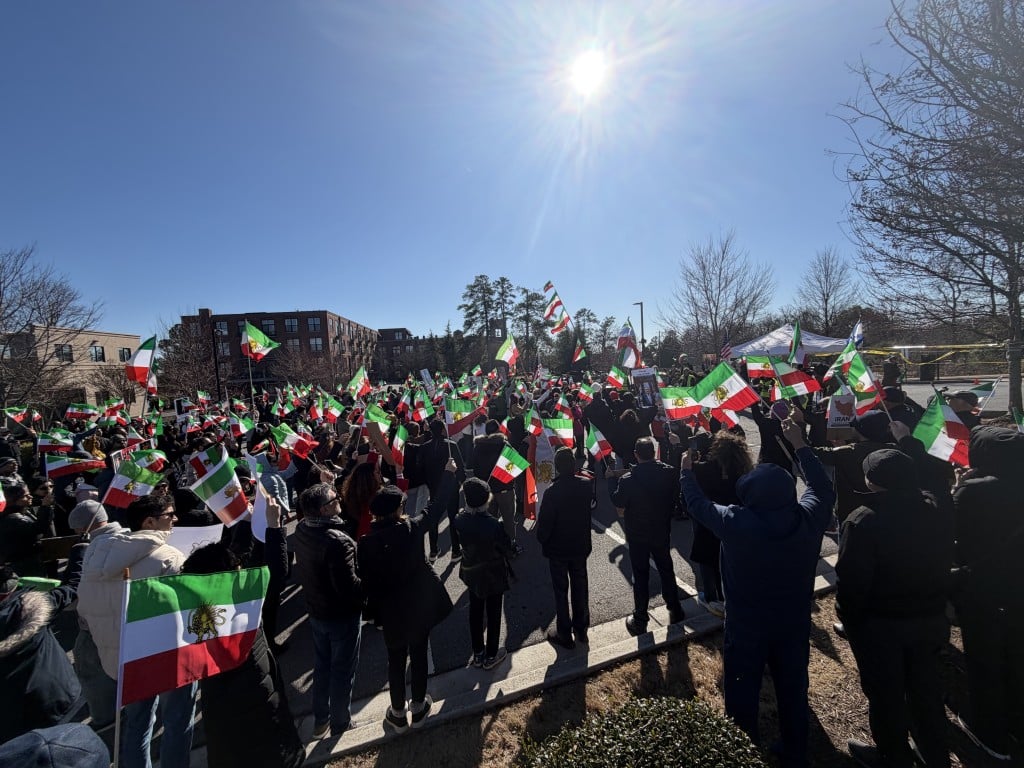
On January 18, Bardia was one of about 500 people who gathered outside the Sandy Springs Performing Arts Center to decry the crackdowns in their home country, voice solidarity with Iranians, and call for a new government. Seeking to draw attention to their cause, another group of protesters rallied in front of CNN studios in Midtown Atlanta while others have launched a social media push, taking to platforms like X and Truth Social to beseech President Donald Trump, European leaders, and universities to pay attention to what’s happening in their country.
About a dozen demonstrators also met outside Emory University’s Winship Cancer Institute to demand the firing of physician Fatemeh Ardeshir-Larijani—the daughter of Ali Larijani, the secretary of Iran’s Supreme Council for National Security and an ally of Iranian leader Ali Khamenei. A Change.org petition, which garnered nearly 150,000 signatures, said: “While she lives peacefully in the U.S., countless young Iranians are dying in Iran due to the policies and decisions made by Ali Khamenei and his inner circle, including her father.” In late January, Emory said that Ardeshir-Larijani was no longer affiliated with the university, but declined to give any more information.
Though some Emory faculty expressed concern over the lack of clarity surrounding Ardeshir-Larijani’s departure, many members of the Iranian community in Atlanta celebrated it: “That was a major thing that happened in Atlanta and had reverberations around the world,” said Dr. Maziar Zafari, an Emory professor of medicine.
“I know many friends of mine in Iran, after the two-week internet blackout, writing to me and thanking the Atlanta diaspora for getting there to make that a symbol of protest against the Islamic Republic.”
Dr. Zafari, a cardiologist who spent his childhood and adolescence in Iran and still has family there, has also been involved in programs that are helping local community members stay informed about—and process the weight of—what’s happening overseas. At a recent talk sponsored by Kanoon, the Persian cultural center, Zafari tried to convey a message of hope, he said: “We have to be the voice of the Iranians in Iran who have protested with just arms, with no weapons, nothing—just with their voices and with their nonviolent activities.” Kanoon also hosted a vigil to honor the dead.
Some Iranians in the Atlanta area 285 South spoke to, including Dr. Zafari and two other Iranians in Atlanta who have attended rallies in the city, have also expressed a desire for U.S. military action in Iran—“I see what he did with Maduro,” Zafari said, referencing the recent U.S. capture of former Venezuelan leader Nicolás Maduro. Trump has made similar threats of intervention against the Iranian regime and may be preparing to strike the country. But other members of the diaspora say such remarks only further complicate the situation—and give the regime an excuse to continue its violent actions against protesters.
“Those who are very much advocates of military intervention from the West, they currently have the louder voice,” said Mona Tajali, an Iranian social scientist who studies women’s political participation in Muslim countries. Now at Stanford University, Dr. Tajali was until recently an Atlanta resident and a professor at Agnes Scott College. “They make it seem as though this is what the general Iranians are asking for.” She said she’s been speaking with Iranians in the country and in the diaspora and has found “that’s definitely not the case.”
For her part, Dr. Tajali said she’d like to see intervention from the West that restores internet access to Iranians—so that freedom activists and labor unions can communicate with one another and push for a change in government from within the country. (Currently, a small portion of the population has been able to gain internet satellite connection through Starlink.) She also hopes to see more international sanctions targeting members of the regime and a release of all political prisoners, including Narges Mohammadi, a human rights activist and 2023 Nobel Peace Prize laureate currently imprisoned in Iran.
As a model for Iran’s future, Dr. Tajali looks to South Africa—where, following apartheid, a national truth and reconciliation committee helped society find a way forward. “I don’t think bombs and tanks or anything like that is going to be what really brings that sustained democratic change that I want,” she said. “I think it’s other types of interventions that we need to see.”
Speaking to 285 South, Bardia said from here in Atlanta, he’ll continue to do what he can to be a voice for the Iranian people. He still has a deep love for his home country, where he spent his childhood and part of his adult life. “If I were to be in Iran, I would be one of those people killed,” he said. “I cannot sit around doing nothing. I want to do something, even though it’s small. I want to do something to stop this massacre.”
Author
Related Articles
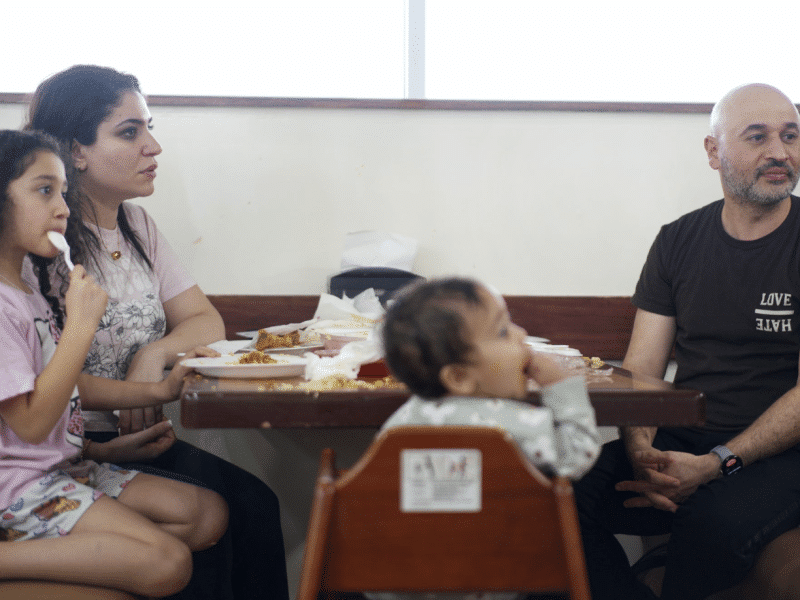
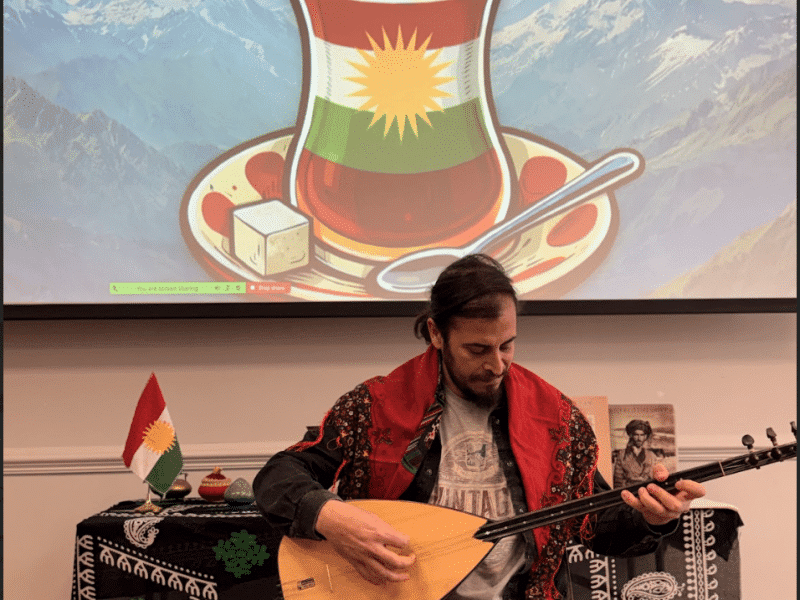
A Decatur teach-in draws attention to the world’s largest stateless ethnic group
With recent events drawing attention to the struggles of the Kurds, members of the Atlanta area’s Kurdish community are asking their neighbors to speak up.
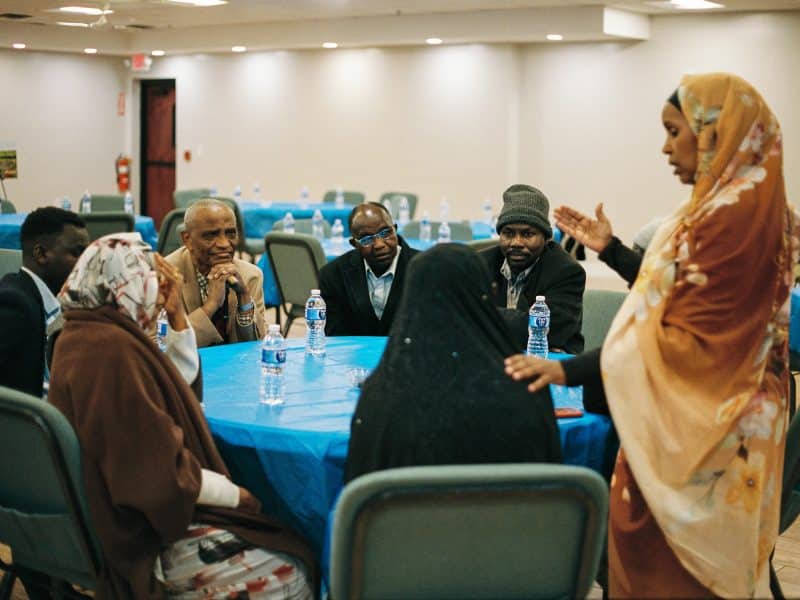
As civil war engulfs Sudan, community members in Atlanta seek to bridge divides locally
“We’re trying to engage the Sudanese professionals, the Sudanese academics, the Sudanese intellects, the guy that runs his own small business,” said one community leader.