
“Every time I don’t hear from him, I panic. I think the worst,” says Adalina, whose husband is in immigration detention
With Jorge incarcerated following a routine traffic stop, Adalina still needs to make ends meet.
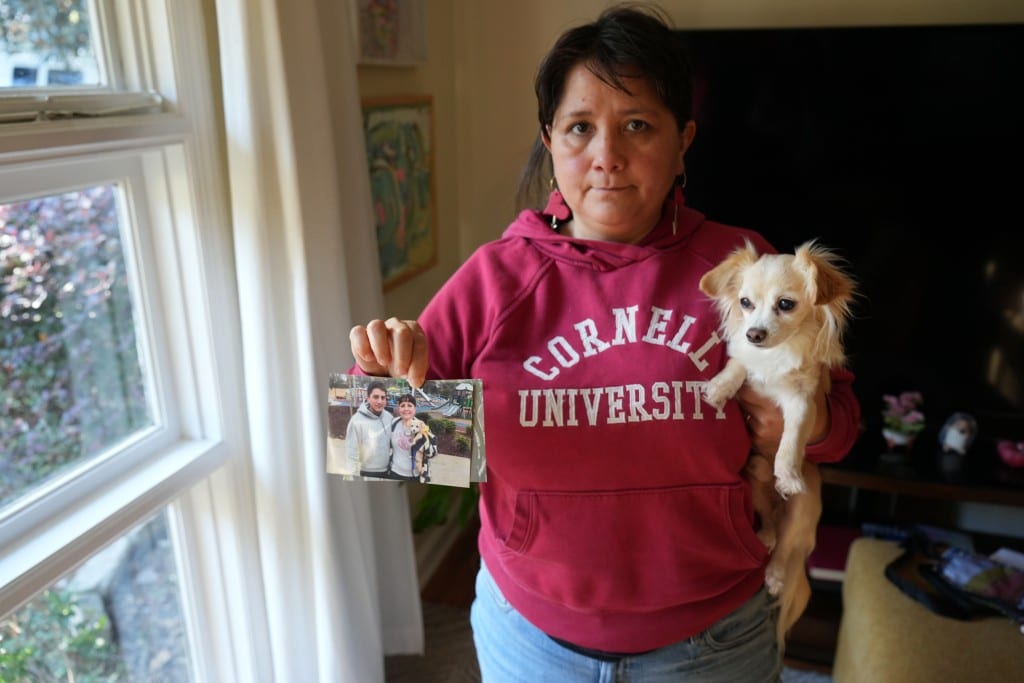
At 3 a.m. on September 19, Adalina Merello was asleep at home in Westside Atlanta when she received a call from her husband, Jorge, who’d left a half hour before to go to a construction job in Alabama. Jorge had been stopped just west of Atlanta in Douglas County for speeding, he told her, by a police officer who’d discovered that he had a THC vape pen on him.
Half asleep, Adalina got in an Uber and went to pick up Jorge’s car while the officer waited for her on the side of the interstate. “I saw Jorge in the back of the cop car, and I said, You have a lot of problems. Because it didn’t take much imagination to know what was going to happen next,” Adalina said.
Born and raised in Peru, Jorge came to the U.S. on a tourist visa that he overstayed. He had applied for asylum and had a permit that allowed him to work at a Latin American restaurant in Buckhead, where he was recently promoted to sous chef. He had no prior criminal record, but according to Georgia law, THC is a controlled substance, and its possession is either a misdemeanor or a felony depending on the amount carried.
Since Jorge’s arrest, Adalina—a U.S. citizen—has been living in a state of constant worry and has been relying on the support of family, friends, and community members in Atlanta and in Oregon, where she was born and raised. A friend set up a GoFundMe to help her pay for legal fees and living expenses, and Jorge’s family in Peru have also chipped in to pay some legal fees. Adalina turned to Facebook and LinkedIn, too, to share Jorge’s story. “I was just overwhelmed by how many people responded to it,” she said.
Still, it’s been hard navigating the complexities of having a husband in detention while trying to keep the lights on at home. “Your spouse gets detained and half your income disappears, so it’s a nightmare,” Adalina said. “I am fearful for my husband every minute of every day, and so are his parents and his sister. But then at the same time, we have to make ends meet. My husband was my roommate—he paid half my bills. So I have to work, it’s not like I have a choice in the matter.” Compounding matters, Adalina’s mother was recently diagnosed with cancer, so she’s supporting her too.
Adalina, who is of Peruvian and Chilean descent, has multiple jobs: She works as a server at a restaurant in Atlanta and as a canvasser knocking on doors and encouraging people to vote in local elections. She had previously run for a Georgia House of Representatives seat; her involvement in politics had made her aware that Jorge could end up in detention at the slightest mistake. She’d already been feeling like the Trump administration’s hard-line immigration policies were putting a target on the backs of Latinos like her husband, and had become even more worried following a September Supreme Court ruling that allows Immigration and Customs Enforcement (ICE) agents to continue using factors like race and ethnicity in immigration stops.
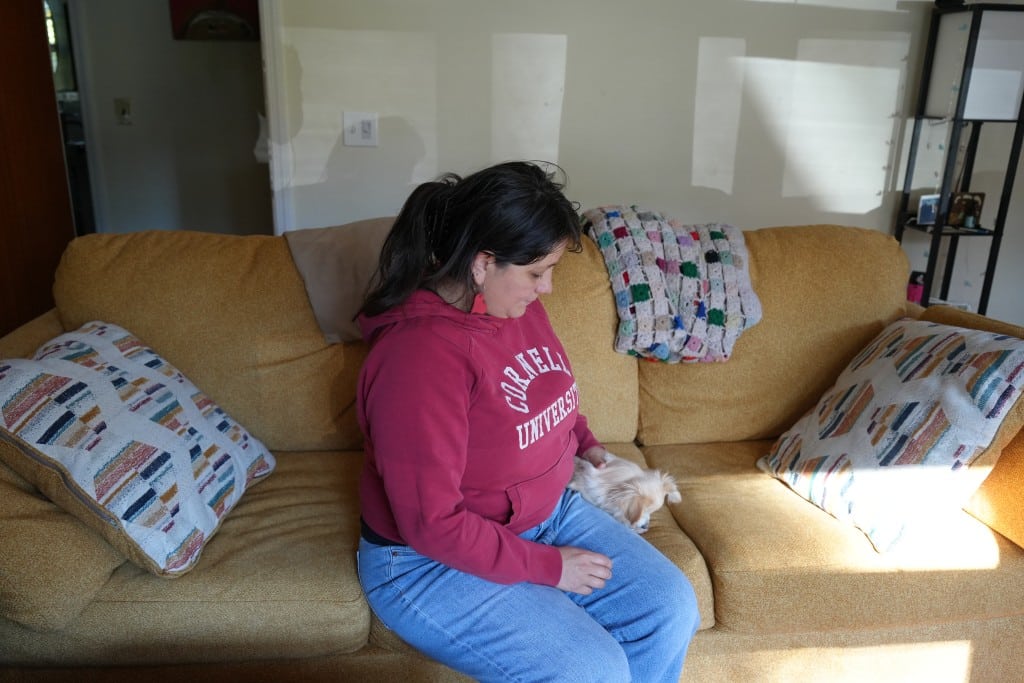
But it’s one thing to read on your phone about families being separated by immigrant detention, she found—and another to experience it firsthand. “Every time I don’t hear from him, I panic. I think the worst, because I just hear horror stories about these things,” Adalina said, sitting on a mustard-yellow sofa where she and her husband used to spend their mornings together talking.
After a Douglas County judge granted him bond, Adalina was initially hopeful that Jorge could return home. But a few hours later, ICE agents issued a detainer—a request that the local jail continue to hold him until federal agents could pick him up. On September 24, Jorge was transferred to ICE’s Atlanta field office, then the penitentiary on McDonough Boulevard—a Federal Bureau of Prisons facility that is now being used for ICE detentions.
On October 3, about two weeks after Jorge’s arrest, Adalina got a call at work. It was Jorge, who told her he’d been transferred to Stewart Detention Center, a notorious facility two hours south of Atlanta. “He sounded the worst I’ve heard him in the whole time, and I freaked out,” Adalina recalled. “I’m like, Oh my God, he’s at Stewart. They die there. All I hear are horror stories about Stewart. It’s hell on earth. It’s a nightmare.” (Thirteen people have died at Stewart since 2006, with the most recent death occurring in June. According to an analysis by NPR, 2025 has been the deadliest year in decades for people in ICE custody)
Adalina reached out to a friend who works at Raphael Warnock’s office and got connected with the senator’s liaison of immigrant affairs, she said, who helped ensure Jorge got the medical care he needed when he fell ill. She also moved fast to find an attorney who could represent Jorge at an upcoming immigration court hearing.
At that hearing, on October 7, the government’s attorneys claimed that, because of the THC vape device, Jorge was trafficking drugs. The attorney asked for a delay to gather more information from Douglas County. On October 10, Jorge had another court hearing, where the judge denied bond based on the speeding charge, Adalina said: “The judge deems Jorge is a threat to society and himself, and she rips him apart.”
Jorge’s attorney advised Jorge that he had two options: He could go back to Peru and apply for a marriage-based green card to return to the U.S. after a few years. Or he could spend a year fighting his case while locked up at Stewart. Although Jorge had told Adalina he was being treated well by the guards, he also decided he was ready to leave detention.
“Jorge made up his mind and wants to voluntarily deport,” Adalina said. “He, at this point, is done with Stewart. He’s just like, I can’t do this anymore.”
At a final immigration hearing on October 22, Jorge’s attorney informed the judge that he would leave the country voluntarily. When Jorge and Adalina saw each other, she said, they cried tears of joy because he was almost out of detention.
For now, the couple’s plan is for Jorge to move back to Lima, where they’ll meet up in January. Adalina is one of three sisters taking care of her mother, who lives in Oregon, so she’s not yet sure if she’ll be able to join him permanently. “I’ve just been dealt a really shitty hand,” she told 285 South. “My main concern is that I can’t fall apart, because how do I support Jorge and my mom in a situation like this? I did fall apart on Wednesday night. I was hysterical because I’ve lost my husband.”
But as the couple plans to seek a legal route for Jorge to reenter the country, Adalina can’t help but feel frustrated about what they’re going through.
“Our life, how it’s been interrupted, and I don’t get to come home at 11 o’clock from my waitress job and have my husband come home at midnight and charlar”—talk—“and just eat some dinner,” she said. “Yeah, it’s absurd. We eat dinner at midnight, but that’s our schedule.”
What makes their situation sadder, Adalina said, is that it isn’t unique. “Jorge and I are two people affected by this, but this is a bigger story than just me and my husband,” Adalina said. “It’s happening to a lot of families, and there are a lot of families who can’t do what I can do. They’re undocumented, and they don’t have the resources I have. They can’t raise $1,000 a day. So on some levels, Jorge and I have it really good. Some of these families will never be reunited.”
*This story was updated to correct Adalina’s job position.
Author

Related Articles
For this 17-year-old high school student, the fight to stop ICE is not just political—it’s personal
A few dozen students gathered at a Lawrenceville park on Friday, determined to keep the protests going.

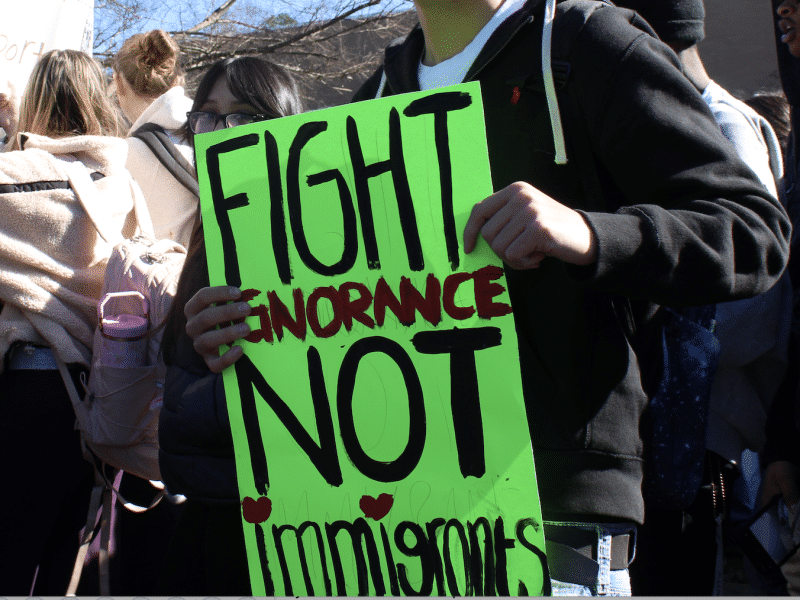
“The world just seems like it’s against them. So it’s really hard when the school does this on top of everything else they’re dealing with”
Cobb County parent speaks out, shaken, after conversation with principal about school walkout