
“Everybody has a ‘Raani’ in their house”
At Raani Coffee on Moreland Avenue, Praveena Sundarraj honors South India’s coffee traditions—and builds a new kind of “third space” for coffee aficionados and their parents
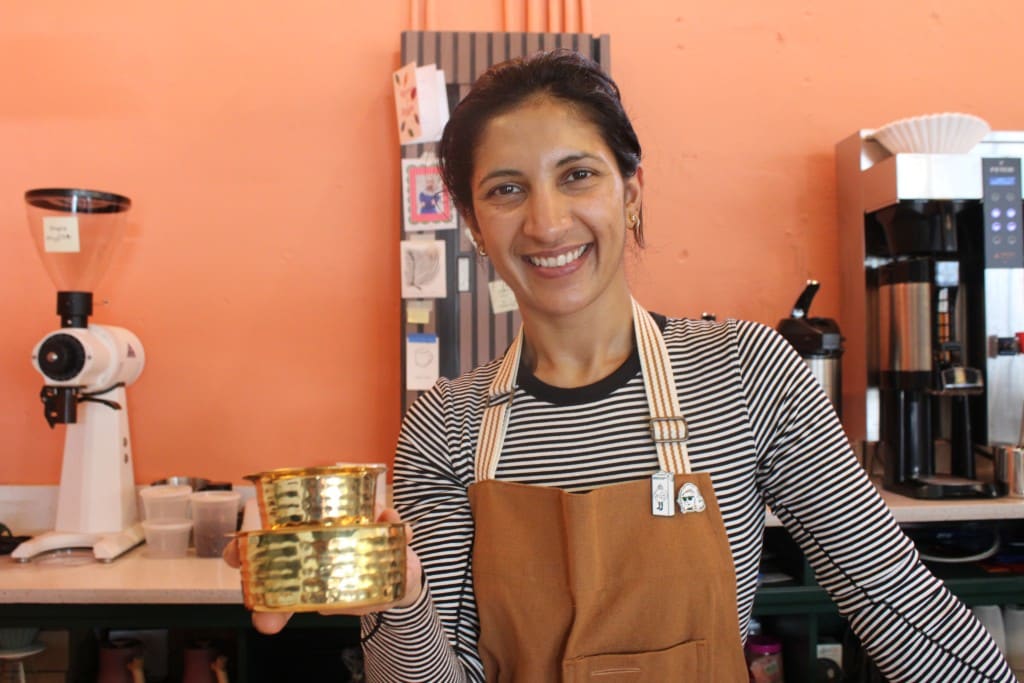
Praveena Sundarraj held out a tiny brass-colored cup, pointing out holes in the bottom where coffee drips though and collects into another slightly larger brass-colored cup. “It’s like an espresso,” she said. But, Praveena added, “it was developed hundreds of years ago, before espresso machines.”
Though India is often associated with tea—or chai, the culture of tea is largely a product of colonialism, with the British East India Company introducing widescale cultivation of the plant to the subcontinent in the 1800s. Praveena explained that coffee, according to legend, was brought to the southern part of the country in the 17th century by an Indian man named Baba Budan. The story goes that Baba, a Sufi saint, had smuggled a few beans he picked up from Yemen on his way back home from making the Hajj pilgrimage to Mecca.
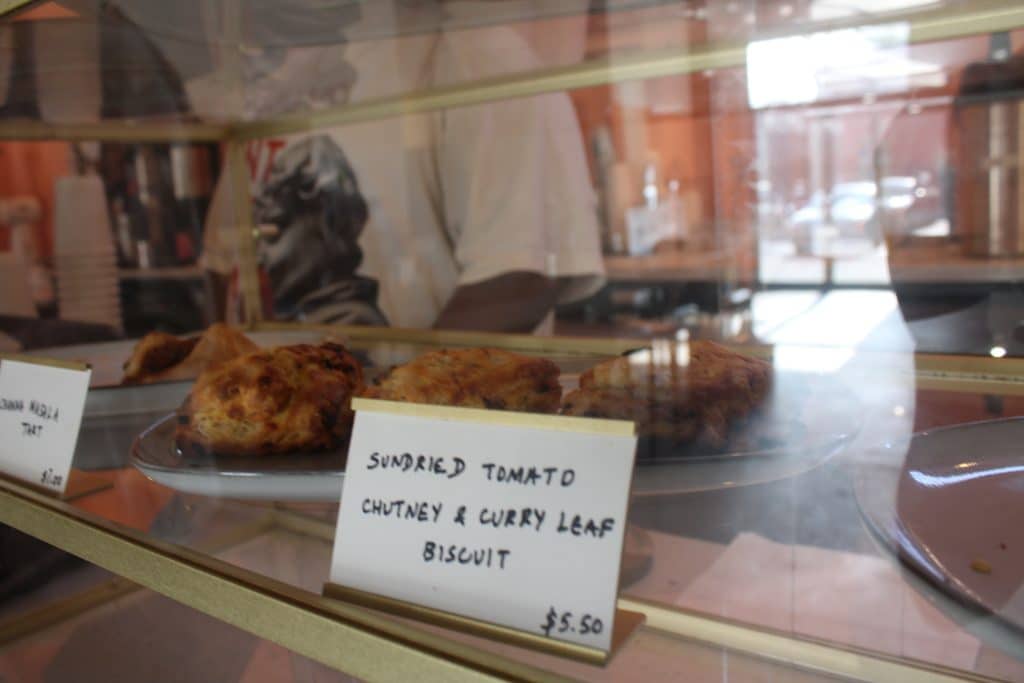
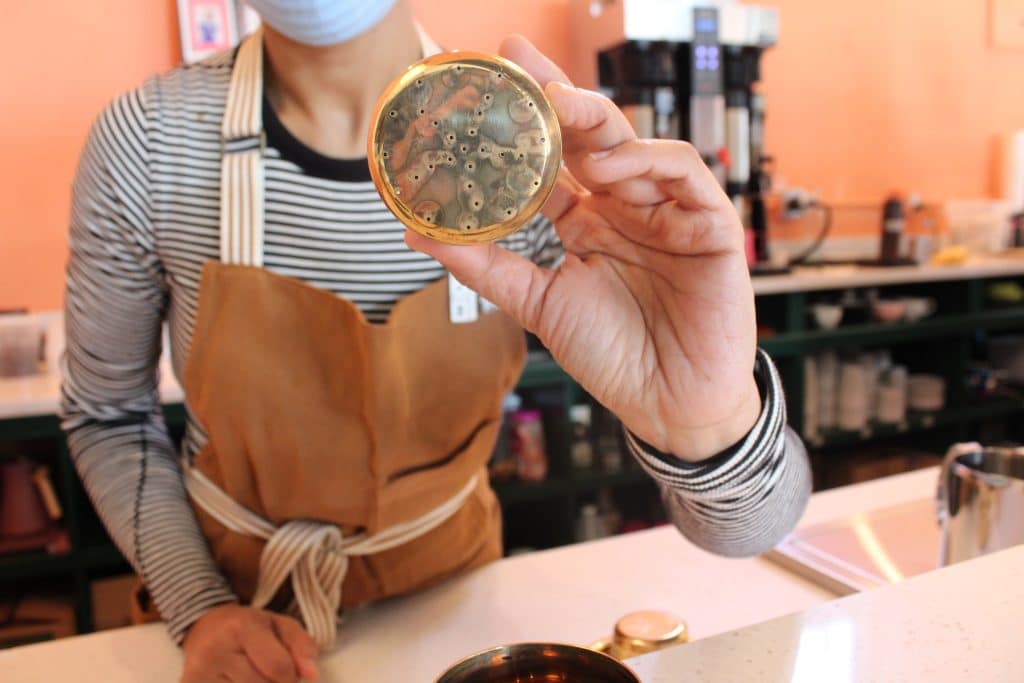
That India is the seventh-highest-coffee-producing country in the world also isn’t widely known, she said. “South India consumes a lot of coffee,” Praveena told 285 South as customers milled about Raani Coffee, the cafe she opened recently on Moreland Avenue in East Atlanta. Though they sipped drinks like gulab jamun lattes, and nibbled on biscuits flavored with masala and cheddar or curry leaves, the centerpiece of Raani’s menu is kaapi (the phonetic term for coffee in India), a South Indian filter coffee traditionally made with a stainless steel filter like the kind Praveena was holding. First, hot water is poured over finely ground beans in the cup on top, filtering slowly into the bottom chamber. Before serving, kaapi is typically mixed with boiled milk and jaggery (a type of unrefined sugar), then poured back and forth in stainless steel cups until it becomes frothy.
Praveena grew up in the South Indian hill station of Ooti, where her family owned tea farms—but they also grew some coffee plants for their own consumption. Every night, Praveena’s mother would pour those ground beans into the filter so it would be ready to drink in the morning.
Like her mother, every evening, Praveena pours the grounds—made from beans sourced from India—into stainless steel filters she bought from Bangalore. There are three of them, each producing a gallon of coffee. “It’s a slow drip, one drip at a time,” she said. “In the morning, when I come in at six o’clock, it will be ready.”
With simply an Instagram page and no marketing budget, Praveena’s been surprised by just how busy the cafe has become despite being open for less than two months. On weekends, she said, they go through the three gallons of filter coffee used for the kaapi drinks by 1 p.m. “Sometimes people come in and they’re very upset that the [kaapi] is done.”
Praveena moved to the U.S. in 2013 and worked in the hospitality and coffee industries, including a stint at Milo’s Tea Company in Birmingham, before opening Raani in November. She said she’s trying to fill a gap in coffee culture in the U.S. She’s not the only one: In recent years Tanbrown Coffee, Recuerdos ATL, and a host of Yemeni coffee shops across the metro have tapped into a desire to see more diversity in the coffee world. From the coffee beans sourced from India to the intentionally communal seating style, Praveena is hoping to bring a wider range of people into the specialty coffee shop world. “You don’t typically see brown kids taking their parents to a coffee shop,” she said. But at Raani, “when people’s parents visit from India—the kids that study in Georgia Tech and Emory—they bring them here.”
On a recent weekend, when Raani hosted a DJ, one customer showed up alone—but, by the time he left, he told her, “I made so many friends,” she said. “Comments like that make me really happy.”
Explaining the name of the coffee shop—raani, or rani, means queen in Hindi, Urdu, and Sanskrit—Praveena said that around the world, the farmers growing coffee don’t speak English. “They all speak a different language, whether it’s Spanish, or in India, Hindi or Tamil.” She wanted a name for her business that reflected that reality—and that cut across the diversity of South Asia. “It’s basically one of the common names,” she said. “No matter what language, no matter what religion you come from, no matter what class system you come from, everybody has a rani in their house.”
Author

Related Articles
“The work has become three times harder”
We speak to pro bono immigration attorney Serene Hawasli-Kashlan, legal director of Asian Americans Advancing Justice–Atlanta, about what it’s like to do her job right now.

“We did it”: Latinx student film Nuestra Realidad makes its cinematic debut at Tara Theatre
“We’re really taking up the space and not only just taking it, but we’re adding to it.”
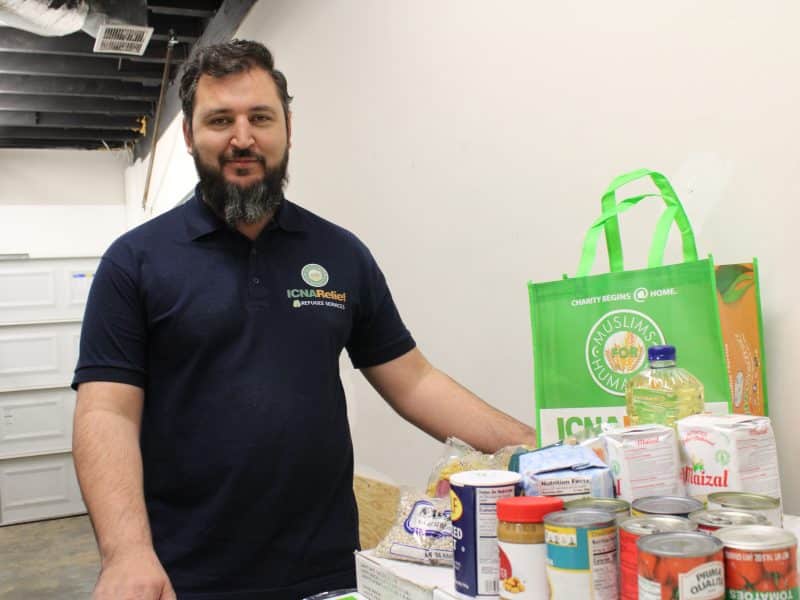
An afternoon at the ICNA food pantry on Memorial Drive
We sat down with Abdul Basit to talk about his work fighting food insecurity and what it’s like to do his job in the midst of mass federal cuts.