
“I don’t know that I’ve been able to reach where I’m at without HOPE,” says alumnus of nonprofit helping Hispanic students attend higher education despite the odds
In 2012, when Luis Otero was a student at Habersham Central High School in Northeast Georgia, he often felt isolated—he was usually the only Latino in many of the advanced or honors classes he was taking. “I grew up in a rural area of Georgia, where there were not a lot of Latinos or Hispanics,” he told 285 South. Undocumented at the time, Luis knew that he had aspirations to pursue higher education, but felt unsure about how to reach them—and about who he could share the details of his background with.
That changed one day when Luis walked up to an exhibitor table at an open house at his high school and met people working with the Hispanic Organization Promoting Education (HOPE), a nonprofit offering an after-school program that supports mostly Hispanic students. The organization’s goal, he learned, was aligned with what he needed: HOPE helps students feel a sense of belonging by being around those who are similar to them, connects them with their local community, and provides information on educational pathways open to them.
Luis began attending monthly meetings with the founders of HOPE, who offered lectures based on leadership books and provided information about things that had once felt out of reach for him: scholarships and the college-application process.
“What really sealed the deal for me was how motivating it was to be in an environment where there were a lot of other Hispanics, Latinos, and Latinas,” he said. “All of us had a very similar background, and we were all there together reaching towards our goals.”
He went on to train with HOPE so he could offer similar workshops to his peers.
Founded in 2009, HOPE—which is based in Gwinnett County—came from a very personal place. “HOPE began on a Wendy’s yellow napkin,” said Angela Araya, who founded the organization with her now husband, David. Angela is from Colombia and David is from Costa Rica, but both have lived in the Atlanta area since they were kids. The idea for HOPE grew out of frustrations they’d both experienced as students at North Gwinnett High School. “David and I were both students that faced a lot of different difficulties—being minorities, at some point being undocumented—so it was really hard to figure out different ways to really be the best that we could be,” said Angela.
Recently out of high school themselves—Angela was 20 years old and David was 18, and they’d been dating for only a month—the couple started brainstorming about what had helped them and how they could support the next generation of students.
Though they attended North Gwinnett during different years, David and Angela had shared a mentor there: Ms. Murphy. As they put their idea together, they reconnected with her and another counselor and asked for a chance to implement their project. “We want to start this after-school program here at North Gwinnett—would y’all be open to it?” David recalls saying to them. “And they said yes, and that is all we needed.”
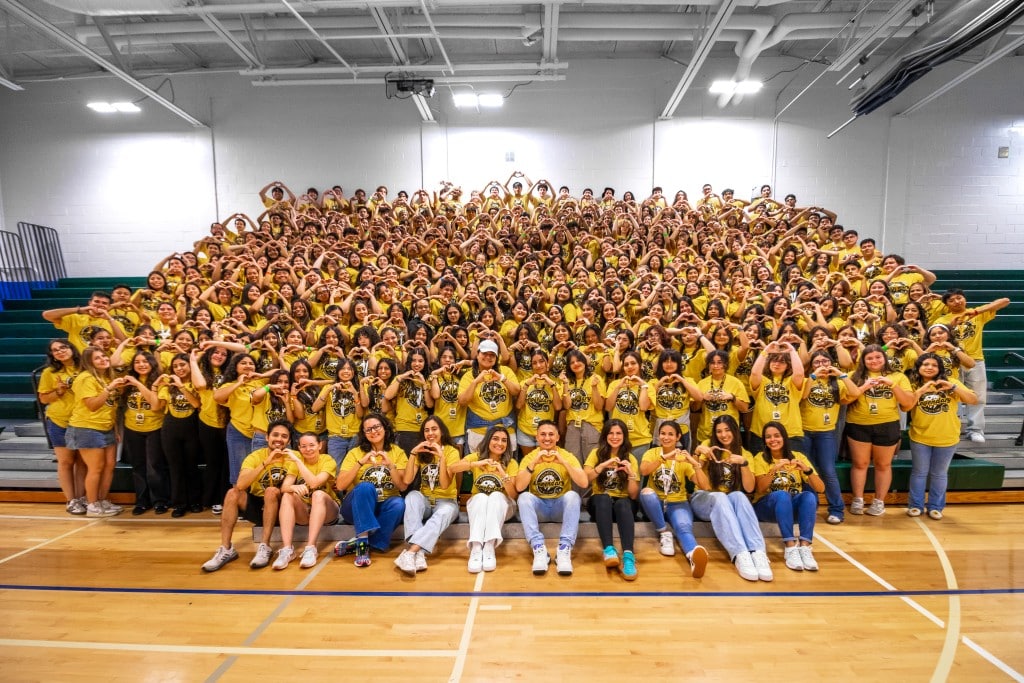
Since then, the organization has grown to encompass after-school programs in 91 high schools, covering nearly 6,000 students in six states—mostly in the South, though the organization also operates in Michigan and New Jersey. The heart of the program is a monthly after-school meeting, with students leading their own chapters and teaching one another skills for boosting self-confidence, communicating effectively, resolving conflict, and pursuing higher education. The kind of leadership development it offers is especially important for students because, research shows, students who have a high sense of belonging in school are more likely to succeed academically.
Along with the monthly chapter meetings and an annual conference where more than 800 students from Georgia come together, HOPE also offers yearly traditions to help students reflect on their personal growth. In January, all chapters do “My Word for the Year,” Angela explained. “They get to answer some questions and say, Okay, what’s my intention this year? I’m going to be stronger this year, so strong means I am going to know how to handle stress. It helps them navigate their life and have coping skills, or just life skills that are not often taught in a school setting or in a book. They’re real-life scenarios.” Some chapters have more than 100 members, so students learn how to own the room and keep the attention of a big crowd; or in other chapters, students might learn how to work on teams when some of the team members don’t get along.
Focus on higher education notwithstanding, HOPE is still eager to work with students who don’t necessarily want to go to college, David said: “There are some students who want to be entrepreneurs, and they have a business idea that they want to launch—well, let’s bring different people who can support them. There are a few of our students who also want to engage in the armed forces. If that’s what you want to do, do you know what the next steps are?”
Though the program is available to all students, more than 90 percent of those participating are Latino. “I really enjoyed the idea that HOPE was bringing together a lot of diverse students, primarily Hispanics, and many of them were from first-generation backgrounds,” Luis said. “They were providing them with that sense of belonging, that support, and with resources to be able to navigate high school and later go to college.”

In one of their first conversations, David asked Luis what his dreams were. Luis said that he wanted to go to college but wasn’t sure if he’d be able to, having come to this country without legal documentation.
David “looked at me and was like, Why not?” Luis recalled. “He just reassured me that my status was not going to be a limiting factor. He believed in me and my potential to succeed despite any of that.” Luis eventually applied for DACA—Deferred Action for Childhood Arrivals, an Obama administration initiative that extends protections to undocumented people who were brought to the U.S. as children by their parents—and was able to go to college. After HOPE recommended him to the Posse Foundation, an organization it has a relationship with—which recruits and offers scholarships to students with leadership potential—Luis earned a four-year full-tuition scholarship to pursue a bachelor’s in business administration at George Washington University.
His younger sisters, Kailey and Yamilex, have also become involved with the organization: Yamilex was able to obtain a scholarship to attend George Washington University as well, while Kailey is currently involved with the local chapter of HOPE at Habersham Central High School in North Georgia.
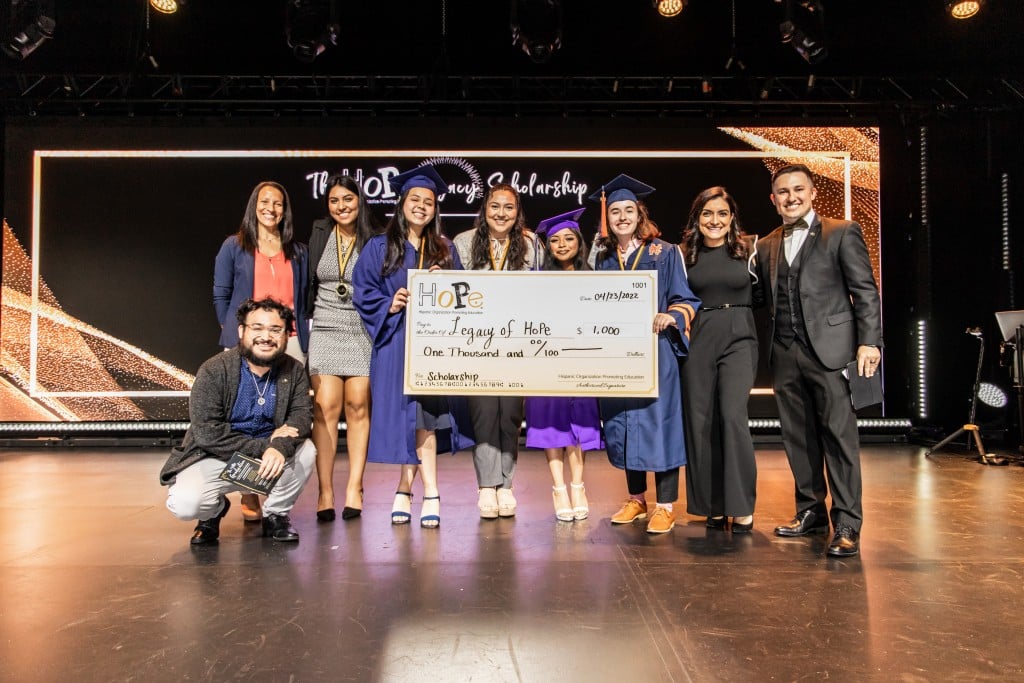
“I don’t know that I’ve been able to reach where I’m at without HOPE,” Luis said. After completing his bachelor’s, he went on to pursue two master’s degrees: one at the George Washington University and a second at the University of Virginia School of Business. He recently moved to New York, where he now works as a financial services consultant, helping banks mitigate risk.
“We want to make sure that students are becoming the best version of themselves,” Angela said. “We help them see that they are valuable, that they are a leader, that they have what it takes to fulfill whatever they believe their mission is in this world.”
Author
Related Articles
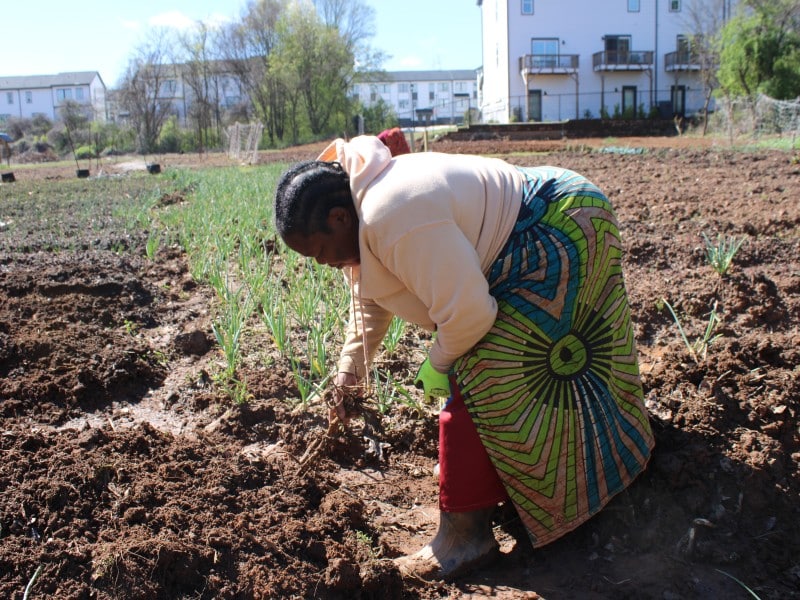
Spring has sprung—and for one Burundian farmer, that means it’s time to get back to the garden
This year, gardeners from the nonprofit Global Growers Network are combating food insecurity by harvesting produce for local food banks.
Andres Carrillo, founder of the pop-up Cocina Pachuco, is using his cuisine to fundraise for immigrants in detention
Born and raised in El Paso, the recently arrived chef is strengthening ties with his new home. One way he’s doing that: supporting the state’s immigrant communities.
“The work has become three times harder”
We speak to pro bono immigration attorney Serene Hawasli-Kashlan, legal director of Asian Americans Advancing Justice–Atlanta, about what it’s like to do her job right now.