
Immigration attorneys report that their female clients at Stewart Detention Center are being transferred out of state
Though reasons for transfers aren’t clear, immigrant attorneys and advocates said overcrowding at the facility could be the cause
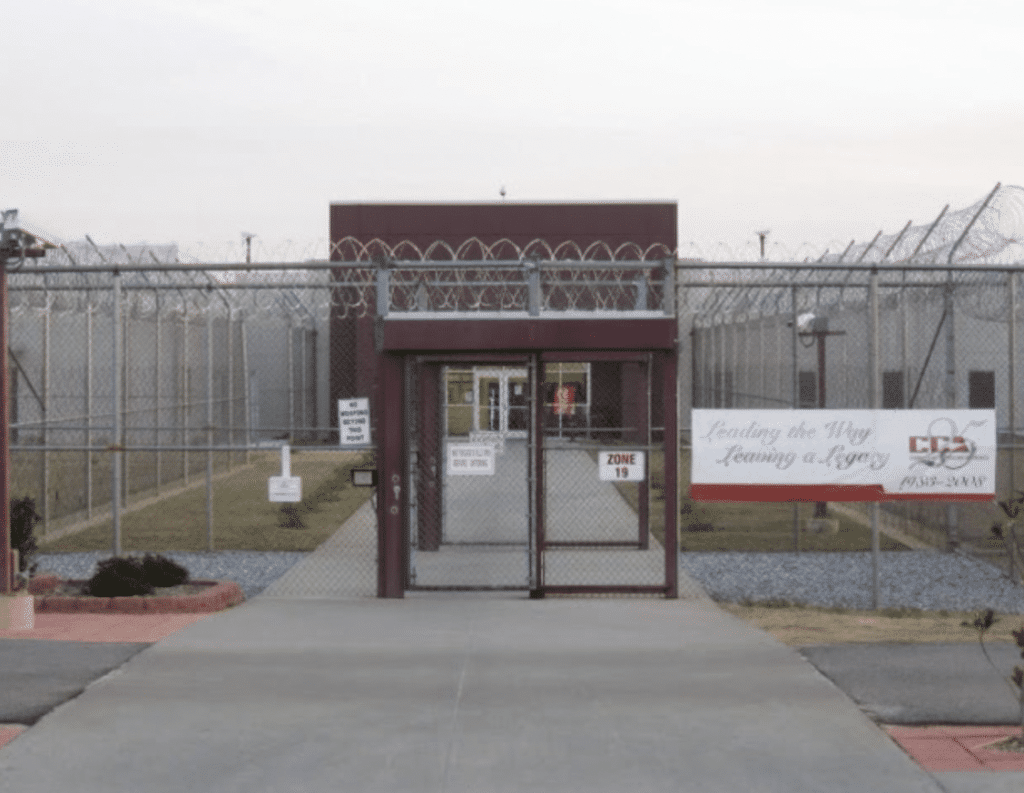
Several women incarcerated at Stewart Detention Center—an immigrant facility about two hours from Atlanta in Lumpkin, Georgia—have been transferred out of the state in the last week, their lawyers confirmed to 285 South. Though the reasons for the transfers aren’t clear, immigrant attorneys and advocates said they thought it was a response to problems of overcrowding that have long persisted at the detention center.
The attorneys were first alerted about the transfers in an email that a colleague sent to a network of immigration lawyers. Bethany Biswas, an Atlanta immigration attorney with a client at Stewart, said she checked the Immigration and Customs Enforcement (ICE) detainee locator system minutes after receiving the email. Her client had been moved to Kentucky.
Two other attorneys confirmed that their female clients at Stewart have been reporting that women were being transferred out of the facility. One of those attorneys, Martin Rosenbluth, confirmed that he has clients who had been moved as well, though no lawyer wanted to share names or details about their clients out of fear of retaliation.
It’s not clear why the women have been moved out, or how many detainees have been affected. At press time, ICE hadn’t responded to 285 South’s requests for comment. Immigration attorneys and advocates told 285 South that overcrowding at the detention center, which is operated by a private contractor on behalf of ICE, is most likely the reason. In February, officials at FCI Atlanta, a Federal Bureau of Prisons penitentiary, confirmed to the Atlanta Community Press Collective that the facility had begun receiving detainees arrested by ICE—despite the fact that FCI Atlanta has also been dogged by complaints about overcrowding and other abuses.
“Stewart has been overcrowded for a long time now, both on the men’s side and the women’s side, so I think they’re just looking for places to move people,” said Samantha Hamilton, an attorney with Asian Americans Advancing Justice–Atlanta who has a female client currently detained at Stewart. “I have no idea how they’re making that determination, or how they’re deciding who goes where.” (Hamilton has also done legal work for 285 South.)
Amilcar Valencia, executive director of El Refugio, a nonprofit that supports those detained at Stewart, told 285 South that over the past month, at least three incarcerated people have told the organization that the detention center is overcrowded, and that they’ve seen buses filled with new detainees arriving more often. “Some people even don’t have a bed; they just give them a mattress, and they’re sleeping on the floor,” he said. It’s also gotten harder, and more time-consuming, to visit people detained at the facility, Amilcar added: “In the past, it was about two hours that you waited. Right now, I think people wait three, four hours, sometimes more, in order to do visits. It’s just a lot of people visiting at the detention center, and only five windows for visitation available each hour.”
A surprise for attorneys
For Bethany Biswas, her client’s move came as a surprise. ICE representatives hadn’t alerted her of the transfer, let alone explained it to her. After she checked the ICE locator, she called her client’s son, who confirmed that his mother was in Kentucky. Her client’s son also told Bethany that two buses full with women left the detention center when she was relocated, and a third bus joined them later in the journey out of state. Bethany is unsure exactly when the move happened, but she learned about it on Thursday last week.
“The whole family is based here in the Atlanta area, so it was a surprise to him as well,” Bethany said. “What he heard from her was that that was not their final destination. They were expected to be about three more days of travel en route to their final destination, but she didn’t know where exactly that was.”
By Monday afternoon, Bethany’s client was in Indiana, and the ICE detainee locator system listed a county judicial center address—not an ICE detention center—as her location, Bethany said. She suspects that her client will be moved to the Chicago area, but by Friday afternoon, she hadn’t heard back from ICE attorneys and didn’t know what her final destination was.
Bethany worries that county jails, correctional facilities, and courthouses—where her other clients have been moved, according to the ICE detainee locator system—aren’t equipped to help immigrant detainees get in touch with their attorneys. At Stewart, for instance, she can schedule Skype calls with her clients that are protected by attorney-client privilege. That kind of communication system isn’t available in other locations, she said.
Bethany’s client has a scheduled court date in the summer with an immigration judge in Georgia. Now, she doesn’t know when —or even if— that will happen.
“Our biggest concern is what happens to that hearing, because we would like it as soon as possible so we can hopefully win her case and get her out,” Bethany said. “If she ends up going to a different court, which is our biggest fear, [she might] not have a hearing for a few more months, depending on exactly where the jurisdiction of that court is.”
She’s also worried about her client’s well-being. Her client has struggled with mental health issues and was on medications, so being removed from a facility where she has been living for the past seven months creates a lot of anxiety for her legal team and family. And, at Stewart, she had friends from church and family members living in Atlanta who visited every weekend. Outside of Georgia, she doesn’t have that support system.
Bethany said her client isn’t the only detainee at Stewart contending with overcrowding—and the possibility of an abrupt transfer. “We have another client who’s also detained for about two months now, and their partner told us that they were sleeping on the floor,” she said. “I think it’s just they thought the easiest way to do it is to move the women out.”
Author

Related Articles
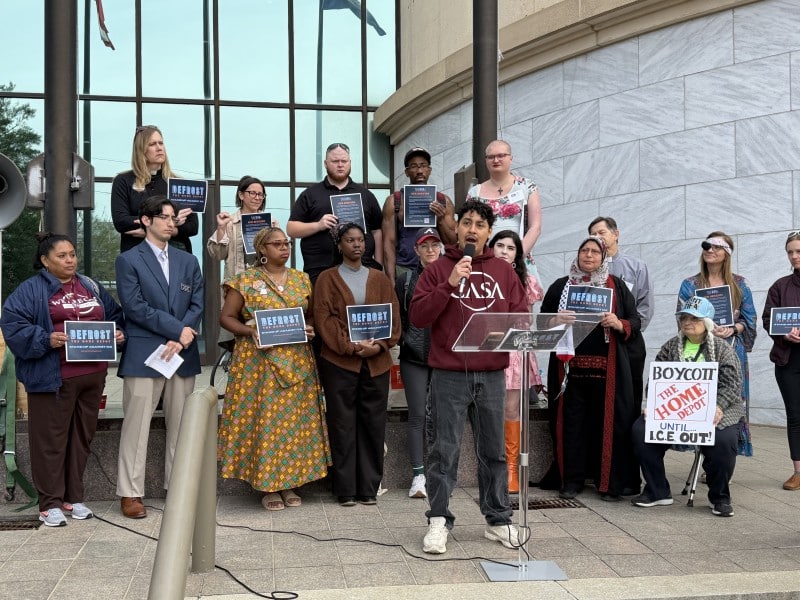
Atlanta advocates demand: “Get ICE out of Home Depot now”
As popular spots for immigrant day laborers to find work, Home Depot locations across the country have been repeated targets of ICE raids. Now advocates are pressuring the Atlanta-based company—an official sponsor of the upcoming World Cup—to take a stand.

Woman who assisted in federal abuse investigation, arrested at Atlanta airport and deported days later
“A slap in the face,” her attorney says describing her client’s situation, who had a pending U-visa application