
“There is no urgency when it comes to our missing persons. And when I say ours, I mean Latinos.”
The organization WeLatinos aims to draw attention to the disappearances of Latino people—a problem that’s neglected, critics say, by police and media.
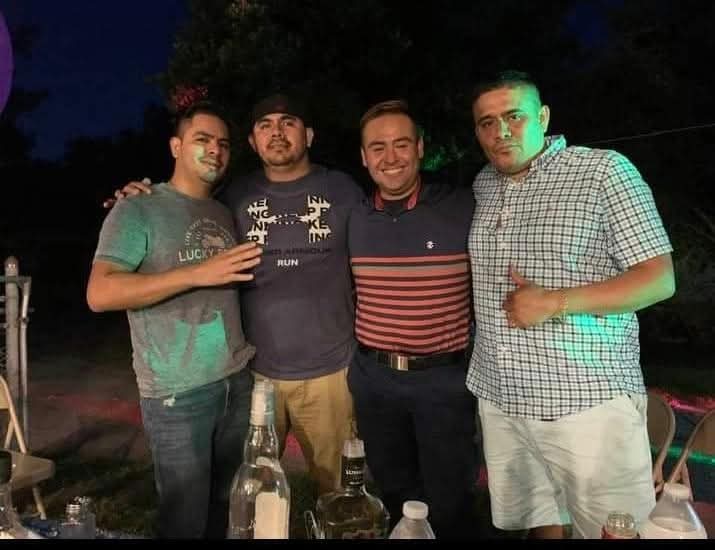
More than four years after Jesus Mancilla-Velez went missing, his family still can’t wrap their heads around the idea that he left voluntarily.
An immigrant from Mexico who lived in Warner Robins, Jesus had two daughters, ages 16 and 27, the latter of whom was adopted. His sister-in-law, Gisela Sanchez, doesn’t believe he would leave them behind. “He was a loving father,” she said in Spanish. “He raised his adoptive daughter as his own. When she had a son, he called him his grandson.”
Jesus was 35 years old when he disappeared in September 2020. He was supposed to go to Savannah for the weekend with friends but never showed up. The same day Jesus vanished, his car was found on a dirt road in Crawford County—two counties over from Houston, where Warner Robins is located. A few days later, his brothers stopped by his apartment and found Jesus’s work clothes lying on his bed, as if he had been preparing to go to his shift at the Mexican restaurant where his brother Diego also worked.
The Georgia Bureau of Investigation launched an inquiry into the case, aided by local sheriffs’ and police departments. But more than four years after the investigation was opened, Gisela and the family are frustrated. At the beginning, she said, the police were very active—but as time passed, the intensity of their search cooled down.
Gisela told 285 South that the past years have been painful, and said the family has gotten little information from the GBI, whose representatives they last spoke with at a December meeting. “One always comes away frustrated,” Gisela said. “I would like for them to share some information with me. What did you find inside the car? Tell me. Well, they can’t, because this is an open investigation.” (A spokesperson for the GBI, which has also said it doesn’t believe Jesus willingly disappeared, told 285 South the investigation remains active, though there were no updates to report.)
However distressing, Jesus’s case isn’t unusual—more than 600,000 people go missing in the United States every year, with 426 current open cases in Georgia. But some evidence suggests that members of Latino and Hispanic communities in the U.S. might be especially prone to disappearance. According to a 2024 Noticias Telemundo analysis, one out of every three children up to the age of 12 who disappeared between 2003 and 2023 was Hispanic—despite Hispanics making up less than a fifth of the U.S. population.
Numbers like these have led to a sense of heightened vulnerability among some Latino communities, compounded by a sense that law enforcement and media don’t focus as heavily on missing Latinos, and other people of color, as much as they do, for instance, white women. The media bias toward the latter demographic is so well-documented that researchers have a name for it, coined by the late journalist Gwen Ifill: missing white woman syndrome.
According to an online tool developed by the Columbia Journalism Review, based on contemporary reporting on missing-persons cases, a 20-year-old white woman who goes missing in Georgia might generate 74 news stories, while the disappearance of a 20-year-old Latina in the same state would lead to an estimated 25 news stories. The tool estimates that the disappearance of a 35-year-old Latino man—like Jesus Mancilla-Velez—might inspire six news stories.
The discrepancy is also compounded by scant data and inconsistent reporting: Hispanics and Latinos are often grouped with white people in missing-persons cases, leading to persistent suspicions these communities are being undercounted. That’s a problem not just in disappearance cases but in the criminal justice system more broadly, said Rodrigo Dominguez-Villegas, the codirector of research at UCLA’s Latino Policy & Politics Institute:
“The lack of comprehensive data collection highlights the broader issue of systemic neglect in documenting Latino experiences, whether in the justice system or missing-persons cases.”
Some communities have attempted to rectify this situation by organizing to keep pressure on police and media to stay focused on missing persons. Emma Lozano, the Chicago-based national vice president for the Midwest for the League of United Latin American Citizens, said such pressure can help bring about the resolution of such cases. “They normally don’t get resolved unless somebody stumbles on the body, or something like that,” said Lozano, who is also a Methodist minister. Her community helped crack the case of Marlen Ochoa-Lopez, a pregnant, undocumented 19-year-old woman who went missing in Chicago in 2019 after dropping her young son off at day care. As Ochoa-Lopez’s supporters spread word, police received a tip that led to the arrest of a mother and daughter; they later pleaded guilty to luring Ochoa-Lopez to their house and murdering her.
“We [have] to reach out to the community again, and to the Latino media and regular media, and they’ll cover you, but you have to hold a press conference,” Lozano said. “How many community members know how to do that?”
In Georgia, Jesus Mancilla-Velez’s family agrees—they’ve worked tirelessly to keep attention on the case of their missing relative, now dragging on into its fifth year. “When a family member goes missing, the only thing that you want is to find them,” Gisela said. “You don’t know what you can do or what tools you have at your disposal.”
An organization helping families of missing Latinos in Georgia
A few years ago, an Athens resident named Melissa Marrero was fresh out of a decade-long stint in the Army, and looking for ways to continue to help others back in the U.S. Exploring her heritage as a Latina, she started thinking about the ways in which members of her community are treated differently—and she came across the cases of Susanna Morales and Rodrigo Floriano, two Gwinnett County teens found dead hours apart from each other in apparently unrelated incidents. News coverage was scarce, and limited to local publications. “When I came out of the service, that’s when it really hit me that I was in a world where Latinos were one, whites were another, Blacks were another,” Melissa said. “There is no urgency when it comes to our missing persons. And when I say ours, I mean Latinos’.”
In 2023, she cofounded the Hispanics United Alliance for the Missing, an organization whose mission was to draw attention to the cases that, Melissa felt, weren’t getting enough of it. Last year, she expanded that work with a new group called WeLatinos, which she launched with Natalie Ponce. Whereas the Alliance focused on missing persons, WeLatinos expands the scope of the work to aid other victims of crime.
On a Saturday morning in early December, Melissa was spreading the word on these efforts in the parking lot of the Global Mall in Norcross, where families from around the area had gathered for a Chocolatada—a traditional Latin American event to celebrate the holidays. Passing out free hot chocolate, cheese sticks, alfajores, and empanadas, WeLatinos members shared information about human trafficking and crime victims, and displayed flyers of active missing-persons cases, including Jesus’s. “The holidays are very important, and they’re kind of the saddest for a lot of these families, so we try to do events so we could show them the support of the community,” Melissa said.
WeLatinos, which relies on donors and GoFundMe campaigns to sustain itself, is currently helping the families of five missing persons. They’ve also worked with families of children who go missing and are sometimes considered runaways. The first 24 hours are critical in missing-persons cases, Melissa explained, but when a child is considered a runaway, police don’t always search with the same urgency. WeLatinos provides court support for crime victims and helps them navigate the legal system, and is currently raising funds so that the family of Jackmerly Hernandez Rodriguez can transport her remains back to her native Venezuela. Hernandez Rodriguez, who’d been in this country for less than a year, was fatally shot at her home in Norcross in December; she left behind a 10-year-old son. (Police identified Hernandez Rodriguez’s ex-husband as a suspect.)
Despite dark outcomes like this, WeLatinos members are motivated to keep going because of the success stories. Last year, the six-member group helped spread the word on social media about the disappearance of two Gwinnett County minors who were found to have left home without alerting their parents, and were later safely returned; in one case, Melissa helped the teen’s mother track her son down by going through his phone records.
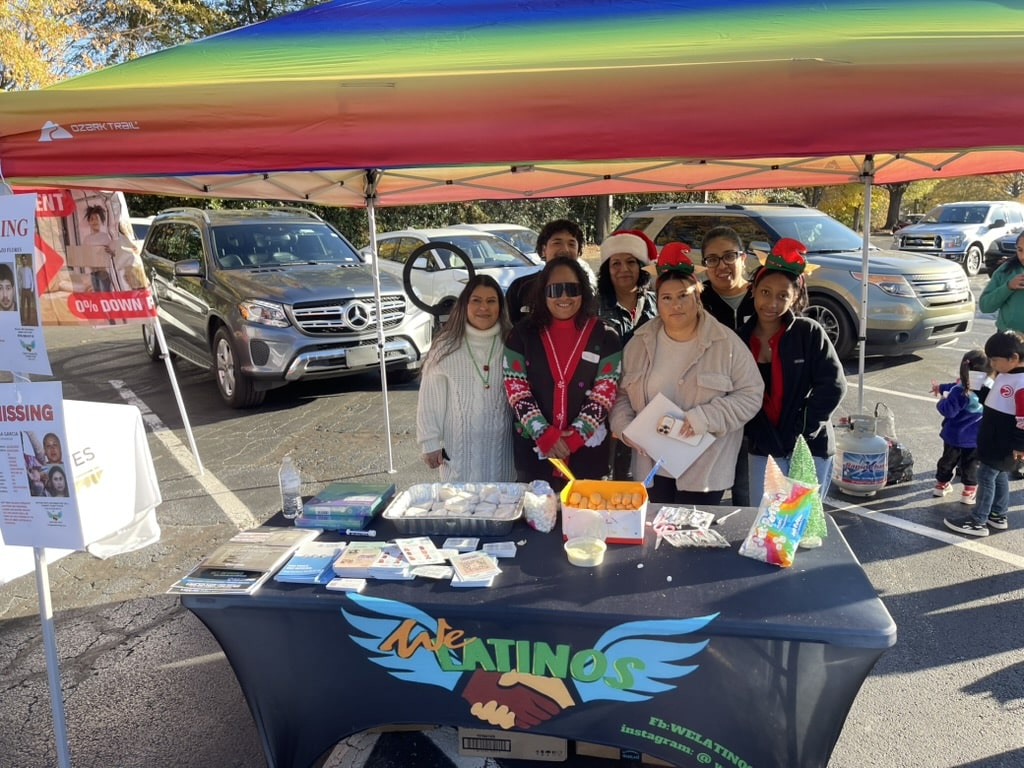
Gisela, Jesus Mancilla-Velez’s sister-in-law, got in touch with WeLatinos in October 2024, after a friend told her to join a Facebook Live that Melissa had organized — the organization does regular online sessions to answer questions from community members. As soon as someone contacts WeLatinos, the group creates flyers for the missing person and distributes them on social media. In Jesus’s case, Melissa said, they’ve also helped the family think through questions to ask at their meetings with the GBI. Though the organization’s work is mainly in Gwinnett, Fulton, and other metro Atlanta counties, WeLatinos’ efforts can expand statewide—as their relationship with Jesus’s family in Warner Robins attests.
“Our nonprofit is willing to help everyone and anyone,” Melissa said. “Yes, we do have a focus on the Latino community, because there are a lot of barriers that play against us, but at the end of the day, we help everyone and anyone who needs our help, missing or victims.”
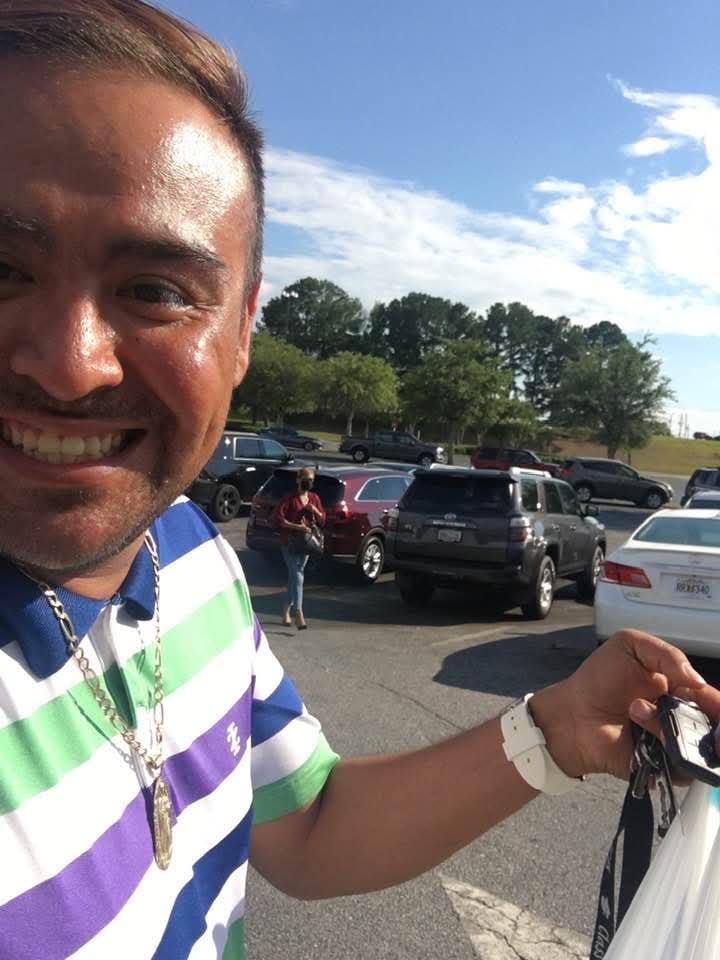
After four years without answers, Gisela said the family understands that Jesus isn’t the only case that law enforcement agencies are contending with. But for them, Jesus is a brother and a father. Gisela and her husband, Diego, remember Jesus as deeply committed to his family, with friends from a wide array of backgrounds and nationalities. He was a good cook—particularly his flan and his strawberries and cream—and the soul of the party, Gisela recalled.
“We would like to have some answers,” she said, her voice cracking. Often, Jesus’s disappearance inspires a deep sadness in her; other times, it’s anger. Whatever happened to him, Gisela said, Jesus didn’t deserve it. The last time she saw him was August 28, 2020, a week before he went missing, when he came by to pick up her kids to take them to swimming class. “He was a good uncle,” she said.
“It’s painful to think about his qualities,” Gisela continued. “Especially thinking that maybe we won’t see him again.”
Author

Related Articles
These are the bills impacting immigrants in Georgia that survived Crossover Day—or didn’t
Crossover Day is the make-or-break point for bills to have a chance of passing in each year’s legislative session. Here’s how a range of laws affecting immigrants fared.

Rodney Taylor struggles to use his wheelchair and prosthetic legs as health deteriorates in immigration detention, says family
Advocates and family members of Gwinnett County resident held at Stewart Detention Center, travel to Washington D.C. to raise the alarm on his case.