
“We have to preserve our culture, our language, our religion, and we have to make some special efforts”
Georgia State House approves resolution recognizing the Punjabi language
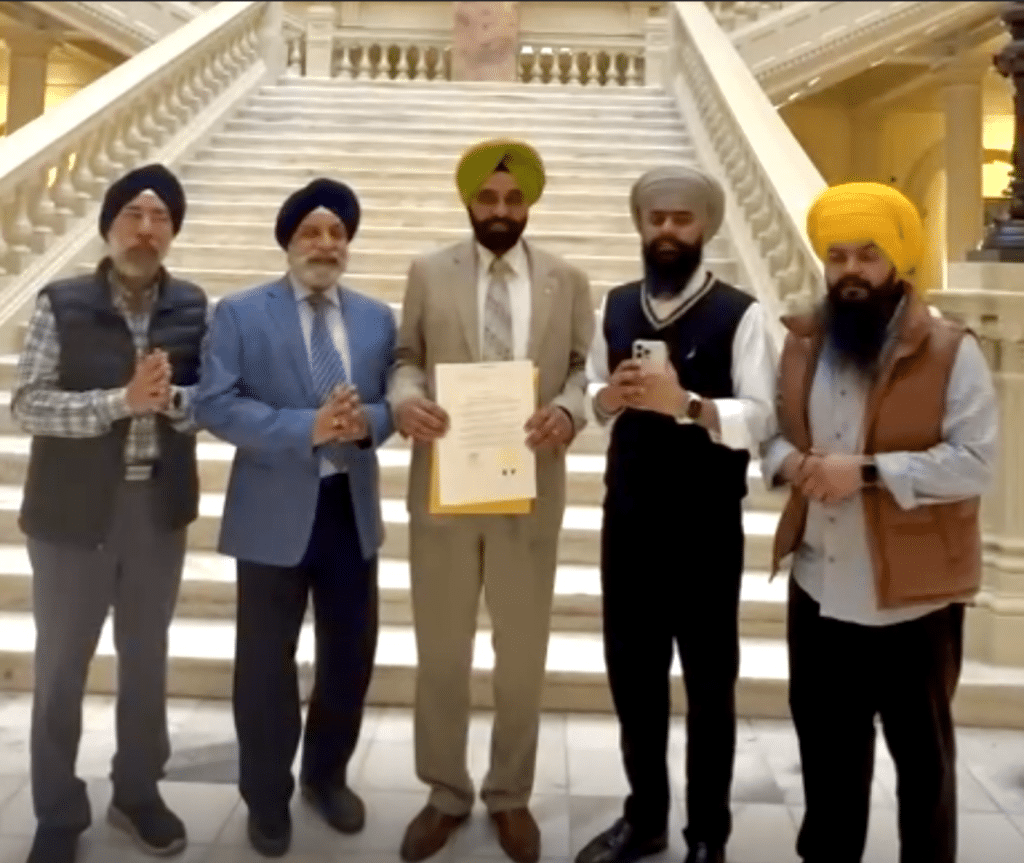
On March 18, Dacula resident Surinder Singh stood at the steps of the Georgia Capitol holding a paper with a State of Georgia House golden seal on it, proudly posing for a photo. On either side of him stood other members of the local Sikh community. They, too, couldn’t hide their pride.
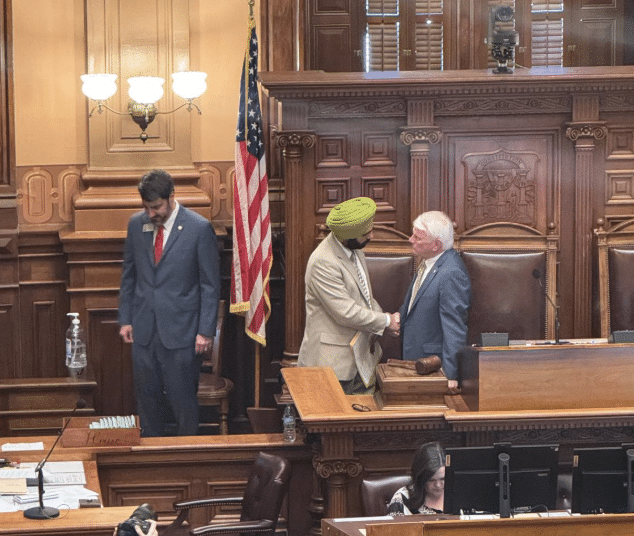
Moments earlier, the Georgia House of Representatives had voted to approve HR 430, which recognizes Punjabi as an official language in Georgia. The Punjabi language is spoken to people native to both India and Pakistan, and across religious communities; many Sikhs, as well as Hindus and Muslims from the northeastern part of South Asia, speak the language.
So do many Georgians—as House Majority Leader Chuck Efstration (R), who introduced the legislation, noted on the House floor last week. “There are more than 15,000 Punjabi-speaking Georgians,” said Rep. Efstration, who represents parts of Dacula. “Members of the House, will you please rise to recognize the Punjab language resolution?” Representatives stood up and cheered.
It was a milestone for Surinder, founder of the Sikh American Society of Georgia, who’s been working to get such a resolution approved.
“We were looking for recognition . . . but could not succeed,” Surinder said, speaking to 285 South on the phone, just moments after getting off the phone with DAWN, a Pakistani national newspaper that had been interviewing him about the resolution’s approval. In the past week, he’s also been interviewed by several Punjabi news outlets including Chandigarh-based BabuShai.com, the Punjabi Tribune, and JusPunjabi, all of them excited to report the news.
After spending years building relationships with state legislators, Surinder reached out to Rep. Efstration. “I said, This is the resolution. I want you to pass it. And he said, It will be difficult, because people don’t know. I said, Can we talk to some other legislators? And then he brings some other legislators together, and then six or seven legislators come together, and they say, Yes, we should recognize the role of Punjabi people in Georgia.”
“As a representative from one of the most diverse counties in the nation, I was proud to sponsor HR 430 to recognize the Punjabi language and the many accomplishments its speakers have made to our state,” read an email from Rep. Efstration’s office in an email to 285 South.
This isn’t the first time a language, or particular community, has gained legislative recognition in Georgia. For instance, in 2023, the State House passed a resolution recognizing Vietnamese Community Day; it also passed a resolution recognizing the contributions of Indian community members that same year. Last session, it approved a resolution recognizing the festival of Nowruz, as well as the Ismaili Shia Muslim community in Georgia.
Representative Marvin Lim, who represents House District 98—an especially diverse corner of Gwinnett County—explained that legislators get a certain number of “privilege” resolutions like these to recognize different groups and people in the community. “These are, indeed, symbolic, and they do not otherwise come with any other privileges (or policy changes, etc.),” Lim wrote in an email to 285 South. “But they help bring light and recognition to those who deserve it.”
While recognizing that HR 430 is largely symbolic, Surinder hopes the official recognition might lead to something more concrete—like state funding for Punjabi curriculum in schools. Beyond that, he hopes the resolution will inspire community members in other states to push for recognition of the Punjabi language. “We have to preserve our culture, our language, our religion, and we have to make some special efforts.”
Surinder, who moved to the Atlanta area in 1996, said he started getting more involved with the community after the September 11 attacks, when hate violence directed at Muslims, as well as Sikhs—who were mistaken for being Muslim—was on the rise. “We tried to address this issue in the gurdwaras [place of worship for followers of Sikhism], and everybody said, yes, if people don’t know us, that means it’s on us to create awareness.”
Author

Related Articles
Medical licensing, HIV prevention, and ICE enforcement: Here are the bills affecting immigrants that passed—or failed—during Georgia’s legislative session
Advocates from Muslim, Latino, and Asian American advocacy organizations help 285 South take stock of this year’s meeting of the Georgia General Assembly.
After a Palestinian activist was excluded from a Decatur book talk, a pastor hopes to make amends
Sparking criticism from civil rights groups, private security prevented Jawahir Sharwany from entering an event featuring Sen. Cory Booker—even though she’d bought a ticket.
At Unity Fest in Clarkston, children celebrate their cultures, both old and new
DeKalb County students come together for the third annual festival