Refugee women kickstart culinary careers in Decatur kitchen
Refugee Women’s Network, a nonprofit focused on empowering women as they build their lives in Atlanta, is helping women create their culinary businesses in Decatur.
This story was provided by 285 South media partner WABE.
Two women stand at large stainless steel tables in the center of a bright, airy kitchen. They dice aromatics and move large trays of catering orders set for delivery later that day.
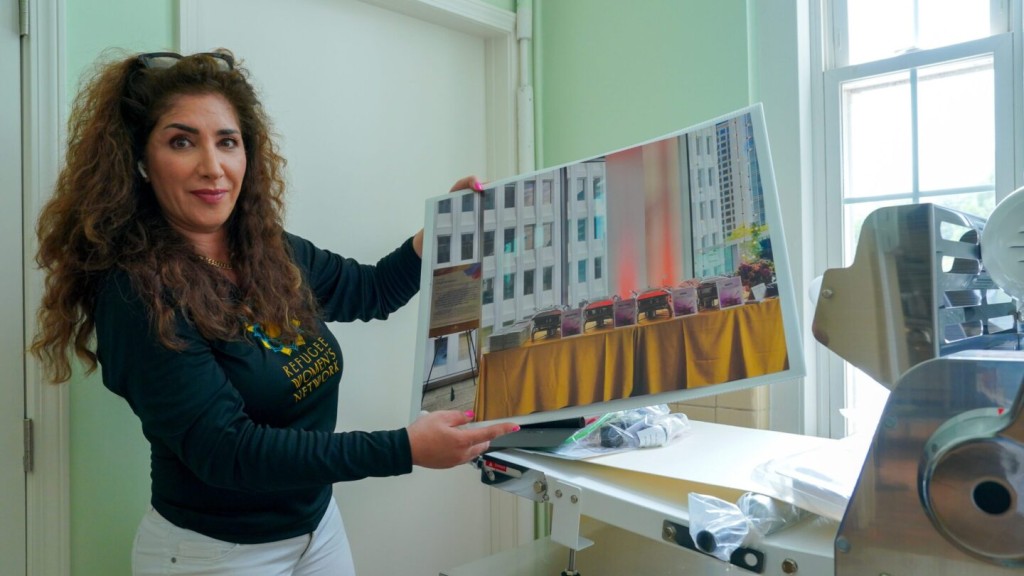
Marmar Stewart beams as she greets them. Stewart is with metro Atlanta’s Refugee Women’s Network, a nonprofit focused on empowering women as they build their lives here.
She heads the Chef’s Club, an entrepreneurship program designed to help launch these women’s culinary careers. It’s one of several programs RWN facilitates, even as the Trump administration slashes funding for refugee services.
The kitchen is tucked into Decatur’s Legacy Park. It sat unused for decades, until RWN raised the money for a full renovation to make a commercial kitchen that served as a hub for the women to work.
“It was a dead kitchen, and we brought it back to life,” she said. “Actually, these women brought it back to life.”
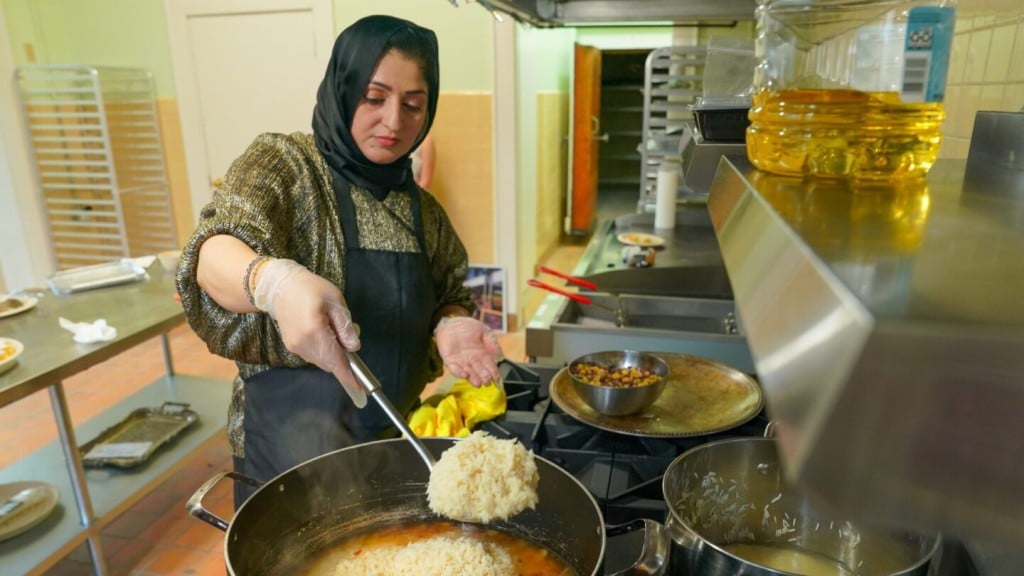
One of the women, Breshna, ladles diced white onions into a large pot of hot oil. The kitchen erupts with fragrance as she stirs the onion around and adds some salt.
Breshna is a mom, a wife, and a refugee from Afghanistan, who will be referred to only her first name for privacy. She resettled in Atlanta about a year ago.
She’s preparing Afghan food for a large catering order.
When refugees are resettled to the U.S., they receive $1,275 per person toward urgent needs like housing and food, and after 90 days, they’re on their own. Oftentimes in families, the husband finds work first. But RWN is working to give women independence in Atlanta.
“We have 50 incredible chefs at Chef’s Club,” Stewart said, “and about, let’s say, 90%, even more, it’s for the first time they’re making a paycheck.”
Sushma Barakoti, the executive director of RWN, said the refugee women came to her with the idea to start food businesses.
“They said, ‘We’ve cooked for big families every day, we can use this skill and earn money,’” Barakoti said.
Refugee resettlement programs like these look a little different now. Since President Donald Trump took office again in January, refugee resettlement to the U.S. has largely stopped and funding has been cut.
Barakoti said RWN has already lost at least $100,000 in grant funding.
“We know that our budget is going to be reduced,” she said, “but at the same time, we are looking at this as an opportunity.”
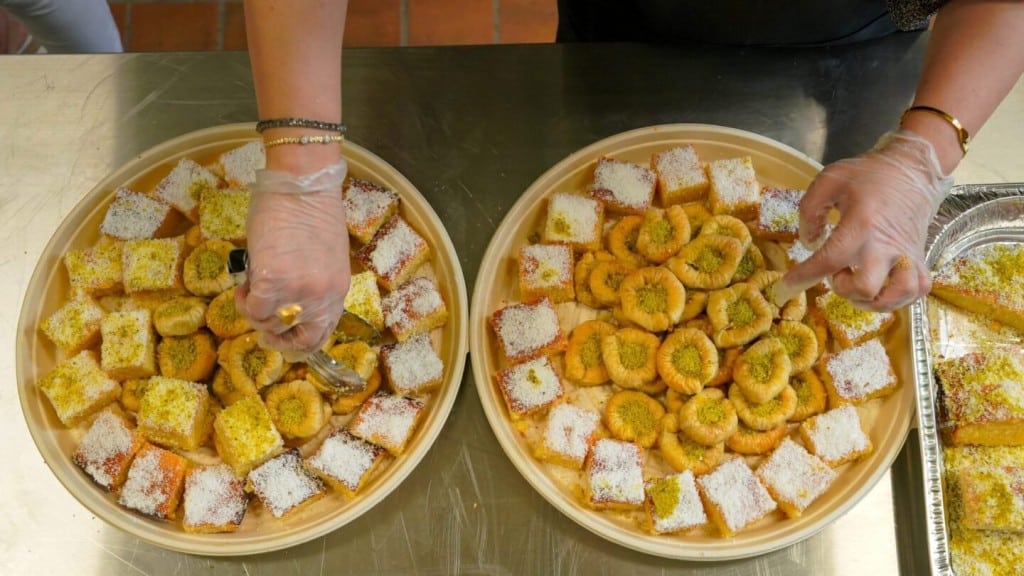
An opportunity to think outside the box. With programs like Chef’s Club, RWN can offer cooking classes, special catering services, and different events that support the nonprofit while also earning money for women like Breshna.
“Our Afghan cuisine is phenomenal because it’s not restaurant quality, it’s mother quality, grandmother quality,” Stewart said.
Breshna seasons the frying onions with bright spices. She is preparing Kabuli rice, a savory Afghan pilaf mixed with caramelized, julienned carrots and plump, juicy raisins. It’ll get served alongside a salad, a saucy chicken, and a savory eggplant dish called Borani.
She often goes to events to sell her food and is at the Decatur Farmer’s Market on Wednesdays. Marmar Stewart interprets for her here.
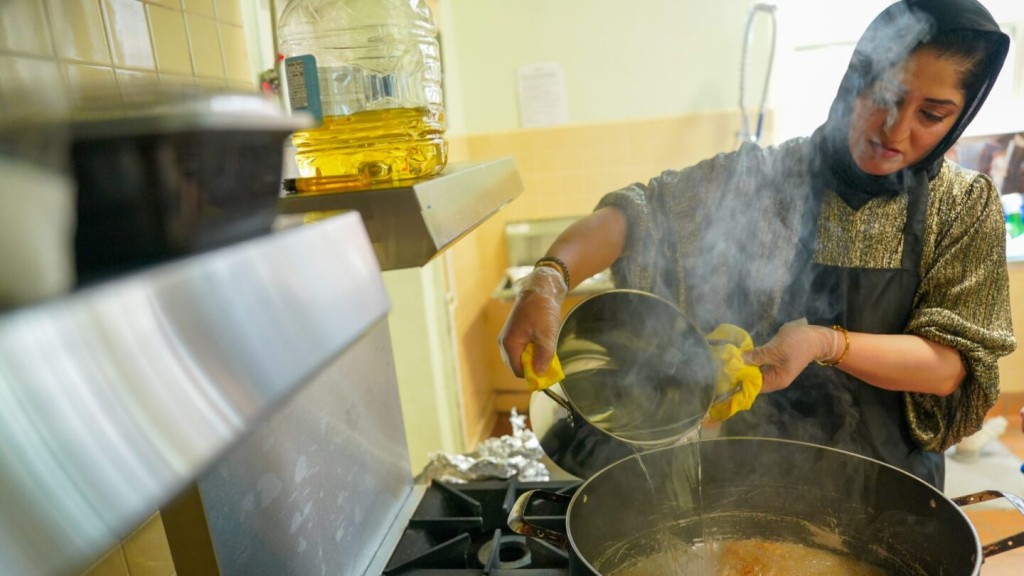
“When I see people love my food, it makes me not tired at all anymore,” Breshna said. “Then when I go back home, I just get encouraged to do even more.”
Women in Chef’s Club go through ServSafe certification, business classes and other training to get them ready. RWN will help set up a bank account and a payment system, and that money goes directly into the women’s bank accounts.
“The little daughters, they look at the moms and then they say, ‘Oh my god, my mother without any education in a foreign country is making money.’” said Stewart. “It’s a role model for them.”
They’ve catered 400-person events, small gatherings, and do custom orders as well. So far, all business has been through word of mouth.
Related Articles
A new Doraville cafe serves up a taste of Southeast Asia’s kopitiam culture
Kopitiams aren’t just coffee shops—”there is human warmth, the friendliness from that cup of coffee”
These Atlanta eateries are saying “Paga Lo Que Puedas”: Pay What You Can
Kamayan ATL and Vinny’s Mutual Aid Bakery are joining over 100 restaurants in 13 countries for a day dedicated to putting food access—and people—first.
In Avondale, culinary inspiration from the streets of Mumbai
Newly opened Bun & Bombay offers homestyle Indian classics, snacks, and outdoor seating.