The only nonprofit dedicated to South Asian American domestic violence survivors in Georgia faces major federal funding cuts.
Raksha is at a turning point after 30 years of service to Atlanta area communities.
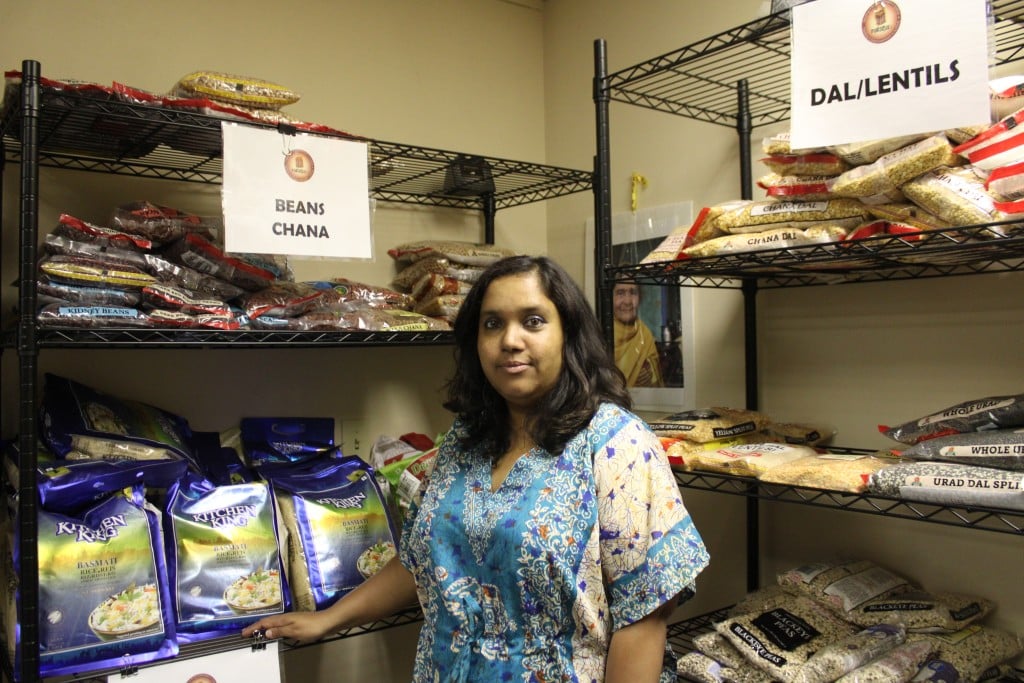
Sonya first arrived in Atlanta about ten years ago from the U.K. on a spousal visa. She said the marriage was abusive. The violence got so bad that at one point she called the police.
“The police officer took me out of the apartment, and he asked me if I was being abused,” Sonya, who is using a pseudonym as a safety precaution, told 285 South. “He said, If you can’t speak, then just blink. So that’s what I did. I blinked.”
The police officer then gave her a phone number. “He said, The minute you call this number, your life is going to change.You have to talk about it. You can’t stay quiet anymore,’” Sonya said.
That phone number connected her to Raksha, a South Asian American community organization in Metro Atlanta that has been supporting survivors of domestic violence for thirty years. Raksha’s programs include everything from counseling, to economic empowerment, to educating community members about issues like mental health and trauma. The organization also works to make sure first responders in the criminal justice system — including police officers, like the one that helped Sonya, know how to identify and help victims of domestic violence with care and cultural sensitivity.
Within days, Raksha staff helped Sonya file a restraining order against her spouse, and eventually set her up at an extended stay hotel.
Today, the funding that allows Raksha to support domestic violence survivors with housing and other needs has been drastically cut. It’s a turning point for the organization, said Aparna Bhattacharya, the nonprofit’s executive director, which marks its 30 year anniversary this year. “The community can choose to invest in survivors and safety — or allow decades of progress to unravel.”
On April 22, Aparna received two emails, sent within a minute of each other, each with news of a federal grant termination. The language was virtually the same in both: “This award is being terminated because it ‘no longer effectuates the program goals or agency priorities,’” read the emails, sent from the Office of Justice Programs at the Department of Justice, which Aparna shared with 285 South. Those priorities, detailed the email, included “protecting American children, and supporting American victims of trafficking and sexual assault.”
“It was already a hard day,” Aparna said, recalling how she felt when she read the email. But receiving this news, “it felt like the bottom had dropped out.” What’s more, she said, the justification for the termination, with its emphasis on protecting “American children” and “American victims,” hurt. “It sent a message that South Asian Americans and Asian Americans are not considered important parts of the community to keep safe. That we’re not valuable, that our lives don’t matter,” she said.
$700,000 in total funding was cut. $200,000 of that money had been to cover “essential needs” for survivors of domestic violence over the next two years, paying for everything from hotels and Airbnbs to Uber rides to meals. The second grant, which was to cover the costs of community outreach work about victim’s rights over the next three years, was for $500,000.
Aparna had factored those grants into how the organization would continue to support community members over the next three years.
Now that money is no longer there for them.
The loss of these two grants, Aparna said, is about 11 percent of Raksha’s annual budget.
There are other federal and state grants that have been cancelled or frozen, too, like a $20,000 Federal Emergency Management Assistance (FEMA) funded grant for housing assistance, administered through United Way. Raksha was counting on that money to help support survivors with their emergency housing needs, which is crucial since Atlanta area shelters are often full or at-capacity.
The potential losses could be 20 percent of Raksha’s budget, Aparna said. “We don’t know what’s going to happen.”
They’re not alone. The DOJ also cancelled a $400,000 grant (that was to cover costs over three years) that had been awarded to the Lucky Shoals Community Association and the Latino Community Fund-Georgia, that was going towards crime prevention efforts in diverse communities in the Metro Atlanta area. In all, the U.S. Department of Justice canceled 365 grants in April, amounting to over $811 million nationally, some of which was going towards supporting victim services — including programs that provided sign language interpretation for domestic violence survivors or provided training for police officers — according to reporting from Reuters.
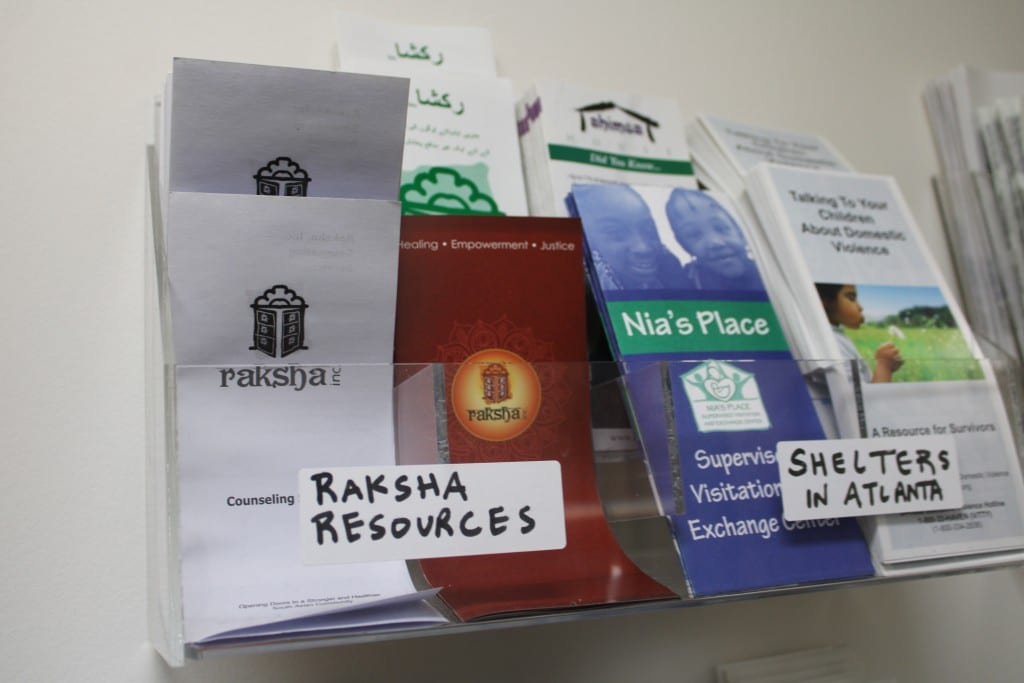
Manisha Lance, Raksha’s deputy director, was at the organization’s food pantry on Thursday, picking out Indian spices like garam masala, cardamom, and cumin, as well as Parle-G biscuits and bags of Cheez-Its. Two women were coming later in the afternoon, and one of them had children, who Manisha knew would appreciate the snacks.
Manisha has been working with Raksha since 2007, and she said that housing assistance has consistently been one of the major needs of survivors, given the lack of affordable housing options in the metro area. Because Raksha has had federal funding that directly went to housing needs, staff members have been able to provide housing cash assistance not only to their own clients, but also to smaller immigrant-serving nonprofits, like Karibou Community Legacy, which works with African immigrants in the Atlanta area.
Finding out about the grant terminations was a blow, Manisha said. “Having to say no to people, that is really hard. We want to help as many people as possible. Atlanta rents are excessive. Food prices are going up,” Manisha said. “What are we going to do, [with] more people who are facing homelessness?”
Aparna isn’t sure about the nonprofit’s future, and she’s torn about how to mark the organization’s 30 year anniversary at such a difficult time. One of her biggest worries, she said is “how we’re going to continue to show up for our communities and continue to meet their needs.”
Right now though, Aparna hopes community members will step up to support the nonprofit. “ I want to believe that the work that we’ve done throughout laid some really good roots.”
She also said Raksha is joining a coalition of groups nationwide who are calling on the DOJ to reinstate their funding, and urging members of Congress to protect future funding. The goal, she said, is bigger than just Raksha; it’s “to ensure all survivors throughout the US have access to services.”
“We are a resilient organization,” Aparna said, comparing the organization to the many survivors it has served. “We’ve been through some tough times before where I thought it would be the end of Raksha, and we made it through.”
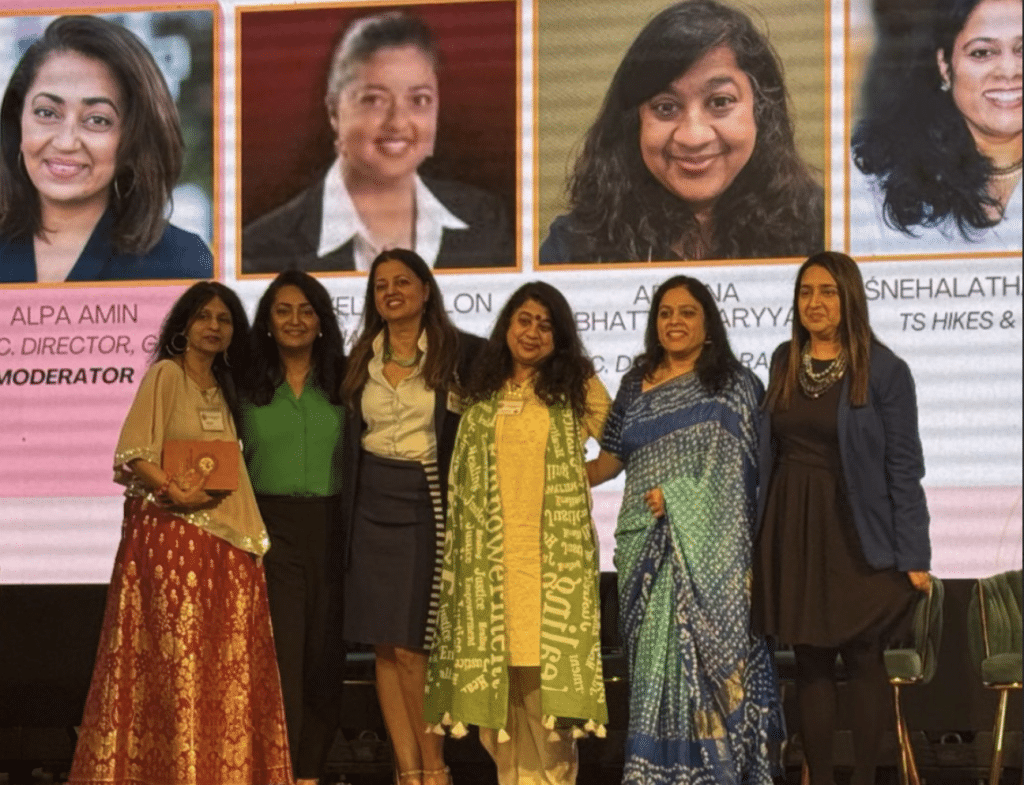
Sonya can’t imagine Atlanta without Raksha.
When she was at her lowest point, Manisha and the staff at Raksha were there for her, 24 hours a day, if she needed them. “They knew I didn’t have clothes, underwear, Tampax, anything. So they made sure that all of that was delivered to me,” she said, speaking on the phone from her apartment.
What was most critical, she said, is that they understood her. Navigating the criminal justice system after suffering abuse, she said can feel “transactional” with the authorities. Especially when “your language isn’t spoken and your religion and your culture [are not] understood … Your dignity isn’t maintained, you’re just seen as another person.”.
“There’s something very cold and clinical in that,” she added.
With Raksha, Sonya didn’t feel like just another number in the system. “They knew that looking back at somebody who looks like me would help me.” They also understood the nuances of her religion and culture. “They understood what I can talk about, what I can’t talk about, who to tell, who not to tell,” she said.
When she lived in London, prior to moving to Atlanta, she said there were at least 10 options for immigrant-serving nonprofit supporting domestic violence survivors in multiple languages. In Atlanta, for South Asians, “there’s only one place. There’s no other place like it,” she said. “If Raksha wasn’t there, I think a lot of us would not be where we are today.”
Author

Related Articles
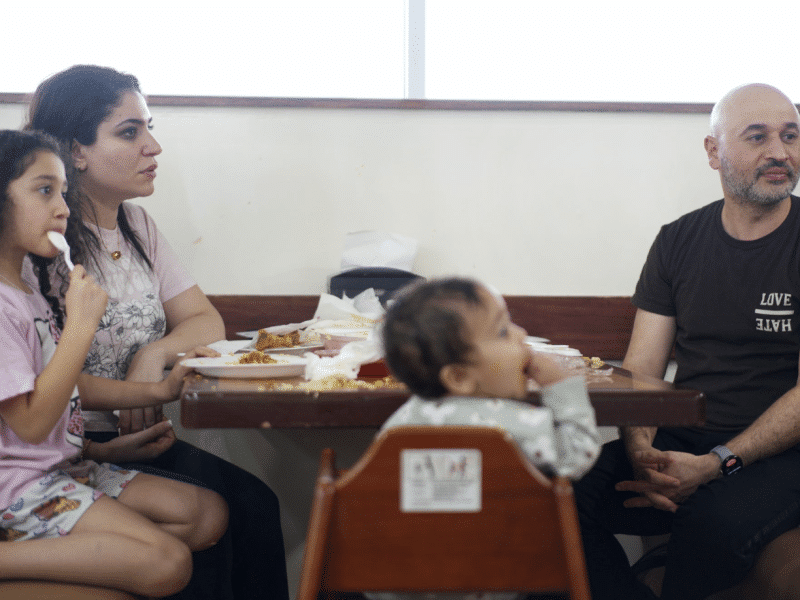
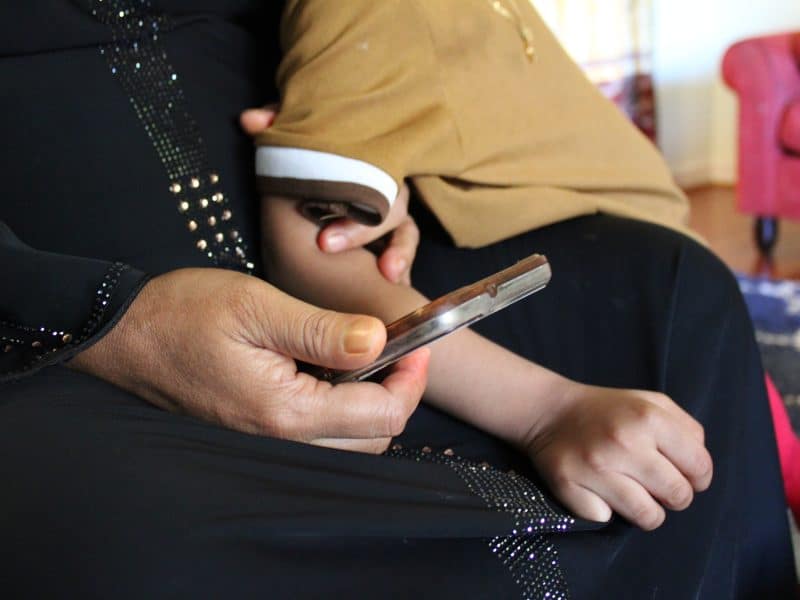
A Rohingya man in New York died under mysterious circumstances— his relatives in Georgia are grappling with the loss
Federal immigration officers left Nurul Amin Shah Alam outside a closed coffee shop in harsh winter weather— days later he was found dead. He was getting ready to move to Georgia, says his niece in Stone Mountain.
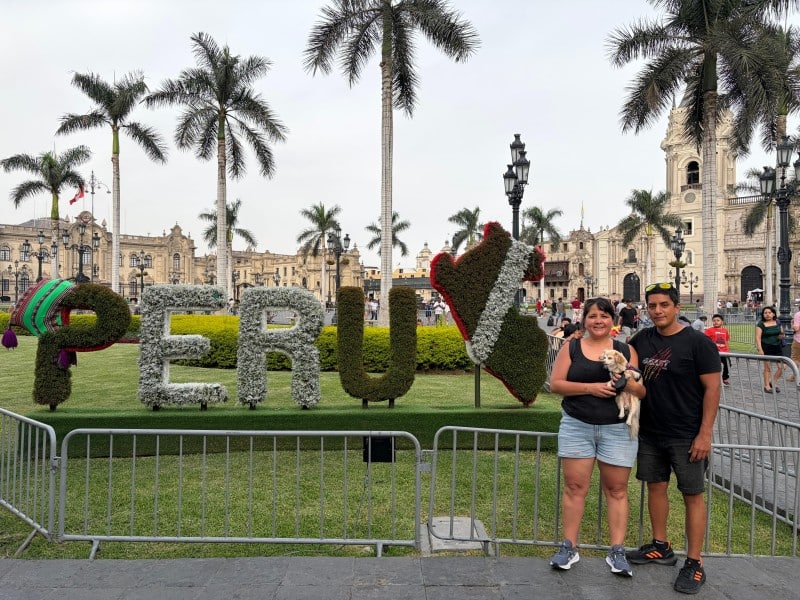
“Our family was destroyed. We’re piecing it back together,” says Adalina, whose husband was deported to Peru
After months apart, a metro Atlanta resident decides to leave the U.S., apply for Peruvian citizenship and join her husband in Peru—at least until a new administration takes office. As she prepares to leave the U.S., she is finding support in her Atlanta friends and community.