“We are stuck”: With SNAP benefits cuts, refugee families in Clarkston on edge
Following legislation passed last year, almost all immigrants and refugees in the U.S. lost access to crucial food and healthcare support. Here’s how two families are coping.
Correction 2/20/26: A previous version of this story incorrectly stated that the job requirements were new state rules. The story has been updated to state that these requirements are new federal rules, part of the One Big Beautiful Bill Act.
Twenty-three-year-old Noor opens the door to her Clarkston apartment. The home is dark and quiet except for the TV, which is playing a program with Quranic recitations. Dressed in a black graphic T-shirt and pink track pants, she appears far younger than her age. Upstairs, her two daughters are taking a nap.
Noor, who asked that her real name not be shared, arrived in Atlanta with her husband and elder daughter in late 2024. They were fortunate—originally fleeing Syria, they landed in Atlanta Hartsfield airport just weeks before President Donald Trump returned to office and imposed a ban on refugees entering the country. Through the support of the International Rescue Committee, they managed to secure a place at the Clarkston Oaks apartment complex. They got set up to receive SNAP benefits and Medicaid while they found their feet.
But a few months after setting up their home, a fire tore through their apartment building, which was home to more than 50 people, mostly refugee families. Noor’s family lost everything: their birth certificates and IDs, even the crib and baby items that Ethaar, a local nonprofit, had given them.
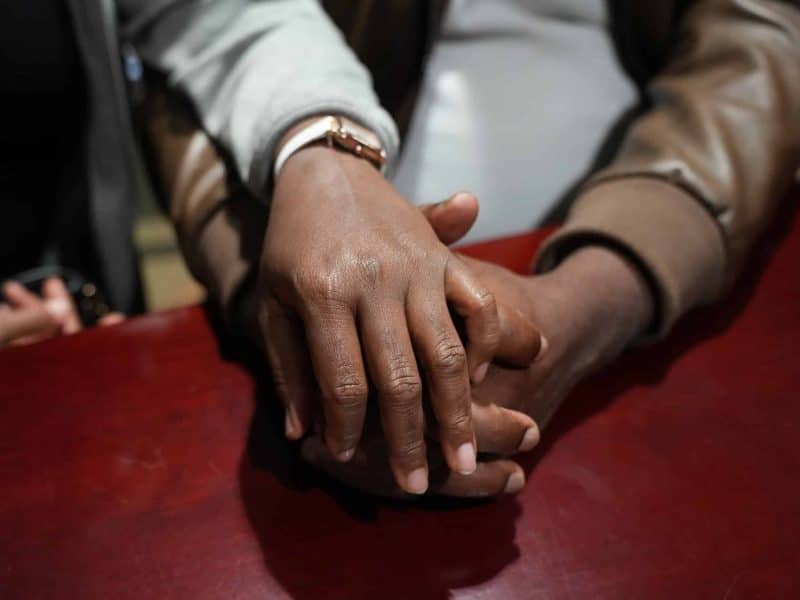
“I’m not happy, I’m tired,” she told 285 South in Arabic, speaking with the help of Ethaar staffer Kinda Laffiteau, who was sitting beside her. “My husband is struggling to find a job,” she explained. “He’s been trying to find a job since he got here.”
That fire wasn’t the end of Noor’s family’s challenges. In January, she received a notice in the mail that she, her husband, and their elder daughter—who’s two—were no longer eligible for the SNAP benefits that had been helping them afford groceries.
She’s not the only one: After the passage of the Trump Administration’s One Big Beautiful Bill Act, almost all immigrants and refugees are no longer eligible for SNAP benefits—unless they have a green card, or are from a small handful of exempt countries. Nationwide, around 90,000 people are expected to lose SNAP benefits on average every month because of these new eligibility restrictions, according to the Congressional Budget Office. Under the new federal rules, there are also proof of work requirements, cutting off even more people off benefits—green card holders and citizens alike. *A previous version of this story incorrectly stated that the job requirements were new state rules.
After the fire, Noor said, a representative told her the IRC would reapply for the family’s documents, but that “it takes time.” “It’s been four months at least, and they’re still waiting,” said Kinda, interpreting for Noor. 285 South reached out to IRC Atlanta for comment but hasn’t received a response.
The lack of any form of identification has made it hard for Noor’s husband to apply for regular jobs. The family subsists on whatever cash jobs he can find—whether it’s assembling furniture or helping out at a local butcher’s shop, she said.
“We are stuck,” said Noor.
It’s almost noon, and Noor said her last meal—some rice with peas—was at 1 a.m. She and her husband are down to eating once a day, in an effort to stretch the food they have, and ensure that their daughters, Ihleen and Mayada, who are two years and 11 months, respectively, have enough to eat. Ethaar has also been providing the family with milk and hygiene items, Kinda said.
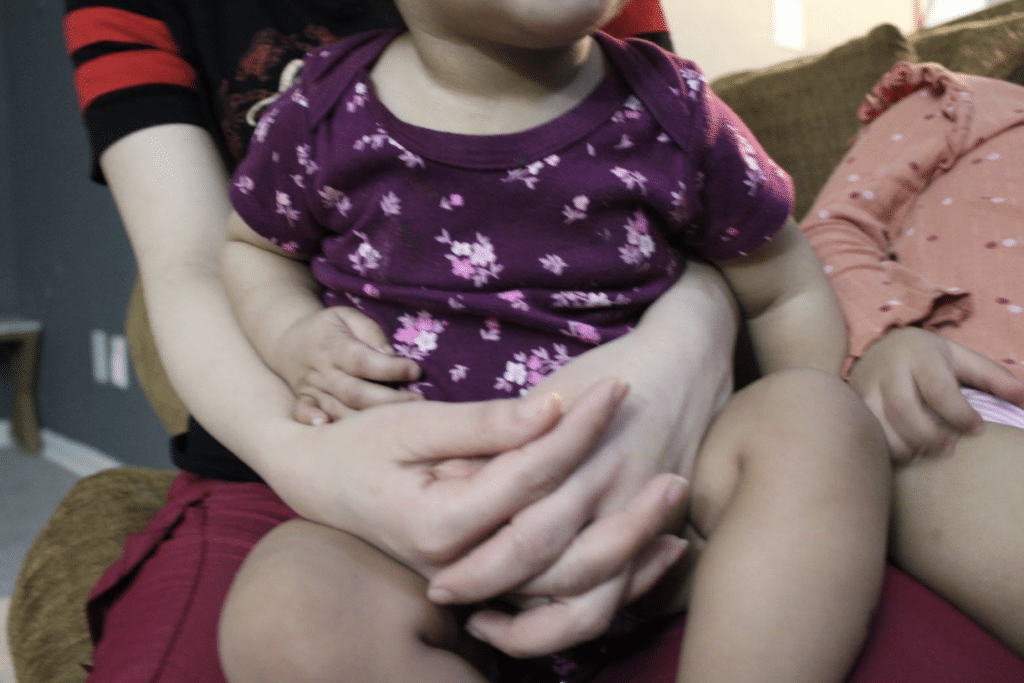
Noor disappears upstairs to wake her daughters from their nap. She emerges minutes later with the baby in her arms, and the two-year-old clinging to her leg. They are glassy-eyed, their sleepy smiles lighting up their soft faces. Ihleen tickles her younger sister’s foot.
Being the only U.S. citizen in the house, baby Mayada still receives SNAP benefits: about $280 a month, her mother said. She also receives some formula and Gerber baby food every month through WIC, a supplemental nutrition program that stands for Women, Infants, and Children. But as Mayada has gotten older, the food she receives has dwindled—they used to receive fresh produce and other items, she said. Ihleen picked up a packet of Gerber food, filled with an orange puree, waving it proudly. Noor explained that whatever food baby Mayada receives, they share with her elder sister.
Noor didn’t have an easy childhood herself. She was just eight years old when her family fled Daraa, Syria, in the midst of the country’s civil war. She recalls that her dad “used to take us to the basement, hiding there.” Eventually, it was too much, “and one day he decided to just leave.” They went to the Zaatari refugee camp, on the Jordan-Syria border, and then made their way to Jordan, where they lived for several years. When Noor was older, she found a job working with people who had disabilities. That’s where she met her husband. His paperwork to resettle in the U.S. was underway, and they were able to secure her documents too, and come to Atlanta not long after.
“Since we arrived,” she said, “we are for worse, not for better.” Noor doesn’t want to return to Jordan, where she has “bad memories” of the hospitals and lack of food. But it’s a point of contention with her husband, who does want to go back.
In Georgia, it’s not clear yet how many noncitizen residents have lost their benefits since the start of this year—but the state’s immigrant populations have grown significantly over the last decade. 285 South submitted a request to the Department of Human Services, asking for the number of noncitizens whose benefits have been terminated, but as of publication, they hadn’t responded.
A few miles down the road, Osman is at home for a few hours with his wife and two-year-old son before he has to catch a bus to Gainesville. He works at a poultry farm, hanging live chickens before they’re slaughtered. It’s a hard, fast paced job: he has to hang about 25 a minute. He and his wife, Nuha, and their four kids arrived in the U.S. around the same time as Noor’s family.
Osman’s family have had their benefits taken away too. “They cut the food, and they cut the healthcare,” he told 285 South in Arabic, with Kinda interpreting.
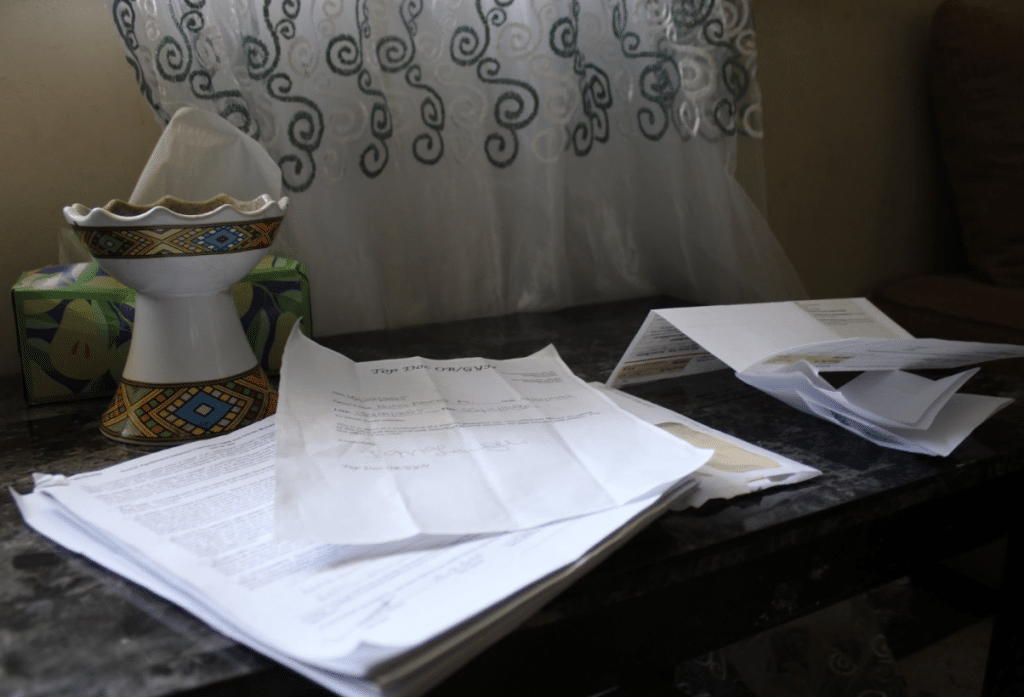
In January, he received a notice that every family member had lost their SNAP and Medicaid benefits. He opens a drawer packed full of papers, taking them out one by one: his Georgia Power bill, his rent payment receipt, the letter from the Department of Health Services notifying him of his SNAP and Medicaid terminations. His monthly expenses are nearly $1,700, not including groceries. His income, he said, is around $2,000, and his hours are increasingly erratic.
“My contract is full-time, but my time, I don’t see it full-time. Every day is different,” he said.
285 South reached out to Georgia’s Department of Human Services to inquire whether the state had any resources for immigrant and refugee families who are no longer eligible for SNAP benefits. A DHS representative responded, writing that “DHS provides significant funding to nonprofit feeding partners across Georgia. Families can visit feedinggeorgia.org/our-food-banks to find resources in their community.”
That list of food banks is in English, with some websites including a Spanish option. Both Noor and Osman’s families speak Arabic. Navigating the websites would require the support of an interpreter, as well as careful rearranging of work schedules and transportation to be able to pick up food boxes.
Nuha, who is seven months pregnant, goes into the kitchen. Seconds later, the sound of a blender drowns out Osman’s voice for a few moments.
Originally from Darfur, Osman explains that he left Sudan after his mother, father, and brother were killed in the civil conflict there. “This situation made me just run away from Sudan. I don’t want to see Sudan anymore,” he said, with Kinda interpreting. He fled to Jordan in 2013. But there was someone back in Sudan he couldn’t forget: Nuha, his neighbor.
“He was in love,” Kinda said, interpreting for Osman. “They stayed in touch online and he insisted to marry her.” Three years later, she joined him in Jordan.
Nuha walks into the living room carrying a plate with two large glasses of fresh orange juice. She is insistent on observing her culture of hospitality, proudly serving whatever she can offer, and she’s happy to have company in their home.
For Nuha, the U.S. hasn’t turned out to be what she expected. She spends all day at home. “I thought I was going to learn English, meet people,” she said, with Kinda interpreting. “I feel I need to be in touch with people.”
Osman also said that not having the time to learn English is holding him back. The prospects of getting a better job, with more income, seem dim, without better English. The commute to work is two hours each way by bus—and he just doesn’t have the time to learn English, he said. Driving would make the commute faster, and he has a car—but the engine is broken, and he doesn’t have the $600 he needs to fix it, he said. Taking time off work for learning a language—or even if he’s sick—isn’t a possibility. Osman has also been having eye trouble from, he thinks, the ammonia in the chicken plant. “Even if I’m sick,” he said, “I go and just work, I have to pay my bills.”
Like Noor and her family, he also feels stuck.
Osman is grateful to know Kinda—Ethaar has been providing the family with hygiene items and food. Besides Ethaar, though, he doesn’t know who else to call or where to turn.
When their two-year-old got diarrhea and a fever recently, Nuha said they couldn’t take him to a doctor. She just treated her son at home. Osman said he is increasingly worried not just about the kids, but about Nuha and her pregnancy.
“If the situation getting worse, we need to go back to Sudan,” he said, shaking his head.
But for Nuha, something is keeping her here—the kids seem happy at school. “Mashallah they learn English,” she said. Their eight-year-old son, in particular: “He love study.”
Author

Related Articles
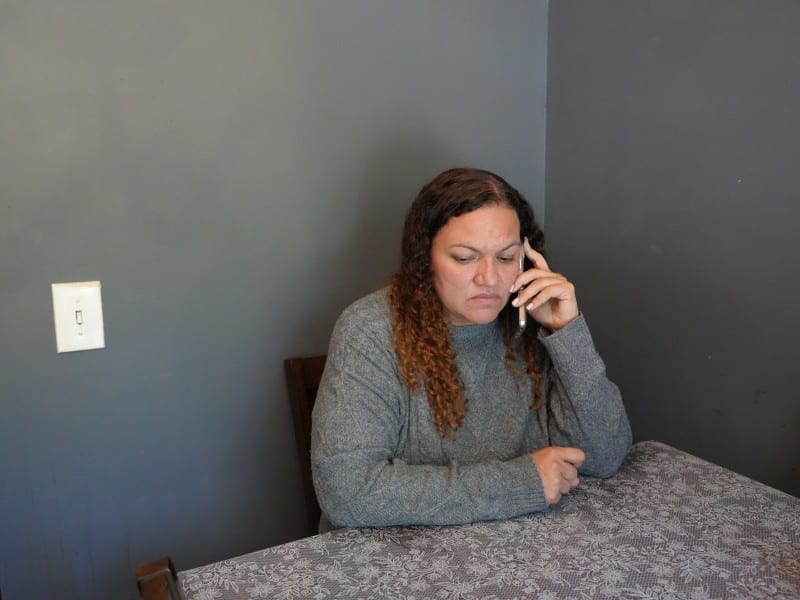
After her brother’s death in ICE custody, a Georgia woman is left with unanswered questions, the logistics of his burial—and deep grief
On July 13, Jesus Manuel Arenas-Silva became the 22nd person this year to die in ICE custody. Advocates say the government isn’t providing the medical care detainees need.
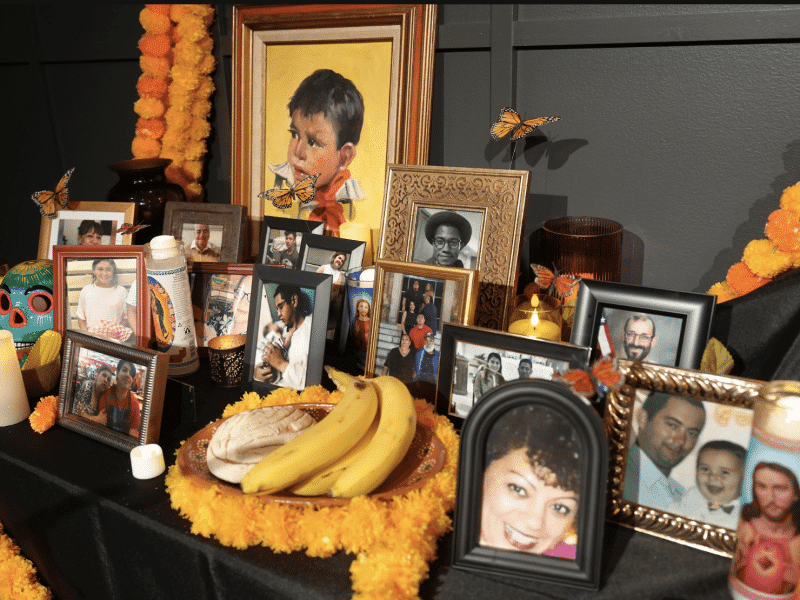
“You’re not supposed to shy away from that”: At a weekend vigil, people remember immigrants whose lives were cut short
The service doubled as a fundraiser for the family of Jesus Manuel Arenas-Silva, who died in ICE custody in Georgia in July.