From H Mart to the Polls: Korean American Voters in Georgia Turn Out Early
In Duluth, a drive to turn out the growing number of registered AAPI voters.
This story was first published by American Community Media, a national nonprofit that reports on America’s diverse communities from the inside out.
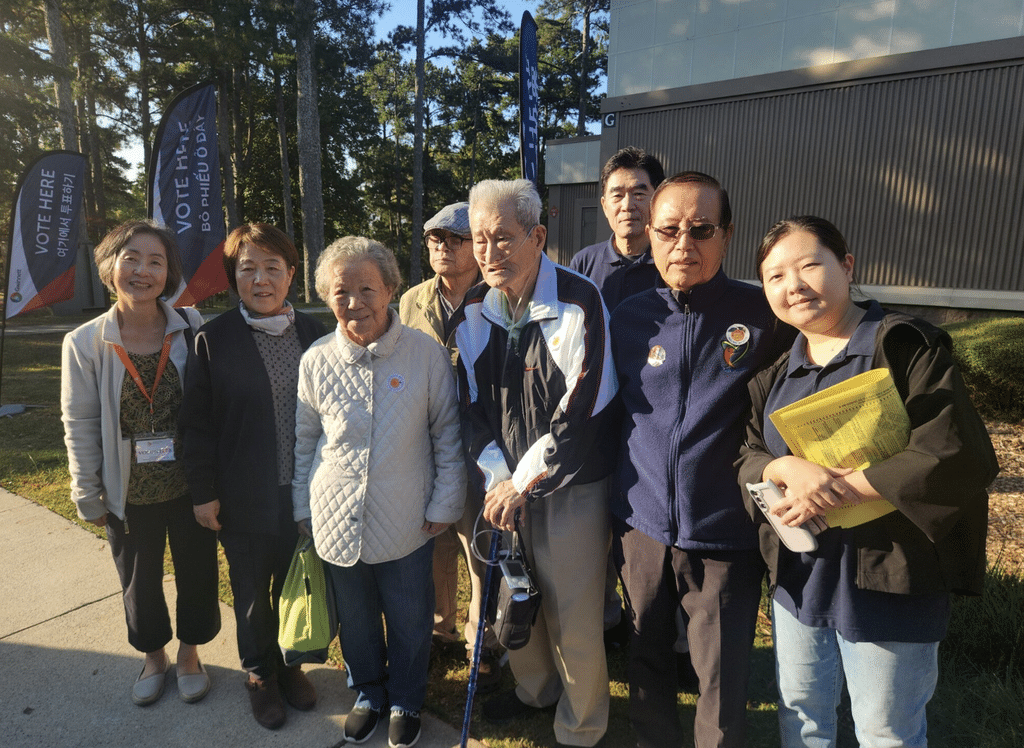
On Sunday, Oct. 25, shoppers at H Mart in Duluth, Georgia, picked up election brochures alongside Korean instant noodles and snacks. Outside the store, volunteers helped shoppers check their voter registration and pointed them to an early voting site in a park one block away. Two Korean-language translators guided voters from the entrance to the voting machines.
The Korean American Voter Assistance Team organized the nonpartisan drive with support from Asian American and Pacific Islander groups AAPI Hub and APIAVote.
Hee Jin Ko, who volunteered with her daughter for AAPI Hub, said, “H Mart is a great place to meet Korean and Asian family, friends, clients and seniors who gather every weekend to buy groceries and eat at local Korean restaurants.”
Duluth City Councilmember Sarah Park, who volunteered at H Mart for four hours, estimated that volunteers engaged 250 people and helped 68 voters cast early ballots in the area over the weekend.
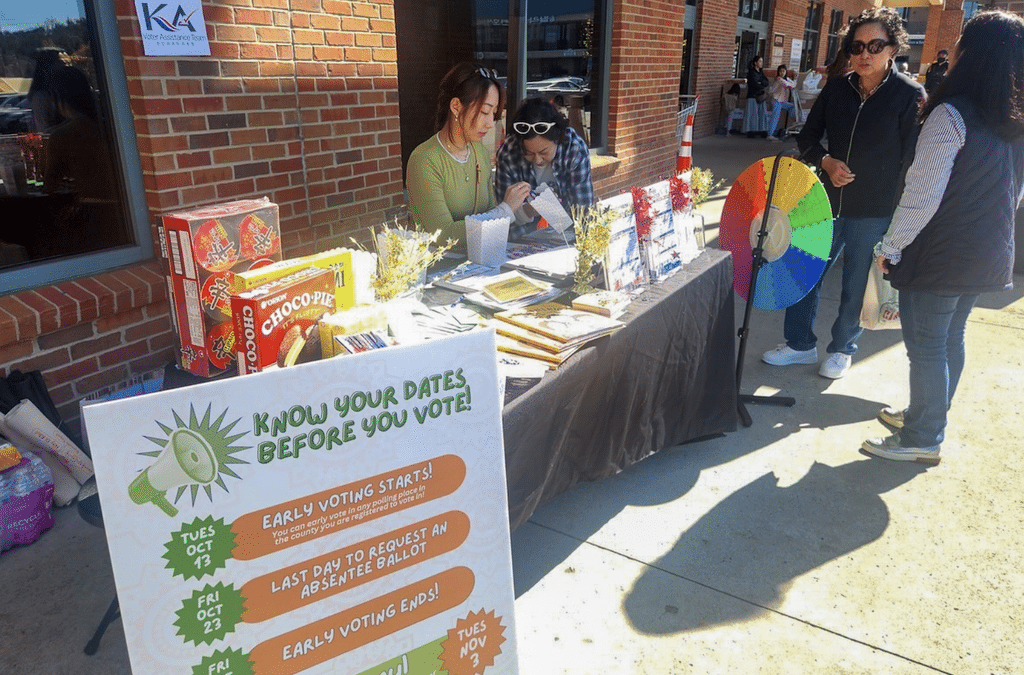
Asian Americans Advancing Justice-Atlanta hosted a similar drive at Assi Plaza in Suwanee, Georgia, where volunteers shared election information with registered Korean voters and directed them to nearby early voting sites.
The drives are part of a push by local Korean American and other Asian American groups to turn out voters in metro Atlanta before early voting ends Friday. The Nov. 3 ballot includes an open governor’s race between Republican Rick Jackson and Democrat Keisha Lance Bottoms, and a U.S. Senate race between Democratic Sen. Jon Ossoff and Republican Rep. Mike Collins.
“Korean grocery stores like H Mart or Assi Plaza serve as central hubs in the AAPI neighborhood because they sit near local polling,” said Mac Park, a translation volunteer with Asian Americans Advancing Justice-Atlanta.
‘The margin of victory’
AAPI voter turnout in Georgia grew 84% between 2016 and 2020 — the largest increase of any state, according to an analysis by AAPI Data.
Georgia now has more than 214,000 registered AAPI voters, up from 94,000 a decade ago, according to a recent analysis by The Atlanta Journal-Constitution.
State Rep. Long Tran called AAPI voters “the margin of victory” at an Oct. 3 forum with Ossoff in Duluth, citing their role in electing Ossoff and Sen. Raphael Warnock in Georgia’s January 2021 runoffs.
Georgia is home to a growing Korean community, fueled by investment from Hyundai, Kia and SK. In 2021, the state had 93,000 Korean residents, and about 100 Korean facilities employed more than 9,400 Georgians, according to the state Department of Economic Development.
Georgia’s AAPI community has also faced anti-Asian American violence and polarizing federal immigration enforcement.
In 2021, a gunman killed eight people at metro Atlanta spas; six of the victims were Asian women.
In September 2025, Immigration and Customs Enforcement led a raid by federal agents on a Hyundai-LG battery plant under construction near Savannah. Agents detained 475 people, most of them South Korean. ICE released more than 300 South Korean workers without charges eight days later, and they returned to South Korea.
“Voters care about the economy, inflation and immigration enforcement at Hyundai,” said Sun Park, a Korean business owner who voted in Johns Creek on Oct. 24.
Candidates court Korean American voters
Candidates from both major parties have courted AAPI voters this fall.
Ossoff, who seeks reelection, met with AAPI voters in Duluth on Oct. 3 and thanked the community for years of collaboration.
“The last year and a half have brought fear, targeting and official bullying,” he said, adding that he aims to be “the most accessible and effective federal representative possible.”
Jackson, the Republican gubernatorial nominee, visited the Duluth Korean Festival on Sept. 20 and pitched Korean American voters on corporate investment.
“My policy will attract Korean manufacturing companies to Georgia and create jobs for local residents,” he said.
The drives come amid heightened federal attention to elections in Georgia.
In late January, FBI agents executing a search warrant seized about 650 boxes of Fulton County’s 2020 election records, including ballots and copies of voter rolls, NPR reported.
A Dec. 2025 email from a Department of Homeland Security official flagged three Georgia counties for providing election materials in Spanish, Korean, Mandarin and Vietnamese. The email also cited a “criminal checklist” for prosecuting voter-related charges, The Atlanta Journal-Constitution reported.
The Justice Department also plans to send Election Day monitors to six Georgia counties with large minority populations — Gwinnett, Fulton, Cobb, DeKalb, Chatham and Macon-Bibb, GPB reported.
Even amid these concerns, AAPI voters continue to turn out.
On Oct. 29, Kim, 70, who gave only his last name, voted with his wife and friends at the polling site next to H Mart in Duluth.
“My son urged us to go and vote,” he said. “I have been voting for decades on the way to shopping at H Mart, along with my friend from the Korean senior center.”
Related Articles
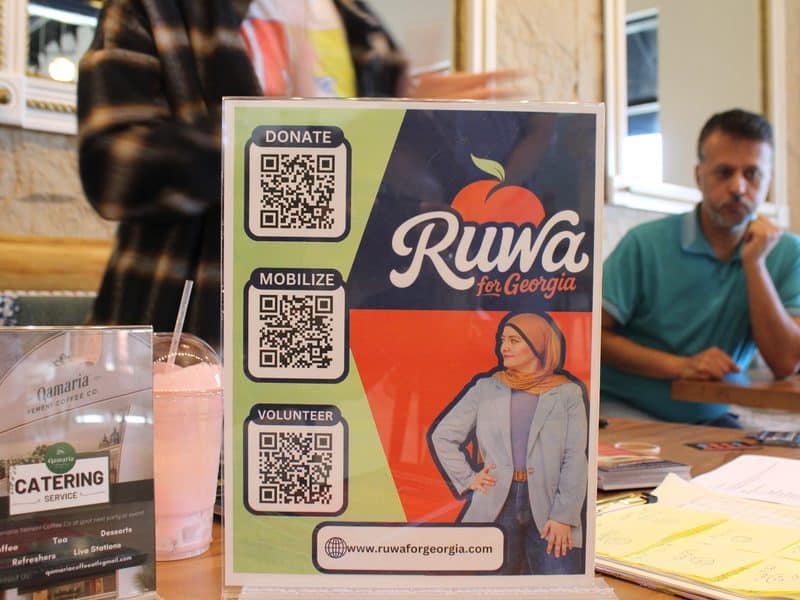
In Gwinnett, state senate candidate Ruwa Romman makes the global, local
“If you are complaining about the cost of living, I remind them that everything has gone up because of the war.”
Atlanta students feel the toll of immigration enforcement
An ESL teacher who has worked with immigrant students for more than 20 years says she has never seen this level of fear.
Midterms: In Georgia, more than a dozen candidates with roots across the world are up for state office
285 South asked them about what they plan to do to support their immigrant constituents.