“Students are scared. They don’t leave the house. They go to school and they go back home and that’s it,” one Atlanta ESL teacher said.
Advocates urge Atlanta residents to wake up to the human impact of ICE enforcement in Georgia.
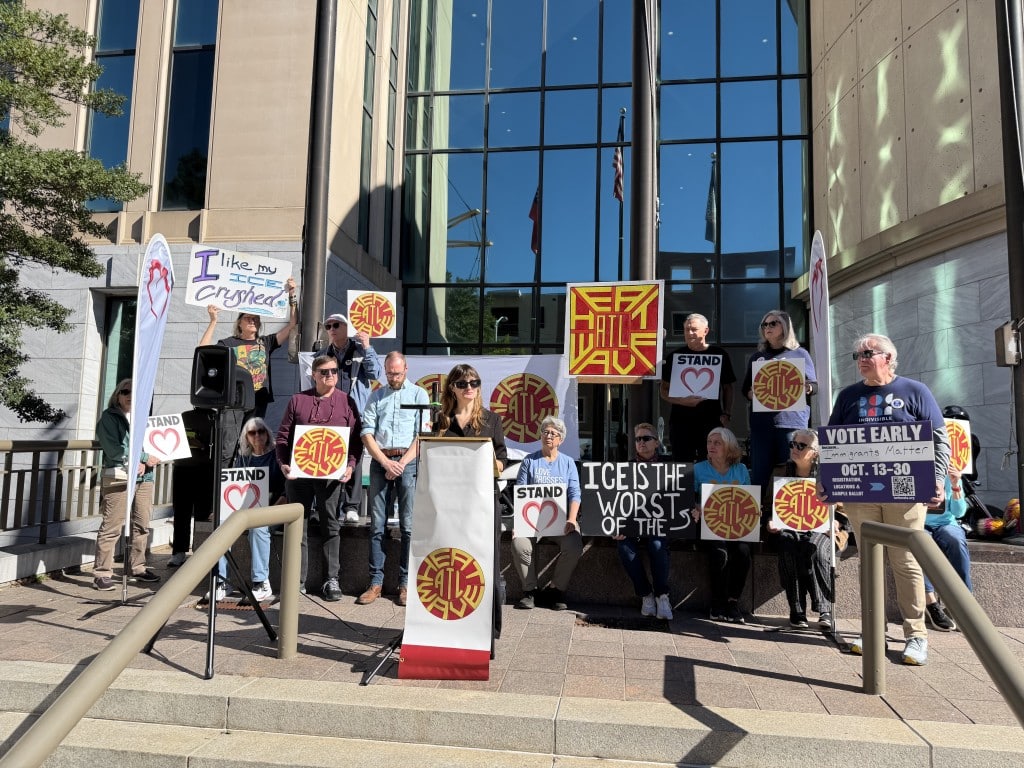
Robin Cathey remembers seeing Melisa for the first time. “If you’d met her, you would be struck by the light that she carries,” Robin said, speaking to a crowd of around a dozen people outside Atlanta City Hall on Tuesday. “She’s exuberant,” she said. “She makes people feel good just being around her.”
An ESL teacher in Atlanta for over twenty years, Robin is well-known in the Clarkston community. One of Melisa’s siblings had reached out to her for help shortly after their then 19-year old sister was detained at the Stewart Detention Center in Lumpkin. After 18 months in detention, said Robin, Melisa is a “shell” of the girl she initially met.
Standing alongside community advocates on Tuesday, including representatives from STAND, Sur Legal, and Community EsTr(EL/La), and Rep. Ruwa Roman, Robin and other advocates urged people to wake up to the human impact of ICE enforcement in the Atlanta area. “Don’t stop talking about this. The shadow surge only works in the dark,” said Kat Taylor of Georgia Voices United. That “shadow surge” is the over 5,000 people ICE reportedly arrested in Georgia this summer, a dramatic increase from the previous summer. Nationwide, Georgia ranked fourth in the number of ICE arrests in 2025, according to data analyzed by the Deportation Data Project.
Melisa, who did not want her real name shared, is one of at least 20 students that Robin has met as an educator who have been directly impacted by changes in immigration policy during the second Trump Administration. Among them, she said, Afghan students whose green cards are being reviewed after being approved, and Haitian and Venezuelan students whose Temporary Protected Status (TPS) have been cancelled. “Everyone is terrified,” Robin told 285 South. In her 20 years as an ESL educator, she said, she has never seen this level of fear. “Students are scared. They don’t leave the house. They go to school and they go back home and that’s it,” she said.
“I want to be [a] positive force in society”
285 South relayed messages to Melisa, who is currently in ICE detention, through Robin. They’ve been in touch via a mobile app detainees use to communicate with family and friends.
Melisa came to the U.S. from Afghanistan and arrived in Georgia with her family in 2025. They hoped to secure asylum and eventually build their lives here. Melia remembers arriving in the U.S., overwhelmed, she wrote, by the independence people seemed to have in the country. It was unfamiliar to her, “but I knew it would be a good place to live, study, and work.” In her initial months in Georgia, she spent most of her time with her family, riding her bike with friends, reading the Quran, and studying English. Her dream, she wrote to 285 South, was eventually to work with children with special needs.
In the summer of 2025 those plans were derailed: Melisa arrived at her immigration court appointment in downtown Atlanta, only to find out it was rescheduled for two months later. As she was heading towards the elevator to exit the courthouse. ICE agents arrested her and eventually sent her to the Stewart Detention Center in Lumpkin. “I didn’t understand what was happening to me. I was scared and panicked,” she wrote.
After five months in detention, Melisa received good news: she won her asylum case in the winter of 2025. But, in another turn of events, the Department of Homeland Security appealed her asylum case a few days before she was supposed to be released. She was never released; Melisa is now at an ICE detention center in Louisiana, over 500 miles away from her family. Her case is currently with the Board of Immigration Appeals.
Stuck in Louisiana with no end in sight, Melisa has been worried about her family in Georgia. “They can’t live peacefully, and me neither, seeing how my family suffers without me by their side makes me sad. I want them to give me the opportunity to be in this country and be with my family so that all this suffering ENDS,” she wrote. “I want to be [a] positive force in society.”
For Robin, who visited Melisa last month, it’s been disturbing to see how much she’s changed. She now has anxiety attacks that she didn’t have before being detained. “She was like a teenager, who had her whole life in front of her,” Robin said. “She was a shell of what she was a year ago. Her light is dying,” she said. “We need to help her before her light is out.”
Melisa isn’t sure what’s going to happen, but the prospect of being deported to Afghanistan is “terrifying,” she wrote. “It wouldn’t be good for me because I can’t study in my country. There is no opportunity for women, no freedom for women.”
What’s getting her through her days in Louisiana is the hope she feels knowing there are people like Robin, and her family, who are still thinking about her. “Without these people I can’t do it,” she wrote. “They are my hope and [give] me hope. And wanting freedom gives me hope!!!”
Author
Related Articles
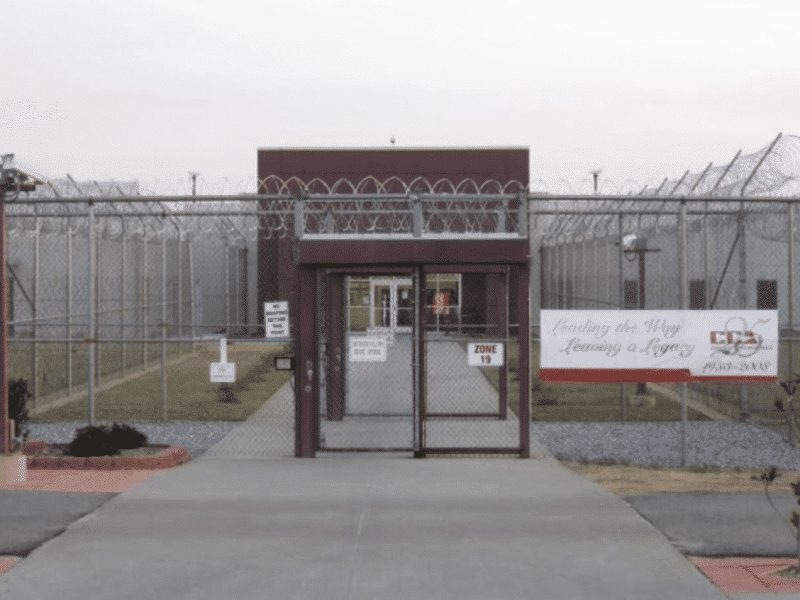
After a sewage eruption at Stewart Detention center, some detainees are still not drinking the water
“The smell is still there, it’s lingering,” said one advocate, who’s been reporting on conditions
This Georgia resident was planning his wedding. Now, he’s on hunger strike in Folkston, fighting for his release from ICE detention
Around 500 people at the Folkston detention facility continue their hunger strike, protesting health and safety conditions, and prolonged detention
Kashmiri filmmaker and GSU alum behind Atlanta-filmed ‘Saffron Kingdom’ released after unlawful detention
The arrest comes as the Trump administration has ramped up immigration crackdowns across the U.S. — and its use of detention against pending cases, like Sheikh’s.