This Georgia resident was planning his wedding. Now, he’s on hunger strike in Folkston, fighting for his release from ICE detention
Around 500 people at the Folkston detention facility continue their hunger strike, protesting health and safety conditions, and prolonged detention
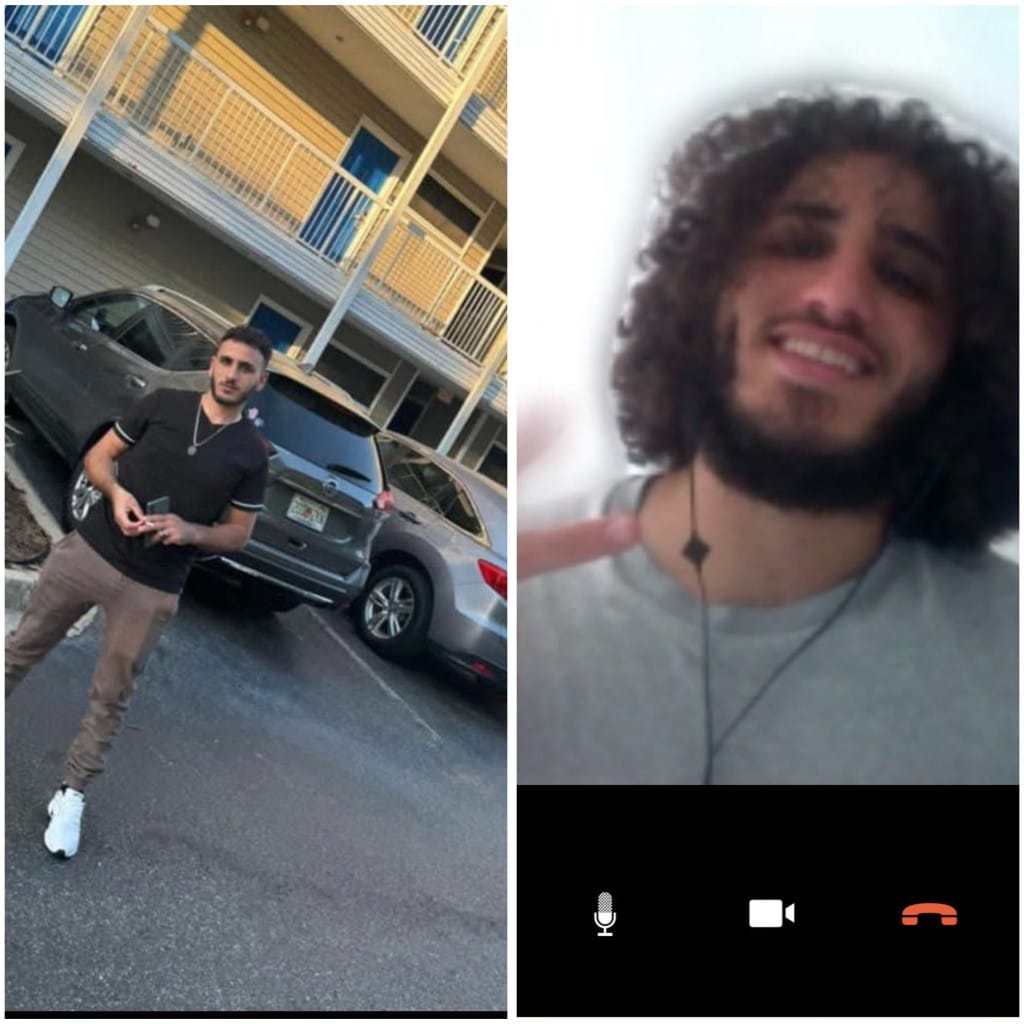
Hajar Alhayazei remembers first meeting Eslam Mohammad Ahmad Ananzeh. They were on the Georgia State University (GSU) campus, where she’s a pre-med student. “When he was interested, he asked for my parents’ information. He got to know my family, he met my dad, he acted on my hand, and we were engaged.” Not long after, they started planning their future- the hope was to have a wedding in January 2026. .
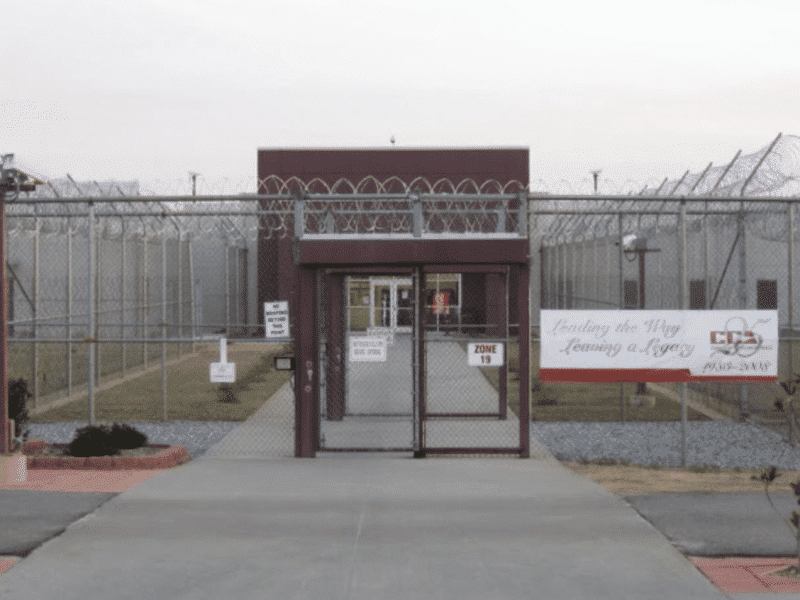
But in December 2025 the couple’s plans were cut short: Eslam, who is from Jordan and had been seeking asylum, was driving to his home in Jesup, Georgia, when he was pulled over. He was eventually detained by Immigration and Customs Enforcement (ICE) and transferred to the D Ray James ICE Processing Center in Folkston, Georgia.
Eslam is one of the 500 people detained at Folkston that’s been on hunger strike since October 6. They’re protesting their prolonged detention and the conditions at the facility, and demanding they be released while they continue to pursue their asylum and immigration cases. A total of 45 detainees – from a range of countries including Russia, Pakistan, Nepal, Afghanistan, and Sudan – sent an open letter last week, detailing conditions in the facility, and asking whoever reads it “simply not to ignore it.”
Of those 45, around 30 of them are now in solitary confinement, according to immigrant rights advocates in touch with the detainees.
In their letter, the men described facing a range of issues at the facility, including “property confiscations during searches, arbitrariness and impunity of guards, occasional failures of air conditioning, plumbing and all other systems, regular collective punishments affecting many detainees because of the actions of one person, poor food, extremely limited medical care, and many others.”
Hajar told 285 South that her fiancé has not been eating or drinking water for the past ten days.. When she spoke to Eslam on Tuesday, October 13, he told her he was dizzy. She could tell he was dehydrated, she said, because of the way he was mumbling. “The water is sometimes yellow,” she said he told her. “He tells me that the food is nasty. It looks spoiled, like very gooey looking.” The guards “yell at them to eat the food, and then they tell them, if you don’t eat the food, either way, you’re not gonna get released. None of this that you’re doing is gonna benefit you.”
On October 7th, Eslam was placed in isolation, she said. “He tells me throughout the night, a bunch of the ones that are in isolation, they scream all night, they bang on the walls, the doors, but no help comes for them.”
285 South spoke to Polina Chertushkina, whose husband, Andrei Gerdiukov, is also in solitary, along with six other men from Russia. In a letter, two of the men said that even before being in isolation, they were confined in their cells for around 6 hours during the day and 5 hours at night.
She said Andrei told her that just this week guards were eating fast food in front of some of the detainees and put a strip of chicken in front of their faces so that they would start to eat. He told her he was feeling dizzy and some men fainted. “They just want good treatment, and fair decisions on their cases,” she said about the men on hunger strike.
285 South reached out to the GEO Group, the private company that runs the detention center. A spokesperson responded, referring us to ICE. We reached out to ICE for comment and received no response.
There are over 2,100 people being held at the Folkston facility, according to data published in July from the Transactional Records Access Clearinghouse, a research arm on immigration from Syracuse University. Georgia is the fourth state with the most ICE detainees in the country. Fewer than a third of all recorded ICE arrests in Georgia in 2025 targeted convicted criminals, according to data analyzed by the Atlanta-Journal Constitution. Nationally, 70.6 percent of people detained by ICE have no criminal convictions.
Lourdes V., an Atlanta resident, whose husband has been detained at the Folkston facility since July, told 285 South that her husband has said he has to microwave his water. Some days though, she’s not sure what’s happening inside, because she can’t reach him. “When he doesn’t call me, I cry like myself to sleep every night, thinking, what’s wrong? Why is he not calling me? They have blocked his calls; sometimes he can’t call me.”
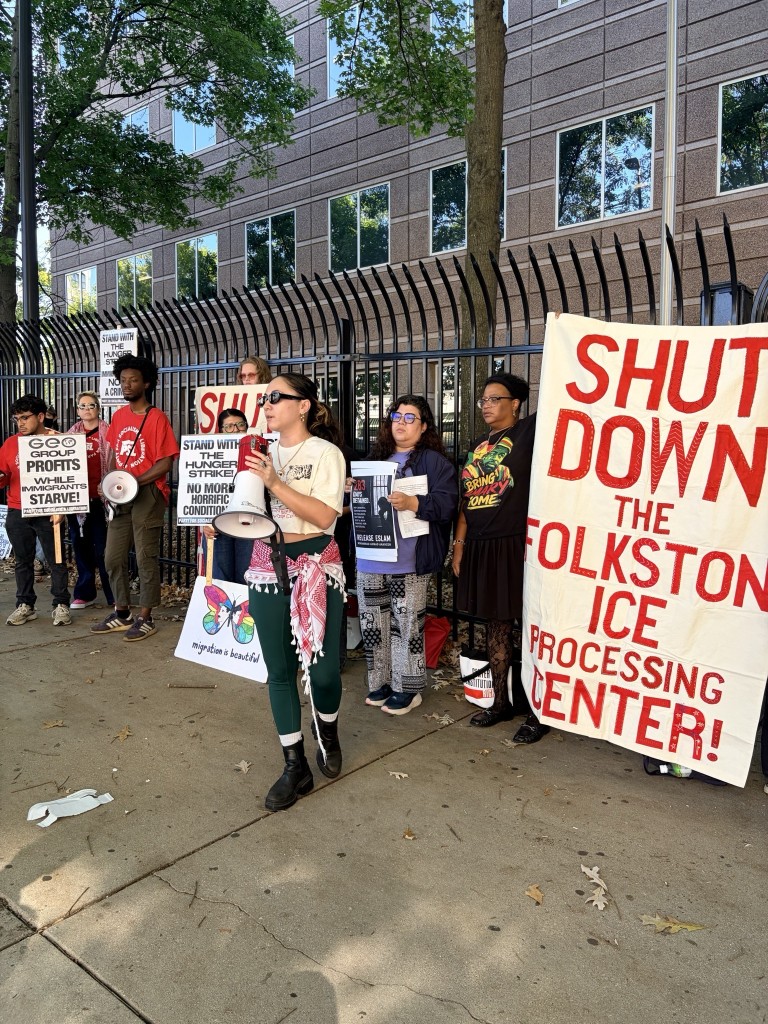
On Tuesday, protesters gathered outside the ICE office on Ted Turner Drive to show their solidarity with hunger strikers at Folkston. Another rally is planned for Thursday, October 15, at 5:30 p.m. outside the Folkston facility, and as well as one on Sunday, October 18, The coalition of organizers, which includes GLAHR, Shutdown Folkston ICE Facility, and Atlanta Democratic Socialists of America is urging people to call their elected officials and continue to raise awareness of the situation at the facility. “The more we get together, the more you highlight this, the more you embarrass them for the despicable bulls* that they are doing, and you draw attention to the stronger we get and the closer we get to a shutdown [of Folkston],” said Gail Sall, whose husband was detained at Folkston earlier this year and ultimately deported.
Eslam comes from a family of 11 siblings, and worked 12-hour shifts at a restaurant in Jesup, Georgia, so he could send money back home, Hajar wrote in a statement that was read at the rally. He spoke with his mother and family every night to make sure they were okay.
She’s worried that Eslam is going to lose consciousness soon. “He said, ‘We’re just gonna leave it to God, and God is gonna help us.’ But he’s like, ‘I’m not gonna give up, and I don’t want to eat this food.”
Hajar’s not sure what she’s going to do. “We were supposed to begin our life together. Instead, I have spent nearly ten months waiting for him to come home.”
Author

Related Articles
After a sewage eruption at Stewart Detention center, some detainees are still not drinking the water
“The smell is still there, it’s lingering,” said one advocate, who’s been reporting on conditions

Kashmiri filmmaker and GSU alum behind Atlanta-filmed ‘Saffron Kingdom’ released after unlawful detention
The arrest comes as the Trump administration has ramped up immigration crackdowns across the U.S. — and its use of detention against pending cases, like Sheikh’s.
Inside Atlanta’s “mega master” immigration hearings
Advocates warn of a concerning trend inside Atlanta’s immigration courthouse: hearings that resemble an “assembly line . . . rushing people into a mass deportation process.”