
As India Targets Pakistan, Indian American residents come out for “Hindu Lives Matter” rally in Suwanee
Gunmen killed 26 Indian tourists on April 22 and the Indian government has responded – blaming Pakistan, cutting off trade, as well as detaining Kashmiris and raiding their homes. In Suwanee, the focus was on Pakistan and pressuring the U.S. to take action.
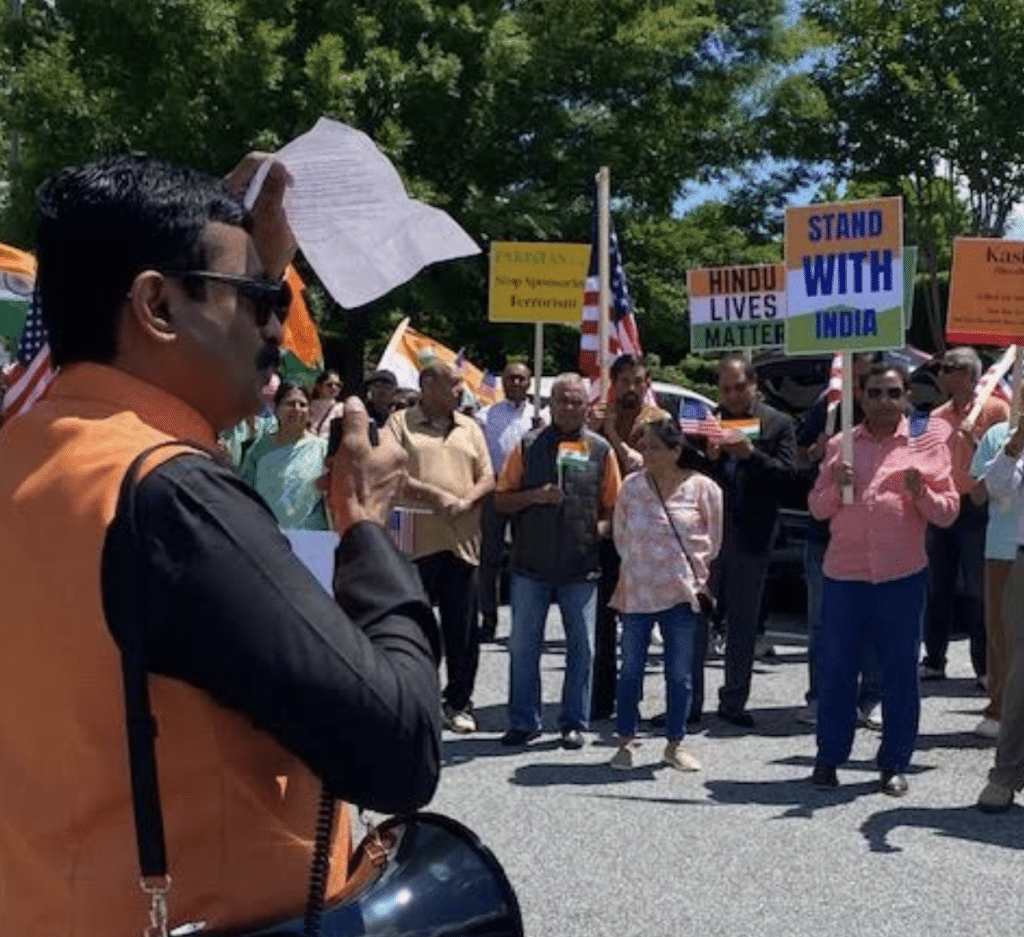
Just a few days before Tuesday’s news broke that India’s military had struck targets in Pakistan, and Pakistan claimed to have shot down Indian air force jets, the animosity between the two countries was evident 8000 miles away in a strip mall in Suwanee.
On Sunday several dozen metro Atlanta residents had gathered at Patel Plaza for a rally.
Rally goers held signs saying “October 7 for Israel. April 22 for India”, “Hindu Lives Matter” and “Stand with India.” For many who had joined, it was the first rally they’d ever attended.
The “Hindu Lives Matter” rally was spurred by an attack in Pahalgam on April 22, when several gunmen shot and killed 26 men in the disputed Himalayan Kashmiri region, most of whom were Indian tourists.
The Indian government has blamed Pakistan for the attack, despite the incident still being under investigation, and both countries have taken tit-for-tat measures, raising fear of a war between the nuclear neighbors.
Inside Indian-administered Kashmir, which is majority Muslim, the Indian army has been given “complete operational freedom” to hunt down the gunmen – so far they’ve arrested approximately 2000 Kashmiris and raided more than 1,000 homes – in a bid, they say, to find the gunmen. Anger in the wake of the attack has also resulted in Kashmiris in India being harassed on the streets.
Over the past several decades, Kashmiri struggles for self-determination have been met by waves of Indian government crackdowns that have led to human rights abuses, disappearances, and restrictions on media.
But in Suwanee on Sunday, the experience of Kashmiri Muslims wasn’t mentioned in any of the rally’s short speeches or slogans. Protesters blamed Pakistan for the April attack and urged state and federal governments in the U.S. to do what they can to punish Pakistan, prevent future attacks on Hindus, and catch and punish the gunmen responsible for the killing.
Federal and state representatives were among those who showed up at Patel Plaza, including Rep. Rick McCormick and state lawmakers Jason Esteves, Esther Panitch and Shawn Still – who recently introduced a bill to fight Hinduphobia, lauded by Hindu groups as the first of its kind in the country.
Rep. McCormick represents Georgia’s 7th district, which has seen dramatic growth in its population of Indian origin over the last two decades. He addressed the crowd in front of the Patel Brothers grocery store: “We’re family. Namasté.” He denounced the “instability created in the region by those who would do harm to innocent people, based on evil.” State representatives followed, invoking the historic alliance between the U.S. and India.
Standing in the crowd, Johns Creek resident Gopal Koratana waved an Indian flag. “As an American citizen, I don’t want to be on the wrong side of history…you cannot separate Pakistan from Islamic terrorism,” said the tech startup founder. He told 285 South the Sunday rally was his first, after 30 years of living in the U.S. When asked about the lack of evidence proving Pakistan was behind the attack, he said, “if you keep looking for proof, that is not the issue – we are past that.” Later, he said he “genuinely hope[s] this doesn’t lead to war – and that world powers work with Pakistan to eliminate support for terrorism.”
After remarks from the elected officials concluded, the crowd marched through the parking lot and onto a grassy area straddling Peachtree Parkway, shouting slogans that organizers had prescribed beforehand, like “We want justice”; “No to terror, yes to peace”; “Punish Punish Pakistan.”
“I was here in the U.S. in 2001. I’ve seen what [terrorism] means,” said Ajay Houde, an Alpharetta medical device entrepreneur who had helped organize the rally, alluding to the events of September 11.
Afterward, as rally goers sampled puri, a fried bread, Gadadhar Nayak, a Suwanee resident of 20 years and data engineer, said he thought the rally’s “message got across,” both because of the number of people who attended, and the presence of elected officials.
Koratana said he thought the rally’s message would reach elected officials in particular for one reason: “There are ten millionaires standing here,” he said, motioning to the crowd. “I am one of them.”
Related Articles
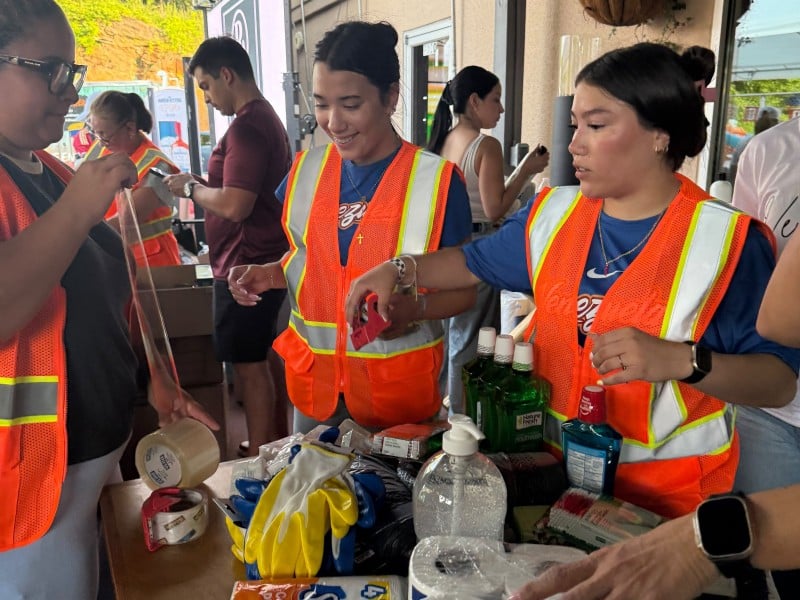
Venezuelans in Georgia come together to send food and medicine to the country after two massive earthquakes
“An outpouring of people” have come out across the metro region to respond to needs in Venezuela, expected to continue for months.
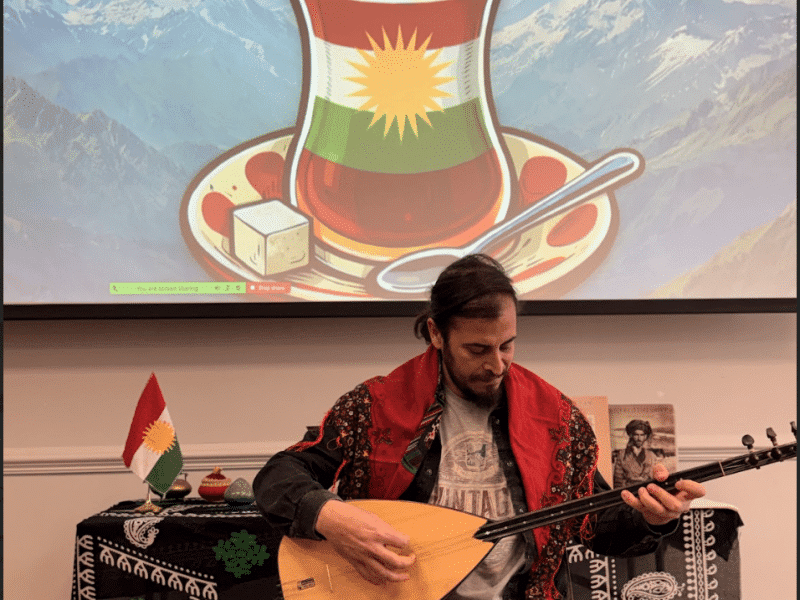
A Decatur teach-in draws attention to the world’s largest stateless ethnic group
With recent events drawing attention to the struggles of the Kurds, members of the Atlanta area’s Kurdish community are asking their neighbors to speak up.