While kids run on the soccer pitch, parents tackle anxiety with lavender oil, breathing techniques, and more
In DeKalb County, a free soccer program for Latino kids helps parents too: through access to information—and each other.
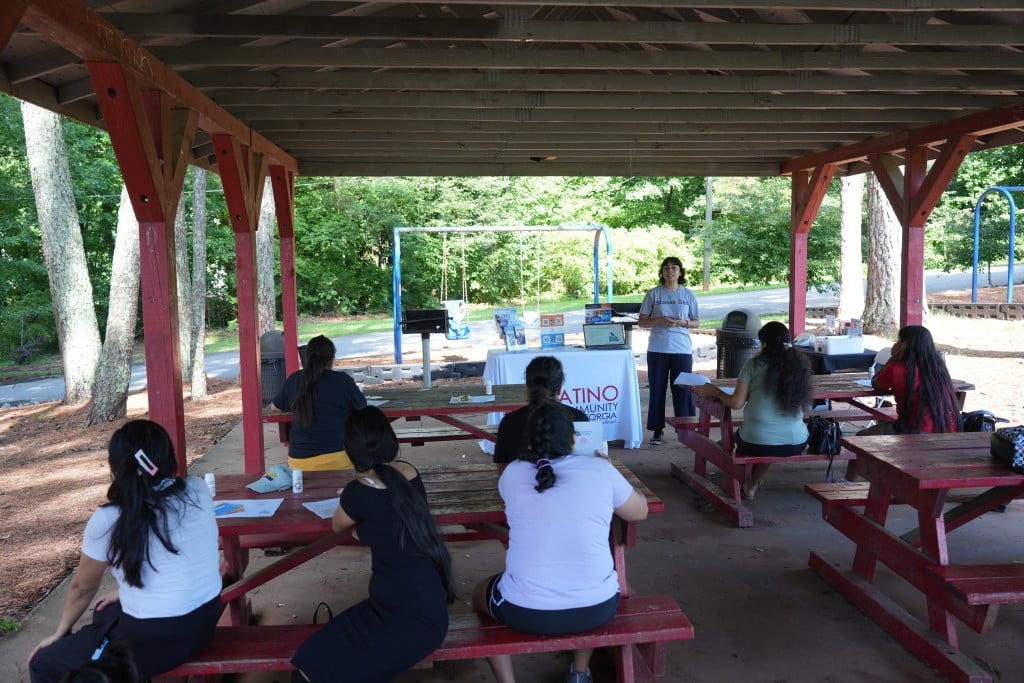
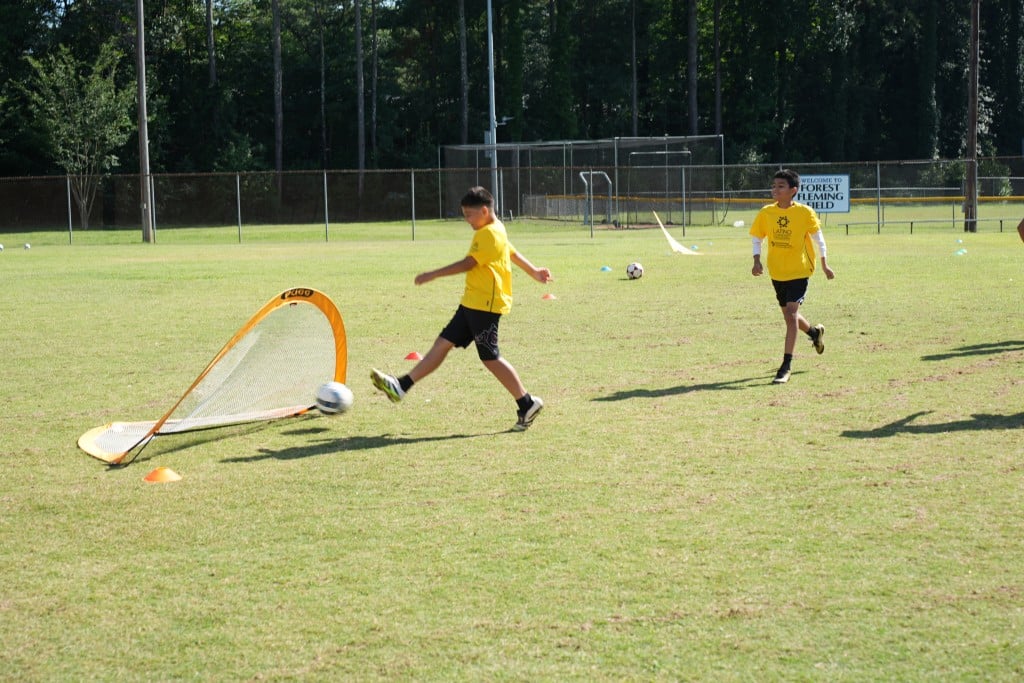
On a sunny and humid Tuesday morning in June, dozens of kids pour into Doraville’s Honeysuckle Park ready to square off: As World Cup competition heats up elsewhere in Atlanta, they’re playing in their own soccer matches. While the games get going, though, the moms and caregivers who brought them to the park don’t just sit on the sidelines and watch—they head to a wooden picnic shelter just a few yards away from the soccer pitch. They’re here to pursue their own goals: better health, physical and mental.
Both kids and adults are here as part of Soccer Academy, an annual partnership of two local organizations that serve the Hispanic community—Amigos de la Comunidad and the Latino Community Fund Georgia—and Soccer in the Streets, which organizes free youth games across the metro. This is the fourth year for Soccer Academy, which is open to kids in DeKalb County. But it’s the first year that organizers have offered programming to parents every day that the academy is in session –in previous years the workshops happened once or twice a week.
Zaily sits at one of the picnic tables while her two kids play: “A mis hijos les gusta mucho,” she tells 285 South. My children love it. But Zaily, a soft-spoken 29-year-old who’s originally from Guatemala, is also gaining valuable information, listening as Aurora Santana-Cortes, LCF Georgia’s well-being manager, walks through techniques to deal with anxiety. For about an hour, Zaily and the other workshop attendees practice breathing exercises, inhaling deeply and then exhaling while blowing air through bubble wands. Aurora invites them to smell lavender oil, which can provide short-term relief from anxiety, and recommends YouTube videos with guided meditations they can follow at home. As Zaily smelled the lavender oil dropes she poured in the palm of her hands, she closed her eyes and her face relaxed.
Among Latino communities in the U.S., physical and mental health have become rising areas of concern for a variety of reasons—the effects of the pandemic, anxieties over immigration enforcement, and general stress over economic conditions. At the same time, resources remain scarce: Factors like language barriers, lack of insurance, lack of legal status, and stigma surrounding mental health all limit Hispanic and Latino communities’ access to care. In 2023, fewer than 100 fully licensed Spanish-speaking mental health providers were even available in Georgia, according to the advocacy group Ser Familia.
At a workshop the previous week, Zaily had also learned about health and nutrition—and gotten her blood pressure, cholesterol, and glucose levels checked. “We’re having preventative health checkups available every day,” Aurora says. “We also have a referral process, so we connect community members who are uninsured or don’t have a primary care physician or have elevated results to community clinics near them.” (285 South has been compiling resource lists to address some of these needs, one of low-cost healthcare providers and one of mental health support options with culturally sensitive care.)
Other workshops have focused on topics like nutrition, tenants’ rights, and worker protections. Once a week, Amigos de la Comunidad also organizes a “resources table” with donated clothes and fruits and vegetables that families can grab for free—even if they don’t have kids enrolled in the soccer camp.
The soccer program also provides something more intangible for families.
“Aquí como ves, pues todos hacemos comunidad,” says Aceli Zenil, Amigos de la Comunidad’s cofounder. “Lo que hacemos es reforzar esa unión de las familias.” As you can see, we all come together as a community here. We focus on strengthening family bonds.
As the years have passed, more parents have gotten involved; some volunteer their time and help set up the tents where Amigos de la Comunidad gives away free lunches for the kids, while others help transport goods such as water, sports drinks, and snacks. Moms exchange advice about issues they might be having at home. They share good news, encourage and congratulate each other, and joke around with the teenagers.
It’s not just the families who benefit from the sense of community—it’s the coaches too. “I miss that part of being connected with the Latino community, because I didn’t grow up here, I grew up in Colombia, so I’ve lived in Colombia my whole life,” says Sergio López Ríos, one of the coaches and the school program coordinator for Soccer in the Streets’ school program coordinator. “When I first came to the United States, there weren’t many Spanish speakers where I lived. So, once I arrived here, I felt that connection again, and I’ve really enjoyed it.”
He says that the energy among the kids, while always high, has become even more intense as the World Cup has gotten underway. His players can’t stop talking about the games and their favorite athletes; even if they’re happening at the same time as soccer camp, the kids are able to find ways to watch the matches or listen to them on the radio.
As the soccer session for the day wraps up, children pick up the balls, cones, and other equipment. Sergio watches them and can’t help but reflect.
“El ambiente es muy particular en esa forma, como muy a lo que estamos acostumbrados los latinos, que nos ayudamos entre todos y todos somos amigos,” he said. The atmosphere here is very distinctive in that way—very much like what we Latinos are used to, where we all help each other out and everyone is friends.
The camp continues throughout June, and Aceli is asking for community support to cover the costs for the lunches for children.
Author
Related Articles
For this Congolese fan, the DRC match is about more than just soccer
Excitement in Atlanta’s Congolese community as the DRC takes on Uzbekistan
After a video goes viral, a customized soccer ball is a business success
At just 25 years old, local shop owner Andrea Suarez has orders until the end of the year.